Playback Advice

Give Your Cleaned Records 1 to 3 Plays Before Listening

Record Cleaning – An Overview

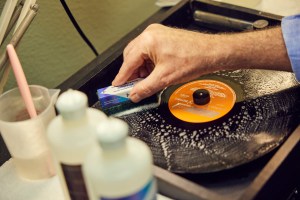
We have a series of turntables set up in the cleaning room that play through every record we’ve cleaned before it goes into the Hot Stamper shootout rotation.

We recommend that you play your records at least once and as many as three times through completely before listening to them, whether you are listening for pleasure or testing for sound quality.

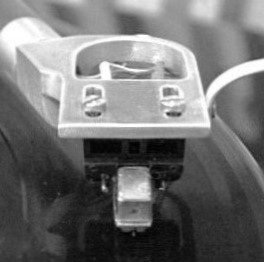
Playing previously cleaned records plows loosened grunge out of the grooves and helps the cartridge “seat” itself in the dead center of the groove at the same time.

Two or three plays usually gets the job done, resulting in a clearly audible improvement of surfaces and sonics.

If you care to, you can clean them the way we do at 45 RPM in order to speed up the process.

For more record cleaning tips and tricks, click here.

To order The Prelude Record Cleaning System, exclusively available from Better Records and 100% guaranteed to be the best record cleaning fluid you have ever used or your money back, please click here.

Once you hear every record you have cleaned sounding better than it ever has, not to mention quieter, we think you will be more than glad you did.

(more…)

Big Speakers and Loud Levels Bring Out the Power of the Orchestra

Hot Stamper LPs that Sound Their Best on Big Speakers at Loud Levels

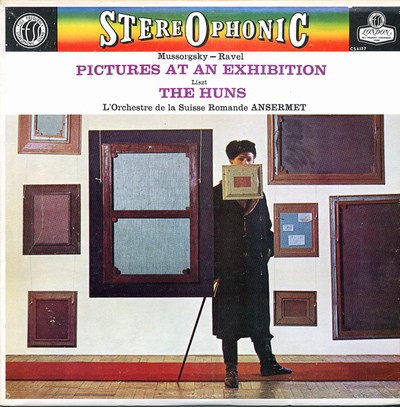
The darker brass instruments like tubas, trombones and french horns are superb here. Other Golden Age recordings of the work, as enjoyable as they may be in other respects, do not fully reproduce the weighty quality of the brass, probably due to limiting, poor eq, poor miking, or some combination of the three.

The brass on this record has the powerful weight and energy of live music like practically no other orchestral pressing we have ever played.

It’s also tonally correct. It’s not aggressive. It’s not irritating. It’s just immediate and powerful the way the real thing is when you hear it live. That’s what really caught my ear when I first played the recording.

There is a blast of brass at the end of Catacombs that is so big and real, it makes you forget you’re listening to a recording. You hear every brass instrument, full size, full weight. I still remember the night I was playing the album, good and loud of course, when that part of the work played through. The power of it was truly startling.

Back then I had the Legacy Whisper speaker system, the one with eight 15″ woofers. They moved air like nobody’s business. If you want to reproduce the power of the trombone, the loudest instrument in the orchestra, they’re the speaker that can do it.

Some of Ansermet’s recordings with the Suisse Romande are absolutely the best I’ve ever heard. It was a magical combination of the right hall, the right engineers, the right orchestra and the right technology — the pure tube ANALOG technology of the 50s and 60s!

Dynamics

Another thing this recording has going for it is dynamic power. This is a dynamic piece of music. Few recordings I have ever heard have the dynamic contrasts that this one does. It really gets loud when it needs to. The best pressings sound completely uncompressed. Although I’m sure there has to be compression of one kind or another, the listener is rarely made aware of it.

Dynamics such as these are thrilling. They let the music come alive.

(more…)

Accurate VTA Using Helplessly Hoping on the Classic LP

Hot Stamper Pressings of the Music of Crosby, Stills and Nash Available Now

This commentary from way back when (2005!) describes how to go about adjusting your VTA for 180 or 200 gram vinyl, using the track Helplessly Hoping from the first album.

Helplessly Hoping is a wonderful song with plenty of energy in the midrange and upper midrange which is difficult to get reproduce. Just today (4/25/05) I was playing around with VTA, having recently installed a new Dynavector DV-20x [a cartridge replaced by the 17d3 soon afterwards and again by the 17dx] on my table, and this song showed me EXACTLY how to get the VTA right.

VTA is all about balance. The reason this song is so good for adjusting VTA is that the guitar at the opening is a little smooth and the harmony vocals that come in after the intro can be a little bright.

Finding the balance between these two elements is key to getting the VTA adjusted properly.

When the arm is too far down in the back, the guitar at the opening will lose its transparency and become dull and thick. Too high in the back and the vocals sound thin and shrill, especially when the boys all really push their harmony. The slightest change in VTA will noticeably affect that balance and allow you to tune it in just right.

To be successful, however, there are also other conditions that need to be met. The system has to be sounding right, which in my world means good electricity, so make sure you do this in the evening or on a weekend when the electricity is better.

(more…)

Azimuth, VTA, Anti-Skate and Tracking Weight – We Got to Live Together

More Record Playback Advice

With a shout out to my man Sly!

The commentary was written in 2005.

One of the reasons this record is sounding so good today (1/12/05) is that I spent last weekend adjusting my Triplanar tonearm. The sound was bothering me somewhat, so I decided to start experimenting again with the azimuth adjustment.

I changed the azimuth in the smallest increments I could manage, which on this turntable are exceedingly small increments, until at some point the following changes became evident:

  1. The bass started to go deeper,
  2. The dynamics improved, and
  3. The tonal balance became fuller and richer.

In essence the cartridge was becoming perfectly vertical to the record.

I don’t think this can be done any other way than by ear, although I don’t know that for a fact.

Azimuth, VTA, anti-skate and tracking weight all work in combination to create the sound you hear. They are like trying to juggle four balls at the same time. They all interact with each other in mysterious ways.

This is one of the reasons why I think everyone needs to know how to set up their own front end. Nobody you could ever pay is going to put the time and effort into getting it just right. I have at least 30 or 40 and probably closer to 50 hours of set up time in this arm. [It is in the many hundreds by now.]

This is, of course, over a period of two years. But as I have played around and experimented in different ways with the setup, I have managed to tailor the sound to my taste while maintaining what I consider to be the highest levels of accuracy.

Robert Brook has some advice for those who would like to learn more about analog setup, and you can find it here.

(more…)

Bob and Ray Produced Our Favorite Record for Cartridge Setup

Hot Stamper Pressings of Bob and Ray Available Now

Bob and Ray Throw a Stereo Spectacular just happens to be our favorite Test Disc, eclipsing all others in the areas of naturalness and difficulty of reproduction. Any tweak or new room treatment — we seem to do them almost weekly these days — has to pass one test and one test only — the Bob and Ray Test. 

This record has the power to help you get to the next level in audio like no other.

Six words hold the key to better sound: The Song of the Volga Boatman.

For the purpose of mounting new carts, our favorite track is The Song of the Volga Boatman from LSP 1773. It’s by far the most difficult track we know of to get to sound right.

There are about twenty places in the music that we use as tests, and the right setting is the one that gets the most of them to sound their best. With every change some of the twenty will sound better and some will sound worse. Recognizing when the sound is the biggest, clearest, and most balanced from top to bottom is a skill that has taken me twenty years to acquire.

It’s a lot harder than it looks. The longer you have been in audio, the more complicated it can seem, which may be counterintuitive but comports well with our day-to-day experience very well.

All our room treatments and tweaks must pass The Bob and Ray Test as well. It’s the one record we have relied on more than any other over the course of the last ten years.

Presenting as it does a huge studio full of brass players, no record we know of is more dynamic or more natural sounding — when the system is working right. When it’s not working right the first thirty seconds is all it takes to show you the trouble you are in.

If you don’t have a record like that in your collection, we highly recommend you find one.

It will be invaluable in the long run. The copy we have is so good (White Hot, the best we have ever played), and so important to our operation here, that it would not be for sale at any (well, almost any) price.

The Bob and Ray Trombone / Trumpet Test

One of the key tests on Bob and Ray that keeps us on the straight and narrow is the duet between the trombone and the trumpet about half way through The Song of the Volga Boatman. I have never heard a small speaker reproduce a trombone properly, and when tweaking the system, when the trombone has more of the heft and solidity of the real instrument, that is a tweak we want to pursue.

The trumpet interweaving with it in the right rear corner of the studio tests the transients and high frequency harmonics in the same section. With any change to the stereo, both of those instruments are going to sound different. For a change to be positive they must both sound better.

(more…)

Led Zeppelin / II – Gee, I Seem to Have No Trouble At All Playing This Record

More of the Music of Led Zeppelin

I expect that pretty much everyone knows the famous story by now.

Robert Ludwig’s “Hot Mix” (a complete misnomer, mostly propagated by those with a poor understanding of what is involved in making records – the mix never changed, only the mastering) of Zep II was causing the needle to jump the groove when Ahmet Ertegun’s daughter tried to play it on her cheap turntable, so they recut the record with more compression and cut the bass. (The recut, if you have never heard one, may take the cake for the worst sounding pressing of the album ever made.)

Our Triplanar Mark 6 / Dynavector 17dx combination seems to play the original just fine. Amazingly well in fact.

Here’s a challenge for all the Heavy Vinyl fans in the world:

Name all the Heavy Vinyl records that sound as good or better than RL’s cutting of Zep II.

Modern engineers tell us they can cut records better now than ever before, with all the bass and dynamics that previous engineers were supposedly forced to limit for the cheap tables and carts of the past.

So where are these so-called “new and improved” records, the ones with better bass and dynamics?

I have yet to hear one. Perhaps someone can point me in the right direction.

Send your list — even if your list only has one entry! — to tom@better-records.com

(more…)

How To Get The Most Out Of Your Records – A Step By Step Guide

More Helpful Playback Advice

We’ve recently begun to include an info sheet with our Hot Stamper pressings which describes some simple steps you can take to get better results with our records in your home.

Since these tips really apply to all records and not just our Hot Stampers, we thought it best to outline them here and add a few additional thoughts. 

Warm Up

Warm up your stereo for at least a half hour before doing any critical listening. A full hour is even better. Make sure you have the volume raised; the speaker drivers need to be moving actively so as to loosen them up and get them in the mood to sound their best.

All Hot Stamper pressings have been thoroughly cleaned by us and there is no need to clean them again, at least not for quite a while. (After a dozen or so plays it might be a good time to think about another cleaning, especially if fingerprints or dust are visible or audible. When in doubt clean the record.)

Since many of the record cleaning fluids on the market today actually make records lose fidelity, we encourage you to clean your records with the one and only system we recommend: The Prelude Enzyme Cleaning System.

Now that Mr. Walker has passed, we are the exclusive dealers for the revolutionary enzyme cleaner he developed.

If you must clean our Hot Stamper pressings with a fluid we do not recommend, our advice would be to listen carefully to the record before recleaning, then again after cleaning, to make sure there is no loss of sound quality. If there is a loss of fidelity we would then strongly advise you to switch to The Prelude Record Cleaning System.

Records that have been properly cleaned actually sound even better after a few plays. After a good cleaning, playing the record helps plow more grunge out of the grooves and also helps the stylus tip to seat itself deeper into the center of the groove.

Every Hot Stamper pressing sold by us has been played through at least once on both sides. Another play or two (or three or four) on your part will help the record sound even better.

(more…)

Tea for the Tillerman – Making Progress in Audio from 1984 to 2004

Hot Stamper Pressings of the Music of Cat Stevens Available Now

The following comments were written in 2004.

Hard Headed Woman is a song that has evolved dramatically over the last 20 years. If you’ve been making regular upgrades to your equipment and taking advantage of all the new technologies available at the front end, such as: vibration control, electromagnetic stabilization, better arms, better cartridges, better phono stages, better motors, fly wheels, Synchronous Drive Systems, better power cords, better power conditioning, to name just a few, you are no doubt able to reproduce this song much better than you were in the old days. Speaking of congestion, it had previously been our experience that every copy of the record had at least some congestion in the loudest parts, typically the later parts of songs where Cat is singing at the top of his lungs, the acoustic guitars are strumming like crazy, and big drums are pounding away and jumping out of both speakers. 

I used to think that Cat’s voice got hard and harsh when he got loud on the passage that starts with “I know… [big drums here] many fine feathered friends…”. Now he gets even louder, the drums are much more powerful, and yet he still sounds like a real person, not an overdriven recording.

A classic case of blaming the recording. The record was fine. I just couldn’t play it right.

(more…)

A Simple Test for Polarity – Listen to the Solo Violin

More of the music of Frederic Chopin (1810-1849)

More of the Music of Jacques Offenbach (1819-1880)

This is one of the pressings we’ve discovered with Reversed Polarity.

Both sides are reversed.

On side two, the Chopin side, notice how vague the solo violin is with the polarity wrong.

As soon as it is switched, a solid, real, natural, palpable violin pops into view.

That’s how you know when your polarity is correct, folks!

This Heavy Vinyl pressing is also quite vague, but you can reverse your polarity until the cows come home, it ain’t gettin’ any better.

Here are some other Records that Are Good for Testing Vague Imaging


The top end of this record is clear, clean and correct. No other copy sounded like this one on the first side. When you hear all the percussion instruments — the tambourines, triangles, wood blocks and what-have-you — you know instantly that they sound RIGHT.

The overall sound is very different from many of the other recordings of the work that we have offered in the past. Rather than smooth, rich and sweet, the sound here is big and bold and clear like nothing we have ever played.

This is Front Row Center sound for those whose systems can reproduce it.

And this is truly a top performance by Fistoulari and the Royal Philharmonic. I know of none better. For music and sound this is the one!

Turntable Tweaking Works Its Magic Once Again – “I’m sitting in shock!”

More Hot Stamper Testimonial Letters

Hi Tom,

Just wanted to give you a big thank you for the commentary on turntable tweaking. I constantly learn important advice on the audiophile subject from your website. I check it everyday.

Lately I have been thinking my audio sound was lacking. It didn’t sound as good as I remember it. After reading the turntable tweaking advice, I reset up the tonearm. VTF, VTA, and azimuth.

I have “magic” in my sound now.

Listened to some Neil Young, [Ten Years After] A Space in Time. Very Tubey.

Listened to my Miles Davis Kind of Blue. It sounded better than I ever heard it. I’m sitting in shock!

The killer was Chicago 2. I love 25-6-to 4 so I was blown away and normally I’m not interested in the rest of that side of the album but I sat through the rest of it and was enthralled by the vocals. Memories of Love is one track I was never interested in but it sounded so good I loved it.

When you want to listen to every record in your collection, you know you’ve done something right.

Anyway I want you to know we audiophiles appreciate the time you take to put up your advice and commentaries. I just got a huge upgrade and it didn’t cost me a cent. Only some time and I learned a little more.

Thanks a bunch, 
Steve E.

Steve,

You are more than welcome!

Thanks for writing,

TP

(more…)