Playback Advice

A Simple Test for Polarity – Listen to the Solo Violin

More of the music of Frederic Chopin (1810-1849)

More of the Music of Jacques Offenbach (1819-1880)

This is one of the pressings we’ve discovered with Reversed Polarity.

Both sides are reversed.

On side two, the Chopin side, notice how vague the solo violin is with the polarity wrong.

As soon as it is switched, a solid, real, natural, palpable violin pops into view.

That’s how you know when your polarity is correct, folks!

This Heavy Vinyl pressing is also quite vague, but you can reverse your polarity until the cows come home, it ain’t gettin’ any better.

Here are some other Records that Are Good for Testing Vague Imaging


The top end of this record is clear, clean and correct. No other copy sounded like this one on the first side. When you hear all the percussion instruments — the tambourines, triangles, wood blocks and what-have-you — you know instantly that they sound RIGHT.

The overall sound is very different from many of the other recordings of the work that we have offered in the past. Rather than smooth, rich and sweet, the sound here is big and bold and clear like nothing we have ever played.

This is Front Row Center sound for those whose systems can reproduce it.

And this is truly a top performance by Fistoulari and the Royal Philharmonic. I know of none better. For music and sound this is the one!

Turntable Tweaking Works Its Magic Once Again – “I’m sitting in shock!”

More Hot Stamper Testimonial Letters

Hi Tom,

Just wanted to give you a big thank you for the commentary on turntable tweaking. I constantly learn important advice on the audiophile subject from your website. I check it everyday.

Lately I have been thinking my audio sound was lacking. It didn’t sound as good as I remember it. After reading the turntable tweaking advice, I reset up the tonearm. VTF, VTA, and azimuth.

I have “magic” in my sound now.

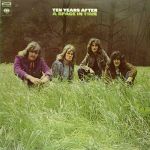
Listened to some Neil Young, [Ten Years After] A Space in Time. Very Tubey.

Listened to my Miles Davis Kind of Blue. It sounded better than I ever heard it. I’m sitting in shock!

The killer was Chicago 2. I love 25-6-to 4 so I was blown away and normally I’m not interested in the rest of that side of the album but I sat through the rest of it and was enthralled by the vocals. Memories of Love is one track I was never interested in but it sounded so good I loved it.

When you want to listen to every record in your collection, you know you’ve done something right.

Anyway I want you to know we audiophiles appreciate the time you take to put up your advice and commentaries. I just got a huge upgrade and it didn’t cost me a cent. Only some time and I learned a little more.

Thanks a bunch, 
Steve E.

Steve,

You are more than welcome!

Thanks for writing,

TP

(more…)

Power Management: Suggestions and Results from Robert Brook

Robert Brook has a blog which he calls

A GUIDE FOR THE DEDICATED ANALOG AUDIOPHILE

With a bit of guidance from yours truly, Robert Brook has carried out some interesting experiments involving the electricity that feeds his stereo. These are his findings.

Power Management: Suggestions and RESULTS!

Robert has approached the various problems he’s encountered in the world of audio and records by being extremely methodical and rigorous, along these three fronts:

Everyone reading this blog can learn a lot from the work he’s done in these three areas and more besides.


More on Robert’s system here. You may notice that it has a lot in common with the one we use. This is clearly not an accident.

And it is also no accident that these two systems just happen to be very good at showing their owners the manifold shortcomings of the modern remastered LP, as well as the benefits to be gained by doing shootouts in order to find dramatically better sounding pressings to play.

(more…)

The Brahms Violin Concerto – Unplug or Suffer the Consequences!

Hot Stamper Pressings Featuring the Violin Available Now

The massed strings here, such as those found at the opening, are close-miked and immediate as befits the Mercury recording style.

Your electricity had better be good when you play this record, because it presents a test many of you will have trouble passing at even moderate levels. 

We’ve often encouraged our readers and customers to go about unplugging things in their homes in order to test the effect of clean electricity on their playback systems.

The opening of this record is a perfect example of the kind of material everyone should be testing with in order to hear these changes.

I’d be very surprised if the strings on this record don’t sound noticeably better after you’ve unplugged a few things in your house, and the more the better.

The effect should not be the least bit subtle. It’s certainly not subtle in our listening room.

The same would be true for any of the tweaks we recommend. The Townshend Seismic Platform or Hallographs would be a godsend for proper playback of this record. Hard to imagine what it would sound like without them. (To tell you the truth, we don’t really want to know.)

(more…)

Beatles ’65 – Listen for Reversed Polarity

More of the Music of The Beatles

This is one of the pressings we’ve discovered with Reversed Polarity.

This is a Capitol Records Purple Label LP with THE BEST SOUND I have ever heard for a Capitol Beatles LP (as of 7/5/06).

But there’s a catch. It only sounds good if you reverse your absolute phase. If you don’t, or can’t, forget it. 

I wrote the rave review you see below without realizing that I had reversed my headshell leads for the previous record I was playing and had forgotten to change them back. So all the nice things I said about Capitol really aren’t true: they got the phase backwards, which positively ruins the sound unless you can correct for it. I did, and was astonished at how musical the album sounded.

Do you want an AMAZING example of how phase can affect the sound of a recording? Switch back and forth on Honey Don’t, especially if you are the skeptical type like me. You will become a believer on the spot, all doubt forever banished.

I wonder how many other bad Beatle albums are phase reversed? We will report our findings as time goes on so watch for them. [We of course never did this. The Beatles pressings we sell are in correct polarity and we simply do not have the time to survey every Beatles record ever made.]

This is what I initially said about the record:

This is a Minty Capitol Purple Label LP with THE BEST SOUND I have ever heard for a Capitol Beatles LP. If more of them sounded like this we wouldn’t have said all those mean and nasty things about Capitol Records for the past forty years. Yes, they still “butchered” For Sale to create this “album”, but that’s not the point. The point is this record sounds like a good Parlophone pressing — rich and sweet, with dead-on tonality. Whatever tapes Capitol may have used had plenty of that famous Beatles Analog Magic in them — you won’t hear any Beatles CDs sound like this, that I can assure you. That sound is gone and it ain’t comin’ back.

The late Capitol mastering here is Right On The Money. I don’t think they ever cut a record better. You can be sure the original Rainbow Label pressings sound as bad as you remember. I have never heard ANY original Capitol pressing that sounded like this — not even close.

The two singles mentioned below both have DREADFUL SOUND, the kind we have come to expect from Capitol. Everything else is wonderful.


“Dave Dexter, Jr. (a name which will live in infamy) “assisted” the Beatles by pulling eight tracks from Beatles for Sale, one from A Hard Day’s Night [I’ll Be Back], and both sides of the latest Beatles single (“I Feel Fine”/”She’s a Woman”) for the creation of this album.” – AMG

(more…)

Talisman Testimonial – “… Damn! And to think I doubted you …”

Tom,

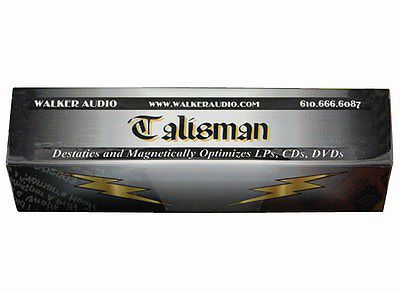
I’m in receipt of the Talisman and have tried it on numerous CDs, LPs and DVDs… damn! And to think I doubted you. A truly serious upgrade without spending serious money. A sheen has been removed from the top and I can hear farther into the recording than ever before, whatever the format. It definitely benefits LP playback more, at least on my system (a Linn rig). Mids are more palpable and instruments play more to their natural voice.

I’m a member of the St. Louis Symphony and recordings that I have participated in sound more like the sound I hear when I’m in the midst of my colleagues on stage at Powell Hall. Thanks for your help.

Tom D.

Tom,

O ye of little faith… Seriously, could you ever be without it now? And the private email I sent you explaining how to get even more out of the device surely meant an even greater improvement in the sound of your system. The kind of change you describe — for a couple hundred bucks! — is practically unheard of nowadays, but of course you heard it, I heard it, everybody hears it. The only people who don’t hear it are the people who are so skeptical that they cannot allow themselves the opportunity to hear it.

This is the kind of thinking that I rather unkindly refer to as Stone Age Audio. If you don’t believe audio has made huge strides in recent years, you simply haven’t taken advantage of the Revolutionary Changes in Audio we talk about on the site. Talisman? Magic Pillow? Hallographs? These things can’t work!

Of course it’s easy to say that if you’ve never heard them, not so easy once you have. If you’re happy with the sound of your stereo, don’t really see the need to make it sound any better, hey, you sure don’t need any of these products.

If, however, you, like us, are THRILLED with the fact that the sound of your favorite recordings is constantly improving, then you need to have a little faith in your friends here at Better Records. We talk the talk because we walk the walk, five days a week and twice on Sunday. My [old] annual tweaking budget is easily in the multi-hundreds of hours; that’s what it takes to make improvements of the kind that we have implemented over the years. With a system like mine, nine out of ten things I try don’t work. It’s that tenth one that makes it all worthwhile.

For our customers, however, we make it so easy. The devices we recommend are guaranteed to work or your money back. They do not require hours of tedious tweaking and listening in search of an appreciable change (that might never materialize). The equipment and sound improving devices we recommend make a DRAMATIC and OBVIOUS change right from the get go.

The only people who don’t know that are the ones who haven’t tried them. Perhaps with a little more faith… (more…)

Brahms / Concerto for Violin and Cello – Reversed Polarity on LDS 2513

Hot Stamper Pressings Featuring the Violin

This is one of the pressings we’ve discovered with reversed polarity.

The orchestra is its typical shrill self. The cello and violin sound wonderful most of the time. When they really get going the sound can be a bit much. At moderate volumes the record is very enjoyable.

If I’m not mistaken, reversing your polarity will help the sound some.

This is a famous recording for having distortion and congestion in the louder orchestral passages. There is no such thing as a copy of this record that doesn’t have those problems as far as I know.

You listen to this record for the wonderful interplay between Heifetz and Piatigorsky and not much else.

(more…)