Contemporary – Reviews and Commentaries

Getting the Balance Right on Mean to Me

Hot Stamper Pressings of Pop and Jazz Vocals Available Now

Mean to Me is a favorite test track for side one, with real Demo Disc quality sound. We credit it with helping us dramatically improve our playback.

Roy DuNann at Contemporary was able to get all his brass players together in one room, sounding right as a group as well as individual voices.

The piano, bass, and drums that accompany them are perfectly woven into the fabric of the arrangement.

What makes this song so good is that when the brass really starts to let loose later in the song, with the right equipment and the right room, you can get the kind of sound that’s so powerful you could practically swear it’s live.

Helen was recorded in a booth for this album, and her voice is slightly veiled relative to the other musicians playing in the much larger room that of course would be required for so many players.

When you get the brass correct, the trick is to get her voice to become as transparent and palpable as possible without screwing up the tonality of the brass instruments.

The natural inclination is to brighten up the sound to make her voice more clear.

But you will quickly be made painfully aware that brighter is not better when the brass gets too “hot” and starts to tear your head off.

The balance between voice and brass is key to the proper reproduction of this album.

Once you have achieved that balance, tweak for transparency while guarding against too much upper midrange or top end. Which also means watch out for audiophile wires that may have fooled you into thinking they were more resolving when actually they were just peakier in some portion of the frequency range.

(more…)

Analogue Productions Fails Spectacularly Right Out of the Gate with Jazz Giant

Hot Stamper Pressings of Contemporary Albums Available Now

You may remember what a disaster the Analogue Productions version of Jazz Giant from the 90s was.

Or maybe you agree with a certain writer that they were god’s gift to the record lovers of the world in need of higher quality pressings. We thought they were crap right from the get-go and were not the least bit shy about saying so,

I haven’t heard the new 45 RPM version and don’t intend to play one, but I seriously doubt that it sounds like our good Hot Stamper pressings. We have yet to hear a single Heavy Vinyl 45 that sounds any good to us, judged by the standards we set in our shootouts.

Actually, to run the risk of sounding even more pedantic than usual, the records themselves set the standards.

We simply grade them on the curve they establish for themselves.

We guarantee that none of their LPs can hold a candle to our vintage records or your money back. If you have one of the new pressings and don’t know what’s wrong with it, or don’t think that anything is wrong with it, try one of ours.

It will show you just how much better a real record can sound, with more space, more transparency, more energy, more presence, more drive, more ambience — more of everything that’s good about the sound of music on vinyl.

It is our contention that no one alive today makes records that sound as good as the vintage LPs we sell. Once you hear one of our Hot Stamper pressings, those Heavy Vinyl records you bought might not ever sound right to you again.

(more…)

The Yellow Label Reissues Can Sound Very Good, But Great? Not a Chance

Hot Stamper Pressings of Contemporary Jazz Albums Available Now

The earlier pressing on the site as of this writing is an amazingly well recorded album with many fine qualities:

Boasting seriously good grades from top to bottom, this vintage Contemporary pressing is doing just about everything right.

These sides are bigger and more open, with more bass and energy, than most others we played – the saxes and trumpets are immediate and lively.

Mr. Earl Hines himself showed up, a man who knows this music like nobody’s business – Leroy Vinnegar and Shelly Manne round out the quartet.

“Great musicians produce great results, and most of the LP’s tracks were done in one or two takes. The result is ‘a spontaneous, swinging record of what happened’ when Carter met Hines ‘for the first time. . . .'”

Our notes for the Yellow Label reissues point out that they are always more compressed, with some added upper midrange. The intro benefits from this but the peaks can get congested.

The earlier pressings, especially the originals on the Black Label, are the most likely to sound right, but they are tough to find in audiophile playing condition.

If you see a copy on the site with these grades — less than 2+ on both sides — it will proabably have a Yellow Label and some of the shortcomings we mention above.

Correct, In This Case

Some people like to search for relationships between the sound of the pressing and the label it has, but in our experience that is more often than not a fool’s errand once confirmation biases and other kinds of mistaken audiophile thinking are taken into account.

When the conventional wisdom turns out to be correct — in other words, when it comports with reality, at least for the six copies of this album that we played — we are happy to temporarily put aside our skepticism and learn the lessons playing a stack of copies of this title has taught us.

Why? Because the experimental evidence supports it.

(more…)

How Do the Early Pressings of The Poll Winners Sound?

Hot Stamper Pressings of Contemporary Jazz Albums Available Now

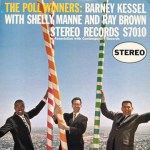
A recent Shootout Winning copy with the early stereo badge cover was described this way:

Stunning sound throughout this vintage Black Label Stereo Records pressing, with both sides earning Shootout Winning Triple Plus (A+++) grades or close to them

Roy DuNann always seems to get the real sound out of the sessions he recorded – amazingly realistic drums in a big room; Tubey Magical guitar tone; deep, note-like bass, and on and on

4 1/2 stars: “The choice of material, the interplay between the three players, and the lead work all meld together beautifully on The Poll Winners, making it a classic guitar album in a small-group setting.”

Musically, all true. Sonically, not so much. The early D1/D2 stampers on the early Black Label might be passable on side one (1+), but side two was just a mess (NFG).

Side One

Track Two

  • A bit bright and flat

Track One

  • Very clear but lacking richness, weight and depth
  • Thin, and bright up top
  • 1+

Side Two

Track One

  • Narrow stereo field
  • Weird tape hiss
  • Metallic top end
  • Very recessed and weird
  • Nope

A different Stereo Badge Cover copy sporting a Black Label won the shootout by the way. Go figure.

(more…)

Most of the Time the Conventional Wisdom Turns Out to Be Right

Hot Stamper Pressings of Contemporary Jazz Albums Available Now

Recently we conducted a shootout for yet another superb Contemporary title. We’d played quite a collection of copies of this particular album over the years, on every label, starting back in the 90s when we first discovered how amazing sounding Contemporary records could be when you get hold of a good one.

We felt we had a solid understanding of both the music and the key aspects of the sound we might expect to hear — Tubey Magic, space, dead-on tonality, top end extension, all the stuff we’ve come to love in these live-in-the-studio, all-tube-chain Contemporary jazz recordings from their heydey throughout the 50s and 60s.

However, it’s not the record you see pictured. For now, the title of this album will have to remain a mystery, along with a great many others for which we’ve been reprinting our shootout stamper sheets so as to discuss their meaning on the blog.

As you can see, the original first pressings earned White Hot Stamper grades and were declared the winner of our shootout. With Nearly White Hot Stamper grades, the early Green second label did very well, followed by an OJC with respectable sound overall.

We recently posted a lengthy post discussing the pros and cons of conventional wisdom. In it we attempted to make the case that, although the most common record collecting tenets are more often right than wrong, there is simply no way to know which standard approach will work for the specific title at hand.

Rather than post one exception after another — easily done, since we have documented literally hundreds of them — we are happy to admit that the standard record collecting rules of thumb work well for most records, with the definition of “most” being “more than half the time.”

That leaves a lot of room for misses, and if those misses happen to be favorite albums of yours, tough luck. Unless…

Unless you know how to test records properly.

(more…)

Jazz Giant and Tube Versus Transistor Tradeoffs

Hot Stamper Pressings of Contemporary Jazz Albums Available Now

In a commentary from more than ten years ago we weighed the tradeoffs in the sound of the originals versus the reissues.

This superb sounding original Black Label Contemporary pressing of Benny Carter’s swingin’ jazz quartet is the very definition of a top jazz stereo recording from the late ’50s recorded and mastered through an All Tube Chain.

There’s good extension on the top end for an early pressing, with TONS of what you would most expect: Tubey Magic and Richness. If that’s what you’re looking for, this copy has got it!

We prefer the later pressings in most ways, but this record does something that no later pressing we have ever played can do — get Benny’s trumpet to sound uncannily REAL.

If you want to demonstrate to your skeptical audiophile friends what no CD (or modern remastered record) can begin to do, play side two of this copy for them. They may be in for quite a shock.

The sound of the muted trumpet on side two is out of this world. 

It’s exactly the sonic signature of good tube equipment — making some elements of a recording sound shockingly real.

(more…)

Don’t Skip the OJC, Put It in a Shootout

Of the three early OJC pressings of West Coast Sound we played recently, only one met our standards. At 2+/1.5+, the sound was good, not great.

One copy earned grades of 1+/1+, which means the sound was passable. The last copy had an NFG side two, which means it was just awful.

(Many of the Heavy Vinyl disasters we’ve been cataloging lately have earned that notorious grade. The unacceptably lo- to mid-fi sound even the better ones offer doesn’t seem to bother the audiophiles who rave about them, however.)

So does side two of the OJC pressing have fairly good sound, merely passable sound, or is the sound hopelessly bad?

In the case of this Shelly Manne album, all three, and the only way we were able to discover that is by cleaning up three of them and playing them head to head with real Contemporary pressings in a blinded experiment.

Obviously we were hoping for better results from our OJCs — only one of the copies we played will turn out to be saleable.

Why did we bother? That old bugaboo the profit motive was all that was needed to make us give the OJC pressings a try. We thought we could make money on them but it turns out that the opposite will happen. Oh well, nothing ventured, noting gained.

More importantly, we are not the least bit shy about coming clean and sharing the results with our readers and customers, especially the part about three identical looking copies with the same stamper numbers all sounding very diffferent from each other.

An added bonus is that side two was worse than side one most of the time. That happens often enough, but nobody but us ever seems to want to talk about it.

If we had had ten OJC pressings to play, we probably would have be able to find at least one or two with a grade of 2+/2+, meaning that George Horn probably did a creditable job mastering the album back in 1984 when he cut it for Fantasy, to sell for the very affordable price of $5.98. It’s most likely the pressing plant that let listeners down.

Needs Tubes

The problem here is that this title needs tubes, or, at the very least, the sound of tubes, and George apparently did not have them, or enough of them, in his mastering chain.

Our specific notes can be seen on the left. We mention that the first track has the best sound (1956 dates), the rest falling short for being darker and more crude (“old school,” some dating from 1953).

The West Coast horn players are the reason to buy this title, with horns that are “sweet and tubey,” but of course to hear that kind of sound you will need a real Contemporary pressing, not an OJC — or anything made in the modern era for that matter.

(more…)

The Dreadful Sound of the Heavy Vinyl Reissues Doug Sax Mastered in the 90s

Hot Stamper Pressings of the Music of Sonny Rollins Available Now

Longstanding customers know that we have been relentlessly critical of so-called “audiophile” LPs for years, especially in the case of these Analogue Productions releases from back in the early-90s. A well-known reviewer loved them, I hated them, and he and I haven’t seen eye to eye on much since.


(Old) Newflash!

Just dug up part of my old commentary discussing the faults with the original series that Doug Sax cut for Acoustic Sounds. Check it out.

In the listing for the OJC pressing of Way Out West we wrote:

Guaranteed better than any 33 rpm 180 gram version ever made, or your money back! (Of course I’m referring to a certain pressing from the early 90s mastered by Doug Sax, which is a textbook example of murky, tubby, flabby sound. Too many bad tubes in the chain? Who knows?

This OJC version also has its problems, but at least the shortcomings of the OJC are tolerable. Who can sit through a pressing that’s so thick and lifeless it communicates none of the player’s love for the music they’re making?

If you have midrangy transistor equipment, go with the 180 gram version (at twice the price).

If you have good equipment, go with this one.


UPDATE 2015

We are no longer fans of the OJC of Way Out West, and would never sell a record that sounds the way even the best copies do as a Hot Stamper. It’s not hopeless the way the Heavy Vinyl pressing is, but it’s not very good either. It’s yet another example of a record we was wrong about.

Live and learn, right?


(more…)

Now That You Know the D2 Stampers Have the Best Sound, What’s Your Next Move?

Hot Stamper Pressings of Contemporary Jazz Albums Available Now

Recently we conducted a shootout for yet another superb Contemporary recording, one that we had auditioned a couple of times before, and one for which we had a good understanding of both the music and the quality of the sound. We’ve played vintage Contemporary pressings by the hundreds at this point. Rarely are we surprised by how good the right stampers and labels can sound.

It’s not the record you see pictured, however. For now, the title of this album will have to remain a mystery, along with a great many others we’ve been discussing on the blog recently.

The cost of discovering the right stampers for famous and often expensive records is often high, can take decades, and is fundamentally at the heart of how we make our money. We are in the business of finding potentially amazing sounding pressings. Often they have stampers we know to be good, and sometimes they have stampers we discover are even better.

We clean them up, play them, and offer to our customers those that, for whatever reasons no one has yet figured out — including us — are far better sounding than any others.

You’ll notice that the early Black Label pressings did the best in our shootout, followed by the later Green Label pressings, followed by the Yellow Label pressings with the earlier cover at 2+, which are in turn followed by the Yellow Label pressings in the later cover.

Depending on which D2 you’re playing, the sound could be absolutely amazing, or perhaps excellent, or, as in the case of the 1.5+ copies, merely good, not great.

Lessons Learned

Knowing the right stampers are D2 for this title does not allow us to predict which pressings will win a shootout. We actually have to sit down and play all the copies to come up with the hierarchy we laid out above.

However, knowing that the Black Label originals with D2 stampers are the copies most likely to win shootouts is very helpful information.

(more…)

On Barney Kessel’s Easy Like, Stick With the Earlier Contemporary Pressings

Hot Stamper Pressings of Contemporary Jazz Albums Available Now

The Shootout Winning pressing we played in 2024 was yet another killer Barney Kessel recording from the Golden Age of Tube Recording:

Both sides of this vintage Contemporary pressing were giving us the rich, sweet and tubey MONO sound we were looking for, earning INCREDIBLE Shootout Winning Triple Plus (A+++) grades or close to them

Roy DuNann (at the console on select tracks, with Val Valentin handling engineering duties on the others) always seems to get phenomenally good sound out of the sessions he recorded – amazingly realistic drums in a big room; Tubey Magical guitar tone; deep, note-like string bass, and on and on

For some reason, the guitar sound from this era of All Tube Chain Recording seems to have died out with the times – it can only be found on the best of these vintage pressings, and, as you may imagine, the better the guitar sounds, the more likely it is that the record will win our shootout

If you don’t have an electric guitar jazz record with this kind of off-the-charts Tubey Magical sound, maybe it’s time you got one

You would never know how good the recording was by playing this D14/D9 pressing on the original label.

The sound was hollow and dry with a boosted top end. The 1+ grade awarded to this side two means it’s simply not that good, early label or no early label.

This Is Why

This is why we do shootouts, and why you must do them too, if owning the highest quality pressings is important to you.

Fortunately for readers of this blog, our methods are explained in detail, free of charge.

We’ve also written quite a few commentaries to help audiophiles improve the way they think about records.

I implore everyone who wants to make progress in this hobby to learn from the mistakes we’ve made. There are 146 “we were wrong” listings on the site as of this writing, and we learned something from every damn one of them.

(more…)