Mobile Fidelity

Labels with shortcomings – Mobile Fidelity

Elvis Costello Likes Mobile Fidelity Records About as Much as I Do

Hot Stamper Pressings of the Music of Elvis Costello Available Now

And he doesn’t even know how bad they sound!


Excerpted from an interview in Variety.

People do seem to have caught on to “Painted” as a classic, though, even well outside the realm of your hardcore fans. I saw it on web forums where there were so many people thirsting over the two different editions of the album that Mobile Fidelity put out prior to this, calling it one of the great albums of the ’90s and clamoring to get the best available vinyl versions.

Well, I don’t have any opinion about that. I don’t hold with that company putting their name above the artist. I don’t like the way their records look. I’ve never listened to any of ’em because of that. I think there’s a huge arrogance. Because I’ve worked with the greatest, Bob Ludwig, who mastered the original record, remastered this (new Universal edition), mastered everything else. He’s the end of the story about that. So Mobile Fidelity can fuck themselves. If you put your name above the artist and above the title, what gives you the temerity to do that? You didn’t make the record.

But you must be proud of the fact that this body of work is so well-regarded…

Yeah. Apart from those copies. I’m kidding. They can do what they want with it. I mean, people are listening to it on a memory stick or whatever, you know? I guess it’s better that it exists than it doesn’t exist. It’s like when people say, are you worried about your birthday coming up? I go, you know what’s worse than having a birthday? Not having a birthday. (more…)

This Beethoven Ninth Started Out with Two Strikes Against It

Hot Stamper Pressings of the Music of Beethoven Available Now

MoFi took the shortcomings of a mediocre-at-best Decca recording from 1972 and made them even worse by means of their ridiculously misguided mastering decisions and wacky cutting system.

They should not have chosen this performance of the Ninth Symphony in the first place, and they certainly should not have added the treble they chose to add, which they did to this title and to every classical recording they remastered without regard to whether or not the recording needed brightening. None that I know of did. Try telling that to the brain trust running MoFi.

(They hired this guy to do their one-step digitally remastered pressings and from the get-go he’s been giving audiophiles the most ridiculously phony sounding records that collectors with way too much money can buy.)

The Decca recording of the Ninth from 1972 is opaque, lacks size and space, and comes off as a bit flat and dry.

Like practically every later Decca pressing we play, it’s passable at best.

Londons and Deccas from this era (1972 in this case) rarely sound very good to us.

Here is what we specifically don’t like about their sound.

If you want to know what’s wrong with the Mobile Fidelity pressing, take the above faults and add some others to them.

Start with an overall brighter EQ, add a 10k boost for extra sparkly strings, the kind that MoFi has always been smitten with, and finish with the tubby bass caused by the half-speed mastering process itself.

Voila! You are now in the presence of the kind of mid-fi trash that may have fooled some audiophiles way back when but now sounds as wrong as the records this ridiculous label is still making today.

Here are some other pressings with bright string tone that are best avoided by audiophiles looking for top quality sound.

1981 Was a Long Time Ago

Old school audio systems are notorious for being dark, dull and lacking in transparency. They might need bright records in order to sound good, but high quality modern systems do not.

If these two MoFi pressings sounds right to you, you are very likely living with one of those old school systems and it is long past time to get rid of it.

(more…)

Are All MoFis Created Equal? A Pair of Pink Floyd LPs Proved They Aren’t

Hot Stamper Pressings of the Music of Pink Floyd Available Now

[This commentary was written about twenty years ago.]

Many audiophiles are operating under the misapprehension that Mobile Fidelity managed to eliminate pressing variations of the kind we discuss endlessly on the site.

That is simply not the case, and it’s child’s play to demonstrate how misguided this way of thinking is, assuming you have the following four things: good cleaning fluids and a machine, multiple copies of the same record, a reasonably revealing stereo, and two working ears.

With all four the reality of pressing variations for ALL pressings is both obvious and incontrovertible.

The discussion below of a Hot Stamper pair of Dark Sides from long ago may shed light on some of the issues involved.

Remember Classic Records Comparison Packages?

This is our first Hot Stamper Comparison Package.

For those who remember the 45 RPM/ 33 RPM Classic Records comparison packages, this is somewhat in the same vein. Of course, we don’t know that they kept the EQ the same for the 45 versions compared to the 33s of the albums included in the package, so the comparison is suspect at best.

You’re not really comparing apples to apples unless you keep the EQ exactly the same. I rather doubt they did, because on Simon and Garfunkel the sound was noticeably worse at 45 than it was at 33. This is the main reason we don’t carry the 45 versions of Classic’s records: they are a lot more money, and who knows if they’re even any better?

[This one sure wasn’t better. This guy liked it, but he is rarely right about any of this record and equipment stuff, as I hope everyone knows by now.]

(more…)

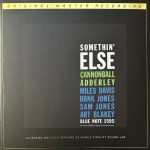
Somethin’ Else on MoFi – How Is This Company Still in Business?

Hot Stamper Pressings of Recordings by Rudy Van Gelder Available Now

For our 2023 White Hot Stamper shootout winning pressing we wrote:

A triumph for Rudy Van Gelder, a top Blue Note title, and as much a showcase for Miles Davis as it is for Cannonball Adderley.

The best sides of this album have as much energy, presence, dynamics and three-dimensional studio space as any jazz recording we’ve ever played.

When you hear it on a copy like this, it’s hard to imagine it could get much better.

We’ve heard more than our fair share of tubby, groove-damaged originals and smeary, lifeless reissues over the years, but this White Hot Stamper blew them all away.

This is a record we could play every week and never tire of. 


But this expensive ($125) MoFi pressing had us wondering what the hell we were on about, because almost nothing about it is right except for something we were not expecting: it’s actually tonally correct.

What are the chances?

With Mobile Fidelity, slim and none, but in this case they managed to pull off slim. So let’s give credit where credit is due.

But the sound is still a mess no matter how tonally correct it is.

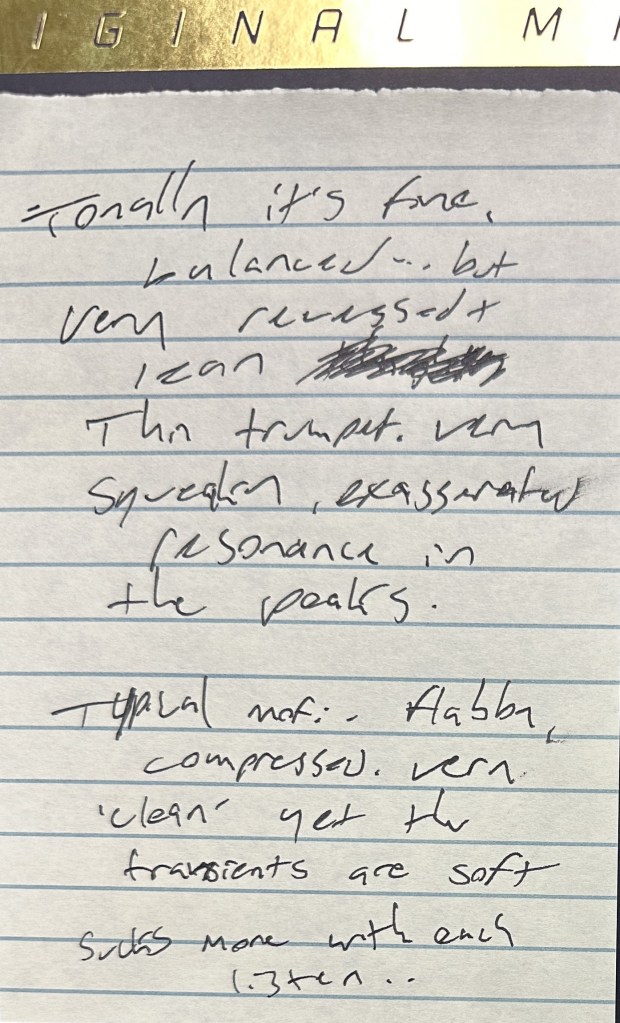
Allow me to list its faults based on the notes we took as the record was playing. The last line sums up the experience nicely.

  • 1) It’s very recessed and lean.
  • 2) The trumpet is thin and very squawky.
  • 3) There is an exaggerated resonance in the peaks.

(more…)

Driving My Car into a Ditch

Hot Stamper Pressings of the Music of The Beatles Available Now

Mobile Fidelity made a mess of Drive My Car on their Half-Speed mastered release of Rubber Soul in 1982.

Perhaps it’s more accurate to say Stan Ricker, MoFi’s go-to mastering engineer, did.

He equalized out far too much upper midrange and top end.

What fuels the energy of the track are the cow bell, the drums and other percussion. Instead of a scalpel, Mobile Fidelity took a hatchet to this slightly bright track, leaving a dull, lifeless, boring mess.

Some Parlophone copies may be a little bright and lack bass, but at least they manage to convey the musical momentum of the song.

Even the purple label Capitol reissues can be quite good. A bit harsher and spittier, yes, but in spite of these shortcomings they communicate the music, which ought to count for something.

As much as I might like some of the MoFi Beatles records [not so much anymore], and even what MoFi did with some of the other tracks on Rubber Soul, they sure sucked the life out of Drive My Car.

We all remember how much fun that song was to hear when it would come on the radio. Playing it on a very high quality stereo should make it more fun, not less.

If you’ve got a Rubber Soul with a Drive My Car that’s no fun, it’s time to get another one.

By The Way

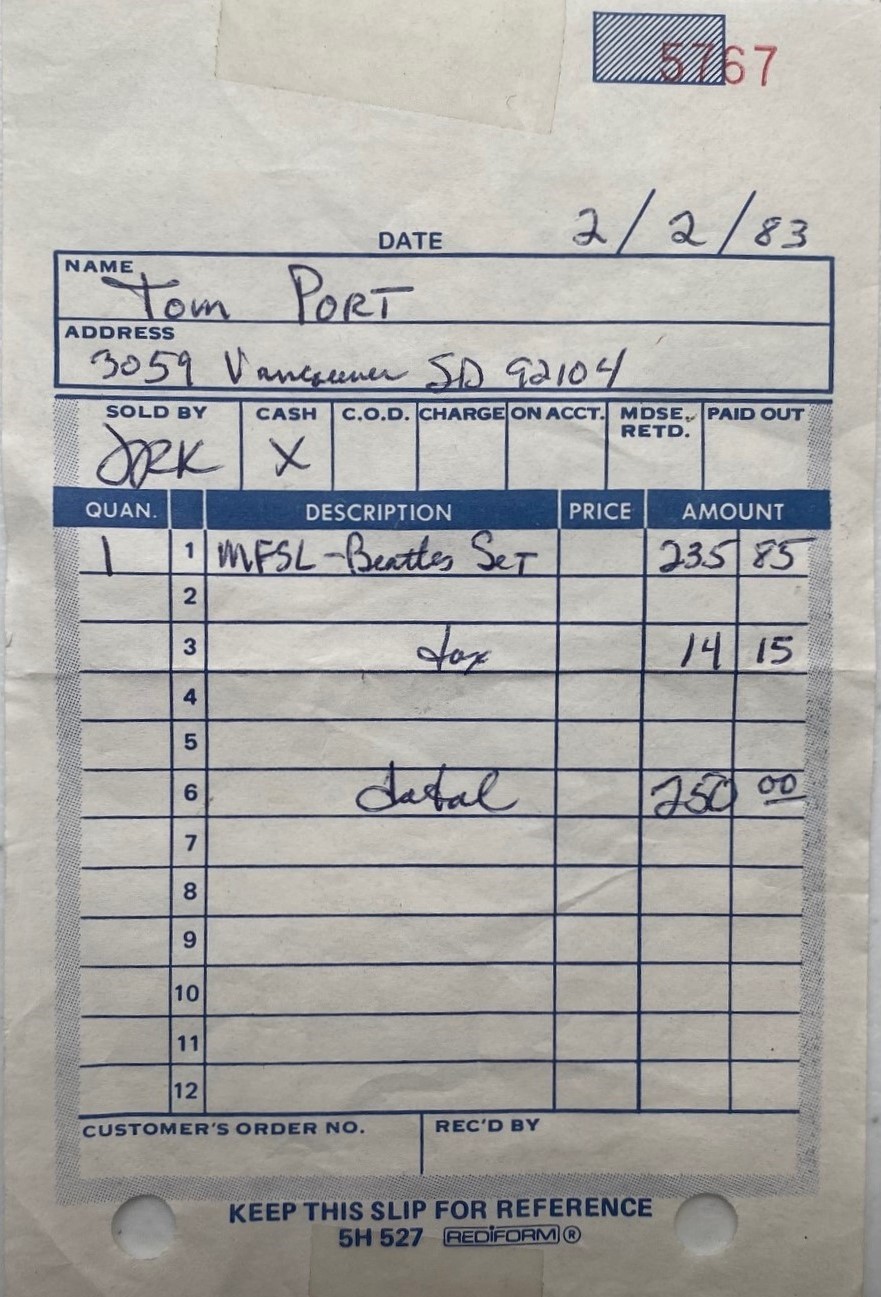
The best $250 — to the penny! — I ever spent on records is the price I paid for my brand new, still-in-the-shipping-carton MoFi Beatles Box. I ordered it in 1982 when I first learned of it, and it finally came the next year. I already owned all The Beatles albums MoFi had done by that point, including the UHQR of Sgt. Peppers, which, like a fool, I got rid of once the set came out.

(more…)

So Long So Wrong – Still So Wrong in the Vocal Department

Hot Stamper Pressings of Jazz and Pop Vocals Available Now

Most audiophiles have a soft spot for female vocals. It’s a sound that a high end stereo — practically any high end stereo — reproduces well.

But why do some audiophiles listen to the artificial-sounding junk that Patricia Barber and Diana Krall put out on album after album?

Their recordings are drenched in digital reverb. Who is his right mind likes the sound of digital reverb?

Rickie Lee Jones may not be my favorite female vocal of all time, but at least you can make the case for it as a Well Recorded Album. It’s worlds better than anything either of the above-mentioned artists have ever done.

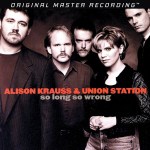
The MoFi pressing of Alison Krauss (5276) is a disaster in the vocal department too.

Audiophiles for some reason never seem to notice how bad she sounds on that record. Can’t make sense of it. Any of the good Sergio Mendes records will show you female vocals that are hard to beat. Our best Hot Stampers bring the exquisite vocal harmonies of Lani Hall (aka Mrs. Herb Alpert) and Janis Hansen (and others) right into your living room.

Why bother with trash like this Mobile Fidelity?

(more…)

Half-Speed Masters – Stopgaps and Benchmarks

Hot Stamper Pressings of the Music of Joan Baez Available Now

Mobile Fidelity released a version of Diamonds and Rust on Anadisq in 1995, and if you want to hear a pressing that’s not murky, compressed and opaque, you would be wise to avoid their remastered pressing.

To be fair, MoFi has made some reasonably good sounding records too. For those of you whose budget is on the limited side, if you find an affordable copy of any of these MoFis, you are probably not completely wasting your money.

Stopgaps and Benchmarks

Our advice for the longest time has been that, while you are actively improving your stereo, room and setup, the best way to use your remastered audiophile pressings is as stopgaps and benchmarks.

As you make more and more progress, eventually you will find the vintage pressings that can show you what your audiophile pressings don’t do well, or at the very least, not as well as they should.

The unfortunate reality — considering how much money you had invested in them — is that they were falling short in many ways for all the years you had been playing them, but until you improved your playback, those problems were hidden from you.

Charting Your Success

As your stereo improves, you can actually chart your success by how many of these kinds of records you are able to eliminate from your collection. Once you can count the number of modern reissues you still own on one or two hands, there is a good chance you have reached a much higher level of playback.

(more…)

Close to You on Mobile Fidelity Vinyl – Is This the Sound Audiophiles Were Clamoring For in ’83?

Hot Stamper Pressings of the Music of Frank Sinatra Available Now

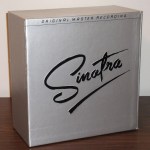
In 2024 we did a shootout for the first of Frank’s many releases from 1957, Close to You. We were fortunate to have the Mobile Fidelity pressing from the ’80s box set to play against the mostly original pressings we had accumulated since our last shootout in 2020.

It takes a long time to find enough clean copies to get a shootout going. Four years is fairly typical these days I would imagine.

As you can see from our notes, side one of this MoFi was just awful. Can you blame us if we didn’t bother to play side two?

P.S. I Love You

  • Over-textured violin
  • Spitty, gritty vocals
  • Hollow and dry

Close To You

  • Very clean
  • Bass and vocals really lacking body and warmth

Our grade, had we given it one, would have had to have been a big fat F.

Is it the worst version of the album ever made?

(more…)

Letter of the Week – “…you have absolutely no idea how much fun and how spiritual this hobby can be!”

Hot Stamper Pressings of the Music of Boston Available Now

One of our good customers had this to say about a Hot Stamper pressing he purchased a while back. My notes are interspersed with his.

Hey Tom,

Had a chance to do a shootout over this past weekend. My focus was Boston’s S/T album. I have 4 copies to play with:

1.) Vintage domestic pressing.
2.) Remastered heavy pressing.
3.) Mofi gatefold pressing.
4.) Better Records WH stamper 2.5+/3+ pressing.

Started with a vintage domestic pressing. This copy was doing nothing right and very painful to listen to. No energy! No low end or high end transparency and the midrange was smeared really bad. The vox sounded flat, 2 dimensional and distant. F- grading!

There are a lot of bad sounding vintage pressings of the album, as you no doubt know firsthand. We sell only the vintage pressings that have been mastered and pressed properly, which is what makes them Hot Stamper pressings.

Remastered heavy pressing was next. The sonic quality was very similar to the vintage domestic pressing and again, very painful to listen to. I will give this copy one thing, it had just a smidge more life to the soundfield than the vintage domestic copy and that’s not saying much. F grading!

Not sure which Heavy Vinyl pressing you played, but the fact that is had bad sound comes as no surprise.

Mofi gatefold pressing next. Again, NO energy coming from the grooves. Although the overall sonic quality was a bit better than the first 2 copies, there still is no low or high end extension. No 3D to the vox or midrange area. No space or separation between instruments. This pressing sounded flat, lifeless, dull and boring and time to take off the turntable. My ears can not take these crappy sounding pressing for very long. D grading!

Agreed. In our review, we described their remastered pressing this way:

The MoFi Anadisc of Boston’s first album has the same problems that seem to have plagued the whole of the Anadisq 200 series. The sound was: thick, opaque, blurry, and murky.

A real slogfest. Audiophile trash of the worst kind. If this isn’t the worst version of the album ever made, I cannot imagine what would be.

Better Records WH stamper 2.5+/3+ pressing next.

This copy blew my mind and socks off as I listened to the whole album.

Talk about Energy!

Until one listens to the sonic quality of this hot stamper on a high quality system, you have absolutely no idea how much fun and how spiritual this hobby can be! This copy is doing just about everything right. A+ grading!

Thx
Mike p.

Mike,

I know exactly what you mean, good records are the only records worth listening to, because they are the most engaging, the most fun and provoke the most powerful emotional — even spiritual — responses. I could not agree with you more.

There is one other important thing to remember. The only way you can be sure that the recording in question is not exactly the way you described the first three pressings of it is to have a pressing that shows you just how good it can really be.

How else would you know?

The fact that audiophiles find the sound of so many Heavy Vinyl reissues acceptable has to be chalked up to the fact that they have nothing better to compare them to.

They may even tell you that their newly remastered pressing is dramatically superior to the vintage domestic vinyl pressings they’ve played.

Of course, all that tells us is that, like you, they had a bad domestic original. We sympathize with their situation. We’ve played plenty of those too.

But once you hear just how good the album can sound — as you now have — those other pressings actually become an insult to Tom Scholz and the work he did (with help from Warren Dewey) on his one and only good album, Boston’s first.

Thanks for having enough faith in us to spend the big bucks it took to acquire our White Hot Stamper.

It’s clear you had the experience playing it that we did — what a record! — and that is money well spent.

(more…)

The Fantasy Film World of… “Did MoFi bother to listen to this before they ruined it?”

Hot Stamper Pressings of the Music of Bernard Herrmann Available Now

Sonic Grade: F

Obviously our customers know by now that a Hot Stamper London or Decca pressing is going to be far better than the Anadisq that MoFi cut in the mid-90s.

How much better?

Words fail me.

Their record was a complete disaster. Perhaps some of the MoFi collectors didn’t notice because they had nothing to compare it to. 

God forbid they would ever lower themselves to buy as common a pressing as a London. Had they done so, what they would have heard is huge amounts of musical information that is simply nowhere to be found on the MoFi.

There is a place on this album, I failed to note exactly where, in which a group of tubas play a descending scale that is somewhat buried in the mix. On the London, they can clearly be heard and recognized as tubas. On the MoFi, I don’t think they can be heard except as some general group of low notes, and anyone thinking that they were tubas would be guessing, the sound is that murky, muddy, and ill-defined.

Robert Pincus once left a Post-It note stuck to the MoFi jacket of a copy he was playgrading for me that summed up our thoughts on the quality of their mastering to a “t”:

“Did MoFi bother to listen to this before they ruined it?”

It’s positively shameful. This music is so good. On top of that, it’s custom made for audiophiles. Audiophiles are the ones who can appreciate the new colors Herrmann created, using what a wise man once called the single greatest instrument ever invented: the symphony orchestra.

If this Mobile Fidelity LP isn’t the perfect example of a pass/not-yet record, I can’t imagine what would be. To find a more poorly remastered record, you would really have to work at it.

(more…)