Mobile Fidelity

Labels with shortcomings – Mobile Fidelity

We Review the MoFi Pressing of Let It Be

Hot Stamper Pressings of the Music of The Beatles Available Now

This review was probably written about fifteen years ago, so we can’t say we would agree with the grade we awarded the album at the time.

Sonic Grade: B or B-

Although I haven’t played my copy in quite a while — it might have been as far back as 2007 or 2008 that I last listened to it if memory serves — I recall that it struck me as one of their better titles.

All things considered, it’s actually pretty good, assuming your copy sounds like mine (an assumption we really can’t make of course — no two records sound the same — but for the purposes of this review we’re going to assume it anyway). I would give it a “B” or “B-“.

It can’t hold a candle to the real thing, but at least MoFi didn’t ruin it like they did with so many of the other Beatles albums, especially this ridiculously phony, bright and compressed one.

(more…)

Letter of the Week – “I’m hearing things I’ve never heard before. Orders of magnitude better.”

One of our good customers had this to say about some Hot Stampers he purchased recently:

Hey Tom,   

Once again, you folks have proved that your albums are worth EVERY PENNY that you charge for them.

For years, I’ve had a couple of domestic pressings, and a “200 gram Anadisq” MOFI, of ELP’s Trilogy. Always thought the sound was pretty solid.

But I JUST finished spinning the British A+++ pressing I scored from you folks this past week, and OH MY. It absolutely CRUSHES all prior versions. It leaves the MOFI in the DUST. I mean, it’s not even close. Not subtle. Not “Well, if I listen closely, I think I MIGHT hear a difference….”

NO. It’s utterly ridiculous. I’m hearing things I’ve never heard before. Orders of magnitude better.

THANK YOU, for your dedication to optimizing the quality of listening. SUCH a great album – and sound that finally is commensurate to the quality of the musicianship. 🙂

Steve

Steve,

So glad to hear it!

I was selling MoFi records when that pressing of Trilogy came out. What a murky piece of crap that was. The cutting system they were using was a joke, and the one they have now is not much better.

(more…)

Getting Fooled, or Fooling Yourself?

Basic Concepts Every Audiophile Should Understand

This excerpt is from a longer commentary we wrote in 2022 about the digital step (the horror!) Mobile Fidelity was secretly using to make their so-called One Step pressings.

What follows is one way to look at what happened and who it happened to.

This gentleman you see pictured, a certain Mike Esposito, made a foolish mistake.

He bought into the hype of the Modern Audiophile Remastered Record hook, line and sinker.

Rather than being skeptical, he wanted to believe what they told him.

He did not use his own ears to make judgments, he let others — reviewers, fellow audiophiles, the label itself — tell him what was pure and good.

Now he has learned that he was misinformed by those in whom he placed his trust. Even worse, he was lied to by the label he… is worshipped to strong a word?

He was also misinformed by the audiophile reviewers who should have known something was wrong. Not being able to recognize the shortcomings in the sound of these pressings was entirely predictable, since these reviewers never developed listening skills much better than those of Mr Esposito. (For more on just how out of his depth the man was, click here.)

His world has been turned upside down. But that’s not technically true — it was always upside down.

We know of practically no evidence to support the proposition that this label knows how to make good sounding records.  We wondered how they were still in business and have no expectation of ever getting any answer more helpful than “shut up.” (If you actually have evidence to support any claim you wish to make, we can help you do that.)

Finding good records and being able to reproduce them properly is hard. Perhaps now Mr Esposito is coming to appreciate just how little he knew about either.


UPDATE 2025

Based on the fact that he charges $1.99 per month — I kid you not — to advise his clients which are the best sounding pressings of the albums he auditions, it’s doubtful that he has learned anything from his experience of being fooled by Mobile Fidelity, along with all the other audiophile reviewers who apparently are as easily duped as he is. (Is there any job in the world requiring less in the way of qualifications than “audiophile record reviewer”?)


(more…)

Mobile Fidelity – The Ultimate Pretender

Hot Stamper Pressings of the Music of Jackson Browne Available Now

During the recording of The Pretender, a newly invented piece of electronics was used called the Aphex Aural Exciter. It harmonically “richened” the sound in interesting and, most would say, pleasing ways.

It was designed to have a euphonic effect, and it succeeded in that aim, beguiling its listeners for a while, especially those at the lo- and mid-fi level, the obvious if unspoken target market these days (although the thought of admitting such a thing would surely cause the sky to fall) for the Heavy Vinyl reissue.

The Aphex was clearly creating distortions, but they were the kinds of distortions that many folks of the audiophile persuasion seemed to like. Which is the very definition of euphonic colorations.

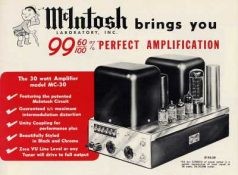
The poster boy for euphonic colorations is our friend here, the famous Mac 30, an amp that came on the market in 1954 and one that still has adherents to this day, some of them quite famous. I had a pair and learned some lessons — as I did with every piece of equipment I owned — in the time I spent listening to them.

If you like old school tubey colorations, the kind we’ve found to be antithetical to the proper reproduction of music in the home, this is the amp for you.
How Much Is Too Much of a Good Thing?

When you play the MoFi pressing of The Pretender, it just seems to have more of that Aphex Aural Excitement.

Here’s the $64,000 question: is MoFi’s supposedly superior mastering technology revealing more of the “aphexy” sound already present on the tapes, or is it adding its own distortions that mimic the Aphex distortions?

It seems to me that in the case of The Pretender it’s clearly the latter.

Deja Vu on MoFi has that same too rich, too smooth sound. Where on earth did that extra richness and smoothness come from? No vintage pressings we have ever played has ever had that sound.

Obviously MoFi preferred The Pretender to sound the way they preferred it to sound, or perhaps it’s more accurate to say that they wanted it to sound the way they thought their customers would prefer it to sound.

Or maybe they have no idea what they’re doing and never did. That strikes me as the most likely explanation for a label that should have gone out of business a long time ago.

Is it just EQ? I’m not expert enough to know, but I do know this: Hot Stamper pressings of The Pretender have much more transparency and clarity, while at the same time offering a good balance of of sweetness and smoothness, with less of that thick, blurry, overly-rich quality that you find on the MoFi pressings of the album.

More on the Aphex

Owen Penglis on the Happymag.tv site describes the Aphex Aural effect this way:

The Aural Exciter brought presence, intelligibility, ‘air’ without hiss, and renewed clarity through its arbitrary process of adding phase shift, harmonics, compression, and intermodular distortion.

(more…)

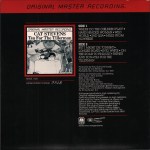
Can the Brightness Problem on the UHQR of Tea for the Tillerman Be Fixed?

Hot Stamper Pressings of the Music of Cat Stevens Available Now

Can adjusting the VTA for the heavier weight vinyl of the UHQR fix its tonality problems?

[This subject also came up in a discussion of the remastered pressings of Scheherzade.]

Probably not. VTA is all about balance.

Adjusting for all the elements in a recording involve tradeoffs. When all the elements sound close to their best, and none of them are “wrong,” the VTA is mostly right.

Try as you might, you cannot fix bad mastering by changing your VTA.

Tea for the Tillerman on UHQR

When I first got into the audiophile record business back in the 80s, I had a customer tell me how much he liked the UHQR of Tea for the Tillerman.

This was a record I was selling sealed for $25. And you could buy as many as you liked at that price!

I was paying $9 for them and could order them by the hundreds if I’d wanted to. Yes, I admit I had no shame.

I replied to this fellow that “the MoFi is awfully bright, don’t you think?” (My old Fulton system may have been darker than ideal, but no serious audio system can play a UHQR as bright as this one without someone noticing the paint has started to peel.)

His reply: “Oh no, you just adjust your VTA until the sound is tonally correct.”

(more…)

Half-Speed Mastering – A Technological Fix for a Non-Existent Problem

Hot Stamper Pressings of the Music of Joe Jackson Available Now

UPDATE

This commentary was written many years ago. We had a Hot Stamper Section back then, because we were selling lots of other kinds of records including direct-to-disc recordings, Heavy Vinyl, Half-Speeds, OJC‘s and various other pressings which we thought would appeal to those in search of higher quality sound.

In 2011, we officially stopped selling anything other than records we had cleaned, evaluated, and found to have superior sound.


We do a lot of MoFi bashing here at Better Records, and for good reason: most of their pressings are just plain awful. We are shocked and frankly dismayed to find that the modern day audiophile still flocks to this label with the expectation of a higher quality LP, seemingly unaware that although the vinyl may be quiet, the mastering — the sound of the music as opposed to the sound of the record’s surfaces — typically leaves much to be desired. 

Hence the commentary below, prompted by a letter from our good friend Roger, who owned the MoFi Night and Day and who had also purchased a Hot Stamper from us, which we are happy to say he found much more to his liking.

In my response, after a bit of piling on for the MoFi, I then turned my attention to three Nautilus records which I had previously held in high regard, but now find deserving of a critical beatdown. (We actually have a section for bad sounding records I once liked. Live and learn, right?) This one is entitled:

(more…)

The Alan Parsons Project – A MoFi Disaster

Hot Stamper Pressings of Albums Engineered by Alan Parsons Available Now

MoFi Regular LP: F / UHQR: D 

Two — count ’em, two — hall of shame pressings and two more MoFi Half-Speed Mastered Audiophile LPs reviewed and found wanting.

The MoFi is a textbook example of their ridiculous affinity for boosting the top end, not to mention the extra kick they like to put in the kick drum, great for mid-fi (sometimes known around these parts as stone age audio systems) but a serious distraction on a high end stereo with good low end reproduction.

If you like the album –and that’s a big if, I myself have never been able to take it seriously — try the Simply Vinyl or the Classic LP.

Even the UHQR sucks. Don’t kid yourself. They’re still mastered by Stan Ricker, and he likes plenty of top end.

Like the old saying goes, if it’s worth doing it’s worth overdoing.

(more…)

Letter of the Week – “I think your blanket dislike of everything MoFi is also not credible.”

Record Collecting for Audiophiles from A to Z

Not long ago we received an email taking us to task for our bashing of Heavy Vinyl in general and Mobile Fidelity in particular.

Hey Tom,

I think your blanket ‘anything new is not as good as the best of original or vintage’ is totally illogical. Why couldn’t more care and excellence be put in to a new pressing now than the best you can find from an original vintage pressing? Take 70’s rock albums. With the oil crisis tons of vinyl was pretty rubbish and/or recycled, and sounds terrible. That having been said, most of the Jimmy Page remasters sound awful too. If you take somewhere like Craft Recordings and their one steps they are outstanding pressings. You also know RVG mastered records to deliberately avoid records jumping on relatively poor quality equipment and not to reflect the ‘true’ sound. So why can’t Kevin Gray master something now that RTI then presses that sounds ‘better’?

I think your blanket dislike of everything MoFi is also not credible. I listened to the original MoFi one step of Sgt. Pepper on a 2 million dollar plus system and it sounded better than any copy I’ve ever heard or anything else we had to compare it with that evening.

I’m not being critical. Just commenting. You clearly have a business in selling great sounding copies of ‘vintage’ pressings (at least I assume they are all vintage). That’s fine and that’s your prerogative. But it doesn’t render every single version of 60’s and 70’s releases produced in the last 10-15 years not worth listening to but it does support your business proposition. Fair enough.

I think you, your team and frequent shoppers may well be suffering from the one thing you kind of imply everyone who buys MoFi or Tone Poets records of – confirmation bias. But that’s fine. If it brings joy to your listening or that of your staff and customers I can’t argue with that. Well done. I just don’t buy the logic.  I too trust my ears! So I will at some point buy a copy that I’ve already got what I think is an amazing copy of and compare it to see for myself.

Nick H.

Nick,

Doing carefully controlled shootouts with large groups of records is the only practical way anyone can learn what to listen for. We wrote about it here in a review for Rubber Soul:

If you have five or ten copies of a record and play them over and over against each other, the process itself teaches you what’s right and what’s wrong with the sound of the album at key moments of your choosing.

Once your ears are completely tuned to what the best pressings do well that others do not do as well, using a specific passage of music — the acoustic guitar John beats the hell out of on Norwegian Wood just to take one example — it will quickly become obvious how well any given pressing reproduces that passage.

The process is simple enough. First you go deep into the sound. There you find something special, something you can’t find on most copies. Now, with the hard-won knowledge of precisely what to listen for, you are perfectly positioned to critique any and all pressings that come your way.

Admittedly, to clean and play enough copies to get to that point may take all day, but through the experience you will have gained knowledge that you cannot come by any other way.

If you do it right and do it enough it has the power to change everything you will ever do in audio.

Once you have done that work, when it comes time to play a modern record, on any label, it often becomes obvious what they “did to it” in the mastering, and how far short if falls when compared head to head to the pressings that were found to have the best sound. This is why we think the three most important words in the world of records are compared to what?

Our critiques are often quite specific about the sound of these records. Here is a good example from 2021: Cat Stevens on 2 Heavy Vinyl 45 RPM discs.

I would be happy to sell you a killer Sgt. Pepper to change your mind, same deal, but I feel at this point you are very unlikely to take me up on that offer for the reasons you list.

The rest of your questions are good ones but have already been answered at length and ad infinitum on our blog. There are 5000 6000 postings. We repeat ourselves a lot.

Many of those who were skeptical before they heard their first Hot Stamper have written us letters extolling the virtues of our pressings. Here are some testimonial letters you may find of interest:

Either way, thanks for writing,

TP

PS

Before you try your first Hot Stamper, as long as you are buying vintage pressings in the meantime, not audiophile records, you are probably not wasting much money. Every vintage pressing has the potential to teach you something. Any modern record should always be considered a stop-gap, never an answer, something to beat when you finally find a real pressing in acceptable playing condition.

(more…)

Sgt. Pepper’s and Mistaken Audiophile Thinking (Hint: the UHQR Is Wrong)

Hot Stamper Pressings of Sgt. Peppers Available Now

This commentary was probably written between 2005 when we did our first shootout for the album and 2008, by which time it would have been a regular feature on the site. 

We charge hundreds of dollars for a Hot Stamper Sgt. Pepper, which is a lot to pay for a record. But consider this: the UHQR typically sells for a great deal more than the price we charge and doesn’t sound remotely as good. 

Of course the people that buy UHQRs would never find themselves in a position to recognize how much better one of our Hot Stampers sounds in a head to head shootout with their precious and oh-so-collectible UHQR.

They assume that they’ve already purchased the Ultimate Pressing and see no reason to try another.

I was guilty of the same mistaken audiophile thinking myself in 1982. I remember buying the UHQR of Sgt. Pepper and thinking how amazing it sounded and how lucky I was to have the world’s best version of Sgt. Pepper.

If I were to play that record now it most likely would be positively painful. All I would hear would be the famous MoFi 10K Boost on the top end (the one that MoFi lovers never seem to notice), and the flabby Half-Speed mastered bass (ditto).

Having heard really good copies of Sgt. Pepper, like the wonderful Hot Stampers we put on the site from time to time, now the MoFi UHQR sounds so phony to me that I wouldn’t be able to sit through it with a gun to my head.


UPDATE 2025

If you are still buying these remastered pressings, making the same mistakes that I was making before I knew better, take the advice of some of our customers and stop throwing your money away on Heavy Vinyl and Half-Speed mastered LPs.

At the very least let us send you a Hot Stamper pressing — of any album you choose — that can show you what is lacking on your copy of the album.

And if for some reason you disagree with us that our record sounds better than yours, we will happily give you all your money back and wish you the very best.

To learn more about records that sound dramatically better than any Half-Speed mastered title ever made (with one exception, John Klemmer’s Touch), please go to our Half-Speed mastering main page .

(more…)

A MoFi Disaster to Beat Them All

UPDATE 2026

This review is fairly old, probably from 2005-2010.


Not long ago I played the MoFi pressing of A Trick of the Tail and could not believe how ridiculously compressed it was.  Rarely have I heard sound as squashed as that which is heard on this LP.

On top of that, the midrange is badly sucked out (as is the case with most Mobile Fidelity pressings) making the sound as dead, dull and distant as can be.

Is it the worst version of the album ever made? Hard to imagine it would have much competition. I have the CD and it’s fine. It sounds like a digital version of the British pressings we favor (the domestic pressings having been made from dubs of course).  The MoFi is bad enough to have earned a place in our Mobile Fidelity hall of shame.

You think Modern Heavy Vinyl pressings are lifeless? Play this piece of crap and see just how bad an audiophile record can sound.

And to think I used to like this version! I hope I had a better copy back in the 80s than the one I played a few years ago. I’ll never know of course. If you have one in your collection give it a spin. See if it sounds as bad as we say. If you haven’t played it in a while (can’t imagine why, maybe because it’s just plain awful), you may be in for quite a shock.

If you are still buying these audiophile pressings, take the advice of some of our customers and stop throwing your money away on Heavy Vinyl and Half-Speed mastered records.

(more…)