Mobile Fidelity

Labels with shortcomings – Mobile Fidelity

MoFi’s Pictures at an Exhibition Is as Wrong as Wrong Can Be

moussmofiHot Stamper Pressings of the Music of Mussorgsky Available Now

If you like orchestral spectaculars, have we got the record for you.

It’s the same recording of the works, but the one you want is on the real EMI label and pressed on UK import vinyl, not this awful Half-Speed recut from Japan.

The record you see pictured is awful sounding, a true hall of shame pressing.

And why are the colors of the album jacket so washed out? Compare their cover to the real thing below. As we often find ourselves asking after reviewing one of these MoFi records: What were they thinking?

The MoFi mastering of Pictures at an Exhibition and The Firebird here are a bad joke played on credulous audiophiles. And yes, I bought them both back when they came out. I was as credulous as everybody else buying these so-called superior pressings.

All that phony boosted top end makes the strings sound funny and causes mischief in virtually every other part of the orchestra as well. Not surprisingly, those boosted highs are missing from the real EMIs.

These appear to be the unbearably bright strings that Stan Ricker favors — why, we have no idea.

The proof? Find me a Mobile Fidelity classical record with that little SR/2 in the dead wax that does not have bright string tone. I have yet to hear one.

The last time I played a copy of the MFSL I found the sound so hi-fi-ish I couldn’t stand to be in the room with it for more than a minute. Of course the bass is jello as well.

The EMI with the right stampers is worlds better.

(Warning: The domestic Angel regular version and the 45 are both awful.)

MoFi had a bad habit of making bright classical records. (More reviews here.) I suppose you could say they had a bad habit of making bright records in general. A few are dull, some are just right, but most of them are bright in one way or another.

(more…)

Our Take on the MoFi 45 Brothers In Arms

Hot Stamper Pressings of the Music of Dire Straits Available Now

We have never bothered to play their remaster, along with some other Heavy Vinyl reissues we think have very little chance of actually sounding good to us.

I found out recently that the MoFi is now on the TAS Super Disc list. You can find it along with the domestic — yes, you read that right — domestic pressing of the first album.

Now just how hard of hearing do you have to be to think that the domestic pressing of Dire Straits’ first album is a Super Disc? A nice record, sure, but nice records aren’t really Super Discs, are they?

Not when there are UK pressings that trounce it. We should know, we’ve played them by the dozens. How the writers for The Absolute Sound can be this far off the mark is a question we cannot begin to answer.

The most obvious answer — and therefore the most likely one — is reviewer malpractice.

What else could it be?

What We Think We Know

We have written quite a number of reviews and commentaries for the first album and we encourage you to read some of them.

Speaking of Super Discs, the good British pressings are so good we put them on our Top Ten Most Tubey Magical Rock and Pop Recordings List. No domestic pressing we have ever played would qualify as anything other than a minimally-acceptable Hot Stamper.

We would never bother to put such a pressing in a shootout, when even the average run-of-the-mill UK copy is better.


We Get Letters

A few years ago we received this email from a customer.

“How would you compare the Brothers in Arms SHS to the Mobile Fidelity 45 rpm copy?”

Dear Sir,

We have never bothered to play their remaster, and why would we? Every MoFi pressing made by the current regime has had major sound problems when compared head to head with the “real” records we sell, and it’s simply not worth our time to find out exactly what is wrong with the sound of any of these new reissues, theirs included.

[I will be reviewing their unbelievably awful Dire Straits first album on 45 one of these days. Rarely have I heard such a good recording, a brilliant recording, turned into such a piece of crap. Robert Brook didn’t like it either.]

However, we have been known to make an exception to that rule from time to time. Recently we did so in the case of the Tea for the Tillerman George Marino cut at 45 RPM for Analogue Productions.

(more…)

Imagine on MoFi Heavy Vinyl from 2003

Hot Stamper Pressings of the Music of John Lennon Available Now

Sonic Grade: B

The last time I played this record was probably in the mid-2000s. Not sure what I would think of it now. Probably not much. Back in those days we thought it was a reasonably good sounding pressing, but it’s doubtful we had ever heard an exceptionally good version of the album, as it would be years before we managed to do our first shootout for it. To see what we have to say about the record now, please click here.

Our review from many years ago:

I played this when it came out, and I have to hand it to the new MOFI, they did a great job with this one. It sounds better than I’ve ever heard it, and KILLS the old MoFi vinyl, which is the version we did the shootout with.

It was a short comparison, as in, no comparison. The earlier MoFi Half Speed (a different master tape, but still…) has that classic MoFi midrange suckout this awful label is famous for, so that Lennon and his piano on the first track sound like they are coming from another room. 

(more…)

Powerful People on MoFi – What Was I Thinking?

More Entries in the Mobile Fidelity Hall of Shame

UPDATE 2024:

I just found my old review notes from 2014! They can be seen below. Please to enjoy.

At the time of our last shootout in 2014, I still had the MoFi pressing of Powerful People in my personal, very small (at that point) record collection.

Almost all the best sounding records from my collection had been sold off long before, going to good homes that I can only assume would play them more than I had in the last ten years.

If it’s a record you see on our site, chances are good I’d have listened to it until I’d practically turned blue in the face.

But I had kept my Powerful People Half-Speed these 30+ years because the domestic pressings I’d played were just too damn midrangy to enjoy.

At least the MoFi had bass, top end and didn’t sound squawky or hard on the vocals.

Well, let me tell you, played against the best domestic pressings, the MoFi is laughable. (In that respect it shares much with the current crop of audiophile reissues.)

It’s unbelievably compressed, a problem that is easily heard on the biggest, most exciting parts of the tracks. They never get remotely as big or as loud on the MoFi as they do on the lowly A&M originals.

It’s also sucked out in the midrange, like most MoFis, and, like most MoFis and Half-Speeds in general, the bass is not well-defined, punchy, and it never goes very deep.

There is also the issue of the MoFi 10k boost on the top end — it’s clearly audible and as bothersome as ever.

In summation, like most of the better audiophile records — from long ago as well as those being produced today — the most you can hope for from these reissues is that they can fix a few problems you might be saddled with on the particular pressing you own.

(more…)

Today’s Half-Speed Mastered Mess Is Meddle

Hot Stamper Pressings of the Music of Pink Floyd Available Now

Sonic Grade: D

Same sonic shortcomings as the MoFi Thick As a Brick. Twenty years ago we wrote:

“The MoFi is TRANSPARENT and OPEN, and the top end will be lush and extended. If you prize clarity, this is the one.”

But if you prize clarity at the expense of everything else, you are seriously missing the boat on Meddle (and Thick As A Brick too).

The MoFi is all mids and highs with almost nothing going on below.

This is a rock record, but without bass and dynamics, the MoFi pressing doesn’t rock, so why would anyone want to own it or play it?

I suppose you could argue that on small speakers the shortcomings of this pressing would be much less bothersome, but on the reference system we use — including the one we had twenty years ago — the lack of low end is a real dealbreaker.

The One Thing They Do

The one thing these pressings have going for them is that they tend to be transparent in the midrange.

It sounds like someone messed with the sound, and of course someone did. They took out the bottom end so that the midrange would be clearer.

That’s one of the tricks these labels use to get their records to impress the audiophiles with small speakers, or ones that are pressed up against the wall, perhaps with a television screen mounted between them.

For some reason, some audiophiles like their records to sound pretty and lifeless with blurry bass.

That is not our sound here at Better Records. We don’t offer records with those qualities and we don’t think audiophiles should be paying good money for records that sound like that.

(more…)

Ziggy Stardust – MoFi Reviewed

Hot Stamper Pressings of the Music of David Bowie Available Now

Sonic Grade: C-

The MoFi pressing is decent, probably better than the average domestic copy I suppose, since those are clearly made from dubbed tapes.

The colorations and limitations of their cutting system would make it far too painful for me to listen to it though, especially the sloppy bass and dynamic compression.

You can do worse but you sure can do a whole lot better, hence the C grade.

MoFi did two of the greatest Bowie albums of all time, Ziggy and Let’s Dance, and neither one of them can hold a candle to the real thing. If you want to settle for a mediocre imitation of either or both of those albums, stick with Mobile Fidelity.

If you want to hear the kind of Demo Disc sound that Bowie’s records are capable of, try a Hot Stamper pressing. It’s guaranteed to blow your mind or your money back.

(more…)

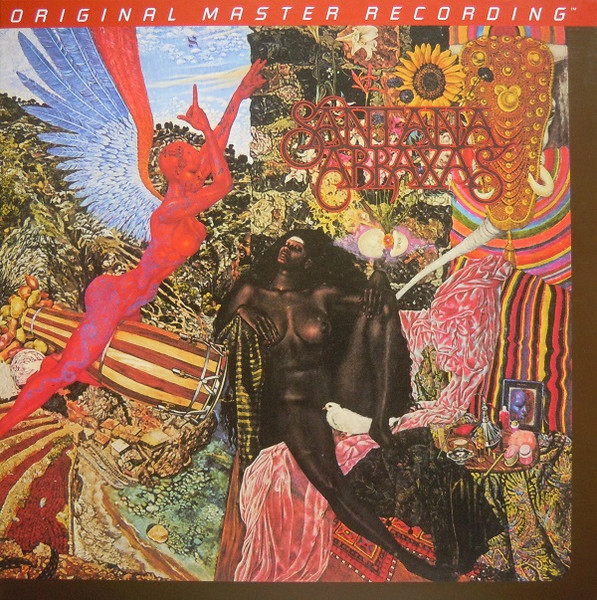
With Abraxas, MoFi Manages to Disgrace Itself Even Further

Hot Stamper Pressings of the Music of Santana Available Now

The remastered Abraxas never got past the first elimination round; it had to have been one of the worst half-speeds I have ever heard. Dead, dead, dead as a doornail.

Is it the worst version of the album ever made? Hard to imagine it would have much competition.

Santana’s first album on MoFi is a record we admit to having liked a bit when it first came out. Since then we have changed our minds. It’s just too damn compressed and lifeless. The Whomp Factor on this pressing is Zero. Since whomp is critical to the sound of Santana’s music, it’s Game Over for us. The review below is exactly what we wrote at the time the record came in. We tried to like it, but it’s clear to us now that we tried to like it too hard. Please accept our apologies.

I noted in my old blog: “But now I would have to say that the MoFi LP is far too lifeless to be acceptable to anyone, even those with the worst kinds of audiophile BS systems.”

(more…)

This MoFi Makes My Head Hurt

Hot Stamper Pressings of the Music of Richard Strauss Available Now

Is the painting on the cover that of a man whose head is suffering from the ridiculously shrill string tone of this MoFi?

Doubtful. Impossible actually. But that’s exactly how my head feels when I play one of these awful MoFi classical LPs.

Their rock, pop and jazz remasters were hit and miss in the old days, with some real winners hidden amongst the junk, but their classical releases that I’ve played, without exception, was a dog.

Want a good way to know you’re dealing with bad records and collector mentality?

When you find one of these records in your local used record store, it is almost guaranteed to be pristine.

Good records get played. MoFi’s classical releases, like plenty of other classical records audiophiles found attractive, got collected and spent most of their days sitting on a shelf, out to pasture so to speak.

(more…)

Chicago Transit Authority on MoFi

Hot Stamper Pressings of the Music of Chicago Available Now

The last time I played a copy of the MoFi Chicago debut was at least twenty years ago. The all tube system I had back then was much darker and dramatically less resolving than the one I have now, having made score upon score of improvements in every area of reproduction in the interim.

I actually had some nice things to say about it. I didn’t find it too bright the way so many MoFi pressings are. Here’s what I wrote all those years ago:

What do we like about this MoFi?

For one thing it doesn’t have the phony boosted top end most of their pressings do. It was mastered by Jack Hunt, not Stan Ricker, and Jack Hunt likes to EQ his projects without all the extra top end that made Mobile Fidelity famous. (Great for dull speakers, don’t you know.)

The other thing this MoFi has going for it is tons of weight down where it needs it, in the all-important lower midrange, and extending well into the mid-bass area.

Chicago is about brass and you want that brass to have weight and power.

So many domestic copies are leaned out, and many are hard sounding. On both counts this MoFi excels over copies with those problems. Our White Hot Stamper was definitely better, but we don’t find those very often, not to mention the fact that we happened to charge a ton of money for it.

I did take issue with the MoFi bass though.

This is where your MoFi falls apart, as good as it may be in other areas.

There IS no lower octave of bass on their pressing.

(more…)

Close to the Edge – A MoFi Winner, Or Was It? We’ll Never Really Know

Hot Stamper Pressings of the Music of Yes Available Now

Sonic Grade: Side One: B to B+ / Side Two: C


Many, many years ago (2005?) we wrote the commentary you see below. We can’t say if we would still agree with the sentiments expressed, so take what you read with a grain of salt, and remember that no two records sound the same. If your copy is better or worse on either side, it will not come as a surprise to us here at Better Records.


This is a great MOFI! (On side one anyway.) I have to admit I was partly wrong about this pressing. I used to think it was mud. Either the copy I have here is much better than the copy I played years ago, or my stereo has changed. I’m going to guess that it’s the stereo that has changed. I used to like the original American copies of this album and now I hear that they are upper midrangy and aggressive. [*] So my stereo must have been too forgiving in that area, which in turn would have made this MOFI sound too dull. [**]

Side one is as good as I’ve ever heard it outside of the best British originals. [We don’t even buy those anymore. Maybe that’s the problem with this comparison.] Since almost none of those have survived in clean enough condition to be played on modern audiophile turntables, there isn’t much of an alternative to this pressing.

And it should be noted that there is distortion on the tape. It’s on every LP copy and it’s on the CD too. There are cacophonous passages that have what sounds like board overload, mike preamp overload, tape saturation or something of the kind.

Eddie Offord, the recording engineer, is famous for complaining that the boys in the band were totally out of control when it came to adding layer upon layer and track upon track to their recordings, running the risk of creating such a dense mix that nothing would be heard above the din. He was always fighting a losing battle trying to rein them in. Although he did his best, it appears his efforts failed in some of the musical passages on this album.

So here’s a MOFI I like, but I only really like side one. Side two, although it’s decent enough, errs a little on the smooth, dull side. I have copies in which the guitars have wonderfully extended harmonics and sweeter tone. Some of them are even domestic pressings! On the MOFI there is a “blunting” of the acoustic guitar transients.

[*] Some pressings are indeed bright and aggressive, but that just shows how little I knew about the album in 2005. The later domestic pressings, and even some of the 4 digit catalog pressings, can indeed sound that way. Eventually I would figure out what the good stampers were and then I would no longer be as ignorant as I so clearly was when I wrote this. As for more stuff we’ve gotten wrong, you can find some of it here, under the heading: live and learn.

[**] My stereo was indeed too dark and forgiving back in those days. The way I know that is that records that are too bright and upper-midrangy to play now played just fine twenty years ago.

(more…)