*Experiments

Experimenting with records is the only way to learn much about them of any real value.

Hot Stamper shootouts are simply the name we came up with for the blinded experiments we do in order to find the best sounding pressings of albums.

If you want to find better sounding pressings, shootouts are the best way to go about it.

It May Be Hard to Believe, But We Actually Enjoy Testing Records

Advice to Help You Make More Progress in Audio

Some audiophile reviewers opining at great length about the sound quality of various kinds of discs — both compact and vinyl — prefer to review only those that sound good to them and simply ignore the rest. (A small sample of the writings of one such reviewer can be found here on the blog, but there are doubtless others who follow the same approach.)

We think this does the audiophile community a disservice.

Needless to say, we see our role differently. Like Consumer Reports, we like to test things.

They test toasters, we test records. We put them through their paces and let the chips fall where they may.

They want to find out if the things they are testing offer the consumer good quality and value.

We want to find out if the records we are testing offer the audiophile good sound and music.

It takes a lot of people and a healthy budget to carry out large numbers of these kinds of tests.

No other record dealers, record reviewers or record collectors could possibly have auditioned more than a fraction of the records that we have. We’ve been looking for the best sounding pressings of records for a very long time, more than forty years.

Now, with a staff of ten or more, we can buy, clean and play records in numbers that are unimaginable for any single person to attempt.

That puts us in a unique position to help audiophiles looking for the highest quality pressings.

Yes, we have the resources, the staff and the budget. More importantly, we came up with a different approach.

We’ve learned through thousands and thousands of hours of experimentation that there is no reliable way to predict which pressings will have the best sound for any given album.

The impossibility of predicting the sound of records is one which we learned to accept as axiomatic. As a born skeptic, this was never difficult for me. Early on in my audio career, sometime in the ’80s, I realized it was self-evident.

The solution we put into practice given the nature of records comprises the four principles we adopted:

  1. We stopped pretending to know something that can’t be known.
  2. We stopped relying on theories proven to have very little if any predictive effect.
  3. We stopped relying on the experts and so-called authorities.
  4. We stopped assuming and speculating and, importantly, we stopped worrying about getting it wrong.

What remained was the simplest possible approach to the problem that would actually work. One that could be taught in a high school science class, if high school science classes were run by skeptical record collectors.

(more…)

Even In The Quietest Moments and Your 1977 Ears – There’s No Going Back

supereveni_1506_1x

Hot Stamper Pressings of the Music of Supertramp Available Now

By 1977 I was a huge fan of the band, having first discovered their music on Crisis (1975) and Crime (1974), in which order I honestly can’t remember.

I played their albums all the time, especially Crisis.

The first Supertramp album I bought on audiophile vinyl would have been Crime of the Century by Mobile Fidelity, which came out in 1978.

Every right-thinking audiophile had that one — MoFi sold over a hundred thousand of them (along with a hundred thousand of Aja, Touch and one or two others).

And why not? The sound was killer on the systems of the day. Lots of slam down low (but not really that low, although it seemed plenty low at the time), lots of extra top up high, lots of phony detail, just what the old school stereos of the day, like mine, needed.

Crisis? What Crisis? followed in 1975. It was the Supertramp album that sent me over the top. I played that album relentlessly. Before long Art Rock was at the top of my list anytime I wanted to have an immersive musical experience, and that, for an obsessive audiophile like myself, meant almost every day.

Supertramp, Yes, Roxy Music, 10cc, Eno, Crack the Sky, ELO, Bowie – it’s all I wanted to listen to back then, and it encouraged me to keep upgrading my equipment whenever I had the money, although I admit to being completely clueless about all of that at the time. More on that subject here.

A year and a half later EITQM followed. It too became a staple of my musical diet. Man, I played that record till the grooves were worn smooth.

I thought the sound of my domestic pressing was killer at the time, too. Crisis was a demo disc at my house and this was right up there with it. Now the obvious question is, did I have a good sounding copy, or did my stereo not reveal to me the shortcomings of my LP? Or maybe my ears were not well enough trained to hear what was wrong.

Those of you who have been doing this for a long time know the answer: any or all of the above, probably all, and nobody can know just how much of each.

And there is no way to find out because you are not that person anymore.

Your 1977 Ears… and Mine

Even if you could recreate your old stereo and room, and find your original copy, there’s one thing you can’t do, and that’s listen to it with your 1977 ears.

Every time you play a record and listen to it critically, your ears get better at their job.

(more…)

Are White Label Promos the Way to Go on this Mystery Columbia Jazz Album?

Hot Stamper Pressings of Vintage Columbia Albums Available Now

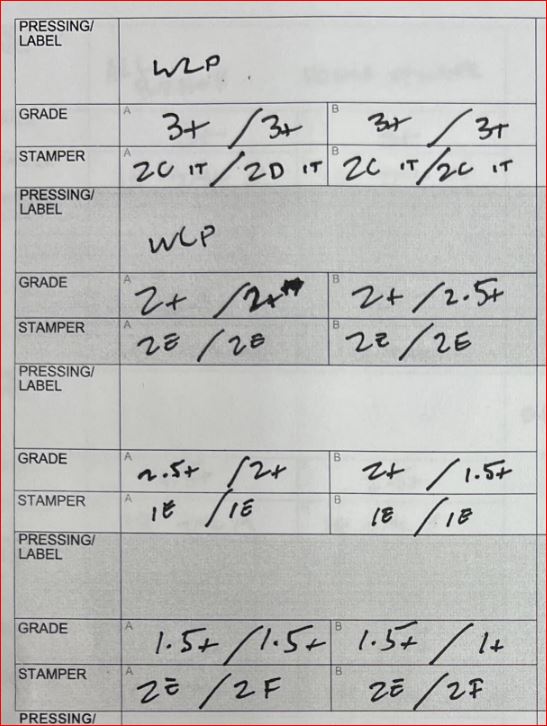
Recently we conducted a shootout for a Columbia recording, one that we had auditioned a couple of times before and one for which we knew the music and the general quality of the sound well.

It’s not the record you see pictured. For now we’re keeping the title a mystery, consistent with the idea that we give out lots of bad stampers on this blog, but almost never do we give out the good ones. (When we do give out the best stampers, we keep the title a mystery. We are not the least bit interested in putting ourselves out of business.)

The discussion for today revolves around the idea held by a great many audiophiles that the White Label Promo copies are going to be the best sounding pressings of almost any album they might happen to run across.

And, to be fair, in the case of this mysterious double album, they’re right.

Our two best sounding copies were White Label Promos.

What interests me in these findings is that the stampers for a White Label Promo copy, the second one, the one with mostly Super Hot grades, are almost identical to the one that came in last in the shootout, with barely passable grades.

If an audiophile collector were to go to Discogs, find the WLP pressings, write down their stampers, and then check them against the copies he owned or might want to buy, he could either find himself with a top quality copy, or a not-nearly-as-good copy, depending on his luck. (And side four of the worst pressing earned a sub-Hot Stamper grade of 1+.)

Why one set of stampers sounds so much better than another set, or the same or similar set on a different pressing, is a mystery.

Does anyone have a practical way to get around the unfortunate reality that allows one set of stampers to sound great and the same or a similar set of stampers to sound not much better than decent?

Well, we can’t say there is a practical way, but we do know of an impractical one. We’ve been practicing and refining that one for more than twenty years.

(more…)

The Absolute Sound Was Half Right about Desperado

Hot Stamper Pressings of the Music of The Eagles Available Now

As we all know, the best sound on an Eagles record is found on the first album. For whatever reason, that record was left off the TAS Super Disc list, even though we feel that sonically it beats this one by a bit, and musically it beats it by a mile.

On the TAS Super Disc list, Harry Pearson recommends the British SYL pressings for this album. SYL pressings can sound very good; we’ve previously found one that rated a Double Plus on both sides.

But our champions for both sides were domestic, both this time and last time.

Does that mean the best domestics will always beat the best SYL pressings? Not at all. Only critical listening can separate the better pressings from the more typical ones. After playing more than a dozen copies of this album this week, we can definitively tell you that there are FAR more mediocre copies of this record — both domestic and import — than truly exceptional ones.

The typical pressing of this album, whether the domestic or SYL, falls far short of belonging on a Super Disc List.

There are killer domestic copies AND killer SYL imports out there, and the only way to know which ones sound good is to collect ’em, clean ’em, and play ’em.

Remember: TAS List doesn’t guarantee great sound, but Better Records does.

If you don’t think a record sounds as good as we’ve stated, we’ll always happily take that record back and refund your money. Good luck getting ol’ Harry to send you a check when the TAS-approved pressings you pick up don’t deliver.

Want to find your own killer copy?

(more…)

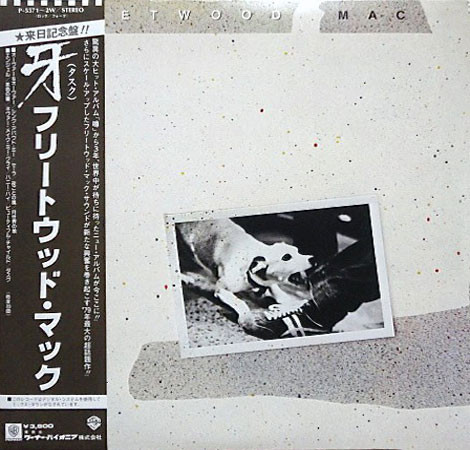
Tusk on Japanese Vinyl Without the Sub-Generation Japanese Mastering

Hot Stamper Pressings of the Music of Fleetwood Mac Available Now

This Capitol-mastered, Japanese-pressed LP has excellent sound on the first two sides and SUPERB sound on sides three and four. I doubt you’ve ever heard the title track rock like this.

We dug up a few Japanese copies of Tusk that were mastered at Capitol by Ken Perry. Because they were made from the real tapes, these don’t have the typical smeary, sub-generation sound associated with Japanese pressings. We found that the best Japanese copies could hold their own with the best domestics on sides one and two, and could win outright on sides three and four.

We almost never like records that, although pressed in Japan, were not recorded in Japan. This is one of the exceptions because the mastering was done by the real mastering engineer, Ken Perry, using the real tape, here in America.

There are also some excellent direct to disc albums that were recorded here in the states and subsequently pressed in Japan.

(more…)

The Search for Lush Life – We Broke Through in 2016

Hot Stamper Pressings of the Music of John Coltrane Available Now

We’ve been searching for years trying to find just what kind of Lush Life pressing — what era, what label, what stampers, whether mono or stereo, import or domestic — had the potential for good sound.

No, scratch that. We should have said excellent sound. Exceptional sound. We’ve played plenty of copies that sounded pretty good, even very good, but exceptional? That pressing had eluded us — until a few months ago.

Yes, it was only a few months ago, early in 2016 in fact, that we chanced upon the right kind of pressing — the right era, the right label, the right stampers, the right sound. Not just the right sound though. Better sound than we ever thought this album could have.

Previously we had written:

“There are great sounding originals, but they are few and far between…”

We no longer believe that to be true. In fact we believe the opposite of that statement to be true. The original we had on hand — noisy but with reasonably good sound, or so we thought — was an absolute joke next to our best Hot Stamper pressings. Half the size, half the clarity and presence, half the life and energy, half the immediacy, half the studio space. It was simply not remotely competitive with the copies we now know (or at least believe, all knowledge being provisional) to have the best sound.

Are there better originals than the ones we’ve played? Maybe there are. If you want to spend your days searching for them, more power to you. And if you do find one that impresses you, we are happy to send you one of our Hot Copies to play against it. We are confident that the outcome would be clearly favorable to our pressing. Ten seconds of side one should be enough to convince you that our record is in an entirely different league, a league we had no idea even existed until just this year.

(more…)

How Can the Best Stampers Also Be the Worst Stampers?

Hot Stamper Pressings of Contemporary Jazz Available Now

Recently we conducted a shootout for a superb Contemporary recording, one that we had auditioned a couple of times before and one which we felt we knew the music and the quality of the sound well.

It’s not the record you see pictured. For now we’re keeping the title a mystery, consistent with the idea that we give out lots of bad stampers on this blog, but almost never do we give out the good ones.

Why, you ask?

The cost of discovering the right stampers is usually high, can take decades, and is fundamentally at the heart of how we make our money: by finding amazing sounding pressings with stampers we know to be good, cleaning them up, playing them, and offering those that, for whatever mysterious reasons that no one has figured out, including us, tend to have the best sounding grooves.

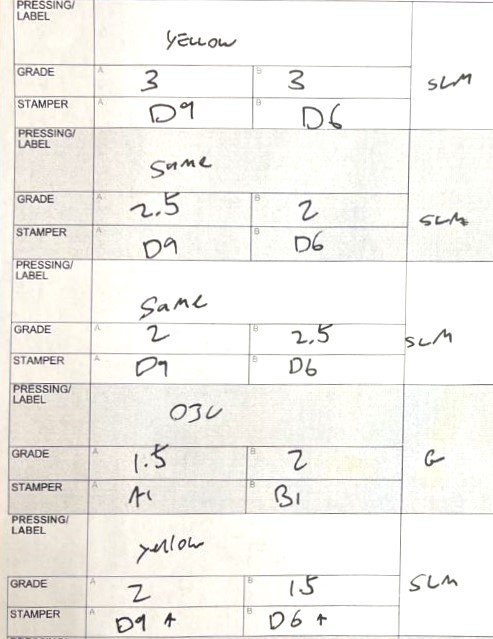
This time around we kept track of the stamper numbers for all the pressings we played, something we are making a habit of doing these days and using to highlight discoveries in the sound of the records we play.

In this case, we discovered an anomaly we thought we would bring to the audiophile world’s attention: the fact that the stampers for the best souding pressing were also the stampers for the worst sounding pressing, because they were the stampers for all the pressings.

One copy earned our White Hot Stamper grade, our highest, for its clearly superior sound, and another one earned our lowest Hot Stamper grade of 1.5+. The rest were quite good, in between those two, which is a very common outcome for most of our shootouts: lots of records in the middle of the distribution, some winners at the top and some losers at the bottom.

Note that the OJC of this title is one we have liked in the past. It didn’t do so well this time around, and that is mostly because we found out about some stampers we like even better. We will probably not being buying the OJC anymore; it’s probably more trouble than it’s worth.

However, the key takeaway from this stamper sheet is the fact that it beat one of the real Contemporary label pressings in the shootout.

So the question an audiophile record collector might ask himself is this one: is the OJC better or worse than the real Contemporary pressing with D9/D6 stampers?

(more…)

We Were So Sure We Had The Pink Floyd’s Ticket, But We Were Wrong

Hot Stamper Pressings of the Music of Pink Floyd Available Now

In a reply to some questions Robert Brook asked about Revolver and Sticky Fingers — see here and here — I made mention of the advice, found on Hoffman’s forum and other sites, that is commonly offered regarding the superiority of specific pressings of albums discussed by those who post there and purport to know well.

This often-arcane advice includes labels, pressing plants, stamper numbers, specific mastering credits, etc. The practice is so common that audiophiles “in the know” are now expected to share their findings with other members for the benefit of all.

That’s the background for my comment below. I was explaining where I stood with respect to the recommendations I often read, in my typically undiplomatic language:

We do not respect the opinions of those who appear to have little understanding of records and their pressing variations. The faulty conclusions they invariably arrrive at lack evidentiary support because they don’t know how to do what we do and can’t be bothered to learn.

Regardless of what these folks believe, by now we’ve heard dozens and dozens of amazing originals [referring to Sticky Fingers]. This made us extremely skeptical that any other mastering house could compete with the right original’s sound. It was just too good.

Yes, we were skeptical, and it has turned out, at least so far, that we were right to be skeptical. Nothing has come close to the best early domestic pressings of Sticky Fingers, the ones that win shootouts and that we have long known to be the best pressings of the album.

But sometimes we are skeptical and we turn out to be wrong.

Specifically we were wrong about some albums by Pink Floyd (but not the title you see pictured). I wrote:

We’re not always correct about these things. We were dead wrong about a couple of famous Pink Floyd albums from the “wrong” country that we’d heard good things about.

They have been winning shootouts for many years now.

Our judgments concerning the best sounding pressings for any given title must be seen in the light of any information arrived at scientifically: it’s considered provisionally true. (We may not be the smartest guys in the room, but we’re sure as hell smart enough to know that much.)

I felt it was important to point all this out. The impression I did not want to leave in the reader’s mind is that we know all the answers.

(more…)

Do the “Wrong Stampers” Sometimes Win Shootouts?

mendestill_depth_1102533608More of the Music of Sergio Mendes and Brasil ’66

Soren has some questions about shootouts and our White Hot Stamper pressing of Stillness. His questions are indented, our answers are not.

Tom,

Does it ever bug you to realize, maybe one or two years down the road and with (as Tom mentions) better playback/cleaning technology, that stampers which you dismissed in a shootout turn out to win the next one, meaning that you could have let many possible hot stampers go?

Soren,

We talk about that a bit here: which is better: Phil DeLancie digital or George Horn analog?

But being bugged by it does no good. It is a reality that must be accepted.

Because we know how easy it is to be wrong, or, more precisely, to not know everything we would like to know, we never stop doing research and development for the titles we sell.

We tell people all the time, go play your Heavy Vinyls and Half-Speeds that you haven’t played recently. If you’ve made improvements to your system, they will often start to show themselves to be not nearly as good sounding as you remember, and that means you are making progress.

I was actually reaching out to you to inquire whether the super hot Sergio Mendes Stillness that I bought from you a couple of years ago is the version with the phase reversed on side 2?

I ask because I don’t recall a phase issue on this specific title was ever mentioned on your site back when I bought it (i would have remembered, I think) so maybe you only found out recently?

Side 1 on the record sounds better to me than side 2. The matrix on this side 2 ends in “M3”.

Both M2 and M3 are in correct polarity.

M3 used to win shootouts by the way. For the longest time, at least ten years, I thought M3 was the ultimate side two.

(more…)

Chicago II – 360 Original or Red Label Reissue?

Hot Stamper Pressings of the Music of Chicago Available Now

Both can be good. I did the shootout and often tried to guess the label for the copy I was hearing, for fun more than anything else. I have to admit that my batting average was not much better than chance. 

The 360s tend to be a little fuller and smearier, but plenty of red label copies sound that way and some 360s don’t, so trying to match the sound to the label was even more pointless than usual.

When comparing pressings in a shootout it’s too late for the label to have any predictive value.

We’ve already bought the records, cleaned them up and now just want to know what they actually sound like — not which ones might be the best, but which ones are the best.

The time for guessing games has passed. Of course, if we do actually figure out what the right stampers are, this helps us next time around.

What Stampers Mean

Stampers mean something, but sometimes, as is the case here, they don’t mean much.

(If you don’t know that by now you probably haven’t done that many big shootouts on your own. Can’t blame you — without lots of helpers in the cleaning and needle-dropping departments, they’d be an even bigger pain than they already are. Even with three people involved it can still take almost all day, and that’s if you just happen to have ten or fifteen copies handy. It took us about two years to find that many, hitting multiple stores every week.)

(more…)