Focus-Class

Here we offer insights into classical and orchestral recordings we think we know well.

Striving for Orchestral Clarity on Finlandia with Decca and Failing with RCA

More of the Music of Jean Sibelius

More of the Music of Edvard Grieg

The original RCA Living Stereo pressings we played in our 2014 shootout were not competitive with the best Deccas and London reissues of Finlandia.

Is the original the best way to go? In our experience with Finlandia, it is not. And it’s not even close.

The Decca reissue you see here is yet another wonderful example of what the much-lauded Decca recording engineers were able to capture on analog tape all those years ago. The 1961 master tapes have been transferred brilliantly using “modern” cutting equipment (from 1970, not the low-rez junk they’re forced to make do with these days), giving you, the listener, sound that only the best of both worlds can offer. [Not true, see Two Things below.)

When you hear how good this record sounds, you may have a hard time believing that it’s a budget reissue from 1970, but that’s precisely what it is.

Even more extraordinary, the right copies are the ones that win shootouts

Side One

Correct from top to bottom, and there are not many records we can say that about. So natural in every way.

The brass is HUGE and POWERFUL on this side. Not many recordings capture the brass this well. Ansermet on London comes to mind of course but many of his performances leave much to be desired. Here Mackerras is on top of his game with performances that are definitive.

The brass is big and clear and weighty, just the way it should be, as that is precisely the sound you hear in the concert hall, especially that part about being clear: live music is more than anything else completely clear. We should all strive for that sound in our reproduction of orchestral music.

The opening track on side one, Wedding Day at Troldhaugen, is one of my favorite pieces of orchestral music. Mackerras and the London Proms make it magical.

Side Two

The richness on this side is awesome. So 3-D, with depth and transparency to rival any recording you may own.

Two Things

When you hear a record of this quality, you can be pretty sure of two things: one, the original is unlikely to sound as good, having been cut on cruder equipment.


UPDATE

Let me stop myself right there. I no longer subscribe to this view. There are many original pressings mastered in the 50s that are as hi-rez and undistorted as anything made after them. Here’s one example. It would be easy to name a great many more. Live and learn I say.


And two, no modern recutting of the tapes (by the likes of Speakers Corner for example, but you can substitute any company you care to choose) could begin to capture this kind of naturalistic orchestral sound. [Mostly still true.]

I have never heard a Heavy Vinyl pressing begin to do what this record is doing. The Decca we have here may be a budget reissue pressing, but it was mastered by real Decca engineers (a few different ones in fact), pressed in England on high quality vinyl, and from fairly fresh tapes (nine years old, not fifty years old!), then mastered about as well as a record can be mastered.

The sound is, above all, real and believable.

The brass has weight, the top extends beautifully for those glorious cymbal crashes, the hall is huge and the staging very three-dimensional — there is little to fault in the sound on either side.

(more…)

Now That’s the Way a Piano Should Sound!

On the best copies the rich texture of the strings is out of this world — you will have a very hard time finding a DG with better string tone.

The best pressings of this recording have none of the shortcomings of the average DG: it’s not hard, shrill, or sour.

DG made plenty of good records in the 50s and 60s, then proceeded to fall apart, like most labels did. This is one of their finest. It proves conclusively that at one time — 1962 to be exact — they clearly knew exactly what they were doing.

Without question this is a phenomenal piano recording in every way.

I don’t know of another recording of the work that gets the sound of the piano better. On the better copies, the percussive quality of the instrument really comes through.

It’s amazing how many piano recordings have poorly-miked pianos.

These bad sounding pianos are either too distant, lack proper reproduction of the lower registers, or somehow smear the pounding of the keys into a blurry mess.

Are they badly recorded?

Or perhaps it is a mastering issue?

Maybe a pressing issue?

To be honest, it’s probably all three.

Lately we have been writing quite a bit about how good pianos are for testing your system, room, tweaks, electricity and all the rest, not to mention turntable setup and adjustment.

  • We like our pianos to sound natural (however one chooses to define the term)
  • We like them to be solidly weighted
  • We like them to be free of smear, a quality that is rarely mentioned in the audiophile reviews we read

Other records that we have found to be good for testing and improving your playback can be found here.

(more…)

Compression Works Its Magic on The Christmas Eve Suite

Hot Stamper Pressings of the Music of Rimsky-Korsakov Available Now

Some notes about the compression effects we heard on side two of a Blueback pressing of The Christmas Eve Suite album back in 2012. We wrote:

Side two is even more transparent and high-rez than side one. The texture on the strings and the breathy quality of the woodwinds make this a very special pressing indeed.

The horns are somewhat smeary and do get a bit congested when loud.

There is more compression on this side two than there was on the best copy we played, and that means low level detail is superb, but louder parts, such as when the more powerful brass instruments come in, can present problems.

Note how good The Flight of the Bumble Bee sounds here.

Compression is helping bring out all the ambience and detail in the recording, and there’s no downside because the orchestra is playing softly, unlike the piece that precedes it.

A classic case of compression having sonic tradeoffs.

(more…)

Our Pines of Rome Shootout Was Twenty Years in the Making

Hot Stamper Pressings of Classical and Orchestral Music Available Now
We did a monster shootout for this music in 2021, one we had been planning for more than twenty years. On hand were quite a few copies of the Reiner on RCA; the Ansermet on London; the Maazel on Decca and London (the Decca being on the TAS List), the Kempe on Readers Digest, and quite a few others we felt had at least the potential to sound good.

Allow me to back up a bit, as this story begins in the 70s.

When I first started paying attention to the TAS Super Disc list in the late-70s, I read about the famous Pines of Rome RCA pressing with 1S stampers that was supposedly so dynamic that it needed to be recut with more compression and less bass in order to play on the turntables of the day. I could never find one, and the Shaded Dogs and Red Seals that I did find never sounded all that good to me.

I know now that I did not have the stereo system back then (equipment, room, etc.) that could reproduce a recording of such difficulty.

In the 80s, the Mobile Fidelity pressing of the Pines of Rome came out, and it never sounded right to me either. This was true of all their classical releases, without exception. To me they epitomized the kind of bright, phony, “audiophile” sound commonly found in audio showrooms but rarely if ever heard in concert halls.

The Classic Records release from 1995 of the Reiner Pines was no better. That record was just too harsh sounding, with the shrill strings that Bernie Grundman was cutting on practically every title put out by that awful label.

I fell for some of them — I actually raved about Witches’ Brew on Classic back then, an endorsement that mortifies me to this day — but most of their classical records were junk that I was selling for cheap to the audiophiles who bought into the reviews written about them in the audio mags.

(more…)

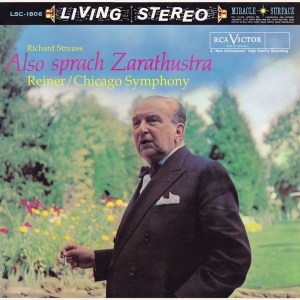
Also Sprach Zarathustra – Comparing 1954 to 1962

Hot Stamper Pressings of the Music of Richard Strauss Available Now

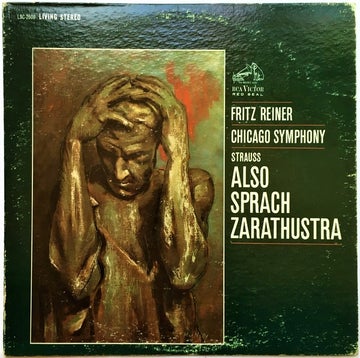
In 2023, we did a very large shootout for LSC 1806 and LSC 2609. LSC 1806 was recorded in 1954 but not released until 1960. It has been on the TAS Super Disc list for a very long time, if not actually from the very beginning. It’s long been considered the definitive recording by TAS Heads for sound and possibly for performance.

LSC 2609 came out in 1962. We prefer it over 1806, as the notes for our shootout make clear:

Initially, I thought I preferred LSC 1806. The amount of space and silky texture in the top end is hard to match. After a few comparisons, though, I began to miss the richer and more realistic midrange of LSC 2609. If anyone strongly prefers 1806 to 2609, they probably have a darker system or a smeary 2609.

The best copy of 1806 in our shootout earned the same Triple Plus grade on side one as our best 2609, slightly less on side two as it had somewhat steely strings.

Still, both are superb recordings. Head to head on big speakers in a custom room and all the rest, we know which recording we prefer.

Most audiophiles, including most of our customers, do not have a big-speaker system playing in a dedicated room, custom built and carefully treated in order to produce sound reproduction of the highest quality. They may prefer the original recording depending on how it sounds on the equipment they are using.

(more…)

The Planets – Testing with Mars and Saturn

More of the music of Gustav Holst (1874-1934)

Mars on the first side and Saturn on the second present serious challenges to any recordings of the work you may own, especially if you own the overrated Mehta recording on the TAS List.

Generally speaking, the White Hot copies stand apart from the pack with more top end extension, and/or more lower end weight. Our notes will typically say “extended highs and lows,” and those are hard to come by, on any record.

Let’s get to the specifics of the two movements we feel are the best test for The Planets as a whole.

The War Test — Side One

War, the first movement, has the string players “bouncing” their bows upside down to create the effect you hear. It’s not fingers plucking the strings; it’s the wood of the bows bouncing on the strings. The quality of that technique is so obvious and correct sounding on the good copies and so blurry and indistinct on the bad ones that you could almost judge the whole first side by that sound alone. When it’s right it’s really right. 

And of course the players are spread out wider and the soundfield is so much more transparent when these types of sonic qualities are brought out. This bouncing bow test makes it easy to separate the better copies from the also-rans when it comes to smear, resolution, transparency and the like.

The Saturn Test — Side Two

(more…)

This Recording of The Planets Has “Blockbuster Sound,” for Better or Worse

Hot Stamper Pressings of the Music of Gustav Holst Available Now

This recording has what we here at Better Records like to call blockbuster sound.

Even on the best copies, the recording does not sound very much like a live orchestra, nor is it actually even trying to sound like a live orchestra in concert.

It’s trying to be huge and powerful in your home.

Which is more in line with a rock Demo Disc such as Crime of the Century or Dark Side of the Moon.

Everything has been carefully and artificially placed in the soundfield. Each instrument or group of intstruments is given its own space and (sometimes ridiculous) location.

It’s clearly not the recreation of a live orchestral event.

No live concert I have ever attended sounds anything like this record.

Instead it’s the actual creation of a unique orchestral sound, with unique staging of its own design.  Lots of microphones were used, which cause instruments and sometimes whole sections of the orchestra to appear in places and take up spaces they could not possibly occupy in the real world.

If you have a good-sized listening room and your stereo images well, with realistic three-dimensional staging and depth, you will have no trouble hearing what we are talking about with any pressing of the album.

This is the sound that Bernard Herrmann made such wonderful use of with his series of Phase IV recordings for Decca, rather different than the four mics and two stereo channels of the Fiedler Gaite Parisienne from RCA in 1954.

Which is ironic. HP talked about The Absolute Sound of live unamplified music as being the standard, yet somehow this recording ended up in his Top Twelve all time greats. Makes no sense to me, but neither do many of the records on the TAS Super Disc list.

That said, our current favorite Planets is the other Planets on the TAS List, Previn’s reading on EMI from 1974.

(more…)

Side One of Ritual Fire Dance Had Tubey Colorations Missing from Side Two

Hot Stamper Pressings of Vintage Columbia Albums Available Now

An undiscovered gem from 1967 on the 360 Columbia label.

Side two of this record blew our minds with its White Hot Stamper sound.

Musically and sonically this record is nothing short of wonderful.

Who knew? You could play fifty vintage piano recordings and not find one as good as this.

Tchaikovsky, Liszt, Beethoven, Debussy, Mozart — these shorter pieces and excerpts were composed by those with the greatest gift for melody, men who’ve produced works that have stood the test of time, enchanting audiences over the centuries with works of such beauty and charm.

Here at Better Records we have never been fans of Columbia classical LPs. Years ago we noted that:

Columbia classical recordings have a tendency to be shrill, upper-midrangy, glary and hard sounding. The upper mids are often nasally and pinched; the strings and brass will screech and blare at you in the worst way. If Columbia’s goal was to drive the audiophile classical music lover screaming from the room (or, more realistically, induce a strong desire to call it a day record-playing wise), most of the time one would have to grant they’ve succeeded brilliantly. Occasionally they fail. When they do we call those pressings Hot Stampers.

To be clear, the fault more often than not has to be in the mastering, not the recording. We’ve raved about so many great copies of titles in the past, only to find that the next three or four LPs we pick up of the very same titles sound just godawful. There are some amazing Bernstein recordings out there, but the the amount of work it takes to find the one that sounds good is overwhelming — how can such great recordings be regularly mastered so poorly?

Side One

A++, with a huge, rich, sweet, natural sounding piano. The more you listen, the more apparent it becomes that, as natural as it may seem at first blush, there are still some old school tubey colorations that make the sound not quite as lifelike and real as one might wish.

And the confirmation of that finding comes as soon as you flip the record over.

(more…)

This Is Why We Love Records from the 50s

Hot Stamper Pressings of Mercury Classical Recordings Available Now

From time to time a record comes our way that sounds absolutely amazing, “I can’t believe it’s a record” amazing.

If it’s the kind of record that sounds like the best copy of Fiesta in Hi-fi from our most recent shootout, we might even let our enthusiasm for its superb fidelity get the better of us. That’s the effect a record as good as the copy we played can have. You just can’t stop yourself from saying one great thing after another about it.

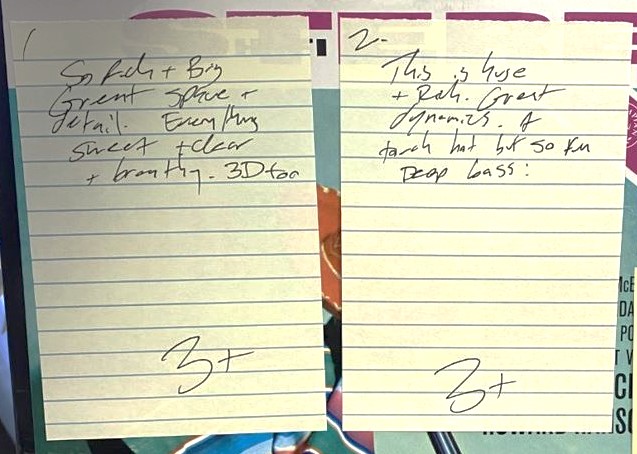
Our over-the-top notes, like those you see below, attempt to convey what it’s like to experience the absolutely breathtaking sound we were hearing.

But where is the harm in that? These are notes that no one outside of the staff are ever expected to see. They are helpful to us in writing our commentary and pricing the specific copy we auditioned, but they are practically never quoted in the listings.

Fiesta in Hi-Fi is an example of one of those recordings that doubles as a thrill ride. They come along from time to time in order to show us the kind of sound that we’d almost forgotten was possible on a record.

Oh yes, with the rare properly-cleaned, properly-mastered, properly-pressed vintage vinyl LP, played back on top quality equipment in a heavily treated, dedicated soundroom, we can assure you it is very possible indeed. Allow us to make the case with the Shootout Winning original pressing you see below.

The notes read: 

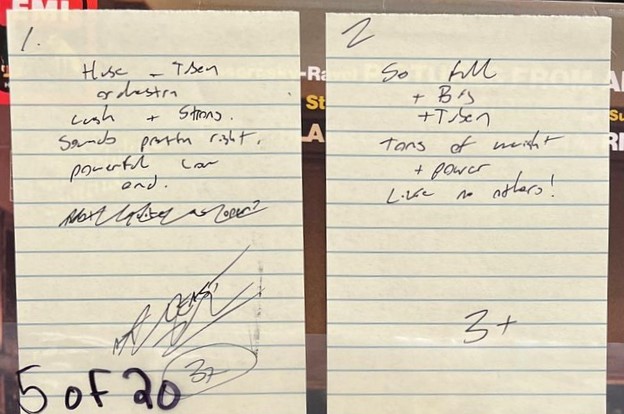
So rich and big / Great space and detail / Everything sweet + clear + breathy / 3D too / Great dynamics / A touch hot but so fun / Deep bass.

You know what’s unusual about these notes?

(more…)

The Carmen Ballet – As Tough a Test Disc As Any We Know

Hot Stamper Pressings of the Music of Georges Bizet Available Now

If I had only one record to bring to someone’s house in order to evaluate their equipment, a killer copy of this Bizet-Shchedrin record would certainly be at the top of my list. (Here are some others.)

If you can make this record sound the way it should, your stereo is cookin’.

If you are having problems, this record will show them to you in short order.

Many copies are bright in the upper-midrange, sounding as nasally and artificial as a bad Mercury or London. Many lack weight down low. The lower strings and heavier percussion play a crucial role in balancing out the upper strings and lighter percussion, so without enough going on down low, the sound skews upwards in an artificial way.

If your copy has either of these problems don’t use it to set up or tweak anything in your system.

Use one of our Hot Stampers, the hotter the better.

The sound of the best copies is rich, full-bodied, incredibly spacious, and exceptionally extended up top. There is a prodigious amount of musical information spread across the soundstage, much of it difficult to reproduce. Musicians are banging on so many different percussive devices (often at the back of the stage, exactly where they should be) that getting each one’s sonic character to clearly come through is a challenge. And when you’ve met it, a thrill.

If you’ve done your homework with VTA, Azimuth, Anti-Skate and Tracking Weight, this is the record that will make clear just how much you’ve accomplished.

The recording has tremendous transients and dynamics. Be prepared to have trouble tracking it. In that respect it’s a prime candidate for table, cartridge and system tweaking.

If you have the kind of big system that a record like this demands, when you drop the needle on the best of our Hot Stamper pressings, you are going to hear some amazing sound.

(more…)