Advice-WTLF, Jazz

Jazz records with advice on what to listen for, in order to help you separate the best pressings from the also-rans and improve the quality of your collection.

On Sweetnighter, Watch Out for Sourness, Slowness and Smear

Hot Stamper Pressings of the Music of Weather Report

What surprised us most about the dozen or so copies that we played years ago for a shootout was how wrong most copies of this album sound. They’re SOUR in the midrange. On this kind of music, a sour midrange is the kiss of death.

Those copies that aren’t sour are frequently just plain dull. On a recording like this, so full of percussion — which, to be honest, it’s a record that LIVES OR DIES on the quality of its percussion — dullness is devastating.

And so is slowness. If you have old school tube equipment — great for vintage RVG recordings but way too slow to keep up with this fast-paced and percussion-heavy music — this record is not going to do what it desperately wants to do: get your feet tappin’.

Smear is also another thing to watch out for — smear kills what’s good about this record. The percussion transients lose their snap and the harmonics get lost. The less smeary sides really bring out the funky magic of the recording.

(more…)

Touch – A Great Test for Tweeters

More of the Music of John Klemmer

Mobile Fidelity, maker of some of the worst sounding records in the history of the medium, is the KING on this title. We know of no better pressing than the right version of the MoFi. (There are three different stampers for the MoFi, and only one of them ever wins shootouts.)

Klemmer says pure emotion is what inspired the album’s creation. Whatever he tapped into to find the source of that inspiration he really hit pay dirt with Touch. It’s the heaviest smooth jazz ever recorded. Musically and sonically, this is the pinnacle of Klemmer’s smooth jazz body of work. I know of none better. (If you want to hear him play more straight-ahead jazz try Straight from the Heart on Nautilus Direct to Disc.)

High Frequency Testing

MoFi was famous for demonstrating on an actual scope that the standard domestic ABC pressing had nothing above about 8 or 10 thousand cycles up top, which is why they all sound insufferably dull and dead. Some MoFi copies have no real top end either, which is the reason to we do these shootouts — to find the copies that are actually mastered and pressed right, not just the ones that should have been.

There’s plenty of information above 15K I would guess on this record — all those delicate percussion instruments ring so sweetly, the highs have to be extending way up there. (This album would probably make a good test to see how well your tweeters work, as well as for turntable setup. The right tracking weight and VTA are crucial to getting all the harmonics of a record like this right.) (more…)

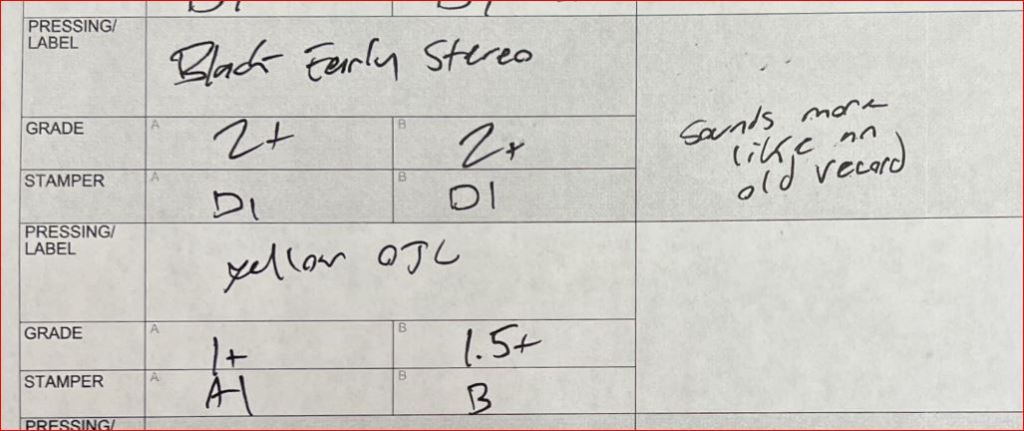
How Does the D1/D1 Jazz Giant Black Label Pressing Sound?

Hot Stamper Pressings of Contemporary Jazz Albums Available Now

Even though the Black label original of Jazz Gianot we played in our shootout held its own well enough, it did suffer from a slight case of “old record” sound.

Head to head with the best vintage reissues, it was a bit crude, didn’t extend fully on the top end, and wasn’t as resolving in the midrange.

The fact that it earned a Super Hot (A++) sonic grade means that it could not have sounded too much like an old record. It was still doing most everything right.

It just had a few sonic shortcomings we recognized were holding it back.

The reissues that beat it in the shootout showed us just how good the album could sound, maybe not night and day better, but definitely better, a full grade better.

The Black Label original we played would still beat the pants off the godawful Analogue Productions Heavy Vinyl pressing that came out in the 90s, the one mastered by the formerly-brilliant Doug Sax.

For those who may not have been collecting back then, we describe in great detail the bad sound of the Heavy Vinyl pressing that AP produced for their version of Way Out West in 1992.

Mobile Fidelity got into the reissue act in 1994, making murky-sounding records on 200 gram vinyl and calling them Anadisqs.

Classic Records started producing their bright, screechy reissues of Living Stereo titles that year as well.

It seems a lot of bad sounding records were being made back then!

Is it any different now? (If it is, please contact me at tom@better-records.com and tell me what you think the differences are. I am at a loss after playing these six Heavy Vinyl titles in 2024 and finding that all of them fell well short of the mark. What mark is that, you ask? Why, the mark set by their vintage counterparts.)

(more…)

Side One Is Actually In Phase (Usually) and You Read It Here First (Probably)

Hot Stamper Pressings of Direct-to-Disc Recordings Available Now

This is a well recorded jazz album that should be able to find a home in any audiophile’s jazz collection.

It is also one of the pressings we’ve discovered with reversed polarity

According to the liner notes, this Dave Grusin album has reversed absolute phase. They tell you to switch the positive and negative at the speaker for the best transient response and spatial clarity. But get this: most side ones are NOT in reversed phase.

That out of phase quality is as plain as the nose on your face when you know what to listen for.

There’s an unpleasant hardness and hollowness to the midrange, a lack of depth, and an off-putting opaque quality to the overall sound.

With our EAR 324p phono stage, the click of a button reverses phase, also known as polarity. I can’t tell you how handy it is to have such a tool at your disposal. Checking the phase for Discovered Again couldn’t have been easier.

An Amazing Discovery

But get this: most side ones are NOT reversed phase. (All the side twos we played were however.) How about them apples! We could not have been more shocked. Here is the most famous out of phase audiophile recording in the history of the world, and it turns out most copies are not out of phase at all!

(more…)

Proper VTA Is Essential to Getting the Sound of Benny’s Muted Trumpet Right

Hot Stamper Pressings of Contemporary Jazz Albums Available Now

For us audiophiles both the sound and the music here are enchanting. If you’re looking to demonstrate just how good a 1959 All Tube Analog recording can sound, this killer copy will do the trick.

The sound of the muted trumpet on side two is out of this world.

It has exactly the sonic signature of good tube equipment — the ability to make some elements of a recording sound shockingly real. There are tradeoffs with tube mastering to be sure, a subject we discuss in some depth here.

The trumpet is also a very good test for turntable setup, tracking, as well as arm and cartridge compatability. You’ve got to be set up properly for every aspect for a difficult-to-reproduce instrument like the trumpet to sound right.

Accurate VTA adjustment is critical to the record reproduction. If you do not have an arm that allows you to easily adjust its VTA, then you will just have to do it the hard way (which normally means loosening a set screw and moving the arm up and down until you get lucky with the right height).

Yes, it may be time consuming, it may even be a major pain in the ass, but there is no question in my mind that you will hear a dramatic improvement in the sound of your records once you have learned to precisely adjust the VTA for each and every one of them.

VTA is not a corner anyone should be cutting.

Careful adjustment of VTA is critical to getting good sound.

Of course, so are anti-skate, azimuth and tracking weight.

(more…)

What to Listen For on My Favorite Things

Hot Stamper Pressings of the Music of John Coltrane Available Now

An album like this is all about its Tubey Magical stereoscopic presentation.

If you’re looking to demonstrate just how good 1961 All Tube Analog sound can be — thanks to legendary engineers Phil Iehle and Tom Dowd — an outstanding pressing of this album is just what the doctor ordered.

What to listen for you ask?

A solid, full-bodied, clear and powerful piano. As we focused in on the sound of the instrument, we couldn’t help but notice what a brilliant player McCoy Tyner is.

This may be John Coltrane’s album, but Tyner’s contribution is critically important to the success of My Favorite Things.

(We rarely care much for Tyner as a leader, which is why you see so few of his albums on the site. Most of his Milestone recordings are terrible, so caveat emptor on those especially.)

Lately we have been writing quite a bit about how pianos are good for testing your system, room, tweaks, electricity and all the rest, not to mention turntable setup and adjustment.

  • We like our pianos to sound natural (however one chooses to define the term).
  • We like them to be solidly weighted.
  • We like them to be free of smear, a quality that is rarely mentioned in the audiophile record reviews we read.
  • Some of the other records we’ve discovered with top jazz piano sound can be found here

(more…)

Farmers Market Barbecue – First Among Equals, or The Best Pablo Ever?

Hot Stamper Pressings of the Music of Count Basie Available Now

Musically FMB is a Top Basie Big Band title in every way. This should not be surprising: many of his recordings for Pablo in the ’70s and early ’80s display the talents of The Count and his band of veterans at their best.

Sonically it’s another story. Based on our recent shootout for this title, in comparison to the other Basie titles we’ve done lately, we would have to say that FMB is the best Basie big band title we’ve ever played. Since so many Basie big band recordings are so good, we don’t want to get ahead of ourselves; after all, we haven’t done shootouts for all of his Pablo large group recordings. To be safe we’ll just call this one First Among Equals.

The following are some general guidelines as to What to Listen For while you critically evaluate any of the Basie Big Band Pablo recordings (or any other big band recordings for that matter).

Simply put, we offer here a short list of qualities that we’ve come to appreciate on the best of the Basie Big Band pressings, qualities that we find are often in short supply on lesser LPs (and, as a rule, those that have been remastered onto Heavy Vinyl). (more…)

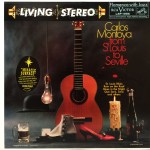
This Phenomenally Well Recorded Montoya Album Is an Amazing Find

Hot Stamper Pressings of Living Stereo Titles Available Now

Flamenco meets Jazz in this extraordinary Living Stereo all analog recording from 1958 (only the second copy to hit the site in years).

Ed Begley is the engineer here and he knocked this one out of the park. The sound is shockingly real – proof positive that the cutting systems of the day are capable of much better sound than many audiophiles might think. If more evidence is what you’re after, see here and here

Need a refresher course in Tubey Magic after playing too many modern recordings or remasterings? This record is overflowing with it.

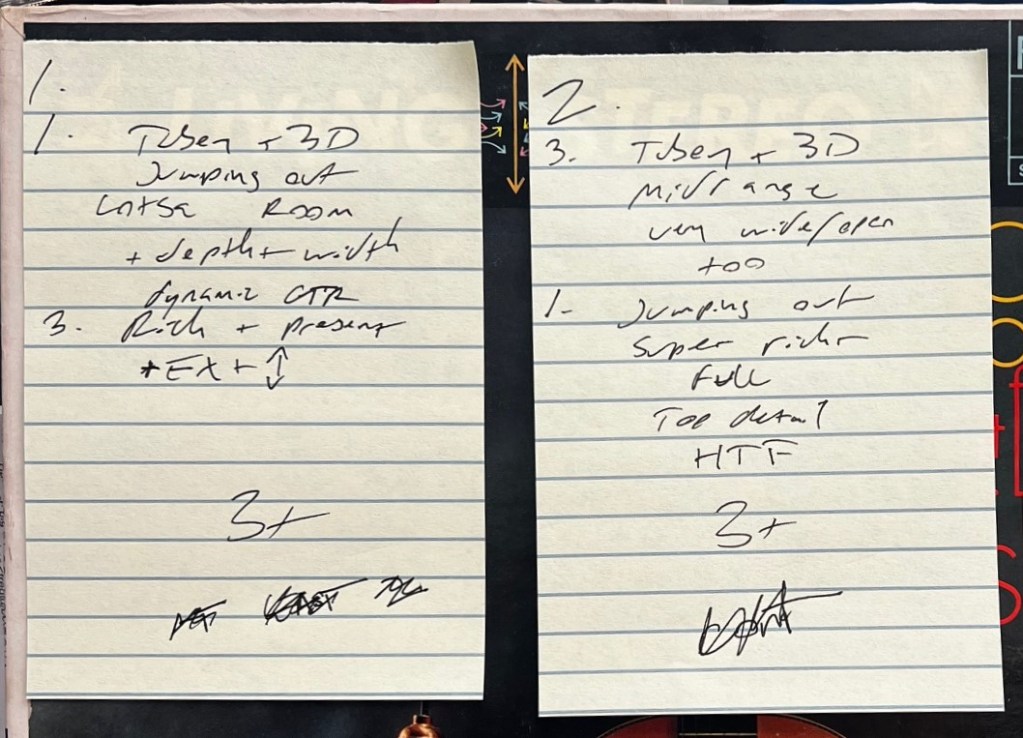
Side One

Track One

    • Tubey and 3-D
    • Jumping out
    • Lots of room and depth and width
    • Dynamic guitar

Track Three

    • Rich and present
    • Extending high and low

(more…)

Reproducing the Phenomenal Size and Space of Time Out

More Columbia 30th Street Studio Recordings

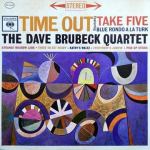
Time Out is a jazz album that’s been a personal favorite of mine for a very long time, as well as a record I’ve been obsessed with for decades. I spent a lot of time working on my system in order to get this album to sound its best.

It taught me a lot, and for that reason it is a recording that deserves a fair amount of credit for helping me become a better listener.

Here is how we described a copy that won one of our shootouts a while back:

Spacious and transparent, this copy has the big three-dimensional soundstage that makes this record such a joy to listen to. The piano has weight and heft, the drums are big and dynamic, and everything is relaxed and sweet — in short, this copy is doing pretty much everything we want a top quality Time Out to do. 

Listen to the drums on Everybody’s Jumpin’. This album was recorded on a big sound stage and there is a HUGE room which can clearly be heard surrounding the drum kit. Add to that that some of the drums are in the left channel and some of the drums are in the right channel and you have one big drum kit — exactly the way it was intended to sound.

Size and Space

One of the qualities that we don’t talk about on the site nearly enough is the SIZE of the record’s presentation. Some copies of the album just sound small — they don’t extend all the way to the outside edges of the speakers, and they don’t seem to take up all the space from the floor to the ceiling. In addition, the sound can often be recessed, with a lack of presence and immediacy in the center.

Other copies — my notes for these copies often read “BIG and BOLD” — create a huge soundfield, with the music positively jumping out of the speakers. They’re not brighter, they’re not more aggressive, they’re not hyped-up in any way, they’re just bigger and clearer.

And most of the time those very special pressings just plain rock harder. When you hear a copy that does all that, it’s an entirely different listening experience.

More letters, reviews and commentaries for recordings made at Columbia’s 30th Street studio.

(more…)

You Simply Cannot Record a Piano Better than Roy DuNann

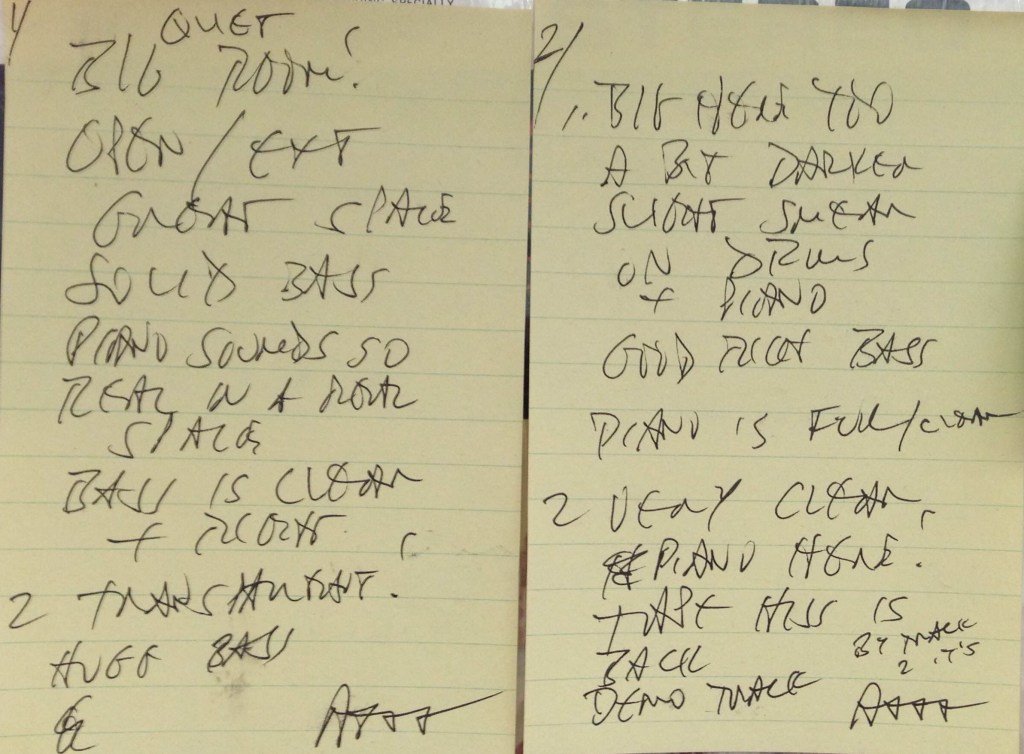
The piano sounds uncannily lifelike right from the start, a beautiful instrument in a natural space, tonally correct from top to bottom. I can’t think of any record off the top of my head that gets a better piano sound than this one.

Listen to the tambourine on the third track on side one. Shelly Manne messes about with lots of percussion instruments on this album and all of them are recorded to perfection.

Not to leave Red Mitchell out, check out the bass; it’s deep and note-like throughout the album.

Better Than a Dream, the second track on side two, has one of the best sounding jazz pianos I have ever heard. My notes say “you cannot record a piano any better” and I stand behind that statement one hundred percent.

There is not a modern reissue on the face of the earth that can hold a candle to the sound of this record.

For any of you out there who doubt my words please take this record home and play it against the best piano jazz recordings you own. If it doesn’t beat them all we are happy to pay the domestic shipping back.

Even our amazing sounding 45 RPM pressing of The Three does not present the listener with a piano that sounds as real as the one on this record.


(more…)