*What We Learned from Shootouts

What Is There to Say about Mercury Sound This Good?

Hot Stamper Pressings of Mercury Classical Recordings Available Now

In 2025 we did a shootout for the Mercury you see pictured, SR-90437, having collected a large number of copies with a wide range of stampers, which of course is always the best approach when doing a shootout for the first time. (Once you have a couple under your belt you naturally can start to focus on the pressings that do well and avoid the ones that do badly.)

In our review for the White Hot Stamper shootout winner, we wrote:

Dorati and the LSO’s dynamic performance of these 16 Hungarian Dances debuts on the site with INSANELY GOOD Shootout Winning Triple Plus (A+++) sound throughout this early Mercury pressing.

These sides are doing everything right – they’re rich, clear, undistorted, open, spacious, and have depth and transparency to rival the best recordings you may have heard. You’d be hard-pressed to find a copy that’s this well balanced, yet big and lively, with such wonderful clarity in the mids and highs.

Some of the above may sound familiar. We say these sorts of things and use these stock phrases to describe many of the amazing sounding records that win our shootouts.

But aren’t these adjectives precisely the ones you should be using when a record is doing everything right? What else could you say about a record that sounds this good?

Our notes are simply the impressions a member of our listening panel wrote down as he critically listened to the record while it was playing.
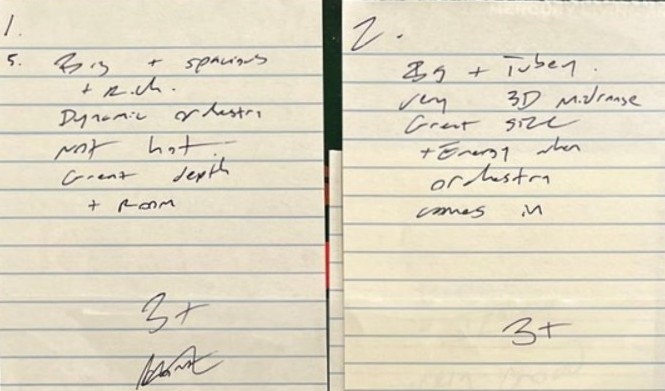
In this case, his attention was being drawn to the marvelous qualities a large scale orchestral recording can have when everything is working at the highest levels of fidelity.

With the right playback equipment and lots of practice, you could easily find yourself listening this way and taking the same kind of notes.

(more…)

An Overview of Beatles Oldies But Goldies

Hot Stamper Pressings of the Music of The Beatles Available Now

This is a Beatles album we think we know well.

We’ve done a number of shootouts for A Collection of Beatles Oldies over the last ten years or so, and our experimental approach using many dozens of copies provides us with strong evidence to support the following conclusions regarding the sound of the originals vis-a-vis the reissues:

  1. The best of the early pressings always win our shootouts. No reissue has ever earned our top grade of A+++ and it is unlikely any reissue ever will.
  2. The reissues can be quite good however. The best of them have earned grades of Double Plus (A++).
  3. The worst of the early pressings also earned grades of Double Plus (A++).
  4. Conclusion: if you have a bad original and a good reissue, you might be fooled into thinking the sound quality was comparable.

(more…)

One of Our Best Sounding Pressings of Revolver Lacked Space on One Side

Hot Stamper Pressings of Revolver Available Now

On side one we played I’m Only Sleeping first, followed by Taxman.

On side two we started with And Your Bird Can Sing, followed by Good Day Sunshine.

You may notice that there seems to be a pattern in the way we pick which songs of each side to do first.

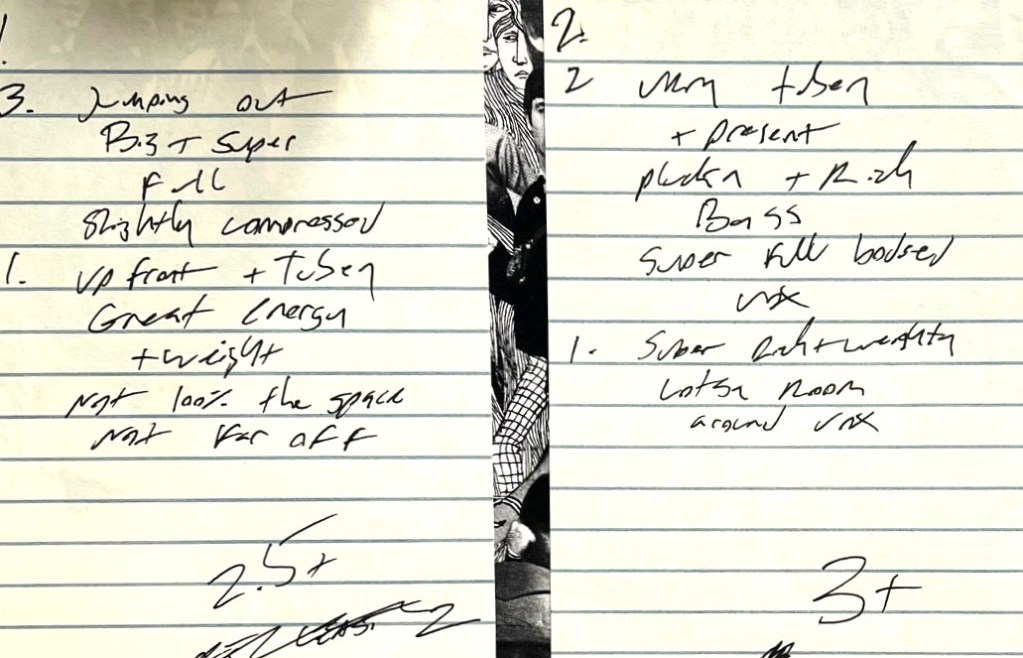
As you can see from the notes, side two of our most recent White Hot stamper Shootout Winner was doing everything right.

The second track was very tubey and present. Good Day Sunshine, the first track, was super rich and weighty, with lots of room around the vox. (I hope you can read our writing. If you can’t, just email me and I will try to find the time to transcribe the rest of the text.)

However, we had a side one that was slightly better than the side one you see here.

The Second Round

When we played the two best copies back to back, side two of this copy came out on top, earning a grade of 3+, but the side one of another pressing showed us there was even more space in the recording than we noticed the first time around.

(more…)

Shootout Winning Stampers for Rhythms of the South Revealed

Hot Stamper Pressings of Exotica and Bachelor Pad Recordings Available Now

There are some records that, no matter how amazing the sound, and how good the music is, simply will not find favor with our customers. This is one of them. I happen to like the music, and the sound is shockingly good, a true Demo Disc for those of you with big speakers pulled well out from the back wall in a spacious, heavily treated room like the one you see below.

We are most likely not going to be doing shootouts for this title in the future, so we thought we would share with everyone what we know about the record, which boils down to which stampers have the potential to do well and which do not.

As you can see, Stan Goodall did a much better job mastering the early Blueback London pressings for Decca than Jack Law.

What information can you rely on when trying to find the best sounding pressings?

The originals all have the same Blueback cover.

In this case, the stamper numbers are the only way to separate the potential winners from the sure losers.

11/2023 Ros, Edmundo Rhythms of the South (PS 114 London) early Blueback 3 3 1E 1E other copies: 2.5/2, 2/2.5
11/2023 Ros, Edmundo Rhythms of the South (PS 114 London) early Blueback 1.5 1 2D 2D s1 dry, flat, trashy. s2 smeary, messy, boring
RE ABOVE: I FOUND THIS IN A BOX. THOUGHT IT SOUNDED REALLY GREAT, ESP. T1, S1

Jack Law’s cutting for side one was

(more…)

Question: “Is your stance that all copies of that same pressing, if you had five brand new copies, would all sound the same and superior?:

What Exactly Are Hot Stamper Pressings?

Patrick wrote to ask us a series of questions recently:

Hello team.

You have vinyls that you consider some degree of a “hot stamp” and this correlates to a very specific pressing of an album, correct?

Is your stance that all copies in that same pressing, if you had five brand new copies, would all sound the same and superior?

Or is it that the one you have is just better than all the others in that same pressing?

Or is it that of the ten different pressings of this album we listened to, this is the best sound period.

Thanks in advance … I hope this makes sense, and any help is appreciated.

Regards,
Patrick L.

Dear Patrick,

Click on this link to see some examples of records with Shootout Winning stampers in which we found out that, after all was said and done, the best sounding stampers could also be the worse sounding stampers.

Knowing the right stampers helps us find good copies, but the most they can do is point the way to good sound.

The listening panel never knows what the stampers are for any of the records that are being evaluated.

We find out what the best stampers are after the records have been played, not before.

Who knows what a record sounds like until it’s been played? No one, not even self-described know-it-all experts such as us.

We run record experiments in order to get actual data that we can rely on to be truthful. We call them shootouts.

The stampers can’t tell us how good the sound of a record is. Only our ears can do that.

Put another way, critical listening doesn’t just play a part in our judgment of a particular pressing.

It is the sole source of that judgment.

Because nothing else counts for anything. (See the Feynman link below for more on that subject.)

(more…)

How Did We Know Side Two Lacked Weight and Tubey Magic?

Hearing massive sound coming out of Big Speakers in a Big Soundroom from a Prog Rock blockbuster like this was a thrill our listening panel won’t soon forget. The notes from the listing we put up for ELP’s debut tell the story.

But not the full story, since we rarely mention what was lacking or wrong with the sides that did not earn our top grade of three pluses.

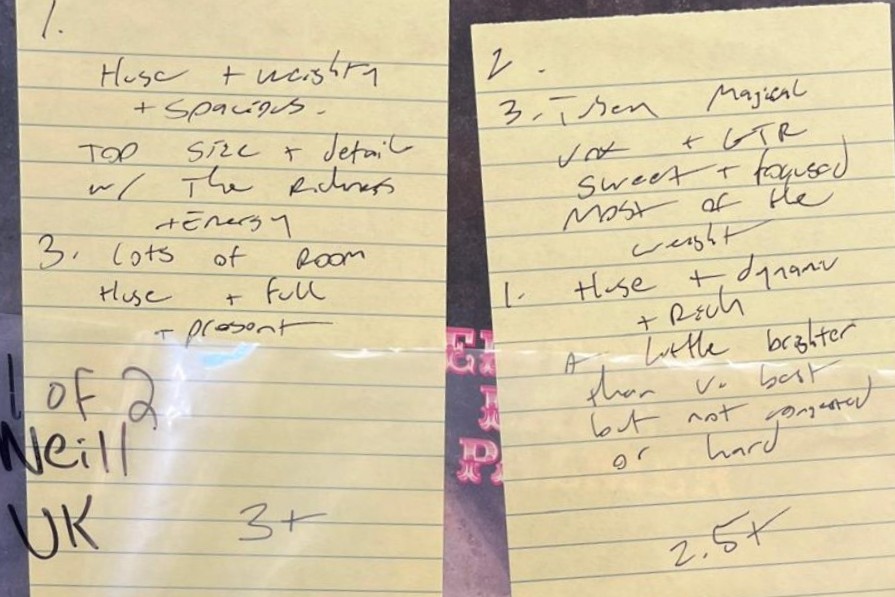
Our notes below will get to that, but first, here is how we described our Shootout Winning UK copy:

Boasting KILLER Shootout Winning Triple Plus (A+++) sound or close to it throughout, this UK Island Pink Rim pressing makes the case that ELP’s debut is clearly one of the most powerful rock records ever made.

Spacious, rich and dynamic, with big bass and tremendous energy – these are just some of the things we love about Eddie Offord’s engineering work on this band’s albums.

Analog at its Tubey Magical finest – you’ll never play a CD (or any other digitally sourced material) that sounds as good as this record as long as you live.

Side one was awesome in every respect, and the way we know that is we played a bunch of copies and nothing could beat it. This side one took top honors for having exactly the sound we described above.

Side two is another matter. We came across a side two that was slightly better than the side two you see here.

When we played the two best copies back to back, side one of this copy came out on top, earning a grade of 3+. However, the side two of another pressing showed us there was even more weight to be heard in the recording than we’d noticed the first time around. Also, it turns out that this side two was a little bright compared to the very best.

When comparing your own pressings of the album, consider listening for these qualities yourself.

(more…)

Cat Stevens Wants to Know How You Like Your Congas: Light, Medium or Heavy?

Hot Stamper Pressings of the Music of Cat Stevens Available Now

During the shootout for this record a while back [the late 2000s would be my guess], we made a very important discovery, a seemingly obvious one but one that nevertheless had eluded us for the past twenty plus years (so how obvious could it have been?).

It became clear, for the first time, what accounts for the wide disparity in ENERGY and DRIVE from one copy to the next. We can sum it up for you in one five letter word, and that word is conga.

The congas are what drive the high-energy songs, songs like Tuesday’s Dead and Changes IV.

Here is how we stumbled upon their critically important contribution.

We were listening to one of the better copies during a recent shootout. The first track on side one, The Wind, was especially gorgeous; Cat and his acoustic guitar were right there in the room with us. The transparency, tonal neutrality, presence and all the rest were just superb. Then came time to move to the other test track on side one, which is Changes IV, one of the higher energy songs we like to play.

But the energy we expected to hear was nowhere to be found. The powerful rhythmic drive of the best copies of the album just wasn’t happening. The more we listened the more it became clear that the congas were not doing what they normally do. The midbass to lower midrange area of the LP lacked energy, weight and power, and this prevented the song from coming to LIFE the way the truly Hot Stampers can and do.

Now I think I understand why. Big speakers are the only way to reproduce the physical size and powerful energy of the congas (and other drums of course) that play such a big part in driving the rhythmic energy of the song.

(more…)

Hey, Maybe Rudy Van Gelder IS as Bad a Mastering Engineer as Some Say

Hot Stamper Pressings of Recordings by Rudy Van Gelder Available Now
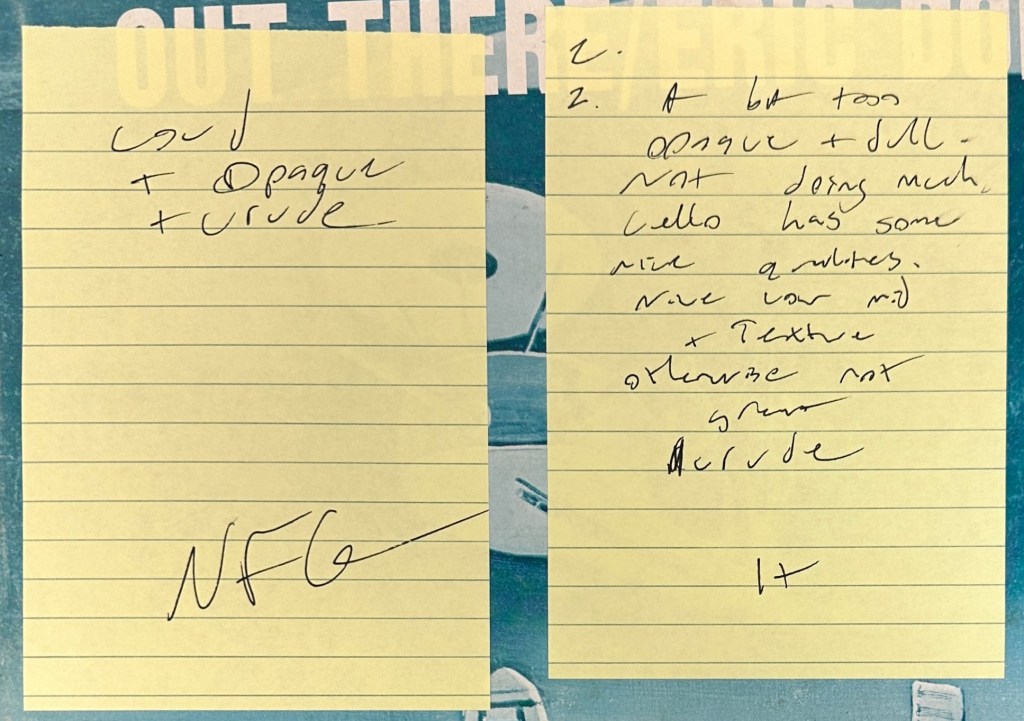
It’s certainly a proposition worth considering, mostly because so many audiophiles seem to believe it. Or maybe in spite of their believing it, skeptics such as myself being the troublemakers they always are.

So let’s dig down into the dirt of a record that Rudy both recorded and mastered.

None of the Rudy Van Gelder cuttings we played of Eric Dolphy’s 1961 release of Out There were better than passable, and some had sides that were downright awful sounding, as you can plainly see from our notes.

The copies that won our most recent shootout were mastered by George Horn, and the best of them sound amazing. Here are some comments we made for the album years back as well as the Allmusic review:

Insanely good sound throughout with both sides earning Shootout Winning Triple Plus (A+++) grades. This copy was doing it all right: rich, full-bodied and Tubey Magical yet still super open and spacious.

“A somber and unusual album by the standards of any style of music, Out There explores Dolphy’s vision in approaching the concept of tonality in a way few others — before, concurrent, or after — have ever envisioned.” – 5 stars

As you will see from our notes, we played some very disappointing early pressings. All the early pressings we had on hand were expensive to acquire, the vintage jazz pressing market being what it is: expensive and full of optimistic record graders of questionable skill. (For these kinds of vintage pressings we probably return 70-80% of what comes our way.)

We have to pay top dollar to get copies that are clean, even on the 60s and 70s reissue labels. Noisy old jazz records are simply not saleable to audiophiles no matter how good they sound.

None of the early copies we played earned grades good enough to bother pursuing, not when there are wonderful sounding vintage reissues from the 80s available. On a more positive note, this being our first shootout for the album in many years, we certainly learned a lot, so let’s just chalk up the losses to the cost of doing business. Our newfound knowledge of the best pressings will continue to pay dividends for years to come now that we know what the right stampers tend to be.

(more…)

Charlie Mingus Asks the Question of the Day for Audiophiles – Compared to What?

Hot Stamper Pressings of the Music of Charles Mingus Available Now

We used to think the early Limelight pressing shown here was so amazing sounding that finding better sound for this recording would simply be impossible, but the original Mercury showed us just how wrong we were – the right Mercury pressing takes the recording to another level, one we never imagined it could reach. (In our experience records do that from time to time. We’ve written about some of the ones we’ve played here.)

Here is a small excerpt from our most recent commentary for the album:

The best copies recreate a live studio space the size of which you will not believe (assuming your room can do a good job of recreating their room). (Here are some of the other recordings we’ve auditioned with exceptional amounts of size and space.

The sound is tonally correct, Tubey Magical and above all natural. The timbre of each and every instrument is right and it doesn’t take a pair of golden ears to hear it — so high-resolution too.

If you love ’50s and ’60s large group jazz you cannot go wrong here. Mingus was a genius and the original music on this record is just one more album supporting the undeniability of that fact.

More evidence, if any were needed, that the three most important words in the world of audio are compared to what?

(more…)

On Our Top Copy, How Could We Tell that One Side Was Not as Full-Bodied?

Hot Stamper Pressings of the Music of Gordon Lightfoot Available Now

We described a recent Shootout Winning pressing of Summer Side of Life this way:

So transparent, open, and spacious that nuances and subtleties that escaped you before are now front and center.

Everything you want in the sound of a good Folk Rock album is here in abundance.

Tubey Magical acoustic guitar reproduction is superb on the better copies of this recording. Simply phenomenal amounts of Tubey Magic can be heard on every strum, along with richness, body and harmonic coherency that have all but disappeared from modern recordings (and especially from modern remasterings).

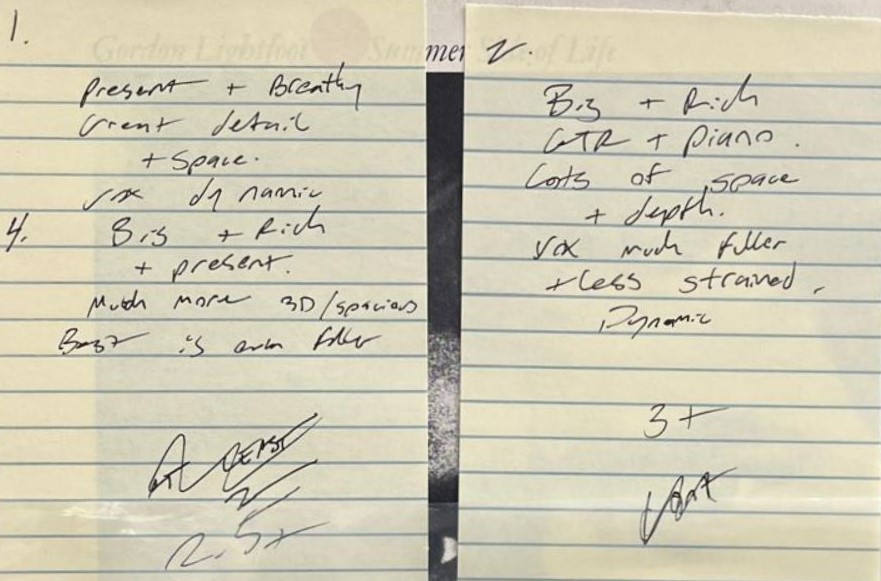
Here are the notes for the 2.5+/3+ copy we put up on the site and sold in 2025.

Side two was killer in every way, and the way we know that is we played a bunch of copies and nothing could beat it. This side two took top honors for having exactly the sound we described above.

(more…)