*Thinking About Records

Music Is Always More Important than Sound

More Entries from Tom’s Audiophile Notebook

It has to be.

You can find Demo Disc quality records all over the site, but what if you are not interested in demonstrating your equipment and just want to play the music you love?

And what if the music you love wasn’t recorded all that well?

What if the music you love is on the third Band album, Stage Fright, a notoriously problematic recording?

You buy the best sounding version you can find and put up with the sonic limitations because the music is always more important than the sound.

(My wife toured with the band Asia in Europe one year, a tour to celebrate their Number One debut album. It happens to be one of the worst sounding records I have ever played, but that didn’t stop people from loving the music. Why would it?)

(more…)

Why Would Anybody Pay Two Hundred Dollars for a Record?

Our Complete Guide to Record Collecting for Audiophiles

Our good customer, Ryan, wrote to tell us just how much he liked the Hot Stamper pressing we sent him of Paul Simon’s The Rhythm of the Saints.

I responded with a few points about the service we provide to the well-healed audiophile. We do this by way of offering the best sounding pressings of your favorite albums, assuming that your favorite albums are the ones we offer on our site. (Many of them are favorites of mine.)

Most of the time our customers agree about the superior sound of our records, especially the customers (like Ryan) who do their own shootouts.)

Based on what I am reading, the pressing we sent Ryan is so good it’s practically priceless. But somebody had to put a price on it, and the price we landed on was two hundred bucks.

To some people this is an outrageous amount of money for one record. But not to someone who loves the album and will play it for the rest of his life. Once a month for 40 years comes to $4 a spin. With apologies to Pete Townshend, I call that a bargain.

If The Rhythm of the Saints is a favorite record of yours, you can now enjoy it for the rest of your life, secure in the knowledge that you have a killer copy in your collection waiting to be played whenever you damn well feel like it (assuming the kids and the wife are out of the house).

(more…)

Finally, Off to the Races

Our Guide to Record Collecting for Audiophiles

UPDATE 2026

Just ran into an old commentary from 2004 (!)  that I had somehow managed to save all these years. The reason I can date it that specifically is because I mention both The Disc Doctor record cleaning fluid and Hot Stampers.

We discovered the Disc Doctor record cleaning fluid in the late-90s, so when we started doing shootouts in 2004, all we had to clean records was The Disc Doctor and a VPI 16.5. By 2007 we had the Odyssey machine and were using the Prelude Record Cleaning System. The combination of those two helped to raise our level of playback a level or two.

We were finally off to the races.

The backstory to the the commentary below would have had something to do with a review I read for the new Heavy Vinyl pressing of Deja Vu from Classic Records. (For those who love the music — and that should mean pretty much everybody reading this blog — here is what a top quality Deja Vu sounds like. In a word, amazing.)

What the commentary below makes clear is that we had a pretty good handle on record pressing variations a number of years before the Hot Stamper thing really took off. It wasn’t long before finding Hot Stamper pressings would take over the business, 2007 or so, and by 2011 we were selling nothing but. They were clearly the best sounding pressings we had ever heard, and we found them using the shootout methods we’d developed over the previous ten years or so.


DATELINE 2004

As those of you who have been reading my stuff for a while know, the last thing you can do is rely on the label to tell you if a record has good sound. This same reviewer mentions how his two original Atlantic pressings have the same label, but somehow sound different (!), as if this makes no sense.

(more…)

On Heroes, It Took Us Ages to Break the Sound Barrier

Hot Stamper Pressings of the Music of David Bowie Available Now

Because the conventional wisdom turned out to be so wrong.

Our intuition that the British originals of Heroes would sound the best was incorrect.

The experiments we carried out falsified that prediction.

In our world, intuitions have a bad track record, but more than a few audiophiles — many of whom are addicted to sharing their “record knowledge” on audiophile forums and youtube channels — seem unaware of the shortcomings of this approach.

Taking a page from one of the greatest minds of the 20th century, we’ve opted to use a more scientific approach in order to discover the record pressings that have by far the best soundi, and we encourage you to do likewise. 

We pioneered the evidence-based approach to finding the best sounding pressings, and, like all good scientists, we shared it with everyone. Some in the audiophile community have taken it to heart, but most have chosen to put their faith in reviewers, forum posters, common sense and logic.

None of these produce consistently good results, but those who use these methods are loathe to question them and only rarely if ever learn the error of their ways.

Once a decision has been made and a specific pressing acquired — you could call it door number three I suppose — cognitive dissonance and confirmation bias immediately kick in to justify the result, and soon enough the game is over. The prize has been won. It’s as good as it gets. Whatever faults it may have must lie in the recording, not the pressing.

(more…)

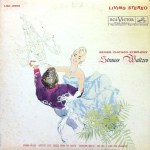
Are the Strauss Waltzes on the TAS List Any Good?

UPDATE 2026

The original, favorable review for this album you see further down is from at least ten years ago and probably more like fifteen.

When we revisited the copies we had of this title more recently, we felt the sound was badly lacking in many ways, with no real extension up top nor much weight to the bottom, the very definition of boxy sound.

Many of the vintage classical records we audition these days have sound that we liked well enough in the past but now no longer meet our standards.

Those pressings might sound fine on an old school stereo (or its modern equivalent), but we have something very different to play our records on, courtesy of the many revolutionary changes in audio that have dramatically altered the quality of analog playback over the last twenty five years.

We much prefer Boskovsky’s performances for Decca for waltzes and the like, by Strauss or anyone else.

TAS List Thoughts

We wanted to like the record, it’s on the TAS List for cryin’ out loud, shouldn’t it at least be pretty good?

It very well may be amazingly good, we can’t say it is or it isn’t. In order to be more sure of our opinion, we would need a great deal more data to back it up. We would need to have a large number of copies on hand, clean them all and play them in order to make it possible to find the killer stamper that may be hiding in the pile, assuming one might be.

(more…)

Breaking Through Barriers and Crossing Bridges

More on the Subject of Critical Listening Skills

The Invisible Barrier Theory

Your ability to recognize that one side of a record more often than not will have sonic attributes and shortcomings that are different from the other side of the same disc is limited by an invisible barrier that exists between you, in your role as a listener, and you, in your role as a judge of the sound.

This barrier also goes by another name: “your stereo.“ There really can be no other explanation for it, assuming you have something close to normal hearing.

What the stereo is incapable of showing you must be seen as a limit on what you can hear, regardless of how skilled a listener you may be, or how much money, time and effort you may have dedicated to your system, or how good a job you think it that system doing.

There is only one solution to a problem like this: get better sound.

Then the differences between any two sides of the same record will become as obvious to you as they are to us.

(more…)

Eat Your Spinach

Hot Stamper Pressings of the Music of Miles Davis Available Now

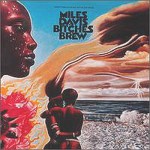
I recently wrote about Bitches Brew. A few excerpts:

The staff may or may not like these kinds of records, but I sure don’t. To be honest, Bitches Brew fits just fine into a section I like to call “albums I can live without.” The world is full of them.

Music is deeply personal. If you don’t feel the need to like what other people like, you and I should get along just fine.

This is music for those who want to be challenged. That’s as true today as it was 50+ years ago when the record came out.

I still don’t care for it though. In my defense, allow me to fall back on the wisdom of de gustibus non est disputandum.

A fellow left me this comment:

Really enjoyed this piece on ‘Bitches Brew’, your take on the album’s density, texture, and restless energy was a great read. It’s fascinating how Miles managed to create something that still feels both challenging and endlessly rewarding all these years later. I especially appreciated the way you framed its impact beyond just jazz, because that’s exactly why the album keeps drawing people back in. I also run a small blog with a few articles about Miles Davis, I hope you’ll take a look, I’d appreciate it.

I thought that it deserved a reply and came up with this one:

Dear Sir,

The records we sell must stand the test of time. Can we say that Bitches Brew stands the test of time? In some ways, yes, absolutely. People are still writing about it. People are still buying it.

But is anybody sitting in a room, by himself, facing two speakers with the lights down low, and actually able to enjoy the music enough to get through all four sides of it? Let me put it as nicely as possible: the most likely answer would be “not many.”

We’re looking for customers who will pay hundreds of dollars for an album. One album. They typically do so with the understanding that they will want to play such an album over and over again. Maybe even become obsessed with  it.

(more…)

We Were Wrong About the Right Mix in 2018

Hot Stamper Pressings of the Music of Neil Young Available Now

In 2018 we described our Shootout Winner this way:

Amazing sound throughout for Neil’s self-titled debut – shootout winning Triple Plus (A+++) sound or close to it on both sides. Both sides are rich, full and Tubey Magical with a big bottom end and excellent resolution.

Surely one of Neil’s toughest to find with top quality sound – and only these early pressings with the original mix have the potential to sound as good as this one does.

Six years later, in 2024, we had acquired enough copies of Neil’s debut to do the shootout again. (Yes, it seems that you may have to wait years for a chance to buy a Hot Stamper pressing of the album from us. However, feel free to use the stamper information provided in the blog listing linked here to help you avoid some of the worst sounding stampers of them all, the earliest ones.

To be clear, some of the later label reissues that come in the second cover are even worse sounding than the first mix stamper pressings that come in the first cover.

(A great deal more on the superior sound of some reissues can be found at the bottom of this listing.)


UPDATE 2024

In our latest shootout, the original mix on multiple copies we played did poorly.

We were wrong and for that we apologize. Please ignore what we wrote about the album below back in 2018. The old mix definitely does not beat the new mix.

(more…)

What to Listen For on Queen’s The Game

Hot Stamper Pressings of the Music of Queen Available Now

UPDATE 2026

Years ago we wrote:

The best sounding side ones were rarely as good as the best sounding side twos.

Not sure if that’s still true but you can check your own copy and see how the two sides compare.

Here some other records that often display side to side differences.


Our Old Commentary

Even the good side ones tended to have a trace of harmonic distortion and compression that is simply nowhere to be found on the good side twos. How and why this is we have no idea. Since every copy had the same sonic issues, we discounted it in our grading.

Only the better copies bring the hits on side one to life and give them the size and power we know they can have.

(more…)

Five Major Problem Areas in Audio

Hot Stamper Pressings of the Music of Prokofiev Available Now

UPDATE 2026

There was a time, perhaps ten years ago, that many EMI pressings finally started to sound a lot better to us than they had in the early- to mid-2000s when this commentary was written.

(2007 was the year everything changed, but it wasn’t 2007 yet. After being deep into audio for close to thirty years, it wasn’t until a few years later that we learned we still had a long way to go.)

Nowadays we can say that we are proud to offer some truly outstanding recordings conducted by Previn, Fremaux and others for EMI.


What to listen for on this album?

That’s easy: The all-too-common 70s EMI harshness and shrillness.

We could never understand why audiophiles revered EMI the way they did back in the 70s. Harry Pearson loved many of their recordings, but I sure didn’t. 

The longer I stay in this hobby, the more clear it becomes that many of the records on the TAS list are better suited to the old school audio equipment of the 60s rather than the modern approach to audio that is possible today thanks to the many revolutionary changes to every aspect of music reproduction that have come along in the last thirty years or so.

(Obviously there are plenty of audio systems from every era that, for all appearances, seem unlikely to reproduce music well, which goes a long way in explaining most of the rampant enthusiasm for the modern Heavy Vinyl pressing.)

These kinds of records used to sound good on those older systems, and I should know, I had an old school stereo even into the 90s. Some of the records that sounded good to me back then don’t sound too good to me anymore.

(more…)