Clear Thinking

Practically everything we know about record pressings we learned by playing them, in record shootout after record shootout, starting way back in 2004.

Once you implement a scientific approach to evaluating record pressings, most of the thinking stops and the real learning begins.

How Not to Conduct a Proper Shootout for Aqualung

UPDATE 2023

This commentary was probably written in 2010 or thereabouts, since that’s the date on Fremer’s Aqualung review, which, for those with much more tolerance for audiophile BS than I am able to muster, can be found here. I’ve made a few changes to the commentary below, but most of the original text is intact.


We recently put up a Hot Stamper Aqualung that just BLEW THE DOORS OFF the CLASSIC 200g pressing. Michael Fremer may think the new reissue is the ultimate pressing, but we sure don’t. 

The Aqualung shootout on his site is priceless. He has so many silly things to say about it, let’s not waste any more time and get right to them.

His Shootout Begins

He says he “… compared Classic’s new 200g reissue with: 1) an original UK Chrysalis 2) an original American Chrysalis/Warner Brothers, 3) an original French Pink Label Island, 4) The Mobile Fidelity ½ speed mastered edition and 5) DCC’s 180g issue mastered by the team of Hoffman and Gray.”
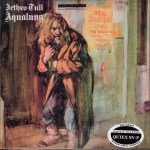
How many of each? One, right? (All the articles in front of the nouns are singular. Assuming MF is using good grammar, how many could there be?)

Mikey, that’s your first mistake.

When it comes to the domestic release, one is a wholly inadequate sample size for pressings that were pumped out by the millions and therefore mastered multiple times. Go to Discogs if you want to see just how many different stamper numbers can be found in the original Reprise pressings. Hint: it’s a lot. Some of them are known to us to be awful, some fall into the middle of the pack, and some we like. Figuring out which are which has taken us a lifetime of work and is well beyond the ability of any single person to decode for more than a few dozen records.

Maybe you got hold of a bad sounding “original American Chrysalis/Warner Brothers,” did you ever think of that? The record bins are full of them.

If you did get hold of a bad one — and all the evidence points in that direction — the time and effort you put into your shootout just went flying out the window, defenestrated as they say.

Shootouts using only a small number of pressings have very little value. Anybody who claims to know anything about records ought to know that.

This next line just floors me.

Now rather than make value judgments, let’s just compare without prejudice.

This guy may not be good for much, but he sure is good for a laugh.

Does he really expect us to believe that the comments that follow are not biased in any way, that they are The Truth, that he is able to measure “intimacy and warmth” and tell us precisely how much of each there is on any given pressing? Who in his right mind thinks like that?  (At this rate he may end up wandering about a park with snot running down his nose, greasy fingers smearing shabby clothes, but let’s hope it doesn’t come to that. Help is available; perhaps Stereophile has a mental health plan under which he could be covered.)

Soon enough he goes on to give his opinion as to the merits of each of the pressings noted above. I’m sorry, did I say opinion? I meant comparisons without prejudice. Sorry, my bad.

The Big Truth

And of course he is more than welcome to make any and all the comparisons he deems fit, each from that lovely sample size of one. And if he wants to add another sample (size = 1) to the mix by playing the DCC gold CD, he’s welcome to do that too, which he did. I’m guessing that his CD player is every bit as accurate as his front end (comprising turntable/ arm/ cartridge/ phono stage/ cables), which, if he were to ascribe a percentage to the accuracy of all the pieces that make up this chain, would have to be in the range of 100% or thereabouts. Or as the late John McLaughlin might say, on a scale of one to ten: ten, meaning Metaphysically Accurate.

No colorations. No imperfections. Pure Truth, and nothing but.

(more…)

Classic Records and Begged Questions

Hot Stamper Living Stereo Orchestral Titles Available Now

A typical review of a Classic Records classical release here on the blog might read more or less as follows:

Classic Records ruined this album, as anyone who has played a sampling of their classical reissues would have expected.

Their version is dramatically more harsh and aggressive than the Shaded Dogs we’ve played, with transistory shrill string tone and almost none of the sweetness, richness and ambience that the best RCA pressings have in such abundance.

In fact, their pressing is just plain awful, like most of the classical recordings they remastered, and should be avoided at any price. 

With every improvement we’ve made to our system over the years, Classic’s remastered classical offerings have managed to sound progressively worse. How could that be, you ask?

Because higher quality playback stops hiding the shortcomings of bad sounding records.

At the same time, and much more importantly, better audio reveals more and more of the strengths of good sounding records.

Begging the Question

But what actually is a good record? Don’t I have to offer some evidence for what causes a record to be good rather than simply asserting that the original is good and the Heavy Vinyl reissue is bad (or at least worse)?

Luckily for you, dear reader, you are actually on a blog that has much to say about these issues.

The main reason we feel qualified to make these judgments is that we make sure to play the records we review under rigorously controlled conditions in what amounts to “blinded” experiments. (Certainly as blinded as is practical.)

And our approach to finding the best sounding pressings for any given album has gone through a host of changes over the course of decades in order to allow us to carry out this difficult work. Work we actually enjoy doing.

It’s also the kind of work that practically nobody else does.

And certainly no one does it at anything approaching the scale of our efforts, with a full time staff and a monthly record purchasing budget in the tens of thousands of dollars.

An amazingly good stereo set up in a heavily-treated room with clean electricity doesn’t hurt either.

(more…)

How Did Columbia Make So Many Great Sounding Records Without Today’s Obviously Superior Mastering Equipment?

Hot Stamper Pressings of Vintage Columbia Albums Available Now

When I play Columbia recordings from the 50s and 60s of Brubeck, Ellington, Miles Davis and other jazz giants, what I find most striking about them is how natural, warm and sweet they sound.

I was playing an old mono Ellington record a while back, and when the clarinet solo came in, it almost took my breath away. The sound of the instrument was that real. This from a mid-50s run-of-the-mill Columbia pressing.

Those guys — the engineers and the musicians — knew what they were doing.

Sometimes when I read about the extraordinary lengths modern engineers go to in order to use the highest quality audiophile equipment: custom microphones, tape recorders, wire, and the like, it makes me wonder how many of the best sounding records in the world managed to be recorded without the benefit of any of that stuff.

RCA didn’t need it for their Living Stereos.  Decca didn’t need it.

Contemporary Records managed to record many of the best sounding jazz records without it.

How did all those great records get made with such bad equipment?

I guess we’ll never know.

Columbia may not have always recorded the best “serious” jazz, but they were very serious about the sound of their jazz. Outside of Contemporary, Columbia has better sounding jazz records than any other label of which I am aware.

Recordings made at their 30th Street Studio are pretty hard to beat. There is no Heavy Vinyl reissue on the planet that can compete with the sound of one of our Hot Stamper pressings of any of the albums recorded there you see available on our site, and they are guaranteed to knock your socks off or your money back.

And the Brubeck albums recorded by Fred Plaut are some of the most amazing sounding of all the Columbias, something few audiophiles would dispute. (Try to get the early pressings in stereo. Nothing can touch them. If you can’t afford our prices, we are more than happy to help you find your own. )


UPDATE 2025

We have two new lists for those who would like to know which Columbia label pressings win shootouts — one for 6-Eye Label winners and one for 360 Label winners.

(more…)

What to Do When Early Warner Bros. Pressings Have Bad Sound

More Label Advice for Audiophiles

There are a lot of Green Label Warner Bros. records from the 60s and 70s that sound dark, murky, recessed and so on.

The shortcomings we list below are hardly exhaustive but they should help you make a good start. Click on any link to see the pressings we have identified with that specific problem.

But the later label LPs are rarely any better and more often than not much, much worse. When you play most of them, it’s obvious that their mastering engineers have gone overboard in cleaning up the murk, leaving a sound that is lean, flat and modern — in other words, unmusical, inappropriate and more often than not disastrous.

But don’t get us wrong, there are plenty of good ones. On this blog we’ve taken the time to identify the Green Label Warner Bros. records with the potential to win shootouts. (Potential is the key word in that sentence.)

Finding the right balance of fullness and clarity may not be easy, but for most Warner Bros. albums it can be done. It’s what we get paid to do, and there’s no reason you can’t do the same thing at home as long as you make sure to follow our approach.

That Old Record Sound

The world is full of old records that just sound like old records. We’ve suffered through them by the tens of thousands.

The average record we play tends to suffer from some of these faults. It might be:

Our website, as well as this blog, are devoted to helping audiophiles find pressings that don’t sound anything like the millions of run-of-the-mill LPs that were stamped out over the last seven decades with no concern for sound quality.

Even a million dollar stereo can’t make the average record sound good, and the more accurate and revealing the system, the more limited and lifeless — relatively speaking of course — the average record will show itself to be.

Average records don’t sound like our amazingly good shootout winning copies, but they look just like them, and that’s what makes finding them so difficult. For classical and orchestral music, the effort required must be seen as the work of a lifetime.

(more…)

Yes, For Some Records There Is Only One Set of Magic Stampers

Hot Stamper Pressings of Music on Island Records Available Now

As is sometimes the case, there is one and only one set of stamper numbers that consistently wins our Catch Bull at Four shootouts.

We stumbled upon an out-of-this-world copy of the right pressing in 2016, a copy took the recording to a level we had no idea could even be possible. (We were going to give it Four Pluses, and probably should have, but cooler heads prevailed.)

Since then we have had many copies come in, but none that could compete with the Magic Stamper pressings.

And the best part of this story is that, no, the best stampers are not 1U, or 2U, or even 3U.

As a matter of fact, they are far from the stampers found on the earliest pressings. That’s one reason it took us so long to discover them, because they are much less commonly found than pressings with the earlier stampers. By the time these later pressings were mastered, pressed and released, the album’s biggest selling days were over.

For all we know this cutting may have been done just to keep the record in print, possibly undertaken many years after its initial release.

Who knows? Who cares? What difference does it make?

Well, it does serve to make a point near and dear to our hearts: that the idea (and operational premise of most record collectors) that the originals are always better is just a load of bunk. It might be and it might not be.

If you want better sounding records, you had better open your mind to the idea that some reissues have the potential to sound better than even the best original pressings.

These, for starters, and there are hundreds more you can read about here on the blog.

Of course this is nothing but bad news for the average audiophile collector, who simply does not have the time or money to go through the hassle of buying, cleaning and playing every pressing he can get his hands on.

But good news for us, because we do.

(more…)

Chicago and The Hottest Sounding Vinyl – Are You a Thrillseeker Too?

We admit to being thrillseekers here at Better Records, and make no apologies for it.

The better the system and the hotter the stamper, the bigger the thrill.

I want to hear the music I love playing louder and sounding better, with more energy and excitement, and the reason I spent an ungodly number of hours over the last 40+ 50+ years working on my stereo is that the kind of sound that can give me thrills doesn’t happen by accident.

You have to work your ass off to get it.

And spend a lot of money.

And search for those pressings that have the sound you are looking for.

And be very lucky.

I don’t play records to sip wine and smoke cigars. I play records to feel something.

Whether the music is rock, jazz or classical, I want to feel the power of the music just as you would feel it at the live event.

(more…)

Could This Be the Sound Audiophiles Complain About with RVG’s Mastering?

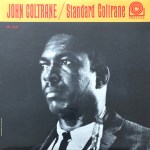
Hot Stamper Pressings of the Music of John Coltrane Available Now

A rare and expensive early mono pressing that we put into our most recent shootout was dreadful sounding.

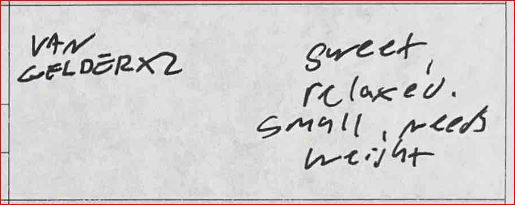
Our main listening guy owns the record and made the note you see below, saying that his personal copy is every bit as bad.

The sound of the original was painfully midrangy and crude. It was not the worst of all the pressings we played, but it was nevertheless pretty bad, sounding nothing like our shootout winners.

We had a pressing on an early Prestige label in stereo, also mastered by Rudy Van Gelder, that was reasonably good sounding, earning grades of 1.5+ to 2+. It was sweet and relaxed, but relatively small and lacked the weight of the best.

For this music, we’ve found the best sound on the better Two-Fer pressings and the right OJC.

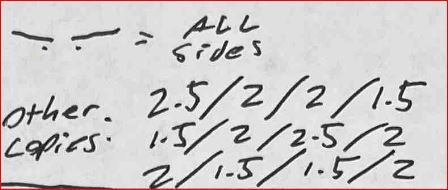
That Two-Fer budget reissue pressing, remastered by David Turner in 1972, can do very well in a shootout, but it can also fall far short of the mark on some sides, as you can see from the grades for these three other copies.

If you have the Two-Fer, how does yours sound compared to the four we auditioned (a shootout we were doing for the third or fourth time I might add), and how could you possibly know such a thing without a great many more copies at hand to clean and play?

(more…)

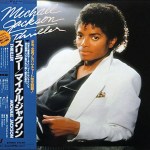
Is It Possible to Find Out Who Mastered the Japanese Thrillers?

Hot Stamper Pressings of the Music of Michael Jackson Available Now

A letter we received not long ago made the point that the Japanese pressing of Thriller the owner had been listening to for years, even decades, fell well short of the mark set by the sound of the White Hot Stamper pressing he now owned.

To think, I spent all those years playing and re-playing a record that was bright and edgy, none the wiser to matrix numbers and pressing variations.

I agreed, saying that I myself learned the hard way, having wasted some of my own money on them. that Japanese pressings were almost always a crock, writing:

Most Japanese pressings cater to what a mid-fi system would need to sound good and a hi-fi system would find ruinous. They are almost always made from dubbed tapes, which are then brightened up in the mastering phase since that is the sound that appeals to the Japanese market for some reason unknown to me. Old school audio equipment — horn speakers and vintage tube electronics — would be my guess.

A fellow who saw an opening to set me straight and take me down a peg, all without having to learn how to use that pesky shift key on his computer, left the following comment in that post:

the japanese pressings were mastered by BG. the only difference being the quality of the material. nice try though, snakeoil salesman.

I immediately went to battle stations. I doubted whether Bernie Grundman has mastered any pressings for the Japanese market, but I couldn’t say for sure. It’s a question that had never come up. We ourselves had discovered a very good sounding pressing of Tusk that was mastered by Ken Perry and pressed in Japan, so I knew it was possible that the original mastering engineer could have sent metalwork to Japan for the Japanese to produce properly-mastered records for their market.

Fortunately, Discogs makes checking such things fairly easy. I went right up to the listing for Thriller and clicked on all the Japanese original pressings to see if there was any evidence to show that he had mastered them.

Bernie Grundman’s name was credited on the back cover as the mastering engineer, but I didn’t put much stock in that. I assumed that he did not master the album for their market, since that is hugely impractical. I surmised that removing his credit would have badly defaced the jacket, something I doubted the Japanese would have found acceptable. They seem to be very particular about these things.

Sure enough, here is what the stampers look like for the typical Japanese pressing that supposedly would have been mastered by BG:

There are about half a dozen original Japanese pressings for the album on Discogs and all the stamper listings look like the one above.

If you know anything about records, you know that these markings could not have been created by Bernie Grundman’s mastering operation here in the states.

(more…)

Stop Doing These Things and You Too Will Start Finding Better Sounding LPs

Our Guide to Collecting Better Sounding Records

We’ve learned through thousands and thousands of hours of experimentation that there is no reliable way to predict which pressings will have the best sound for any given album.

The impossibility of predicting the sound of individual pressings is one which we’ve learned to accept as axiomatic. As a scientifically-oriented person and a born skeptic, this was a concept I had never had any difficulty wrapping my head around.

At some point in my audio career, probably in the early-90s, about twenty years into my audio journey, I realized it was in fact beyond dispute. Like it or not — and, based on what I read on forums and such, there apparently is a sizable number of audiophiles who don’t like it — it was simply a fact.

What to Stop

Given the unpredictable nature of records, the five most important aspects of the solution we put into practice were these:

  1. We stopped pretending we could know something that can’t be known. [1]
  2. We stopped relying on theories proven to have virtually no predictive effect. [2]
  3. We stopped paying attention to the experts and so-called authorities. [3]
  4. We stopped assuming and speculating. [4]
  5. We stopped worrying about getting it wrong. [5]

It took many years, decades even, to learn what worked and what didn’t work in our pursuit of better records. We came to realize over that span of time that the five things listed above were hindering us in doing our job, so we stopped doing them.

What remained was the simplest possible approach to the problem. One that could be taught in a high school science class, if high school science classes were run by experimentally-minded record collectors.

  1. Guess what pressings might be good for a given album.
  2. Buy some of those pressings and others like them.
  3. Clean them up, play them and see if your guess about the sound of the pressing turns out to be right, wrong or somewhere in-between.
  4. Repeat steps one through three until you chance upon a pressing that sounds better than all the others.
  5. Get hold of as many of those as you can and play them against each other under rigorously controlled conditions.
  6. Continue to make other guesses and acquire other pressings to play against the pressing you believe to be the best.
  7. Keep making improvements to your playback system and never stop testing as many alternate pressings as possible.

That’s it. Nothing to it. It all comes down to experimenting at a sufficiently large scale to achieve higher rates of success.

Failing Forward

Edison is said to have failed 10,000 times before inventing a light bulb filament that had a practical use.

Most audiophiles do not have the time and money, not to say patience, needed to fail again and again this way.

For us, having a full-time staff of ten and a rather large record buying budget, we see failures as just another part of the job. Our successes pay for them, since obviously somebody has to, Milton Friedman’s famous remark about free lunches being as true as ever. This partly accounts for our prices being as high as they are.

We don’t make a dime from writing about records that don’t sound good to us. We review them as a service to the audiophile community. We play them so that you don’t have to.

(more…)

Getting It Right When There’s Money on the Line

More Entries in Our Thinking About Records Series

John Stossel wrote a piece about prediction markets shortly after the 2022 midterms, explaining why prediction markets are still a good thing even though many of the predictions for the election that were made there did not come true. His take:

Bettors [may be wrong, but] at least adjust their predictions quickly.

Last night, while clods on TV still said “Democrats and Republicans battle for control of the House (CBS),” those of us who follow the betting already knew that Republicans would win the House.

Historically, bettors have a great track record. Across 730 candidate chances we’ve tracked, when something is expected to happen 70% of the time, it actually happens about 70% of the time.

That’s because people with money on the line try harder than pundits to be right.

As you can imagine, this last line was music to my ears.

We’ve built our record business on the fact that we have the experience, the expertise and the staff needed to find the best sounding pressings of many of the most important recordings of all time, from Dark Side of the Moon to Kind of Blue and everything in between.

And, as everyone knows, we charge a premium price for our Hot Stamper pressings, often ten and twenty times their “market value.”  This has been known to confuse and upset some people.

But can we charge more than our customers are willing to pay and still be in business after 37 38 years?

Some people must think they are getting their money’s worth, at least, that’s what some of them tell us.

We have to back up our opinions and our descriptions with actual records that deliver the sound we say they will, or we would have gone out of business a long time ago. You can fool some of the people all of the time, etc., etc.

Guaranteed?

This is in sharp contrast to the audiophile reviewers who tout one new record after another with no guarantee whatsoever that you will find anything like the superior sound they spent an endless number of words describing when the record finally ends up on your turntable.

Where do you go to get your money back when the record doesn’t have the sound they told you it would have?

(more…)