***Speaker Advice

Baby You’re a Rich Man

Hot Stamper Pressings of the Music of The Beatles Available Now

Below we discuss listening to Baby You’re a Rich Man from side two of the German Magical Mystery Tour album.

If you own a copy, play yours and listen for what we describe in this track by track breakdown.

For those of you interested in digging deeper into the sound of scores of other titles, our listening in depth commentaries have track breakdowns for some of the better-known albums we’ve done shootouts for.

Baby You’re A Rich Man

This track is Demo Disc Quality on the best Hot Stamper pressings. As I was playing this song for the shootout, the thought occurred to me that if I had one track to play to someone to demonstrate what a thrill it is to have a big, expensive stereo, it would be hard to pick a better song than Baby You’re A Rich Man.

The only other one that occurs to me off the top of my head is Sergio Mendes’ For What It’s Worth off Stillness, a record we never have in stock by the way.

The sound is wall-to-wall and floor-to-ceiling and big as life. You can’t get that sound with screens and you can’t get it with smaller speakers and their smaller drivers.

Once you’ve heard that sound it’s hard to get too excited about any other.

(more…)

Our 2016 Shootout Winner Just Sounded More Like Live Music

Hot Stamper Pressings of the Music of Paul McCartney Available Now

Back in 2016 we had this to say about a copy of the album we had just played:

This copy will put you front and center for the single greatest Paul McCartney recorded concert of all time.

In the final round of shootouts on both sides, this copy showed itself as clearly superior in terms of transparency and three-dimensionality, as well as having the most rock solid bottom end. To sum it up, my notes read “so real,” which is exactly what makes this copy THE one to have. This is Paul and his mates LIVE in your listening room like you have never heard them before.

This copy gave us the feeling that we were right there in the audience for the taping of this amazing performance. It made other copies sound like records — good records, but records nonetheless. This one has the IMMEDIACY of a live show, one which just happened to be fronted by one of the greatest performers in the history of popular music, Sir Paul McCartney.

We shootout this album about once a year, which means that many changes will have occurred to the stereo in the meantime. One of the qualities that we noticed this time around was how much like live music this album can be when the pressings have one specific quality — tons of bass.

Live music, especially live music heard in a club, tends to have plenty of bass. It’s the sonic quality that’s by far the most difficult to recreate in the home.

When a record manages to capture that kind of “live” low end energy, it really helps make the connection between the sound of live music and the sound coming out of your speakers.

(more…)

Gino Vannelli, Big Speakers and The Amazing SP3A-1 Preamp

Rock Records that (Potentially) Sound Amazing on Big Speakers at Loud Levels

At one time Storm at Sunup was easily my favorite Gino Vannelli album. When it came out in 1975 I immediately fell in love with the music and put it into heavy rotation on my turntable (a phrase that had not been invented yet but perfectly describes how easy it is to become obsessed with an album).

It was one of a group of recordings that made me want to pursue higher quality equipment, hoping that any improvement in playback would allow the music to sound even bigger and more exciting.

It was pretty damn big and exciting already, but I wanted more. 

Right around that time I got my first tube preamp, the Audio Research SP3A-1, which replaced a Crown IC-150. As you can imagine, especially if you know the IC-150 well, playing this album through that state-of-the-art tube preamp was a revelation.

From that point on there was no going back. I started spending all my money on (what I took to be) better and better equipment and (often mistakenly) better records by the score. That was fifty plus years ago and I haven’t stopped yet. [Not so much now that I’m retired, but you get the point.]

Even at the age of 21 I wanted to pursue Big Systems driving Big Speakers.

You need a lot of piston area to move enough air to bring the dynamics of a recording like this to life, and to get the size of all the instruments to match their real life counterparts, or at least to seem to, this being a multi-track studio recording.

For that you need big speakers in big cabinets, the kind I’ve been listening to for more than fifty years. (My last small speaker was given the boot around 1973 or so.)

To tell you the truth, the Big Sound is the only sound that I can enjoy. Anything less is just not for me, mostly because the music I love demands the big sound, whether the listener is aware of that fact or has anything like the system required to reproduce it.

With few exceptions, the records that helped us improve our playback required big speakers that could play at loud volumes.

(more…)

Sound Like This Makes Audiophiles the Laughing Stocks of the Music World

Advice We Think Can Help You Make More Audio Progress

Click on the link below and give this system a listen for a minute or two.

Have you ever heard live music that sounded like this?

Who in his right mind wants a stereo with this kind of ridiculously artificial sound?

If you’re reading this blog, I hope it’s not you, because you will never find a record on our site with sound this unnatural.

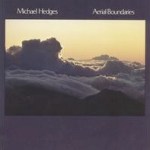
If you like the sound of an album such as Aerial Boundaries, then buy this speaker. It will make all your records sound just like it! It’s the perfect example of a pass/fail record, the way this speaker is an example of a pass/fail speaker.

Here is how we described the sound of Aerial Boundaries years ago:

It sounds as if someone went into the biggest room in the studio they could book, sat Michael Hedges down on a stool out in the middle of it, and then took all the mics and aimed them at the walls. Roll tape! (Assuming they used tape, who knows what kind of crap digital system they were using.)

And the best part is that it was nominated for an engineering Grammy!

If you think the average music lover today wouldn’t know good sound if it bit him in the ass, this album is proof that nothing has changed, not since 1984 anyway.

Some commentary I found on the web

Aerial Boundaries is the second album by guitarist Michael Hedges released on the Windham Hill label in 1984. It was nominated for a Grammy Award as Best Engineered Recording.

(more…)

Small Speakers and Some Audio Lessons I’ve Learned Over the Last 50+ Years

These Are the Fundamentals of Good Sound

UPDATE 2026

The video linked to below is now private. A smart move on the part of its creator.

However, as you will see from our commentary, it really doesn’t make much of a difference whether it is or not. What we had to say about it years ago is still true.


Do not believe a word you hear in this video. [Not a problem!]

You probably shouldn’t even watch it. [Indeed, and now you can’t.]

Let me state clearly one of our core beliefs here at Better Records.

Small speakers are incapable of lifelike musical reproduction in the home.

(more…)

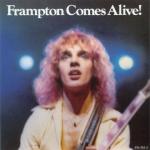
Some Speakers Don’t Let Frampton Come Alive

Hot Stamper Pressings of the Music of Peter Frampton Available Now

When I was first getting serious about audio in the mid-70s, electrostatic and screen-type speakers were quite common in audio showrooms. Classical music aficionados in particular seemed to prefer them to other designs. They were often big, open and clear, and never boxy or sour.

Another quality they had going for them was that they were exceptionally transparent.

Alas, they were inadequate or wrong in almost every way a speaker can be, but transparency was their strong suit and everybody could hear it. All of the qualities noted above — big, open, clear — worked together to fool a great many audiophiles into thinking that theirs was the right approach to reproducing music.

(Circa the Pretzel Logic era, Becker and Fagen of Steely Dan fame were apparently big fans of Magnepan speakers, to the consternation of everyone else in the band — especially the engineers, one imagines — who thought they were overly-smooth, incapable of reproducing the frequency extremes high and low, soft, and lacking in their ability to reproduce many of the most important aspects of music, energy especially. Count me among their harshest critics.)

It was my good fortune at the time that I liked to play my rock music good and loud, so screens, panels and full-range electrostats were never going to cut it for me.

I once heard the giant Magnaplanar 1D system — a series of ten panels that stretched all the way across the long wall of the audio showroom I frequented at the time, standing about 7 feet tall to boot — try to reproduce a favorite Peter Frampton record of mine. (It was Wind of Change, a Desert Island Disc I still play regularly to this day.)

(more…)

Cat Stevens Wants to Know How You Like Your Congas: Light, Medium or Heavy?

Hot Stamper Pressings of the Music of Cat Stevens Available Now

During the shootout for this record a while back [the late 2000s would be my guess], we made a very important discovery, a seemingly obvious one but one that nevertheless had eluded us for the past twenty plus years (so how obvious could it have been?).

It became clear, for the first time, what accounts for the wide disparity in ENERGY and DRIVE from one copy to the next. We can sum it up for you in one five letter word, and that word is conga.

The congas are what drive the high-energy songs, songs like Tuesday’s Dead and Changes IV.

Here is how we stumbled upon their critically important contribution.

We were listening to one of the better copies during a recent shootout. The first track on side one, The Wind, was especially gorgeous; Cat and his acoustic guitar were right there in the room with us. The transparency, tonal neutrality, presence and all the rest were just superb. Then came time to move to the other test track on side one, which is Changes IV, one of the higher energy songs we like to play.

But the energy we expected to hear was nowhere to be found. The powerful rhythmic drive of the best copies of the album just wasn’t happening. The more we listened the more it became clear that the congas were not doing what they normally do. The midbass to lower midrange area of the LP lacked energy, weight and power, and this prevented the song from coming to LIFE the way the truly Hot Stampers can and do.

Now I think I understand why. Big speakers are the only way to reproduce the physical size and powerful energy of the congas (and other drums of course) that play such a big part in driving the rhythmic energy of the song.

(more…)

Money Down the Drain

Basic Audio Advice — These Are the Fundamentals of Good Sound

Readers of this blog know that I’m a fan of big speakers, but in a room that’s as bad for sound reproduction as this one is, these monsters would qualify as a form of torture at anything above a whisper.

There is an ideal balance between absorption and reflection that must be found for every room. The balance this fellow has chosen is 98% reflection, which will lead to 100% awful sound.

I don’t even like the picture between the speakers. If you must have something there, in my experience rarely will it sound good unless it is five or more feet off the ground. (See picture below.)

Note that sidewall absorption in our listening room is never more than about five feet high. For some reason that seems to work the best. We tried lots of different heights over the course of years and we always came back to nothing over five feet.

The back wall has 4 inch thick 4×8 sheets of styrofoam across most of it, leaving the corners empty (which always seems to work the best, again, who knows why).

A small piece of absoptive material in the middle up high seemed to help, but more than that was too much and less did nothing.

These may be the most wonderful speakers in the world in the right room, but in this room there is no speaker that could possibly reproduce music properly, which means this guy spent a lot of money and got nothing for it. He’s not alone.

He could get some carpet and pull his speakers well out into the room for starters, but then the whole thing just won’t have the elegance it did, so what on earth would ever make him do such a thing? His favorite music? Hah, that’s a good one.

(more…)

A Few Quick Thoughts on Correctly Sized Instruments

More Unsolicited Audio Advice

Something I rarely take time to write about on this blog is the sizing of instruments.

Some speakers — typically those with smaller drivers — create images of instruments that are too small, smaller than you would picture them in your mind if you were sitting in the audience with your eyes closed.

Other speakers — typically screens of one kind or another — produce larger-than-life images of instruments and vocalists. In the 70s, I heard a lot of screens and full-range electrostats — these come to mind, and there were plenty of others like them, Magneplanars and the like — but the images never seemed right-sized or real enough to be taken seriously.

I opted for a big dynamic system in the mid-70s and over the course of the next fifty years never heard anything that would give me reason to doubt that choice.

(more…)

In the Market for New Speakers? See How Well They Handle the Energy of Far More Drums

Hot Stamper Pressings of the Music of Dave Brubeck Available Now

The drum solo Joe Morello lets loose on Far More Drums is one of the best on record. I was playing that song recently and it occurred to me that it is practically impossible for a screen or panel speaker of any design to reproduce the sound of those drums properly, regardless of how many subs you have.

Most of the music is not in the deeper bass anyway. It’s the whack of instruments whose energy is in the lower midrange and mid-bass that a screen speaker will struggle with.

A good large-driver dynamic speaker fed by fast electronics can handle the energy in that range with ease.

This is the album you need to take with you next time you head to your local stereo store to audition speakers.

It will help clarify the issues. Screen speakers do many things well, but drums are not one of them, at least in my experience they aren’t. If drums are important to you, do yourself a favor and buy a dynamic speaker, the bigger the better.

brubeck in the studio733

Time Further Out, like most of the classic Brubeck albums, is a big speaker record. It requires a pair of speakers that can move air with authority below 250 cycles and play at fairly loud levels. If you don’t own speakers that can do that, this record will never really sound the way it should.

(more…)