Good, Not Great Sound

These are records that we auditioned and found to have good, not great, sound quality. If a record earns a Hot Stamper grade of 1.5+ on both sides, it is a very good sounding record, but it is a far cry from the best pressings that we’ve played in shootouts.

Shaded Dogs with 12s Stampers Are Not the Way to Go on LSC 2566

Hot Stamper Pressings of the Music of Edvard Grieg Available Now

One set of stampers for the Shaded Dogs we played in our most recent shootout sounded consistently subpar, 12s/12s.

The sound was blary on both sides. (More records with blary sound can be found here.)

Although the Shaded Dog originals with the right stampers will always win our shootouts, the White Dog reissues still sound quite good to us, just not as good.

This Shaded Dog might be passable on an old school audio system, but it was too unpleasant to be played on the high quality modern equipment we use.

There are quite a number of other vintage classical releases that we’ve run into over the years with similar shortcomings. For fans of vintage Living Stereo pressings, here are some to avoid.

Some audiophiles may be impressed by the average Shaded Dog pressing, but I can assure you that we here at Better Records are decidedly not of that persuasion.

Something in the range of five to ten per cent of the major label Golden Age recordings we play will eventually make it to the site. The vast majority just don’t sound all that good to us. (Many have second- and third-rate performances and those get tossed without ever making it to a shootout.)

(more…)

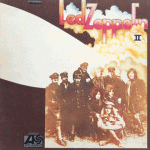
Jimmy Page Remasters a Classic

Hot Stamper Pressings of the Music of Led Zeppelin Available Now

The more appropriate title for this commentary might be The Two Game, in honor of The Blue Game we created way back in 2007.

That year was indeed a watershed in the history of Better Records. It was the year we officially gave up on Heavy Vinyl, having come to the conclusion that the modern remastered LP was a lost cause. One thick slab of vinyl after another was ordered up and placed on our turntable, where it lay half-dead until someone took it off and relieved us of our misery.

Signs of improvement were nowhere to be found. A slough of dubious pressings released in the fifteen years since then have only confirmed the wisdom of our decision. It seems we got out just in time!

Fittingly, it was actually Blue that finally tipped the scales.

Geoff Edgers, the writer for the Washington Post investigating the world of audiophiles, visited me in 2021 to hear what this crazy Hot Stamper thing was all about. [1]

He brought with him a number of records to hear on our reference system, including the 2014 remaster of Led Zeppelin II (excellent), the remaster of Brothers in Arms that Chris Bellman cut, released in 2021 (also excellent, review to come), and last and definitely least, the pricey Craft Recordings remaster by Bernie Grundman of Lush Life (astonishingly bad, review coming).

That last one will cost you a couple of hundred dollars minimum, but you should save your money. It’s not worth a plugged nickel if good sound is what you are after. If you like being the only one on your block with a limited edition pressing, then I suppose you can tell your audiophile friends you own one and that it looks nice on the shelf. Whatever you do, don’t play it.

Retirement Changed My Plans

I’ve been meaning to write about Page’s version of the second Zeppelin album for more than a year. The more times I played the album, and the longer I thought about it, the more remarkable the sound of the record seemed to me, remarkable in the sense that some very interesting things were going on in the sound that would be worth writing about for the benefit of our customers and readers.

But then I retired and had lots of other things to do in order to get out of California. The review would have to wait.

In 2021 and for some time thereafter, I was so impressed with the sound that I considered buying a dozen, cleaning them up and doing a shootout with them. The sound was good enough to qualify as a Hot Stamper, probably in the range of 1.5+, which is what we would typically call good, not great sound.

Still, worlds better than the truly awful sounding audiophile pressings we’ve been reviewing over the last couple of years.

I actually did buy a second copy, had it cleaned and played it against the first one we bought. It sounded virtually identical. Whatever the differences, they were minor, although if I’d bought ten copies, I suspect that the differences between the best and the worst would have been significant, but that’s really only a guess.

(Many years ago, back in 2008 I think, we had done a shootout using a Heavy Vinyl title, Sting’s Mercury Falling. We have not done many since, for the simple reason that we know of no Heavy Vinyl pressings with sound good enough to be considered Hot Stampers.)


UPDATE 2025

Actually we now know of one, which proves it can be done!)


The guys who do the listening now and I all agreed about what the new version was doing, right and wrong. [2]

I wanted to talk about the good and the bad in depth because I thought I knew what was going on with the sound that nobody else would outside of our little group of three. I felt I had unlocked its secrets, secrets no one, to my knowledge, had discussed or examined. (If you know of a good review, please send it my way. I have yet to read a good one.)

The Hot Stamper Remaster

We don’t list albums with One Plus grades anymore, but in this case we could make the argument — and back it up! — that the best pressings of Page’s version are better than any reissue ever made. No audiophile version is any good, that’s for sure. We’ve played them and reviewed them and put them where they belong, in our audiophile hall of shame. [3]

Our latest thinking is that we will give one of the Page remasters to our customers for free when they buy one of our Hot Stamper pressings, so that they can compare the two for themselves. This is currently our policy.

(more…)

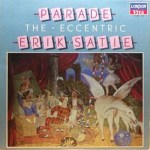
Satie / Parade – The Eccentric Erik Satie

This contains various works by Satie as performed by Camarata, Bernard Herrmann, London Philharmonic and The London Festival Players.

Obviously these were Phase 4 recordings which have been compiled on this album from 1973. The sound is quite good: very transparent and lively. It does not have the tubey magic that the best of the Golden Age recordings so often have in abundance, but the tonal balance is correct and the overall sound is quite good.

This album contains many of Satie’s most famous works on one LP. I can’t imagine that you will find this music easy to come by on other pressings.

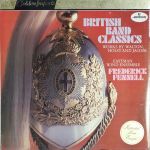
British Band Classics Vol. 2 – The First Classical Record I Bought as an Audiophile

Hot Stamper Mercury Pressings Available Now

British Band Classics Volume Two was the first Mercury classical LP I ever bought. After hearing it at an audiophile friend’s house I went down to Tower Records and found one in the bin. I think the price was $3.99 for the Golden Import, the same pressing you see pictured, which of course was all that was available as the real Mercury pressings we long out of print.

That was what I had heard, so I had no idea what the original even looked like, and of course I had no idea that the original sounded dramatically better, or that one day I would be selling original Mercury pressings like it for many hundreds of dollars.

This was the mid-70s, a time when you could walk into a record store and buy new records, not long before HP would create a feeding frenzy for vintage Mercs and other Golden Age recordings.

As I’m writing this, I can picture myself in the store. I can still remember that the clerk who helped me find the record commented that I should have come in the week before when the record was on sale for $1 off. I certainly feel like I got my money’s worth that day. This album went on to become one of my personal treasures. I used to marvel at the way the wind instruments actually sounded like the pipes of an organ. (I wasn’t really sure at first that there wasn’t an organ playing somewhere on the record. I didn’t know much about classical music then. )

When I went to England a number of years ago I attended a wind band concert in the park not far from Buckingham Palace. Out in the open the sound was very sweet but dull — the high frequencies dissipate in the open air. It was one of my early lessons in audio. Live sound is not always what it’s cracked up to be, and recorded sound can be amazing — on the right stereo with the right pressing of the right recording.

Much of the credit for the sound on this album must go to Fennell. I’ve been told that he was a stickler for making sure everyone was perfectly in tune and playing correctly within the ensemble. That’s exactly what you hear when you play a record like this — it’s practically sonic perfection.

Also, if you ever see a clean copy of Vol. 1, which is only available in Mono, pick it up. If it’s cut right, it is out of this world.

(more…)

George Cables – Cables’ Vision

UPDATE 2025

The rave review you see below is from 2020.

We got hold of some copies of this album this year in preparation for a new shootout and could not find the sound we thought we had heard back in 2020.

The record now sounds a little bright and rich, but too close to middling to devote the studio time to find the best pressing through the shootout process.

Please accept our apologies if you were not as excited by the album as we were years ago, yet another case of live and learn.


  • George Cables’ superb 1980 release finally arrives on the site with Shootout Winning Triple Plus (A+++) sound or close to it throughout 
  • I’ve known about this Allen Sides Oceanway recording for decades – his stuff is smooth, punchy, solid, and alive with energy
  • 4 1/2 stars: “One of the most satisfying recordings to be released in 1980… this date features trumpeter Freddie Hubbard and saxophonist Ernie Watts in fiery form; the two horn players took time off from their much more commercial efforts for other labels. The solos overall are concise and make expert use of each note. Cables’ tunes are generally catchy and memorable while “Byrdlike” gives the virtuosos an up-tempo blues to romp through. This well-paced set is a gem that is highly recommended.”

This Contemporary pressing has wonderful sound. This should not be too surprising as it was recorded by one of our favorite engineers, Allen Sides, working out of his Oceanway studios. (Supposedly he is a big fan of vintage mics and the like. with many superb and valuable examples.)

On top of that the album was mastered by Bernie Grundman, who was at the time still cutting very good sounding records, this being 1980. Since then he has gone precipitously downhill, as we have noted on the site numerous times.

(more…)

Teaser and the Firecat – Our First Hot Stamper Listings (2005-6)

Hot Stamper Pressings of the Music of Cat Stevens Available Now

This Hot Stamper listing from 2006 is a Time Capsule of Commentaries of sorts; it contains write-ups from 2006, 2005 and 2002 all rolled into one. Out of sheer laziness we used to leave the old commentary in the listings, sort of like building the new city on the ruins of the old. For those who don’t mind excavating through the Hot Stamper thoughts of the past, please read on. 

We give out some stamper information down below for those of you who might have some Island reissues.

Notes from August 2006

DEMO DISC QUALITY SOUND of the HIGHEST ORDER!

(For pop music anyway.) Before I get into the sound of this record, let me preface my remarks by saying this is a work of GENIUS. Cat Stevens made two records which belong in the Pantheon of greatest popular recordings of all time. In the world of folky pop, Teaser and the Firecat and Tea for the Tillerman have few peers. There may be other recordings that are as good but there are no other recordings that are better.

For years I have been telling people that one day I would put up on the Web site some Hot Stamper copies of Cat Stevens’ greatest albums. Today is that day.

Last night I listened to at least fifteen of the best pressings of this album that I had available to me — we’re talking some heavy hitters here, all top quality British and American original pressings — and even though this pressing didn’t take top honors (that distinction belongs to the $500 copy we put up) — it was clearly at the top of the pack.

This is an Original Island Sunray pressing. As good as the best domestic originals are, none of them could compete with the amazing British copies that I played. I can’t explain it, but that’s the way it worked out. (more…)

12s Is Killer on Fiedler’s Gaite Parisienne from 1959

Hot Stamper Pressings of Living Stereo Recordings Available Now

UPDATE 2026

This listing for a 12s/12s pressing is from 2008. In 2004, we liked 11s/10s quite a bit.

Our favorite performance of Gaite Parisienne is the one from Readers Digest. (Don’t bother to look for it on our site. We never have any stock as it is too hard to find and usually too noisy for most audiophiles.)


12s Hot stampers. The best sounding copy I’ve ever heard.

Jim Mitchell is famous for pointing out that many of the RCA’s that were re-recorded a few years later are inferior to their earlier counterparts.

This record is no exception.

LSC 1817 is an amazing record.

This record is merely good, with depth, soundstaging, nice string tone, etc., but not the kind of sonic fireworks to be found on the 1954 2-track recording that RCA first did of the work.

A very good Sabre Dance as a bonus, check it out. It’s the lead off track on Destination Stereo (LSC 2307) for good reason: it sounds great.

Click on this link to read more reviews and commentaries for Gaite Parisienne.

(more…)

The King on Century Direct Disc – Not Good Enough

This is a Century Direct-to-Disc LP that is every bit as good sounding as the excellent Glenn Miller disc, and in some ways better.

The problem is that Benny sounds much too old and tired, so this one gets a Not Good Enough ranking from us.

Our Pledge of Service to You, the Discriminating Audiophile 

We play mediocre-to-bad sounding pressings so that you don’t have to, a free service from your record-loving friends at Better Records.

You can find this one in our hall of shame, along with others that — in our opinion — are best avoided by audiophiles looking for hi-fidelity sound.

Some of these records may have passable sonics, but the music is weak.  These are also records you can safely avoid.

We also have an audiophile record hall of shame for records that were marketed to audiophiles with claims of superior sound. If you’ve spent much time on this blog, you know that these records are some of the worst sounding pressings we have ever had the misfortune to play.

(more…)

Offenbach / Gaite Parisienne / Dorati

More of the Music of Jacques Offenbach

This lovely Mercury Golden Import LP not only has Super Hot Stamper sound on side one, which is where Gaite Parisienne can be found, but it also boasts one of the greatest performances of the piece ever recorded. 

Dorati is surely The Man when it comes to energy, drive and dynamic excitement with this venerable warhorse. He and his Minneapolis Symphony play the hell out of this boisterous music, and luckily for us audiophiles, the Mercury engineers give us Demonstration Quality Sound to go with it.

The original Mercury release of this record (sr 90016) is a shrill piece of trash, as is the Mercury Wing pressing. So many of the early Mercurys were poorly mastered it seems.

We audiophiles must wait for reissues (either by Mercury or in this case by Philips once they had bought Mercury) to show us how good the sound of a particular recording might actually be. [Not sure I would agree with most of that now in 2022.]

Of course what you really need is the right copy to know ultimately how good the recording can be, and to find it you might have to clean and play ten LPs, or more. That’s where we come in.

(more…)