Passable Sound

The Original Jazz Classics Series Put Out a Passable Relaxin’

Hot Stamper Pressings of the Music of Miles Davis Available Now

We much prefer the right version of the 70s Two-Fer reissue (PR 24001) to the OJCs of both Cookin’ and Relaxin’ (OJC-190). Previously we had written:

These 70s reissue pressings are practically as good as any we have ever heard. Full-bodied, warm and natural, with plenty of space around all of the players, this is the sound of vintage analog.

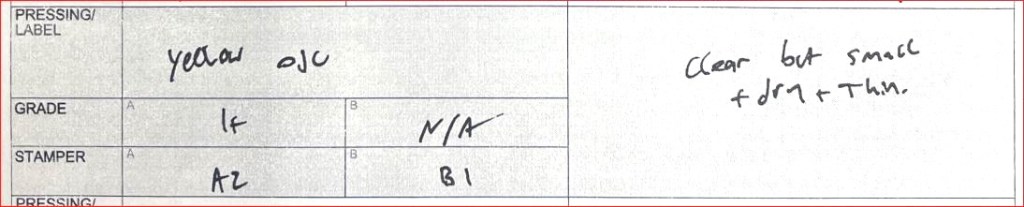
It had been a while since we last played the OJC pressing of either album, so we picked up a copy of Relaxin’ and threw it into the shootout, where it did about as badly as expected.

The first side earned our 1+ grade, which means that, like a lot of reissues it’s passable, but really not good enough for a serious audiophile (hopefully meaning you) to bother with, which is why we didn’t even play side two (the N/A you see noted where the grade should be).

The OJC is clearly better suited to the old school audio systems of the 60s and 70s rather than the modern systems in use today. These kinds of reissues used to sound good on those older systems, and I should know, I used to have an old school stereo, and some of the records I used to think sounded good back in the day don’t sound too good to me anymore (although this one never did).

(more…)

These Kelly Blue Reissues from the 70s Are a Real Mess

Hot Stamper Pressings of the Music of Wynton Kelly Available Now

Sometimes the 70s reissues of vintage jazz recordings that were made in the fifties, sometimes released with different covers similar to the one you see pictured, have excellent sound.

We know that for a fact because we’ve played some very good ones.

In the case of Kelly Blue, we felt we were obligated to play a few to make sure we were hearing as wide a range of different pressings as possible. We wanted to be sure we were hearing the best sounding pressings regardless of what era they were pressed in. (We’re very open minded that way.)

Here are our notes for the Black Label Riverside Stereo pressing with “1971” stampers:

  • Thin,
  • Dry,
  • Honky,
  • Veiled.
  • Severe stereo spread. (Hard left and right, unmusical this way, players are disconnected.)
  • Grade: 1+ on both sides

The other copy we had was even worse:

  • NFG on side one, side two never played.

The Riverside originals we’ve played in the past, like a lot of other Riverside originals from the 50s, such as those by Thelonious Monk, were uniformly terrible.

And trying to find one in audiophile playing condition is as easy as it sounds.


We’ve auditioned countless pressings like this one in the 38 years we’ve been in business — buying, cleaning and playing them by the thousands. This is how we find the best sounding vinyl pressings ever made.

Not the ones that should sound the best. The ones that actually do sound the best.

If you’re an audiophile looking for top quality sound on vintage vinyl, we’d be happy to send you the Hot Stamper pressing guaranteed to beat anything and everything you’ve heard, especially if you have any pressing marketed as suitable for an audiophile. Those, with very few exceptions, are rarely better than mediocre, and some of them are just awful, with many of the newest releases being the most awful of them all!

(more…)

This London from 1961 Didn’t Make the Grade

Hot Stamper Classical and Orchestral Imports on Decca & London

1961 just happens to be one of the greatest years for high quality analog recordings. Just check out this amazing group of albums, all recorded or released that year.

This London LP was released in 1961, right in the heart of the Golden Age, so we figured it had a good chance of displaying the kind of relaxed, immersive, smooth, rich, Tubey Magical Decca sound we absolutely cannot get enough of here at Better Records.

As we were preparing to do the shootout with the six copies of CS 6202 we had amassed over the years, we suddenly ran into a big problem.

(Cue sound effect of record being scratched here.)

(more…)

Don’t Waste Your Money on this Famous and Pricey RCA from 1960

Hot Stamper Pressings of Living Stereo Recordings Available Now

The most recent copy we’ve played of LSC 2405 left us feeling underwhelmed. We expected more from such a famous (and pricey!) TAS-Listed Living Stereo record.

In the past we’ve auditioned the Victrola and the Decca SPA reissue, and both seemed to be reasonably good but not quite good enough to offer our customers. We were still looking for a better Fifth Symphony, and paid top dollar for this copy hoping it would be the one to make a shootout possible.

Unfortunately, that was not the case. The sound of this copy was rich but opaque. We would call it no better than passable. It might be a good sounding record on a different pressing, but we doubt it could be a great one, and we really don’t want to spend the kind of money it would take to prove ourselves wrong on that account.

As the best of the RCA pressings demonstrate beyond all doubt, 1960 was a great year for classical and orchestral recordings.

What the modern mastering engineers of today do to such wonderful recordings is another thing altogether. Bernie Grundman remastered this one in the 90s for Classic Records, and we can describe the work he did for them in just four words.

To sum it all up, LSC 2405 is unlikely to sound very good on high quality modern equipment. If your system leans more towards the old school approach — vintage tubes, vintage tables, horn speakers, that sort of thing — then the lack of transparency won’t be nearly as bothersome as it is to us.

(more…)

Born Under a Bad Sign in Mono – Maybe Passable, Maybe Not

Hot Stamper Pressings of Electric Blues Albums Available Now

The Shootout Winning early stereo pressing that we played recently was indeed a very special record. Everything we said about it in our review was true:

These are just a few of the the things we had to say in our notes: “big and tubey and 3D”…”jumping out of the speakers”…”very full vox”…”weighty and rich”…”great energy”…”so much room and detail.”

No other copy came close to this one, and we had a bunch, many of which earned minimal grades of 1.5+ because,  on this record, you really have to know what to look for in the dead wax.

But nothing of the sort can be said of the early Blue Label mono pressing we played. It was barely passable on side one, and we didn’t even bother to play side two since no pressing that earns a grade of 1+ on either side can be considered a Hot Stamper.

Here is what we heard on side one:

  • Hard and dark
  • Vocals get lost
  • Sounds a little faster (sped up)

And that was enough. Who wants to play a record with that kind of sound? Or one that’s been sped up?

If you’re one of those music lovers who’s still holding a torch for mono, Born Under a Bad Sign is not a hill you want to die on.

We personally don’t care one way or the other if any particular mono record has good sound or bad. We just play them and call them as we hear them. We called this one “meh” and recommend you steer clear of it if you are looking for good sound.

(more…)

Another Knockout for Indianapolis, and It Was Rarely Even Close

Hot Stamper Pressings of Living Stereo Recordings Available Now

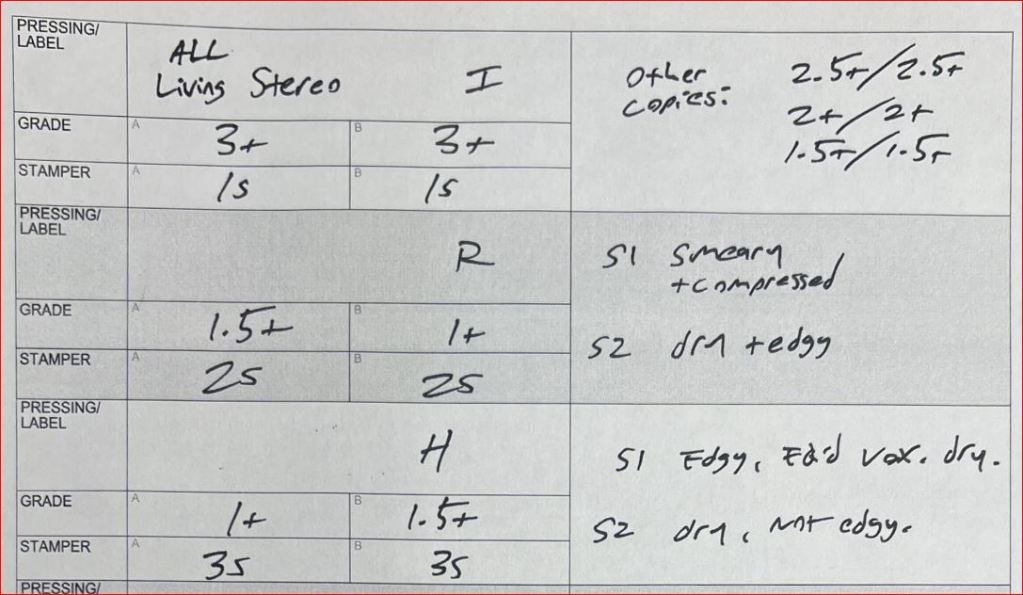
Below you will see the complete stamper sheet for a shootout we did in 2024.

Note that the album you see pictured is not the record we did the shootout for.

For RCA classical and orchestral recordings, many collectors think that the earliest pressings on the Shaded Dog label, in stereo, pressed in Indianapolis, tend to be the best sounding. 

More often than not, a rule of thumb like that one turns out to be right, which is how it got to be a rule of thumb in the first place. In this shootout, it turned out to be as right as rain.

The best pressingss with 1s stampers beat the 2s which beat the3s. Indianapolis was once again the pressing plant that produced the best sounding copies.

In fact, in this case the differences were even starker than we would have imagined going in. No copy not pressed in Indianapolis was even saleable, since a record that does not earn a grade of at least 1.5+ on both sides can qualify as a Hot Stamper pressing.

Fortunately, even though we were buying them randomly, we managed to luck out to some degree by finding many more 1s pressings than later-numbered ones.

Key Takeaways

  • 1s/1s is by far the best stamper for this mystery title, as collector wisdom would have predicted.
  • Indianapolis produced the best sounding pressings in this shootout, again, as predicted.
  • At some point collector wisdom fails us, as the Shootout Winning stampers (3+) and the good, not great stampers (1.5+) turned out to be the same stampers. This means that:
  • 1s is no guarantee of top quality sound. It follows that:
  • 1s might be the hot ticket, the 3/3 winner, but the odds, four to one, are against it. Again, it follows that:
  • As is almost always the case, the 1s pressing is most likely to be one of a bunch of potentially hot tickets.

(more…)

Another Substandard Pressing of Coltrane’s Music — What Is Going On?

Hot Stamper Pressings of the Music of John Coltrane Available Now

We played an early Blue Label Prestige mono pressing of Standard Coltrane that was thankfully not as awful as the original Yellow Label mono we played, but it wasn’t very good either.

We characterize a record that earns one plus on both sides as having passable sound.

Which means you could listen to it, maybe even enjoy it for the most part, but you would have no idea just how well Rudy Van Gelder recorded the sessions in 1958 that went into the making of the album, which as you know was not compiled for release until 1962.

As you can see from the notes above, it was crude, smeary and thick. We try to avoid selling records with those faults, but sometimes you do the best you can and you still end up with records that have those shortcomings to some degree.

But if you know what to look for, and you know how to clean records and do shootouts, you know that there are great sounding pressings of this album. You just have to do the work it takes to find them.

I can’t say that most modern remastered records are crude, although some of them are, but a great many we’ve played are smeary, and almost all of them are thick — that is, lacking in transparency.

That last quality — a lack of transparency — may be the most irritating of all, a subject we discuss here.

(A great many records we’ve auditioned over the years are good for testing transparency. Those wanting to improve this aspect of their playback should consider making use of them.)

(more…)

Bruch & Mozart Violin Concertos – Were We Wrong?

Living Stereo Orchestral Titles Available Now

Many years ago we wrote the following review for LSC 2472:

Superb sound. The violin is wonderful on both sides. The Mozart is absolutely gorgeous; the best I’ve ever heard it.

The orchestra on the Bruch side gets a little congested in the louder passages, which is typical for records of this era.

Laredo plays these pieces beautifully. The Bruch is an especially romantic work and his violin sings sweetly and with deep emotion throughout. The Mozart is more spritely and he plays it with the light touch it requires. You will have a hard time finding a better violin concerto record. This ranks with the best of them.


UPDATE 2024

More recently we got in a nice 1S/1S pressing that sounded thick and dark, even after a good cleaning.

Were we wrong years ago? Hard to say. That copy from many years ago is gone.

Three things to always keep in mind when a pressing doesn’t sound like we remember it did, or think it should:

(more…)

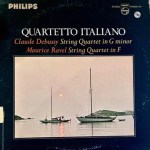
Sorry, This Album of String Quartets Is Not As Good As We Thought

Hot Stamper Pressings of the Music of Claude Debussy Available Now

Hot Stamper Pressings of the Music of Maurice Ravel Available Now

UPDATE 2024

About ten years ago we were under the impression that the domestic Philips pressing you see pictured had exceptionally good sound, sound that would be difficult to beat.

Well, that just goes to show how little we knew about the sound of the various recordings of this music back then.

We needed to do a lot more homework, and the reason we started playing other recordings of these two string quartets is simply that the Philips record we liked so much was too hard to find on the domestic pressing.

The imports could be found, sure, but they sounded like a lot of Philips pressings — overly smooth, smeary, lifeless, recessed and veiled, like the Golden Imports Philips had made in the 70s. It was in those bad old days of the early 70s that Philips set about ruining the sound of phenomenally good Mercury master tapes. They should never be forgiven for it.

I bought one and fell in love with it, for both its music and its sound, a classic case of me not having any idea what I was missing.

How clueless was I? I was almost as clueless as the guy who thought the MoFi pressing of Star Wars and Close Encounters was a true audiophile Demo Disc. As foolish a MoFi fan as I was in the late-70s, even I knew was a piece of phony junk that record was.

Now there are dozens of outfits that make it their business to ruin phenomenally good master tapes by dint of their incompetent remastering, a story we never tire of telling.

Breaking Through

The key to our breakthrough was the rediscovery of a record we had played many years before, all the way back in 2005, and had simply lost track of in the ensuing years: LSC 2413. (It’s easy to lose track of rare Shaded Dogs. They’re not usually sitting in the bins of your local record store. Out of sight, out of mind.)

The best pressings of LSC 2413 are dramatically better sounding, and the performances are equal to or better than any we know.

Recently we finally got hold of another copy of the rare Philips pressing above and found to our dismay that the sound was not nearly as good as we remember it from our shootout years ago. The copy that came in was flat and badly lacked the presence and Tubey Magic of the Shaded Dog pressings we played of the RCA.

As the best of the RCA pressings demonstrate beyond all doubt, 1960 was a great year for classical and orchestral recordings. (What the shameful modern masterng engineers operating today do to such wonderful recordings is another thing altogether.)

(more…)

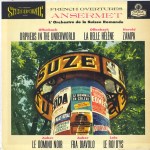
This Copy of French Overtures Had One Exceptionally Good Sounding Side

Hot Stamper Pressings of the Music of Jacques Offenbach Available Now

UPDATE 2025

Reviewed back in 2009 in our pre-shootout days.


This Minty London Blueback LP has a WONDERFUL Tubey Magical Super Hot Stamper side one.

I have never heard this music sound better. Of course Ansermet is exactly the right conductor for these light and colorful orchestral pieces; the performances are uniformly superb.

But as audiophiles we want to make sure the sound is what it should be, and here side one does not disappoint. The string tone is perfection. I defy anyone to find a Heavy Vinyl reissue with string tone even remotely as good. In my experience there is simply no such record.

With vintage classical records there are always trade-offs of course. Here the loudest passages suffer from some mild compressor distortion, so common on these early pressings. A small price to pay for sound this lovely I say.

The Zampa overture by Herold is probably the best sound on the album — it’s gorgeous!

Side two is not quite as good. We rated it A Plus, with real weight and energy but a bit too much compression and distorton in the loud passages to be completely satisfying.


UPDATE 2025

Nowadays we would never list a record for sale as a Hot Stamper pressing with a grade of 1+ on either side.

And, more importantly, the grades we awarded these two sides were just estimates.

We did not put this copy in a shootout with a batch of similar pressings.

We played the record, liked what we heard on side one, liked what we heard on side two a bit less, and offered it to our customers with the description of the strengths and weaknesses you read about.

We could not have begun to conduct a shootout for this early London. Back in those days we simply could not find enough copies of such a rare title to make such a thing happen.

As for the compressor distortion on side one that we heard, it’s entirely possible that with better cleaning and better playback that the distortion we thought we heard would disappear. Blaming the record is rarely the ideal approach for making progress in audio.

(more…)