Label Advice

Some of the titles listed here have better sound on labels that many record collectors would probably not assume would be the best.

Other titles have inferior sound based on the labels we’ve identified in these listings.

Keep in mind that all the practical advice you see here is based solely on the numerous experiments we’ve run and the data we’ve collected from them.

Labels, Patterns and Reasoning in a Circle

Hot Stamper Pressings of Orchestral Music Available Now

This commentary was written more than ten years ago. It seems to be holding up just fine though, especially considering just how bad some of the Heavy Vinyl pressings we’ve played recently sounded.


RFR1/ 2This pressing has DEMONSTRATION QUALITY SOUND.

Here is the sound that Mercury is famous for: immediate, dynamic and spacious. This record lives up to the Mercury claim: You immediately feel as though you are in the Living Presence of the orchestra.

This is precisely the kind of record that Speakers Corner would not have a clue how to master. I’d stake my reputation on it, for what that’s worth.

As you may know, I am a critic of the new [now long in the tooth] Speakers Corner Mercury series, and I can tell you without ever hearing their version of this recording that there is NO CHANCE IN THE WORLD they will ever cut a record that sounds like this.

It’s alive in a way that none of their pressings would even begin to suggest.

If you don’t believe me, please buy this record and play it for yourself. If you don’t agree, I will refund your money and pay the domestic shipping back.

This record also gives the lie to those who think that Vendor pressings are inferior. This is a Vendor and I would be surprised if there’s a better sounding copy than this one. I’ve certainly never heard one.

People who like to read labels and find some sort of pattern or connection between the label and the sound of the record are living in a world of their own making.

A world that exists solely in their heads.

The stamper numbers are the only thing that can possibly mean anything on a record, and even those are subject to so much variation from pressing to pressing that they become little more than a vague, general guide.

This LP is a good example of a record that a certain kind of record collector might pass up, hoping to find a better sounding non-Vendor pressing.

Of course, the circular reasoning that would result is that such a collector would buy the non-Vendor pressing, possibly with the exact same stamper numbers, hear how good it sounded, and congratulate himself on the fact that the non-Vendor pressings always sound so much better.

All without ever having done a comparison. A good way to never be wrong.

(more…)

The World of the Zombies on Decca – How Accurate Is the Label?

Hot Stamper Pressings of the Music of The Zombies Available Now

For all intents and purposes, The World of the Zombies is a reissue of their 1965 debut album, Begin Here, with a few track changes, the most important of which is the addition of Tell Her No.

In 2008 and again around 2010 I had a chance to see the newly reformed Zombies play locally and they put on one helluva show. That rich keyboard sound Rod Argent pioneered influenced a ton of bands I love, especially pop groups like Jellyfish and Crowded House.

On our amazingly Tubey Magical Hot Stamper copies, the Hammond B-3 sound is GLORIOUS. Smooth, sweet vocals and dead on tonality complete the sonic picture here.

Just for fun sometime go to popsike.com and check out what the original first Zombies record on Decca sells for. Try $1500 and up! And people think our prices are high — we ain’t never charged that kind of bread.

[At the time of this writing that was true. Led Zeppelin II put an end to our old price ceiling.]

How Good Is the Stereo Reprocessing of the Mono Tracks?

Sticks and Stones on side one is in reprocessed stereo, but it has been done tastefully and is very close to mono.

(more…)

On Young Person’s Guide, Stick with the Unboxed Deccas

Hot Stamper Pressings of Classical and Orchestral Music Available Now
This is our favorite recording of the work. Those of you looking for a Young Person’s Guide can stop looking, this is the one.

For those who have never heard it, check out The Young Person’s Guide on YouTube – it is a tour de force of orchestral excitement, especially from the percussion section.

We’ve learned from shootouts past (and were reminded again during our most recent) that the London pressings can also be quite good, but none of them can hold a candle to the early Deccas.

However, the later Boxed Label Deccas leave a lot to be desired and should be avoided by those looking for top quality sound.

Side one of this copy was dry and hot. Side two thin and very small.

This is an amazing recording, but you’d never know it from playing the reissues.

There are about 150 orchestral recordings we think offer the best performances with the highest quality sound. This record is certainly deserving of a place on that list.

(more…)

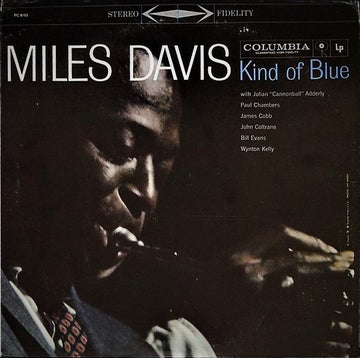
Six-Eye, Black Print, White Print, Red Label – Which Is the Best Sounding Kind of Blue?

Hot Stampers Pressings of the Music of Miles Davis Available Now

Is the 50s original always better, is the 70s reissue always better, is the 60s 360 pressing always better?

The answer is “no” to all three.

Why? Because no pressing is always better. All pressings are unique and should only be judged on their merits, and you do that by playing them, not by looking at their labels. For us this truth is practically axiomatic. It is in fact the premise of our entire business. Over the course of the 28 years we have been selling records we have never found any compelling evidence to invalidate it.

The day that someone can accurately predict the sound quality of a specific record by looking at the label or cover is a day I do not expect to come, ever.


UPDATE 2024

Our Latest Thinking on KOB

The 6 Eye label domestic stereo pressings win our shootouts, in the case of Kind of Blue without exception.

The 360 label pressings, black print (1962-63) or white print (1963-70), as well as the rare 70s red label (1970-?), can sound very good, but they never win shootouts.

We’ve identified a select group of reissues with the potential to do well in shootouts, typically earning a grade of Super Hot (A++) when up against the best originals which earn our top grade, White Hot (A+++). Kind of Blue is one of those recordings.


A Larger Point

But there is a larger point to be made. Let’s assume that the best original Six Eye Columbia pressings can be the best — the most Tubey Magical, the most involving, the most real. You just happen to have a clean pressing, and you absolutely love it.

But is it the best? How could you possibly know that?

Unless you have done a comparison with many copies under controlled conditions, you simply cannot know where on the sonic curve your copy should be placed.

Perhaps you have a mediocre original. Or a mediocre 360 Label copy. Since you haven’t done a massive shootout you simply have no way of knowing just how good sounding the album can be.

(more…)

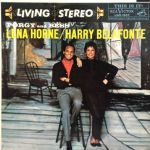
On Porgy and Bess, Stick with the Early Pressings on the Black Label

Hot Stamper Pressings of the Music of Harry Belafonte Available Now

A Living Stereo knockout! We sometimes forget to spend time with records like this when there are so many Zeppelin and Floyd records waiting to be played (and a lot more customers waiting to get hold of them to add to their collection).

We’ve always enjoyed Belafonte At Carnegie Hall, but when we’ve dug further into his catalog we’ve been left cold more often than not. However, when we finally got around to dropping the needle on a few of these many years ago we were very impressed by the music and blown away by the sound on the better pressings.

Just make sure that you avoid the orange label reissues.

They are dry, gritty and spitty. The notes below show a side one earning a single plus (1+) not-quite-Hot Stamper grade. We discuss its faults on the far right, and the other orange label pressing we played was even worse, earning a grade of NFG.

(more…)

Are All the Masterdisk Pressings of 2112 Good Sounding?

Hot Stamper Pressings of the Music of Rush Available Now

Even though many of the original pressings are mastered at Masterdisk (by HW, BK and GK), some of the reissues from 1979 on the “skyscraper” label are too.

But none of the later pressings we played sounded very good. Audiophiles looking for top quality sound should stick to the domestic originals.

What We’re Listening For On 2112

  • Energy for starters. What could be more important than the life of the music?
  • Then: presence and immediacy. The vocals aren’t “back there” somewhere, lost in the mix. They’re front and center where any recording engineer worth his salt would put them.
  • The Big Sound comes next — wall to wall, lots of depth, huge space, three-dimensionality, all that sort of thing.
  • Then transient information — fast, clear, sharp attacks, not the smear and thickness so common to these LPs.
  • Tight punchy bass — which ties in with good transient information, also the issue of frequency extension further down.
  • Next: transparency — the quality that allows you to hear deep into the soundfield, showing you the space and air around all the instruments.
  • Extend the top and bottom and voila, you have The Real Thing — an honest to goodness Hot Stamper.

(more…)

Years Ago We Badly Misjudged the Recording Quality of Tull’s Debut

Hot Stamper Pressings of the Music of Jethro Tull Available Now

A clear case of live and learn.

We listed a White Hot copy of This Was in 2008 on the Island pink label and noted at the time:

Be forewarned: this ain’t Stand Up or Aqualung. I don’t think you’ll be using any copy of This Was to demo your stereo, because the recording has its share of problems. That said, this record sounds wonderful from start to finish and will make any fan of this music a VERY happy person. We guarantee you’ve never heard this album sound better, or your money back.

Now we know a couple of things that we didn’t back in 2008.

1). This album is a lot better sounding than we gave it credit for years ago. It’s not perfect by any means but it is much better than the above comments might lead you to believe.

We chanced upon an exceptional sounding copy of the album in 2017 or so, and that taught us something new about the record:

2). The Pink Label pressings are not the best way to go on this album.

Once we heard the exceptional copy alluded to above, we played it against our best Pink Label copies and it was simply no contest.

In 2008 we still had a lot to learn. We needed to do more research and development, which of course we are doing regularly with Classic Rock records, our bread and butter and the heart of our business.

We do them as often as is practical, considering how difficult it is to find copies with audiophile quality playing surfaces.

Nine years later, we felt we finally had a proper understanding on the various pressings of This Was. It goes like this:

The Pink Label original British pressings can be good, but they will never win a shootout up against copies with these stampers (assuming you have more than one copy — any record can have the right stampers and the wrong sound, we hear it all the time. Beware of small sample sizes).

(more…)

Letter of the Week – “I have been listening to a first pressing Decca, but your copy made it sound egregiously insipid.”

Hot Stamper Pressing of the Music of The Rolling Stones Available Now

One of our good customers had this to say about some Hot Stampers he purchased recently:

Hey Tom, 

This LET IT BLEED is a gorgeous monster. Everything just jumps off the page, so to speak. I have been listening to a first pressing Decca, which I have owned for years, but your copy made it sound egregiously insipid. As I kept turning up the volume, the room seemed to be nodding its head and egging me on to keep increasing it. I never reached the point where too much was too much. Great copy.

The Mahavishnu EMERALD was brilliant. It brought out all the exciting dimensions of my system. The exquisite strings floated above the musical melee which tattooed its obligato deliriously across its raucous underbelly. The sound reached out like tongues of flame making the speakers completely disappear in their rocking wake.

This is an amazing record that projects and dances the music in every direction and then some. Everything is alive. So completely alive. A real treat. A great recording that tells me my system is completely responsive.

Phil

Phil,

We’ve known for a very long time — since roughly 2005 — what an awful pressing the original mono Decca is of the album.

When we last heard one, it did not evn pass the laugh test, and we never bought another.

Even the original Decca stereo pressings of the album are not that good, and at the prices being charged these days, a very poor choice if you want the best sound.

(more…)

Did You Get Your $1.87’s Worth on the Reissue of Suites For Solo Cello?

Hot Stamper Pressings of Mercury Recordings Available Now

Many of the Oval Label pressings we’ve played recently have fared poorly in our shootouts.

As you can see from the notes below for this particular Starker record, one side was passable, earning our 1.5+ grade. It’s a decent sounding record I suppose, but a long, long, long way from the best.

1.5+ is four grades down from the top copy. That’s a steep dropoff as far as we’re concerned. 1.5+ only hints at how good a recording SR 90370 can be on the best vintage pressings.

To see more records that earned the 1.5+ grade, please click here. (Incidentally, some of them are even on Heavy Vinyl. The better modern pressings have sometimes, if rarely, been known to earn Hot Stamper grades, and one shocked the hell out of us by actually winning a shootout. Wouldn’t you like to know which one!)

For those who might be interested, there’s more on our grading scale here.

We often tell audiophiles that it’s never a good idea to judge records by their labels, so when it came time to do a shootout for this famous Bach recording from Mercury, it was only fitting that we play every pressing we had on the shelf, including the later Ovals, which are by far the easiest to find for any of the Starker Mercury titles.

Well, now we know. This is some weak tea, probably not too different from the Philips-pressed Golden Imports we gave up on long ago.

(more…)

Silky Sound? Everybody Knows That’s Impossible

Hot Stamper Pressings of the Music of Neil Young Available Now

This early pressing of EKTIN IS an amazing find, the kind of record the thrillseekers who work here at Better Records live for.

As I was reading the notes, I saw a word there that I had never associated with the sound of the album: “silky.” Since when does Everybody Knows This Is Nowhere have silky vocals?

But there it was, describing the first track on side one (Cinnamon Girl) as well as both the third track on side two (Cowgirl in the Sand) and track one (Losing End (When You’re On)).

We don’t have a tag for silky sound. About the closest we could come would be “glossy sound,” the kind of sound you might find on a Toto album, or Gauch0, or Mirage, or Gorilla, or Abbey Road. Starting in the mid-70s, anything produced by Ted Templeman and engineered by Donn Landee would be sure to have glossy sound.

But this album is from 1969. Silky vocals are not easy to find on recordings from that year, Abbey Road being the obvious exception.

And they’re not easy to find on the vast majority of copies we have played over the years. I doubt that the other copies in the shootout have notes mentioning silky vocals.

But if your equipment is good enough, and you know how to clean your records right, and you dial in your setup to a T, with a big enough stack of copies you may be able to find an Everybody Knows… with silky vocals. Twenty years ago I wrote a commentary about diminishing returns in audio being a myth. Now, finding this amazing pressing of Everybody Knows, is just one more piece of evidence to support just how precient that idea was.

Hey, want to find your own top quality copy?

(more…)