MFSL (Older)

Labels With Shortcomings – Mobile Fidelity (Older)

Led Zeppelin II on MoFi — Back to the Stone Age!

Hot Stamper Pressings of the Music of Led Zeppelin Available Now

An audiophile hall of shame pressing and another MoFi LP reviewed.

Yes, it’s yet another record perfectly suited to the stereos of the 60s and 70s, often referred to on this blog as the “stone age” for reasons explained in detail here.

This version of Zep’s sophomore release from 1969 has to be one of the worst audiophile remastering jobs in the history of the world. There is NOT ONE aspect of the sound that isn’t wrong. Not one!

The highs are boosted, the upper midrange is boosted, the mid-bass is boosted, the low bass is missing — what part of the frequency spectrum is even close to correct on this pressing? The answer: none.

If you’re in the market for a Hot Stamper pressing of Led Zeppelin II, we can help you, but prices these days are steep and show no sign of coming down. We typically pay $1000+ or more for the used copies we buy if that tells you anything about what to expect a Hot Stamper pressing will cost you.

Records are getting awfully expensive these days, and it’s not just our Hot Stampers that seem priced for perfection.

If you are still buying these modern remastered pressings, making the same mistakes that I was making before I knew better, take the advice of some of our customers and stop throwing your money away on Heavy Vinyl and Half-Speed Mastered LPs.

At the very least let us send you a Hot Stamper pressing — of any album you choose — that can show you what is wrong with your copy. of the album.

And if for some reason you disagree with us that our record sounds better than yours, we will happily give you all your money back and wish you the best.
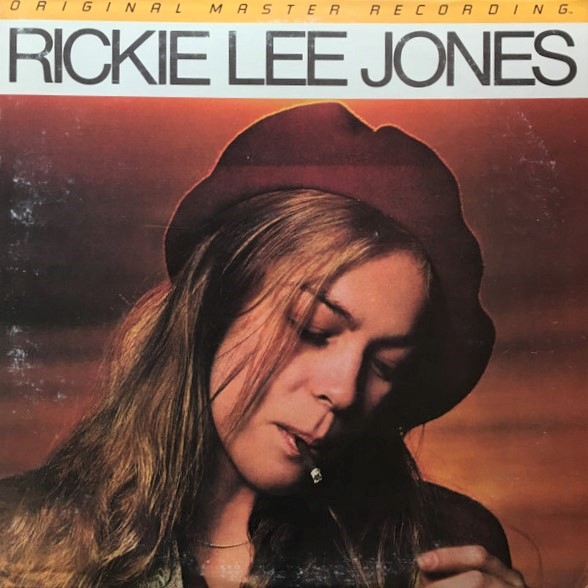
Rickie Lee Jones – MoFi Reviewed, Positively (!)

Hot Stamper Pressings of the Music of Rickie Lee Jones Available Now

Sonic Grade: B

Another MoFi LP reviewed, and this one’s pretty good for a change. 

The Mobile Fidelity pressing of this album can actually be pretty decent.

If you get a good one, that is. Records are records and limited editions have dramatic pressing variations just like all the other records out there in Record Land.

Audio perfection it ain’t, but all in all it’s a very enjoyable record. Its strengths are many and its faults are few. Let’s give credit where credit is due; the MoFi is dynamic, transparent, sweet, and open, and you won’t hear us saying that about very many MOFI pressings.

It belongs in their Top Ten (a list we have yet to make, for some reason we never find the time!), toward the bottom I would guess, due to its own sloppy bottom, but that’s half-speed mastering for you. Like most new audio technologies it was a giant step in the wrong direction.

We suppose you could live with the blubbery MoFi bass found on their remastered LP — most audiophiles seem more than happy to, right? — but instead, we’re happy to report that it will no longer be necessary. All our Hot Stamper copies are guaranteed to trounce it.

Why Would Anyone Want to Take All the Fun Out of CCR’s Music? Part One

More of the Music of Creedence Clearwater Revival

The last time I played the MoFi pressing mentioned below I found the sound so weirdly colored as to defy understanding. Ten years ago when I wrote this commentary I apparently found it more tolerable.  More recently I clearly did not.

When an audiophile record sounds worse than it used to, there is a very good chance that you are making progress in audio.

Of course this is not something to be assumed. (Speaking of assumptions, you can find more on the subject here).

Rather it is something to be tested. (You can read more about some of the rigorous and extensive record testing we have conducted over the last twenty years here.)

Even if 99 times out of a hundred it turns out to be the case that the modern remastered record can now be seen for the fake it always was, there is still a one out of a hundred chance that the record may in fact be better than you remember.

These audiophile records are easily called out for their illusory superiority for the simple reason that the better your stereo gets, the more obvious their colorations and shortcomings become. This was my experience, and I pass this information on in the hopes that you will make progress with your stereo system and find them every bit as wrong as I do.

We’ve created a section for the worst of them, and even with 274 entries we could easily double that number if we were inclined to carry out more auditions and catalog their manifold shortcomings.

With the number of Heavy Vinyl records being pressed today, triple or quadruple that number I suspect would be possible.

Without sounding even more arrogant than some believe me to be, I have better things to do with my time. Thank god we are in the business of selling good records and not in the business of reviewing bad ones.


Further Reading

Records are getting awfully expensive these days, and it’s not just our Hot Stampers that seem priced for perfection.

If you are still buying these modern remastered pressings, making the same mistakes that I was making before I knew better, take the advice of some of our customers and stop throwing your money away on Heavy Vinyl and Half-Speed mastered LPs.

At the very least let us send you a Hot Stamper pressing — of any album you choose — that can show you what is wrong with your copy. of the album.

And if for some reason you disagree with us that our record sounds better than yours, we will happily give you all your money back and wish you the best.

Surfer Girl Takes MoFi Spit to a New Level

Hot Stamper Pressings of the Music of The Beach Boys Available Now

An audiophile hall of shame pressing and another MoFi LP reviewed and found wanting.

I played the MoFi pressing of this record many years ago, some time back in the early 90s if memory serves, and at the time I could hardly believe that the good people of MoFi would release a record that was so ridiculously SPITTY. The sibilance is positively out of control, the result of their wacky cutting system and phony EQ and who knows what else.

But then I remembered that there has never been a title produced by these people with sound so bad that they would have cancelled its release. {This is a classic case of begging the question. I really have no idea why some of their titles that exist only on test pressing — Pearl for one — never saw the light of day. It is possible that it was cancelled because it sounded worse than even the hard-of-hearing Powers That Be at MoFi could tolerate. Doubtful, but possible.)

(more…)

West Side Story on MoFi Reviewed

More of the Music of Oscar Peterson

Reviews and Commentaries for the Music of Oscar Peterson

Sonic Grade: B-

Another MoFi LP reviewed and this one’s pretty good!

I played this record a while back — it’s one of the Mobile Fidelity’s I remember liking from the old days — and sure enough it still sounds good. It does not have the phony boosted bottom and top that most MoFis do. Since it’s such a well recorded album, the sound is very impressive. Also the music is great. This is one of Previn’s best piano trio records. And Shelly Manne drums up a storm.

If you want a dramatically better sounding pressing of the album, we would love to find you one, but they are very hard to come by these days.

Sergio Mendes & Brasil ’66 – Another Spitty and Thin MoFi

Sonic Grade: D

An Audiophile Hall of Shame pressing and another MoFi LP reviewed and found wanting.

So spitty and thin! Why, in God’s name, why would you want to ruin such a wonderful recording?

When you have a recording that is already plenty bright, adding top end and taking out more lower midrange is the last thing in the world you should be doing. Since that was the standard operating procedure for MoFi and other Half-Speed mastering outfits around this time, that’s exactly the approach they ended up taking.

Those of you who have had the opportunity to play the Mobile Fidelity pressing of this record should know what a disaster it is.

Is brighter better? Apparently Mobile Fidelity thinks so. It sounds like a bad CD.

But it’s not a bad CD. It’s an expensive audiophile record!

If you’ve spent any time on this site, you should know by now that many audiophile records sound WORSE than the typical CD.

The typical CD does not have an equalization curve resembling a smile. The classic smile curve starts up high on the left, gets low in the middle, and rises again at the end, resulting in boosted bass, boosted top end, and a sucked out midrange — the Mobile Fidelity formula in a nutshell.

But they forgot to boost the bass on this album, so it’s closer to a half-smile I suppose.

More letters, reviews and commentaries for the debut album by Sergio Mendes and Brasil ’66

MoFi Thought the Guitars on Sundown Could Use More “Sparkle”

Another Record Better Suited to the Stereos of the Seventies

Sonic Grade: F

An audiophile hall of shame pressing and another MoFi LP reviewed and found wanting.

I comment below about the ridiculous sound of the MoFi pressing of this album.

When you have a recording that is already plenty bright, adding more top end and taking out more lower midrange is the last thing in the world you should be doing.

Since that is standard operating procedure for MoFi (as well as most other Half-Speed mastering outfits), that’s exactly the approach they ended up taking.

Those of you who have had the opportunity to play the Mobile Fidelity pressing of this record should know what a disaster it is.

His voice sounds so phony on the MoFi that you’d swear it’s a bad CD.

But it’s not a bad CD. It’s an expensive audiophile record!

If you’ve spent any time on this blog, you should know by now that many audiophile records sound WORSE than the typical CD.

The typical CD does not have an equalization curve resembling a smile. The classic smile curve starts up high on the left, gets low in the middle, and rises again at the end, resulting in boosted bass, boosted top end, and a sucked out midrange — the Mobile Fidelity formula in a nutshell. (more…)

The Crusaders / Chain Reaction – MoFi Reviewed

More Jazz Fusion Records with Hot Stampers

This is a Mobile Fidelity LP with relatively good sound. We did a mini-shootout many years ago and this copy apparently killed the competition. 

However…

When you play the MoFi against an actual honest-to-goodness properly mastered and pressed vintage LP – we call them Hot Stampers – the audiophile version of the album reeks of phony top end EQ, compression and sloppy bass.

Of course, what half-speed mastered record doesn’t?


Further Reading

The best place to start is here:

How come you guys don’t like Half-Speed Mastered records?

(more…)

Bridge Over Muddy MoFi Water

More of the Music of Simon and Garfunkel

This pressing is the poster boy for muddy sound.

Naturally, it has to be one of the worst sounding versions of the album ever made.

It was mastered by Jack Hunt, a man we know to be responsible for some of the thickest, dullest, most dead MoFi crimes against good sound from their shameful catalog.

(The CBS Half-Speed is actually quite good by the way.)

(more…)

MoFi Thought This Recording Needed More “Sparkle”

More of the Music of Emmylou Harris

An Audiophile Hall of Shame pressing and another MoFi LP reviewed and found wanting.

When you have a recording that is already plenty bright, adding more top end and taking out more lower midrange is the last thing in the world you should be doing.

Since that is standard operating procedure for MoFi (and other Half-Speed mastering outfits), that’s exactly the approach they ended up taking.

The sound that Emmylou and her producers were going for here is clean, detailed and low distortion, which is what the best pressings, the “hottest stampers,” deliver.

Those of you who have had the opportunity to play the Mobile Fidelity pressing of this record should know what a disaster it is.

Is brighter better? Apparently Mobile Fidelity thinks so. And they did the same thing to Gordon Lightfoot’s album. His voice sounds so phony on the MoFi that you’d swear it’s a bad CD.

But it’s not a bad CD. It’s an expensive audiophile record!

If you’ve spent any time on this blog, you should know by now that many audiophile records sound WORSE than the typical CD.

The typical CD does not have an equalization curve resembling a smile. The classic smile curve starts up high on the left, gets low in the middle, and rises again at the end, resulting in boosted bass, boosted top end, and a sucked out midrange — the Mobile Fidelity formula in a nutshell.

(more…)