Mobile Fidelity

Labels with shortcomings – Mobile Fidelity

Letter of the Week – “I think your blanket dislike of everything MoFi is also not credible.”

Record Collecting for Audiophiles from A to Z

Not long ago we received an email taking us to task for our bashing of Heavy Vinyl in general and Mobile Fidelity in particular.

Hey Tom,

I think your blanket ‘anything new is not as good as the best of original or vintage’ is totally illogical. Why couldn’t more care and excellence be put in to a new pressing now than the best you can find from an original vintage pressing? Take 70’s rock albums. With the oil crisis tons of vinyl was pretty rubbish and/or recycled, and sounds terrible. That having been said, most of the Jimmy Page remasters sound awful too. If you take somewhere like Craft Recordings and their one steps they are outstanding pressings. You also know RVG mastered records to deliberately avoid records jumping on relatively poor quality equipment and not to reflect the ‘true’ sound. So why can’t Kevin Gray master something now that RTI then presses that sounds ‘better’?

I think your blanket dislike of everything MoFi is also not credible. I listened to the original MoFi one step of Sgt. Pepper on a 2 million dollar plus system and it sounded better than any copy I’ve ever heard or anything else we had to compare it with that evening.

I’m not being critical. Just commenting. You clearly have a business in selling great sounding copies of ‘vintage’ pressings (at least I assume they are all vintage). That’s fine and that’s your prerogative. But it doesn’t render every single version of 60’s and 70’s releases produced in the last 10-15 years not worth listening to but it does support your business proposition. Fair enough.

I think you, your team and frequent shoppers may well be suffering from the one thing you kind of imply everyone who buys MoFi or Tone Poets records of – confirmation bias. But that’s fine. If it brings joy to your listening or that of your staff and customers I can’t argue with that. Well done. I just don’t buy the logic.  I too trust my ears! So I will at some point buy a copy that I’ve already got what I think is an amazing copy of and compare it to see for myself.

Nick H.

Nick,

Doing carefully controlled shootouts with large groups of records is the only practical way anyone can learn what to listen for. We wrote about it here in a review for Rubber Soul:

If you have five or ten copies of a record and play them over and over against each other, the process itself teaches you what’s right and what’s wrong with the sound of the album at key moments of your choosing.

Once your ears are completely tuned to what the best pressings do well that others do not do as well, using a specific passage of music — the acoustic guitar John beats the hell out of on Norwegian Wood just to take one example — it will quickly become obvious how well any given pressing reproduces that passage.

The process is simple enough. First you go deep into the sound. There you find something special, something you can’t find on most copies. Now, with the hard-won knowledge of precisely what to listen for, you are perfectly positioned to critique any and all pressings that come your way.

Admittedly, to clean and play enough copies to get to that point may take all day, but through the experience you will have gained knowledge that you cannot come by any other way.

If you do it right and do it enough it has the power to change everything you will ever do in audio.

Once you have done that work, when it comes time to play a modern record, on any label, it often becomes obvious what they “did to it” in the mastering, and how far short if falls when compared head to head to the pressings that were found to have the best sound. This is why we think the three most important words in the world of records are compared to what?

Our critiques are often quite specific about the sound of these records. Here is a good example from 2021: Cat Stevens on 2 Heavy Vinyl 45 RPM discs.

I would be happy to sell you a killer Sgt. Pepper to change your mind, same deal, but I feel at this point you are very unlikely to take me up on that offer for the reasons you list.

The rest of your questions are good ones but have already been answered at length and ad infinitum on our blog. There are 5000 6000 postings. We repeat ourselves a lot.

Many of those who were skeptical before they heard their first Hot Stamper have written us letters extolling the virtues of our pressings. Here are some testimonial letters you may find of interest:

Either way, thanks for writing,

TP

PS

Before you try your first Hot Stamper, as long as you are buying vintage pressings in the meantime, not audiophile records, you are probably not wasting much money. Every vintage pressing has the potential to teach you something. Any modern record should always be considered a stop-gap, never an answer, something to beat when you finally find a real pressing in acceptable playing condition.
(more…)

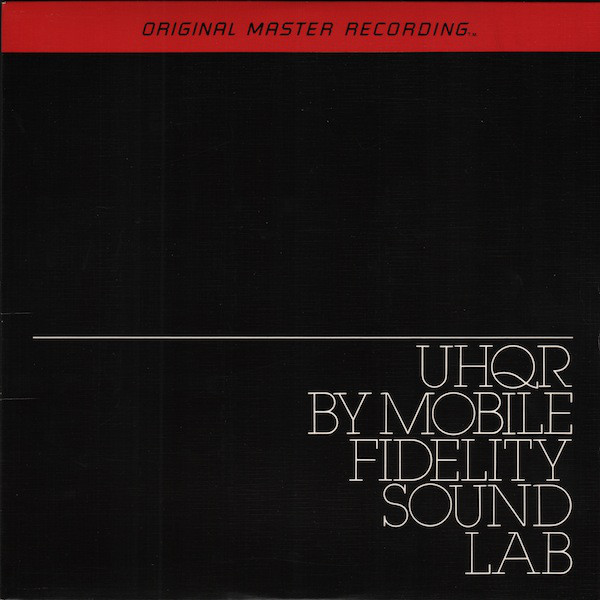
Sgt. Pepper’s and Mistaken Audiophile Thinking (Hint: the UHQR Is Wrong)

Hot Stamper Pressings of Sgt. Peppers Available Now

This commentary was probably written between 2005 when we did our first shootout for the album and 2008, by which time it would have been a regular feature on the site. 

We charge hundreds of dollars for a Hot Stamper Sgt. Pepper, which is a lot to pay for a record. But consider this: the UHQR typically sells for a great deal more than the price we charge and doesn’t sound remotely as good. 

Of course the people that buy UHQRs would never find themselves in a position to recognize how much better one of our Hot Stampers sounds in a head to head shootout with their precious and oh-so-collectible UHQR.

They assume that they’ve already purchased the Ultimate Pressing and see no reason to try another.

I was guilty of the same mistaken audiophile thinking myself in 1982. I remember buying the UHQR of Sgt. Pepper and thinking how amazing it sounded and how lucky I was to have the world’s best version of Sgt. Pepper.

If I were to play that record now it most likely would be positively painful. All I would hear would be the famous MoFi 10K Boost on the top end (the one that MoFi lovers never seem to notice), and the flabby Half-Speed mastered bass (ditto).

Having heard really good copies of Sgt. Pepper, like the wonderful Hot Stampers we put on the site from time to time, now the MoFi UHQR sounds so phony to me that I wouldn’t be able to sit through it with a gun to my head.


UPDATE 2025

If you are still buying these remastered pressings, making the same mistakes that I was making before I knew better, take the advice of some of our customers and stop throwing your money away on Heavy Vinyl and Half-Speed mastered LPs.

At the very least let us send you a Hot Stamper pressing — of any album you choose — that can show you what is lacking on your copy of the album.

And if for some reason you disagree with us that our record sounds better than yours, we will happily give you all your money back and wish you the very best.

To learn more about records that sound dramatically better than any Half-Speed mastered title ever made (with one exception, John Klemmer’s Touch), please go to our Half-Speed mastering main page .

(more…)

A MoFi Disaster to Beat Them All

UPDATE 2026

This review is fairly old, probably from 2005-2010.


Not long ago I played the MoFi pressing of A Trick of the Tail and could not believe how ridiculously compressed it was.  Rarely have I heard sound as squashed as that which is heard on this LP.

On top of that, the midrange is badly sucked out (as is the case with most Mobile Fidelity pressings) making the sound as dead, dull and distant as can be.

Is it the worst version of the album ever made? Hard to imagine it would have much competition. I have the CD and it’s fine. It sounds like a digital version of the British pressings we favor (the domestic pressings having been made from dubs of course).  The MoFi is bad enough to have earned a place in our Mobile Fidelity hall of shame.

You think Modern Heavy Vinyl pressings are lifeless? Play this piece of crap and see just how bad an audiophile record can sound.

And to think I used to like this version! I hope I had a better copy back in the 80s than the one I played a few years ago. I’ll never know of course. If you have one in your collection give it a spin. See if it sounds as bad as we say. If you haven’t played it in a while (can’t imagine why, maybe because it’s just plain awful), you may be in for quite a shock.

If you are still buying these audiophile pressings, take the advice of some of our customers and stop throwing your money away on Heavy Vinyl and Half-Speed mastered records.

(more…)

Elvis Costello Likes Mobile Fidelity Records About as Much as I Do

Hot Stamper Pressings of the Music of Elvis Costello Available Now

And he doesn’t even know how bad they sound!


Excerpted from an interview in Variety.

People do seem to have caught on to “Painted” as a classic, though, even well outside the realm of your hardcore fans. I saw it on web forums where there were so many people thirsting over the two different editions of the album that Mobile Fidelity put out prior to this, calling it one of the great albums of the ’90s and clamoring to get the best available vinyl versions.

Well, I don’t have any opinion about that. I don’t hold with that company putting their name above the artist. I don’t like the way their records look. I’ve never listened to any of ’em because of that. I think there’s a huge arrogance. Because I’ve worked with the greatest, Bob Ludwig, who mastered the original record, remastered this (new Universal edition), mastered everything else. He’s the end of the story about that. So Mobile Fidelity can fuck themselves. If you put your name above the artist and above the title, what gives you the temerity to do that? You didn’t make the record.

But you must be proud of the fact that this body of work is so well-regarded…

Yeah. Apart from those copies. I’m kidding. They can do what they want with it. I mean, people are listening to it on a memory stick or whatever, you know? I guess it’s better that it exists than it doesn’t exist. It’s like when people say, are you worried about your birthday coming up? I go, you know what’s worse than having a birthday? Not having a birthday. (more…)

This Beethoven Ninth Started Out with Two Strikes Against It

Hot Stamper Pressings of the Music of Beethoven Available Now

MoFi took the shortcomings of a mediocre-at-best Decca recording from 1972 and made them even worse by means of their ridiculously misguided mastering decisions and wacky cutting system.

They should not have chosen this performance of the Ninth Symphony in the first place, and they certainly should not have added the treble they chose to add, which they did to this title and to every classical recording they remastered without regard to whether or not the recording needed brightening. None that I know of did. Try telling that to the brain trust running MoFi.

(They hired this guy to do their one-step digitally remastered pressings and from the get-go he’s been giving audiophiles the most ridiculously phony sounding records that collectors with way too much money can buy.)

The Decca recording of the Ninth from 1972 is opaque, lacks size and space, and comes off as a bit flat and dry.

Like practically every later Decca pressing we play, it’s passable at best.

Londons and Deccas from this era (1972 in this case) rarely sound very good to us.

Here is what we specifically don’t like about their sound.

If you want to know what’s wrong with the Mobile Fidelity pressing, take the above faults and add some others to them.

Start with an overall brighter EQ, add a 10k boost for extra sparkly strings, the kind that MoFi has always been smitten with, and finish with the tubby bass caused by the half-speed mastering process itself.

Voila! You are now in the presence of the kind of mid-fi trash that may have fooled some audiophiles way back when but now sounds as wrong as the records this ridiculous label is still making today.

Here are some other pressings with bright string tone that are best avoided by audiophiles looking for top quality sound.

1981 Was a Long Time Ago

Old school audio systems are notorious for being dark, dull and lacking in transparency. They might need bright records in order to sound good, but high quality modern systems do not.

If these two MoFi pressings sounds right to you, you are very likely living with one of those old school systems and it is long past time to get rid of it.

(more…)

Are All MoFis Created Equal? A Pair of Pink Floyd LPs Proved They Aren’t

Hot Stamper Pressings of the Music of Pink Floyd Available Now

[This commentary was written about twenty years ago.]

Many audiophiles are operating under the misapprehension that Mobile Fidelity managed to eliminate pressing variations of the kind we discuss endlessly on the site.

That is simply not the case, and it’s child’s play to demonstrate how misguided this way of thinking is, assuming you have the following four things: good cleaning fluids and a machine, multiple copies of the same record, a reasonably revealing stereo, and two working ears.

With all four the reality of pressing variations for ALL pressings is both obvious and incontrovertible.

The discussion below of a Hot Stamper pair of Dark Sides from long ago may shed light on some of the issues involved.

Remember Classic Records Comparison Packages?

This is our first Hot Stamper Comparison Package.

For those who remember the 45 RPM/ 33 RPM Classic Records comparison packages, this is somewhat in the same vein. Of course, we don’t know that they kept the EQ the same for the 45 versions compared to the 33s of the albums included in the package, so the comparison is suspect at best.

You’re not really comparing apples to apples unless you keep the EQ exactly the same. I rather doubt they did, because on Simon and Garfunkel the sound was noticeably worse at 45 than it was at 33. This is the main reason we don’t carry the 45 versions of Classic’s records: they are a lot more money, and who knows if they’re even any better?

[This one sure wasn’t better. This guy liked it, but he is rarely right about any of this record and equipment stuff, as I hope everyone knows by now.]

(more…)

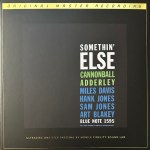
Somethin’ Else on MoFi – How Is This Company Still in Business?

Hot Stamper Pressings of Recordings by Rudy Van Gelder Available Now

For our 2023 White Hot Stamper shootout winning pressing we wrote:

A triumph for Rudy Van Gelder, a top Blue Note title, and as much a showcase for Miles Davis as it is for Cannonball Adderley.

The best sides of this album have as much energy, presence, dynamics and three-dimensional studio space as any jazz recording we’ve ever played.

When you hear it on a copy like this, it’s hard to imagine it could get much better.

We’ve heard more than our fair share of tubby, groove-damaged originals and smeary, lifeless reissues over the years, but this White Hot Stamper blew them all away.

This is a record we could play every week and never tire of. 


But this expensive ($125) MoFi pressing had us wondering what the hell we were on about, because almost nothing about it is right except for something we were not expecting: it’s actually tonally correct.

What are the chances?

With Mobile Fidelity, slim and none, but in this case they managed to pull off slim. So let’s give credit where credit is due.

But the sound is still a mess no matter how tonally correct it is.

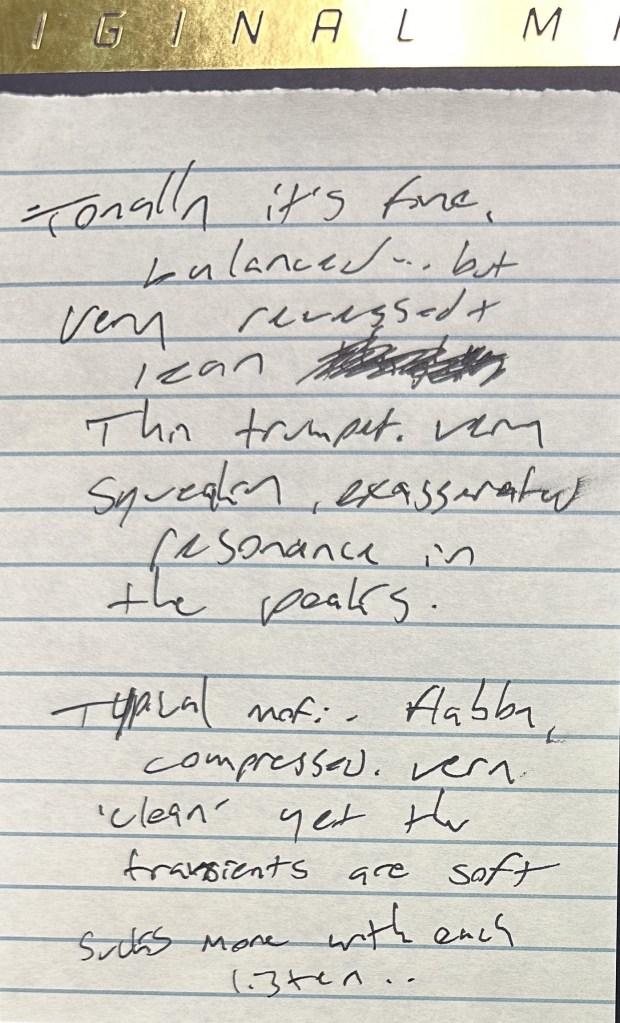
Allow me to list its faults based on the notes we took as the record was playing. The last line sums up the experience nicely.

  • 1) It’s very recessed and lean.
  • 2) The trumpet is thin and very squawky.
  • 3) There is an exaggerated resonance in the peaks.

(more…)

Driving My Car into a Ditch

Hot Stamper Pressings of the Music of The Beatles Available Now

Mobile Fidelity made a mess of Drive My Car on their Half-Speed mastered release of Rubber Soul in 1982.

Perhaps it’s more accurate to say Stan Ricker, MoFi’s go-to mastering engineer, did.

He equalized out far too much upper midrange and top end.

What fuels the energy of the track are the cow bell, the drums and other percussion. Instead of a scalpel, Mobile Fidelity took a hatchet to this slightly bright track, leaving a dull, lifeless, boring mess.

Some Parlophone copies may be a little bright and lack bass, but at least they manage to convey the musical momentum of the song.

Even the purple label Capitol reissues can be quite good. A bit harsher and spittier, yes, but in spite of these shortcomings they communicate the music, which ought to count for something.

As much as I might like some of the MoFi Beatles records [not so much anymore], and even what MoFi did with some of the other tracks on Rubber Soul, they sure sucked the life out of Drive My Car.

We all remember how much fun that song was to hear when it would come on the radio. Playing it on a very high quality stereo should make it more fun, not less.

If you’ve got a Rubber Soul with a Drive My Car that’s no fun, it’s time to get another one.

By The Way

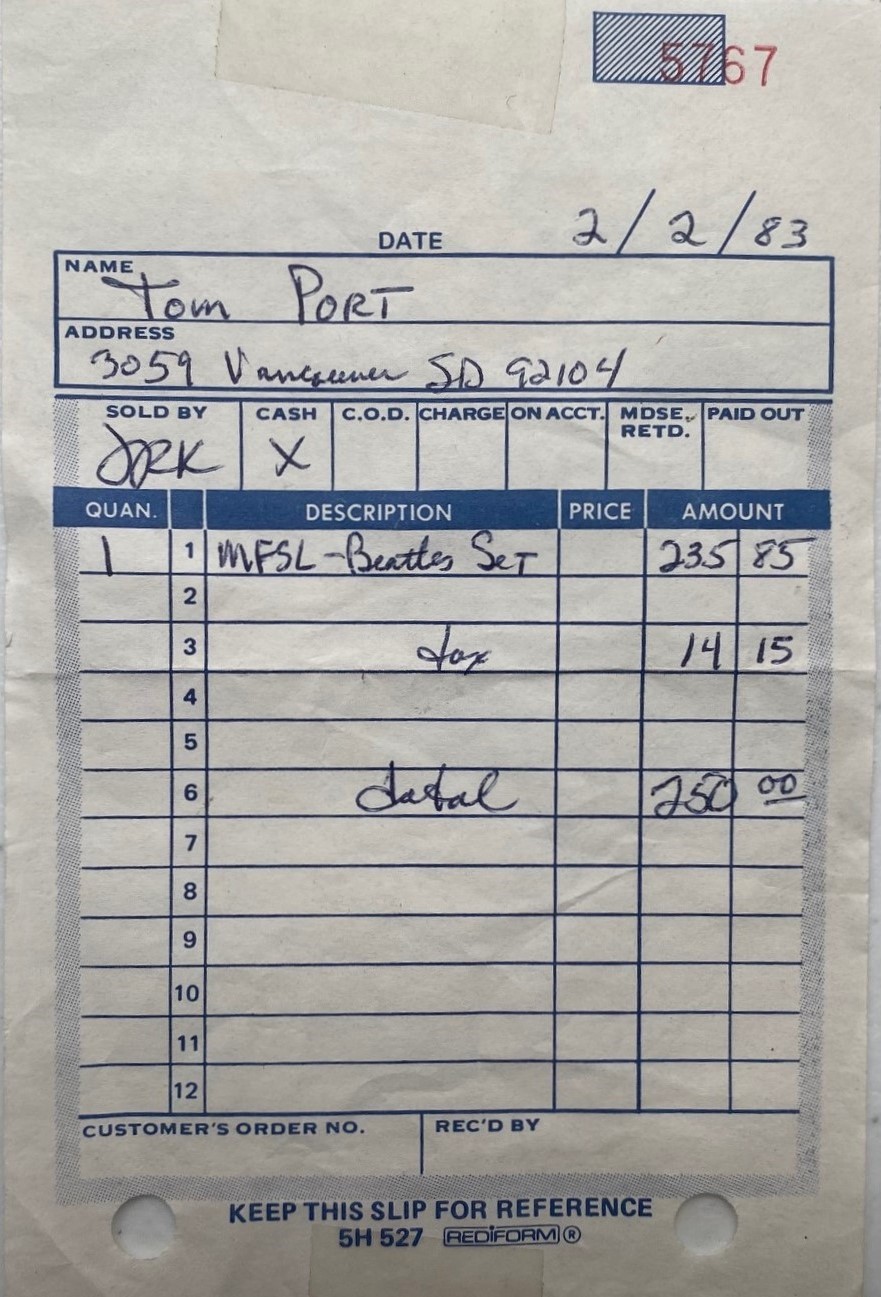
The best $250 — to the penny! — I ever spent on records is the price I paid for my brand new, still-in-the-shipping-carton MoFi Beatles Box. I ordered it in 1982 when I first learned of it, and it finally came the next year. I already owned all The Beatles albums MoFi had done by that point, including the UHQR of Sgt. Peppers, which, like a fool, I got rid of once the set came out.

(more…)

So Long So Wrong – Still So Wrong in the Vocal Department

Hot Stamper Pressings of Jazz and Pop Vocals Available Now

Most audiophiles have a soft spot for female vocals. It’s a sound that a high end stereo — practically any high end stereo — reproduces well.

But why do some audiophiles listen to the artificial-sounding junk that Patricia Barber and Diana Krall put out on album after album?

Their recordings are drenched in digital reverb. Who is his right mind likes the sound of digital reverb?

Rickie Lee Jones may not be my favorite female vocal of all time, but at least you can make the case for it as a Well Recorded Album. It’s worlds better than anything either of the above-mentioned artists have ever done.

The MoFi pressing of Alison Krauss (5276) is a disaster in the vocal department too.

Audiophiles for some reason never seem to notice how bad she sounds on that record. Can’t make sense of it. Any of the good Sergio Mendes records will show you female vocals that are hard to beat. Our best Hot Stampers bring the exquisite vocal harmonies of Lani Hall (aka Mrs. Herb Alpert) and Janis Hansen (and others) right into your living room.

Why bother with trash like this Mobile Fidelity?

(more…)

Half-Speed Masters – Stopgaps and Benchmarks

Hot Stamper Pressings of the Music of Joan Baez Available Now

Mobile Fidelity released a version of Diamonds and Rust on Anadisq in 1995, and if you want to hear a pressing that’s not murky, compressed and opaque, you would be wise to avoid their remastered pressing.

To be fair, MoFi has made some reasonably good sounding records too. For those of you whose budget is on the limited side, if you find an affordable copy of any of these MoFis, you are probably not completely wasting your money.

Stopgaps and Benchmarks

Our advice for the longest time has been that, while you are actively improving your stereo, room and setup, the best way to use your remastered audiophile pressings is as stopgaps and benchmarks.

As you make more and more progress, eventually you will find the vintage pressings that can show you what your audiophile pressings don’t do well, or at the very least, not as well as they should.

The unfortunate reality — considering how much money you had invested in them — is that they were falling short in many ways for all the years you had been playing them, but until you improved your playback, those problems were hidden from you.

Charting Your Success

As your stereo improves, you can actually chart your success by how many of these kinds of records you are able to eliminate from your collection. Once you can count the number of modern reissues you still own on one or two hands, there is a good chance you have reached a much higher level of playback.

(more…)