Heavy Vinyl Commentaries

Letters and commentaries on the subject of the modern remastered Heavy Vinyl pressing.

“What I’m all about is saving the world from bad sound.”

Check Out Some of Our Reviews (and Those of Our Customers’) for Albums on the Analogue Productions Label

Saving the world from bad sound you say? Hey, that’s what I’m about too!

I thought I was doing a pretty good job of it, laying out, often in great detail, exactly what’s wrong with these new Heavy Vinyl records being put out by the likes of Mobile Fidelity and Analogue Productions.

We have over 250 listings for them right here on the blog. Are there some good ones I missed?

Apparently the writer for the Times thinks there are, although some of the ones he mentions do not do much for his credibility. (Aja comes to mind, made from a copy tape — Chad goes that extra mile all right! To see what Sisario has to say about the album, with our take as well, just scroll to the bottom of this commentary.)

Let’s see what Sisario has to say about the man from Kansas and his vinyl empire.


An article about Chad Kassem and Analogue Productions has just come out, written by Ben Sisario for The New York Times.

Sisario is the guy who was as enamored with Pete Hutchison of the Electric Recording Company as he seems to be of the fellow you see pictured, a man who he has no trouble calling “The Wizard of Vinyl,” and with a straight face as far as I can tell.

Audiophiles in my experience tend to be credulous — I should know, I was as credulous as they come about everything audio back in my twenties and thirties — but it seems that writers for The New York Times will believe almost anything somebody tells them about records. (Perhaps Sisario will be taken to task in the comments section, but I’m sure not going to waste my time trying to find out.)

I would love to have him come to Westlake so we could play him some of the albums he seems to think are so great. That would be one helluva wake-up call. Not only would he have to retract this article, he would have to retract the one about Hutchison. That would be a win win in my book!

(more…)

Letter of the Week – “…you have absolutely no idea how much fun and how spiritual this hobby can be!”

Hot Stamper Pressings of the Music of Boston Available Now

One of our good customers had this to say about a Hot Stamper pressing he purchased a while back. My notes are interspersed with his.

Hey Tom,

Had a chance to do a shootout over this past weekend. My focus was Boston’s S/T album. I have 4 copies to play with:

1.) Vintage domestic pressing.
2.) Remastered heavy pressing.
3.) Mofi gatefold pressing.
4.) Better Records WH stamper 2.5+/3+ pressing.

Started with a vintage domestic pressing. This copy was doing nothing right and very painful to listen to. No energy! No low end or high end transparency and the midrange was smeared really bad. The vox sounded flat, 2 dimensional and distant. F- grading!

There are a lot of bad sounding vintage pressings of the album, as you no doubt know firsthand. We sell only the vintage pressings that have been mastered and pressed properly, which is what makes them Hot Stamper pressings.

Remastered heavy pressing was next. The sonic quality was very similar to the vintage domestic pressing and again, very painful to listen to. I will give this copy one thing, it had just a smidge more life to the soundfield than the vintage domestic copy and that’s not saying much. F grading!

Not sure which Heavy Vinyl pressing you played, but the fact that is had bad sound comes as no surprise.

Mofi gatefold pressing next. Again, NO energy coming from the grooves. Although the overall sonic quality was a bit better than the first 2 copies, there still is no low or high end extension. No 3D to the vox or midrange area. No space or separation between instruments. This pressing sounded flat, lifeless, dull and boring and time to take off the turntable. My ears can not take these crappy sounding pressing for very long. D grading!

Agreed. In our review, we described their remastered pressing this way:

The MoFi Anadisc of Boston’s first album has the same problems that seem to have plagued the whole of the Anadisq 200 series. The sound was: thick, opaque, blurry, and murky.

A real slogfest. Audiophile trash of the worst kind. If this isn’t the worst version of the album ever made, I cannot imagine what would be.

Better Records WH stamper 2.5+/3+ pressing next.

This copy blew my mind and socks off as I listened to the whole album.

Talk about Energy!

Until one listens to the sonic quality of this hot stamper on a high quality system, you have absolutely no idea how much fun and how spiritual this hobby can be! This copy is doing just about everything right. A+ grading!

Thx
Mike p.

Mike,

I know exactly what you mean, good records are the only records worth listening to, because they are the most engaging, the most fun and provoke the most powerful emotional — even spiritual — responses. I could not agree with you more.

There is one other important thing to remember. The only way you can be sure that the recording in question is not exactly the way you described the first three pressings of it is to have a pressing that shows you just how good it can really be.

How else would you know?

The fact that audiophiles find the sound of so many Heavy Vinyl reissues acceptable has to be chalked up to the fact that they have nothing better to compare them to.

They may even tell you that their newly remastered pressing is dramatically superior to the vintage domestic vinyl pressings they’ve played.

Of course, all that tells us is that, like you, they had a bad domestic original. We sympathize with their situation. We’ve played plenty of those too.

But once you hear just how good the album can sound — as you now have — those other pressings actually become an insult to Tom Scholz and the work he did (with help from Warren Dewey) on his one and only good album, Boston’s first.

Thanks for having enough faith in us to spend the big bucks it took to acquire our White Hot Stamper.

It’s clear you had the experience playing it that we did — what a record! — and that is money well spent.

(more…)

Heavy Vinyl Super Discs – “Nobody should have to listen to sound like that.”

More of the music of Sergei Rachmaninoff (1873-1943)

This entry links up a few of the commentaries I wrote as I went back through the Classic catalog, comparing their pressings to both originals and reissues.

We take to task Classic Records, The Absolute Sound, and Chesky, as you will see below.

This commentary was written in 2005, prompted at the time by a rave review in TAS for one of the new Speakers Corners Mercury reissues. I detested the sound of the first one I heard, and subsequent releases only confirmed that the mastering of the Mercury catalog for Speakers Corner was an abomination — an affront, in my none-too-humble opinion, to all right-thinking audiophiles.

As for my commentary, it should be obvious that these awful remastering labels have not gone out of business, but instead have prospered, making millions of dollars from audiophiles eager to lay down their hard earned money for one Heavy Vinyl pressing after another, often of the same title even.

When Harry Pearson — of all people! This is the guy who started the Living Stereo craze by putting those forgotten old records on the TAS list in the first place — gave a rave review to the Classic Records reissue of LSC 1806, I had to stand up (in print anyway) and say that the emperor clearly had removed all his clothing, if he ever had any to begin with. (And now he has a CD List? Ugh.)

This got me kicked out of TAS by the way, as Harry does not take criticism well. I make a lot of enemies in this business with my commentary and reviews, but I see no way to avoid the fallout for calling a spade a spade.

Is anybody insane enough to stand up for LSC 1806 today?

Considering that there is a die-hard contingent of people who still think Mobile Fidelity is the greatest label of all time, there may well be “audiophiles” with substandard audio equipment or weakened powers of observation and discrimination, or both (probably both, as the two go hand in hand), that still find the sound of that steely stringed Classic pressing somehow pleasing to the ear. Hey, anything is possible.

(more…)

Letter of the Week – “I wish I had never bought a new audiophile pressing now that I have come across your site.”

More Hot Stamper Letters from Customers

One of our good customers had this to say about some Hot Stampers he purchased recently:

Hey Tom, 

I wish I had never bought a new audiophile pressing now that I have come across your site. A new experience listening to music. Thank you.

Bennett

Bennett,

Thanks for your letter. You are not alone in swearing off these modern mediocrities. Many of our customers went through the same process you have, and it seems they are just as pleased with the results as you appear to be.

TP

P.S.

The above letter came to us years ago, in 2020 probably.

As of 2024, we’re sorry to report that Heavy Vinyl pressings — at least the ones we’ve played recently — show little evidence of improvement.

If anything they’re every bit as bad as they used to be, as you can see from our reviews of almost 200 of them.

(more…)

The Timekeepers Is Probably Bad on Heavy Vinyl, But Who Can Be Bothered to Find Out?

More of the Music of Count Basie

Analogue Productions remastered this longtime favorite of ours, The Timekeepers, on 45 RPM vinyl. Considering their dismal track record — an unbroken string of failures, scoring not a single winner that I am aware of — I’m guessing the Hot Stamper we offered here would have blown the doors off their version, as well as any other Basie album they have done or ever will do on vinyl.

A good customer emailed us back in 2012 with the quote below, authenticating our rather negative disposition at the time concerning the AP releases from the ’90s:

Recently I unearthed a pile of “The Tracking Angle” magazines, MF’s short-lived venture in publishing, that I’d kept all these years (this may damn me in your eyes, but at the time he was one of the more animated [animated but consistently wrong, not a good tradeoff] writers on audio). I dutifully reread the very first issue (Jan. 1995) for the first time in many years, even a review of “Tea for the Tillerman,”… I was flabbergasted to come across this:

So what does Mr. “Better Records” think? In a newsletter where he says a digital remastered OJC vinyl title sounds better than Acoustic Sounds’ all analogue version and says the whole lot of them “suck” and “simply cannot sound good on a good stereo,” he calls this Cat Stevens reissue “Fabulous. Very dynamic with plenty of presence in the midrange, unlike the ‘audiophile’ records of today.”

We proudly stand behind every word. If the comparable OJC title sounds better than the remastered one Acoustic Sounds is peddling, then it sounds better, digital remastering or no digital remastering.

We don’t pay any attention to who makes the records, how they make them or why they make them.

We just play them and let the chips fall will they may. Mr. Fremer thinks that making records the “right” way should result in better sounding records, but we have found precious little evidence to back up that theory, and volumes of evidence which utterly refute it.

Yes, those Analogue Productions records sucked, they continue to suck, and they will always suck. The “audiophile” records of that day did lack presence, and the passage of time is not going to change that fact.

Play practically any Reference, Chesky or Classic title from 1995 to the present day and listen for the veiled midrange, the opacity, the smeary transients, and the generally constricted, compressed, lifeless quality of its sound, a sound that has been boring us to tears for decades as well as fundamentally undermining the very rationale for the expense and hassle of analog itself in the modern digital age, a much more serious charge.

Ask yourself, where are those records now?

Piled on the ash heap of analog history, that’s where (apologies to Leon Trotsky). Nobody writes about them anymore, and it’s not because they were so good, no matter what any audiophile-type reviewer thought or may think about them.

As long as Analogue Productions is around, at least no one can say that Mobile Fidelity makes the worst sounding audiophile records in the world. They are certainly some of the worst, but not so hopeless that they have never made a single good sounding record, which is the title that Chad Kassem holds.

To the best of our knowledge. Obviously we have only played a small fraction of the records released on his godawful label. In our defense let me say that a small fraction was all we could take.


Letter of the Week – “Better Records has completely transformed my relationship with music listening…”

Hot Stamper Pressings of the Music of Charles Mingus Available Now

Our good customer ab_ba decided to write us a letter, this being his third anniversary of being sold on the reality of Hot Stampers. (I have taken the liberty of editing some of it.)

Dear Tom and Fred,

Today marks my third anniversary of being your customer. It’s quite a milestone! Frankly, when I realized it’s only been three years, I was surprised. It has felt longer. I really want to thank you both, and I thought I’d take a moment to look back on it all.

    • Better Records has completely transformed my relationship with music listening, in so many ways it’s hard to enumerate them all. Great sounding records, of course, but so much more.
    • A fantastic stereo that’s so good that for the first time ever leaves me with zero desire to change anything about it.
    • A better understanding of how to attain music worth listening to.
    • Specific albums and musicians I would not have known about, that I now really treasure.
    • And, most surprising of all, some exceptionally good friends who I cherish as people, and not just as fellow travelers along this esoteric path.

For me personally, getting great sound at home was always a somewhat-angsty quest: “there must be something better.”

I sense that others feel that way about it too. But now, for me, my music listening is pure satisfaction. And that is thanks entirely to you.

Looking back on it with some nostalgia, I thought I’d note some of the milestones so far:

My first purchase was a Super Hot Stamper of Mingus Ah Um, for $300. I still viscerally remember the feeling when I made that purchase. I remember putting it on for the first time, and having the sound just explode out of my tiny B&W speakers, like nothing I had heard before.

It was so different from my MoFi One-Step of Ah Um, I instantly had all of my preconceptions shattered.
(more…)

How Can Sound This Bad Possibly Earn a 10?

Hot Stamper Pressings of the Music of Bob Dylan Available Now

Maybe if the scale goes from 1 to 100, sure, I could see it. Yeah, 10 out of 100 sounds about right.

But the scale goes to 11, which makes a grade of 10 risible to anyone who has played this seriously flawed pressing. Here is how we described its sound many years ago:

We found this mono reissue to be flat as a pancake and dead as a doornail, like most of the Sundazed records we’ve played, starting way back in the early 2000s. No, they never got any better.

In our experience, Sundazed is one of the worst record labels of all time. This pressing is simply more evidence that backs up our low opinion of them.

Obviously we may have a low opinion of them, but a famous audiophile reviewer seemed to find the sound to his liking. He wrote:

Sundazed’s reissue gives the original a run for the money and remains true to the original, though it suffers in the bass, which while deep and reasonably well defined, is not as tightly drawn or focused. The upper mids on the original also bloom in a way that the reissue’s don’t, giving the reissue a slightly darker, recessed sound, but there’s still sufficient energy up there since Dylan’s close-miked vocals pack an upper midrange punch. If the vocals or harmonica sound spitty and unpleasantly harsh, it’s your system, not the record [!] – though there’s plenty of grit up there. On the plus side, the overall clarity and transparency of the reissue beats the original. [!] A really fine remastering job.
Of course we find every word of this review arrant nonsense, except the discussion of the qualities he praises in the original relative to the reissue. It’s been twenty years since this remastered pressing came out, does anybody still like the sound of it? Anybody? Let’s hope not.

(more…)

Letter of the Week – “They may be cheap but they are 100% a waste of money.”

Hot Stamper Pressings of the Music of Duke Ellington Available Now

Our good customer Conrad had written us quite a while ago asking what we thought about the sound of Analogue Productions’ records. Obviously we had nothing nice to say about them, which you can read here if so inclined.

He thought they were not great but good enough at the price:

I guess we can’t really compare experiences without knowing exactly the records we’ve each heard, and the AP pressings never hold a candle to any of the hot stampers I have received from you. It’s not close; my system and ears clearly know the difference. However, I don’t expect them to, and part of my relatively positive feeling about them is biased by knowing they’re dirt cheap at around $30 a pop.

An excerpt from my reply:

I believe you are trying to find reasons to justify the purchase of these modern remastered records, despite the shortcomings of their sound. My stereo is not forgiving enough of their faults to play them for enjoyment, and my ears are not forgiving enough of their sonic irregularities to find even the best of them much more than passable.

I took off my rose-colored glasses a long time ago, and I certainly have no intention of putting them back on.

Our stereo is designed to reveal the strengths and weaknesses of every record we play. Bad records sound awful on it, and mediocre records are a waste of time.

Years ago we started to notice that most of the new Heavy Vinyl pressings were sounding worse and worse, and by 2007, when Blue came out, that was the straw that broke the camel’s back. We decided to take a stand and we have never questioned for a moment that decision.

Conrad followed up with this after I had asked him about some titles he might have been impressed with.

I disagree with most of the benefit of the doubt I was giving them then, and haven’t listened to any really since then aside from here and there and always with utter disappointment. System and standards have improved. They may be cheap but they are 100% a waste of money, whereas your records cost the moon but repay in kind and are easy to amortize.

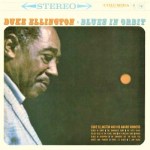
That said, one that did sound decent enough was Blues In Orbit.

Unfortunately, I was never able to get around to discussing that one title Conrad thought sounded decent enough, Blues in Orbit.

When it comes to the records audiophiles think sound good on Heavy Vinyl — especially the ones I’ve never played (or played decades ago and can’t remember their sound all that well) — we have a short question, all of three words, that we like to ask:

“Compared to what?”

Without playing other pressings, doing a proper shootout for the album with some nice Six-Eye stereo originals and maybe some 360s and even a red label 70s pressing or two, you simply have no way of knowing how good the album can sound.

What you have with the Classic Records remaster (or any other Heavy Vinyl reissue for that matter) is what seems like a good sounding pressing, no more, no less.

And how good is it really?

Is it in danger of getting worn out from being played too often?

Has it become a personal favorite?

Are you falling in love with the music and knocked out by the sound?

(more…)

“Big, warm, mushy and limp”

Hot Stamper Pressing of the Music of Joni Mitchell Available Now

One of our good customers had this to say about some records he played recently:

Hey Tom, 

I just had to drop you a brief note, to say THANK YOU, for your writings regarding DCC pressings many years back.

I was just going back through them on your site, after I unearthed my DCC pressings this afternoon and gave a couple of them (i.e., Elton’s Madman; Joni’s Court and Spark) a spin – as I recall y’all being the first to speak truth in the face of overwhelming adoration regarding these (when they first were released).

OMG. They are COMPLETELY lifeless, with ZERO energy!

Big, warm, mushy and limp, yes.

Probably sound comforting (at some level) on a low-budget lean solid state system. [High-budget ones too I would venture to guess.]

But on a system with any level of transparency and truth-to-pressing, YIKES. It just made me sad.

THEN, I went online, and checked the current PRICES for these pressings (of which I own several sealed), and I got SUPER HAPPY! People are paying some serious coin for these turkeys – so I can be well rid of them, and take that cash and buy some more of YOUR awesome pressings! Win-win! 👍😊

Warmest regards,

Steve

Steve,

I should say right off the bat that I think the DCC of Court and Spark is not a bad sounding record, at least the copy I had wasn’t bad sounding last time I played it. Your mileage apparently varied.

Madman I hope to write about before too long. I found my DCC copy to be lean in the lower midrange, and missing much of the Tubey Magic that makes that recording so special (along with many others by Elton from that era).

A few more thoughts:

The sound I think you are hearing that you refer to as lifeless and lacking in energy is really the result of Kevin Gray’s lousy cutting chain. The sound you hear on your DCC albums is precisely the sound I had heard on this DCC album many years ago.

Played back-to-back with the properly-mastered, properly-pressed originals, the DCC was shockingly lacking in many of the most important qualities a record should have. Eventually Paul and Judy were the couple that showed me what a fool I had been.

Low resolution cutters like the ones used to cut the DCC discs sound dead and boring, even when the mastering choices are good ones and no obvious compression is being used.

Kevin Gray famously does not have a way to put compressors into his chain, as my friend Robert Pincus at Cisco found out when he cut 52nd Street and could not get some aspects of it to sound right, due to the fact that he was unable to add compression in the mastering the way Sterling had.

That’s what it needed and that’s what it didn’t get. Kevin don’t play dat.

I have been beating this long-dead horse for about fifteen twenty years now. Any time I actually do play one of the DCC records these days, it usually sounds worse than I remember it.

(more…)

Sgt. Peppers on Heavy Vinyl – The Reviewers from 1982 Blow It Again

beatlessgtHot Stamper Pressings of the Music of The Beatles Available Now

You might agree with some reviewers that EMI’s engineers did a pretty good job with the new Sgt. Pepper.

In the March 2013 issue of Stereophile, Art Dudley weighed in, finding little to fault on this title but being less impressed with most of the others in the new box set.

His reference disc? The MoFi UHQR. Gadzooks!

Oh, and he also has some old mono pressings and a domestic Let It Be. Now there’s a man who knows his Beatles.

Fanatical? You’re damn right he’s fanatatical. And who can blame him? We’re talkin’ The Beatles for Chrissake!

When I read the reviews by writers such as these I often get the sense that I must’ve fallen through some sort of Audio Time Warp and landed back in 1982.

How is it that our so-called experts appear to have so little understanding of how records are made, how variable the pressings can be, and, more importantly, how critical it is to maintain rigorously controlled conditions when they carry out the comparisons among pressings that they discuss in their reviews.

Here’s the gist of the problem:

Critically comparing LPs is difficult and time-consuming.  It requires highly developed listening skills. Looking back, these are skills that I know I could not possibly have had because I didn’t have a clue as to how to go about acquiring them.

I see no evidence that the audiophile reviewers of today are better at it than I was in 1982, and I was terrible.

Moving on, let’s look at what one well-known reviewer has to say, keeping in mind that he’s using his original British pressing for comparison. I quote at length — without prejudice so to speak — so there can be no misunderstanding. (Emphasis added.)

(more…)