*Live and Learn

Here we discuss the records we think we got, uh, wrong.

It’s not really a problem for us though. We feel no need to cover up our mistakes. Recognizing and correcting previous errors is how we’ve managed to learn so much about records that no one else seems to know.

Gaining knowledge — in any field, not just record collecting or music reproduction — is always slow, incremental and riddled with errors and bad judgments.

A common misperception among those visiting the site is that we think we know it all. Nothing could be further from the truth. We learn something new about records with practically every shootout.

By playing the records grouped here, under rigorously controlled conditions, on top quality equipment, we found out just how much better or worse they are than are we thought.

Grossman & Renbourn Direct to Disc – Updated

Hot Stamper Pressings of Direct-to-Disc Recordings Available Now

Many years ago we described the East World Direct-To-Disc Japanese import LP you see pictured this way:

Lovely acoustic music; the best cuts are the first two tracks on side two. They sound like a classic Vanguard recording from the 60s. One of the best East World titles.


UPDATE 2025

In preparation for a possible shootout, we got another copy of the record in and were much less impressed in 2025 than we were in 2010, which was probably the last time we had played the record.

It was somewhat veiled and dry. The sound wasn’t bad, it was actually fairly good, but that’s a long way from amazing. If we’re going to offer you an acoustic guitar recording, it’s going to have to be amazing sounding because there are a lot of amazing sounding vintage acoustic guitar albums from the 50s to the 70s to compete with.

And to compare it to a classic Vanguard recording is just ridiculous.

Vanguard produced some the most natural recordings in the history of the recorded music. East World produced some decent, modern and somewhat artificial-sounding recordings of mostly forgettable music in the 70s. We had no business comparing the two of them.

We obviously had a long way to go in audio before we got straightened out on that point. We’re always banging on about making audio progress so that you can recognize and collect better sounding records, and this East World pressing is the perfect example of us taking our own advice.

Our stereo had improved so much over that span of fifteen years that it was now obvious to us how second-rate this Japanese Direct-to-Disc actually was.

If you have any Direct-to-Disc recordings still sitting on your record shelf, pull some of them down and see how well the sound — and the music — hold up. Chances are good that a number of them might soon be finding a new home in the trade-in pile, in order to clear more space for better records.

(more…)

Don’t Skip the OJC, Put It in a Shootout

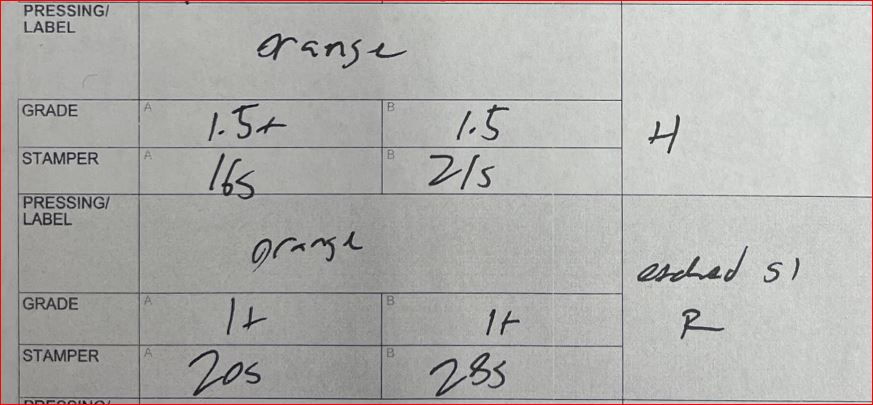
Of the three early OJC pressings of West Coast Sound we played recently, only one met our standards. At 2+/1.5+, the sound was good, not great.

One copy earned grades of 1+/1+, which means the sound was passable. The last copy had an NFG side two, which means it was just awful.

(Many of the Heavy Vinyl disasters we’ve been cataloging lately have earned that notorious grade. The unacceptably lo- to mid-fi sound even the better ones offer doesn’t seem to bother the audiophiles who rave about them, however.)

So does side two of the OJC pressing have fairly good sound, merely passable sound, or is the sound hopelessly bad?

In the case of this Shelly Manne album, all three, and the only way we were able to discover that is by cleaning up three of them and playing them head to head with real Contemporary pressings in a blinded experiment.

Obviously we were hoping for better results from our OJCs — only one of the copies we played will turn out to be saleable.

Why did we bother? That old bugaboo the profit motive was all that was needed to make us give the OJC pressings a try. We thought we could make money on them but it turns out that the opposite will happen. Oh well, nothing ventured, noting gained.

More importantly, we are not the least bit shy about coming clean and sharing the results with our readers and customers, especially the part about three identical looking copies with the same stamper numbers all sounding very diffferent from each other.

An added bonus is that side two was worse than side one most of the time. That happens often enough, but nobody but us ever seems to want to talk about it.

If we had had ten OJC pressings to play, we probably would have be able to find at least one or two with a grade of 2+/2+, meaning that George Horn probably did a creditable job mastering the album back in 1984 when he cut it for Fantasy, to sell for the very affordable price of $5.98. It’s most likely the pressing plant that let listeners down.

Needs Tubes

The problem here is that this title needs tubes, or, at the very least, the sound of tubes, and George apparently did not have them, or enough of them, in his mastering chain.

Our specific notes can be seen on the left. We mention that the first track has the best sound (1956 dates), the rest falling short for being darker and more crude (“old school,” some dating from 1953).

The West Coast horn players are the reason to buy this title, with horns that are “sweet and tubey,” but of course to hear that kind of sound you will need a real Contemporary pressing, not an OJC — or anything made in the modern era for that matter.

(more…)

Now, There Was A Song! Sounds Bad to Us Now

Hot Stamper Pressings of the Music of Johnny Cash Available Now

UPDATE 2024

We got a couple of nice copies of this record in recently and they sounded terrible.

We suspect we were being too generous with our previous review. Buy this one for the music of you like, but don’t expect it to have audiophile quality sound.


This very nice looking original Columbia Stereo 360 Label LP has that authentic early Johnny Cash sound. We put this through our cleaning process and took a listen. The EQ on his vocals is a little bit brighter than we like but overall the album has LOTS OF TUBEY MAGIC!

“This is an outstanding album of covers of old country songs, from the familiar (Ernest Tubb, Hank Williams, George Jones) to lesser-known gems. ” AMG

(more…)

The Dreadful Sound of the Heavy Vinyl Reissues Doug Sax Mastered in the 90s

Hot Stamper Pressings of the Music of Sonny Rollins Available Now

Longstanding customers know that we have been relentlessly critical of so-called “audiophile” LPs for years, especially in the case of these Analogue Productions releases from back in the early-90s. A well-known reviewer loved them, I hated them, and he and I haven’t seen eye to eye on much since.


(Old) Newflash!

Just dug up part of my old commentary discussing the faults with the original series that Doug Sax cut for Acoustic Sounds. Check it out.

In the listing for the OJC pressing of Way Out West we wrote:

Guaranteed better than any 33 rpm 180 gram version ever made, or your money back! (Of course I’m referring to a certain pressing from the early 90s mastered by Doug Sax, which is a textbook example of murky, tubby, flabby sound. Too many bad tubes in the chain? Who knows?

This OJC version also has its problems, but at least the shortcomings of the OJC are tolerable. Who can sit through a pressing that’s so thick and lifeless it communicates none of the player’s love for the music they’re making?

If you have midrangy transistor equipment, go with the 180 gram version (at twice the price).

If you have good equipment, go with this one.


UPDATE 2015

We are no longer fans of the OJC of Way Out West, and would never sell a record that sounds the way even the best copies do as a Hot Stamper. It’s not hopeless the way the Heavy Vinyl pressing is, but it’s not very good either. It’s yet another example of a record we was wrong about.

Live and learn, right?


(more…)

The Planets – Can You Imagine Sound this Bad from a TAS List Super Disc?

Hot Stamper Classical and Orchestral Pressings Available Now

We can, we played it.

Or, to be more correct, we played them. Two pressings, each with one good side and one very bad side.


UPDATE 2025

Take all of this with a very large grain of salt. In the course of doing more shootouts for the Mehta Planets, we’ve played quite a number of different pressings and now believe — believe being the operative word — we know which are the best stampers.

It is very unlikely that any Dutch pressing would be competitive with the best UK-pressed copies cut by Harry Fisher.

For those of you who just want a good sounding copy of The Planets to play and enjoy, our favorite by far is Previn’s reading on EMI from 1974.

We know of no better performance, and we much prefer the dramatically more natural sound quality.

The Mehta recording, like much of what he recorded for Decca in those days, is a multi-miked mess, the kind we grew out of (for the most part) a long time ago. (More of the multi-miked records we’ve auditioned, of varying quality to be sure, can be found here.)


Our old commentary (please excuse the heavy-handed caps):

This 2-pack from many years ago (ten fifteen perhaps), described below, boasts White Hot Stamper sound on side two for the Mehta Planets. Yes, it IS possible. Side two shows you what this record is actually capable of — big WHOMP, no SMEAR, super SPACIOUS, DYNAMIC, with an EXTENDED top.

It beat every London pressing we threw at it, coming out on top for our shootout. Folks, we 100% guarantee that whatever pressing you have of this performance, this copy will trounce it.

But side one of this London original British pressing was awful.

We wrote it off as NFG after about a minute; that’s all we could take of the bright, hard-sounding brass of War.

If you collect Super Discs based on their catalog numbers and labels and preferred countries of manufacture, you are in big trouble when it comes time to play the damn things.

That approach doesn’t work for sound and never did.

If your stereo is any good, this is not news to you. The proof? The first disc in this 2-pack is Dutch. It earned a Super Hot grade in our blind test, beating every British copy we played against it save one. Side two however was recessed, dark and lifeless. Another NFG side, but the perfect complement to our White Hot British side two!

(more…)

Shorty Rogers – The Swingin’ Nutcracker

Hot Stamper Pressings of the Music of Tchaikovsky Available Now

UPDATE 2025

We wrote the commentary you see below about 15 years ago.

We liked the record back then just fine. However, we recently got another couple of copies in and they sounded OK, not great, but what really had aged badly was the music, which was corny and, worst of all, contra the album’s title, definitely did not swing.

Don’t waste your money on this one the way we did.


Our old commentary:

Insanely good Living Stereo sound throughout with both sides earning Shootout Winning Triple Plus (A+++) grades and playing reasonably quietly. Al Schmitt handled the engineering duties, brilliantly, with Shorty and dozens of his West Coast Pals contributing to the dates, the likes of Conte Candoli, Art Pepper, Bill Perkins, Bud Shank, Harold Land, Richie Kamuca and more.

“The most remarkable aspect about the score is how boldly it re-imagines the original. The Swingin’ Nutcracker is contemporary from an American perspective without patronizing the European original.” – Marc Meyers, Jazz Wax

(more…)

Bruch & Mozart Violin Concertos – Were We Wrong?

Living Stereo Orchestral Titles Available Now

Many years ago we wrote the following review for LSC 2472:

Superb sound. The violin is wonderful on both sides. The Mozart is absolutely gorgeous; the best I’ve ever heard it.

The orchestra on the Bruch side gets a little congested in the louder passages, which is typical for records of this era.

Laredo plays these pieces beautifully. The Bruch is an especially romantic work and his violin sings sweetly and with deep emotion throughout. The Mozart is more spritely and he plays it with the light touch it requires. You will have a hard time finding a better violin concerto record. This ranks with the best of them.


UPDATE 2024

More recently we got in a nice 1S/1S pressing that sounded thick and dark, even after a good cleaning.

Were we wrong years ago? Hard to say. That copy from many years ago is gone.

Three things to always keep in mind when a pressing doesn’t sound like we remember it did, or think it should:

(more…)

Mozart / Symphony No. 35 – A Cisco Recommended LP, or Is It?

Hot Stamper Pressings of the Music of Mozart Available Now

I wrote this review in 2001, the equivalent of the stone age in my audio world — most everything of value that I’ve learned in audio over the last fifty years I learned in this century — and would now disagree with a great deal of what I said about the sound of the record.

The music and performances are fine, but the sound has all the hallmarks of bad cutting equipment and dead-as-a-doornail RTI vinyl.

This is the review I wrote in 2001:

Hearing this performance from Thomas Nee and his orchestra is like hearing the work for the first time. It may be difficult to reproduce the magic in these grooves but wonderfully rewarding when you do. You won’t be bored! The sound is intimate and immediate; this is the record for those of you who appreciate more of a front row center seat. Count me in; that’s where I like to sit myself.  

I worked hard on my system for about 4 hours one night, using nothing but this record as my test, because of its wealth of subtle ambience cues, excellent string tone, and massed string dynamics. There is a lot to listen for, and a lot to get right, for this album to sound right.

The performance of the Mozart’s 35th Symphony is definitive. Without a doubt this is the best Mozart record currently available, one that belongs in any serious record collection. I give it a top recommendation for its sublime musical qualities that set it apart from other current releases. In short, a Must Own.


UPDATE 2020

Twenty years and a great deal of audio progress later I have changed my tune. Now I would say:

Cisco’s titles had to fight their way through Kevin Gray’s opaque, airless, low-resolution cutting system, a subject we discussed on the blog in some depth here. Other bad sounding records that he mastered can be found here.

An excerpt:

As is the case with practically every record pressed on Heavy Vinyl over the last twenty years, there is a suffocating loss of ambience throughout, a pronounced sterility to the sound. Modern remastered records just do not breathe like the real thing.

Good EQ or bad EQ, they all suffer to one degree or another from a bad case of audio enervation.

Where is the life of the music?

You can try turning up the volume on these remastered LPs all you want; they simply refuse to come to life.

A textbook case of live and learn.


Cisco Music had this to day about their record:

One of Mozart’s most popular symphonies is given a visceral and driving performance. Instead of slowing down the tempo in service to lyricism, conductor Thomas Nee chose to adhere to Mozart’s written instructions: ‘The first movement must be played with fire; the last, as fast as possible.’ Even if you own several recordings of this bright and joyous work, you’ve never heard it played like this, and certainly never with this kind of audiophile sound! 

This is exactly the kind of “audiophile sound” I fell for 20 25 years ago, long before I had a clue as to just how good the best orchestral recordings could sound.

(more…)

Sorry, This Album of String Quartets Is Not As Good As We Thought

Hot Stamper Pressings of the Music of Claude Debussy Available Now

Hot Stamper Pressings of the Music of Maurice Ravel Available Now

UPDATE 2024

About ten years ago we were under the impression that the domestic Philips pressing you see pictured had exceptionally good sound, sound that would be difficult to beat.

Well, that just goes to show how little we knew about the sound of the various recordings of this music back then.

We needed to do a lot more homework, and the reason we started playing other recordings of these two string quartets is simply that the Philips record we liked so much was too hard to find on the domestic pressing.

The imports could be found, sure, but they sounded like a lot of Philips pressings — overly smooth, smeary, lifeless, recessed and veiled, like the Golden Imports Philips had made in the 70s. It was in those bad old days of the early 70s that Philips set about ruining the sound of phenomenally good Mercury master tapes. They should never be forgiven for it.

I bought one and fell in love with it, for both its music and its sound, a classic case of me not having any idea what I was missing.

How clueless was I? I was almost as clueless as the guy who thought the MoFi pressing of Star Wars and Close Encounters was a true audiophile Demo Disc. As foolish a MoFi fan as I was in the late-70s, even I knew was a piece of phony junk that record was.

Now there are dozens of outfits that make it their business to ruin phenomenally good master tapes by dint of their incompetent remastering, a story we never tire of telling.

Breaking Through

The key to our breakthrough was the rediscovery of a record we had played many years before, all the way back in 2005, and had simply lost track of in the ensuing years: LSC 2413. (It’s easy to lose track of rare Shaded Dogs. They’re not usually sitting in the bins of your local record store. Out of sight, out of mind.)

The best pressings of LSC 2413 are dramatically better sounding, and the performances are equal to or better than any we know.

Recently we finally got hold of another copy of the rare Philips pressing above and found to our dismay that the sound was not nearly as good as we remember it from our shootout years ago. The copy that came in was flat and badly lacked the presence and Tubey Magic of the Shaded Dog pressings we played of the RCA.

As the best of the RCA pressings demonstrate beyond all doubt, 1960 was a great year for classical and orchestral recordings. (What the shameful modern masterng engineers operating today do to such wonderful recordings is another thing altogether.)

(more…)

Letter of the Week – “I never owned a copy that had as much bottom end along with vocals that seem to jump out of my speakers.”

Hot Stamper Pressings of the Music of Jethro Tull Available Now

One of our good customers had this to say about some Hot Stampers he purchased a while back:

Hey Tom,   

Just a quick note to express my complete satisfaction with my latest purchase from Better Records.

I just received my copy of the WHS of Jethro Tull’s This Was LP. Needless to say, I have several copies of this album, both domestic and UK versions. One is a Pink Label UK which I purchased from you a while back*.

I was so completely blown away at how much better this LP sounds. Both are great, but this one is simply unbelievable.
I never owned a copy that had as much bottom end along with vocals that seem to jump out of my speakers.

Thank you again for your work finding these superior copies of albums I never thought could sound this good!

Hope to purchase again soon,
Regards
D B

Dennis,

So glad you enjoyed this copy as much as we did, and you even had a Pink Label to play against it, a record not many audiophiles own.

Stand Up and Benefit are the same way, the original pressings are not the way to go, but try telling that to the average audiophile who covets only first pressings.

They can read labels and they know which are the earliest ones, but they rarely have the equipment and the listening skills to know that the right reissues are CLEARLY better, something you heard right from the start I suspect.


UPDATE 2024:

Allow me to apologize for the patently unfair nature of the above characterization.

The truth is much more complicated than my remarks would lead you to believe.

Most audiophiles, even those with high-quality equipment and reasonably good listening skills, simply do not have the resources — time and money — to acquire another half-dozen pressings of This Was in the hopes that one of them might beat the original they struggled to find and had most likely paid good money for.

Our story for this album makes it clear just how hard it is to discover the pressings that are clearly superior to the ones most collectors and audiophiles have been led to believe are the best.

Not one out of a hundred has the resources to do what it takes to find the best pressings for more than a few dozen titles.

There is, however, one group of dedicated music lovers that has been able to achieve success in this regard for literally thousands of titles.

That group, you will not be surprised to learn, is made up of the ten or so individuals who work at Better Records.

Without a dedicated staff and a major league record-buying budget, it would simply be impossible to find out what we have been able to find out since we did the first Hot Stamper shootout two decades ago.

(more…)