More Mercury Classical Recordings
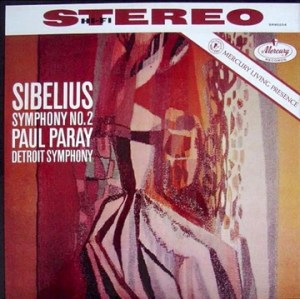
- Paray and the Detroit Symphony Orchestra’s lively and dynamic performance debuts on the site with INCREDIBLE Shootout Winning Triple Plus (A+++) sound throughout this early Maroon Label Mercury Stereo pressing of SR-90204
- It’s also fairly quiet at Mint Minus Minus, a grade that even our most well-cared-for vintage classical titles have trouble playing at
- This spectacular recording is big, clear, rich, transparent and energetic – the bottom end is especially strong and dynamic
- Here is the Mercury sound we love, sound that is not easy to find, regardless of what anyone else will tell you
- Huge, immediate, and natural – with a record this good, your ability to suspend disbelief will require practically no effort at all
This vintage Mercury pressing has the kind of Tubey Magical Midrange that modern records can barely BEGIN to reproduce. Folks, that sound is gone and it sure isn’t showing signs of coming back. If you love hearing INTO a recording, actually being able to “see” the performers, and feeling as if you are sitting in the studio with the band, this is the record for you. It’s what vintage all analog recordings are known for — this sound.
If you exclusively play modern repressings of vintage recordings, I can say without fear of contradiction that you have never heard this kind of sound on vinyl. Old records have it — not often, and certainly not always — but maybe one out of a hundred new records do, and those are some pretty long odds.
What The Best Sides Of Sibelius’s Symphony No. 2 Have To Offer Is Not Hard To Hear
- The biggest, most immediate staging in the largest acoustic space
- The most Tubey Magic, without which you have almost nothing. CDs give you clean and clear. Only the best vintage vinyl pressings offer the kind of Tubey Magic that was on the tapes in 1960
- Tight, note-like, rich, full-bodied bass, with the correct amount of weight down low
- Natural tonality in the midrange — with all the instruments having the correct timbre
- Transparency and resolution, critical to hearing into the three-dimensional studio space
No doubt there’s more but we hope that should do for now. Playing the record is the only way to hear all of the qualities we discuss above, and playing the best pressings against a pile of other copies under rigorously controlled conditions is the only way to find a pressing that sounds as good as this one does.
Copies with rich lower mids and nice extension up top did the best in our shootout, assuming they weren’t veiled or smeary of course. So many things can go wrong on a record. We know, we’ve heard them all.
Top end extension is critical to the sound of the best copies. Lots of old records (and new ones) have no real top end; consequently, the studio or stage will be missing much of its natural air and space, and instruments will lack their full complement of harmonic information.
Tube smear is common to most vintage pressings. The copies that tend to do the best in a shootout will have the least (or none), yet are full-bodied, tubey and rich.
Size and Space
One of the qualities that we don’t talk about on the site nearly enough is the SIZE of the record’s presentation. Some copies of the album just sound small — they don’t extend all the way to the outside edges of the speakers, and they don’t seem to take up all the space from the floor to the ceiling. In addition, the sound can often be recessed, with a lack of presence and immediacy in the center.
Other copies — my notes for these copies often read “BIG and BOLD” — create a huge soundfield, with the music positively jumping out of the speakers. They’re not brighter, they’re not more aggressive, they’re not hyped-up in any way, they’re just bigger and clearer.
And most of the time those very special pressings are just plain more involving. When you hear a copy that does all that — a copy like this one — it’s an entirely different listening experience.
What We’re Listening For On Symphony No. 2
- Energy for starters. What could be more important than the life of the music?
- The Big Sound comes next — wall to wall, lots of depth, huge space, three-dimensionality, all that sort of thing.
- Then transient information — fast, clear, sharp attacks, not the smear and thickness so common to these LPs.
- Powerful bass — which ties in with good transient information, also the issue of frequency extension further down.
- Next: transparency — the quality that allows you to hear deep into the soundfield, showing you the space and air around all the instruments.
- Extend the top and bottom and voila, you have The Real Thing — an honest to goodness Hot Stamper.
Side One
Allegretto
Tempo Andante, Ma Rubato
Side Two
Vivacissimo
Finale: Allegro Moderato
AMG on Symphony No. 2
The genesis of the Second Symphony can be traced to Sibelius’s trip to Italy in early 1901. The trip came about at the suggestion of his friend, the amateur musician Axel Carpelan, and it was there that he began contemplating several ambitious projects, including a four-movement tone poem based on the Don Juan story and a setting of Dante’s Divina Commedia. While none of these plans ever came to fruition, some of the ideas sketched during this trip did find their way into the second movement of this symphony. Carpelan was also instrumental in raising money to allow Sibelius to relinquish his work at the Helsinki Conservatoire and devote himself to the composition of the Second Symphony. Despite his friend’s help, Sibelius’ return to Finland for the summer and autumn was not accompanied by any great burst of inspiration, and extensive revisions delayed the first performance, first to January 1902 and then to March 1903. But from then on, the symphony enjoyed unparalleled success in Finland and eventually led to the major breakthrough in Germany that was so craved by Scandinavian composers of this era (one which Nielsen, for instance, never achieved). The Second Symphony has retained an extraordinary popularity for its individualistic tonal language, dark wind coloring, muted string writing, simple folk-like themes, and distinctly “national” flavor that are all Sibelian to the core.
While the opening mood is pastoral, it leads to an air of instability, in which small, short gestures seem to arise at random and then trail off. Yet there is a subtle coherence to the work that counters its seemingly shapeless quality. All of the material of the first movement emerges from either the two repeated-note subjects heard in the strings and winds at the opening, or from a brooding idea first presented in the winds and brass.
Unlike the first movement, in which the gentleness of the introduction is recaptured at the conclusion, the second movement is full of turbulence and ends without consolation. Two competing subjects seem to engage in a battle: First, a dirge-like bassoon melody in D minor, marked “lugubrious,” builds to a towering culmination in winds and brass; then an ethereal, ruminative theme is played by divided strings in the key of F sharp major. The energetic scherzo, with its machine-gun figures in the strings, is built from a fragment of greatest simplicity: a repeated B flat followed by a turn around that note.
Following the precedent of Beethoven’s Fifth Symphony, the Scherzo is linked directly to the finale through a grand rhetorical bridge passage. The symphony at last achieves a flowing D major melodic line that heroically shakes off the D minor preparation, in the best sense of the Romantic tradition. Also like Beethoven, Sibelius brings back the transitional material a second time so that the victory of the major key can be savored anew, after which he concludes the work with a hymn-like peroration. That said, the Second Symphony marks the end of Sibelius’ early Romantic period that paid homage to his predecessors. In subsequent works, his interest rested more in pursing new formal methods based on fragmentation and recombination.