
Hot Stamper Pressings of the Music of Beethoven Available Now
By the early 2000s we had finally come to the conclusion that the RCA pressings of the Beethoven 7th offered the best combination of sound and performance we could find.
By 2024 we had enough copies — seven in total — to do a shootout. The best copy we were able to salvage from this debacle is described, perhaps too generously, below.
This Decca-recorded, Shaded Dog pressing of Beethoven’s Symphony No. 7 debuts on the site with big, spacious, and lively Double Plus (A++) Living Stereo sound or close to it.
Side one is doing just about everything right – it’s rich, clear, undistorted, open, and has depth and transparency to rival the best recordings you may have heard, and side two is not far behind in all those areas.
The full stamper sheet shown below makes clear what happens when your luck just plain runs out. The Soria pressings were by far the best — they were the only ones to earn 3+ on either side — but side two of all three copies we played was defective, rendering them all but worthless.
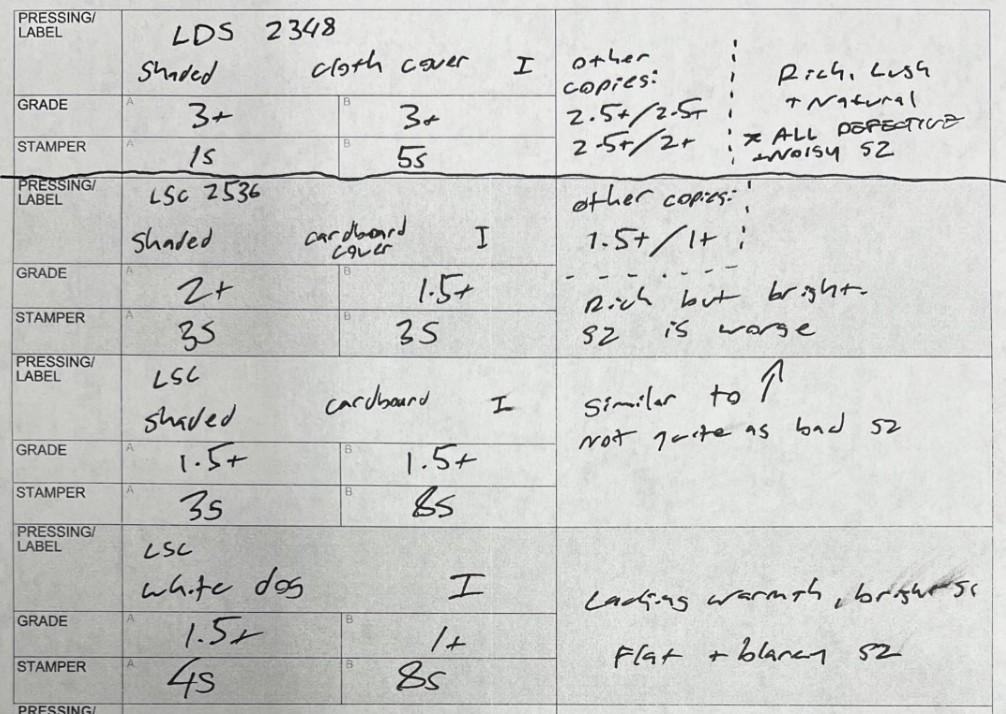
When RCA recut the record for their regularly priced Living Stereo release, LSC-2536, the dropoff in sound quality was profound, a fact readily seen from our notes. (“Rich but bright, side two is worse.”)
Is there a logical reason RCA ended up doing such a poor job cutting LSC-2536, especially after doing such a great job of cutting LDS-2348?
Not that I know of.
Can you imagine the average record-loving audiophile — the kind who has never done a shootout for himself, which means roughly 99.99% of the group — trying to make sense of these findings?
He would surely find the chaos we carefully document in the stamper sheet above hard to reconcile with much of the conventional wisdom he’s familiar with — the kind that audiophiles readily adopt to guide them in their search for superior vintage pressings.
Yes, the originals are better, but why are all the side two’s defective? And why do the early recuts sound so much worse?
And who on the face of the earth has ever made this kind of information available to the record buying public at large?
Does anyone other than us take the time and spend the money to find out what is really going on with pressings such as these? Not to my knowledge. If you know of anyone, please contact me.
And if you think you have an explanation for the huge pressing variations for the 7th we played, please, by all means, send it our way.
Until then we will just have to reconcile ourselves to the unpleasant idea that the mysteries of vinyl are many and deep and rarely do they lend themselves to simple solutions. As Kevin D. Williamson likes to say, it all looks so easy when you don’t understand it.
Symphony No. 7 (Beethoven)
Critics and listeners have often felt stirred or inspired by the Seventh Symphony. For instance, one program-note author writes:
… the final movement zips along at an irrepressible pace that threatens to sweep the entire orchestra off its feet and around the theater, caught up in the sheer joy of performing one of the most perfect symphonies ever written.
Composer and music author Antony Hopkins says of the symphony:
The Seventh Symphony perhaps more than any of the others gives us a feeling of true spontaneity; the notes seem to fly off the page as we are borne along on a floodtide of inspired invention. Beethoven himself spoke of it fondly as “one of my best works.” Who are we to dispute his judgment?
Another admirer, composer Richard Wagner, referring to the lively rhythms which permeate the work, called it the “apotheosis of the dance.”
Wikipedia