Rock and Pop LPs to Improve Your Playback

Listening in Depth to Crosby Stills & Nash

Hot Stamper Pressings of the Music of Crosby, Stills and Nash Available Now

Now with bonus CD Advice.

Although millions of copies of CSN’s first album were sold, so few were mastered and pressed well, and so many mastered and pressed poorly, that only a ridiculously small number of Hot Stamper copies have ever actually made it to the site. A couple dozen would be my guess, compared to, for example, the Beatles albums, many of which have sold by the hundreds. To this day they are difficult to keep in stock, I assume because our customers seem to really like them.)

We wish that were not the case — we love the album — but the copies we know to have the potential for Hot Stamper sound are just not sitting around in the record bins waiting for us to scoop them up.

But of course that was never the really the case even back in the good old days, as the reissue we like was simply not produced in significantly large numbers the way the originals were. Finding the right reissues was always a matter of luck, with the odds stacked very much against us. I don’t remember ever finding more than one copy with the killer stampers in a single year.

Warning

Whatever you do, don’t waste your money on the Joe Gastwirt-mastered CD.

It couldn’t be any more awful. (His Deja Vu is just as bad.)

In-Depth Track Commentary

Side One

Suite: Judy Blue Eyes

What’s magical about Crosby, Stills, Nash & Young?

Their voices of course. It’s not a trick question. They revolutionized rock music with their genius for harmony. Any good pressing must sound correct on their voices or it has no value whatsoever. A CSN record with substandard midrange reproduction — like most of them — is a worthless record.
(more…)

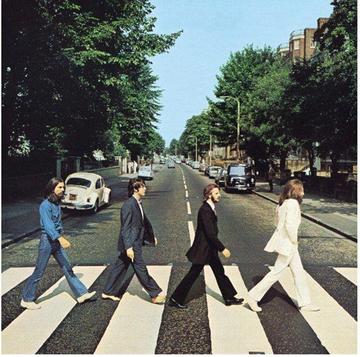
Listening in Depth to Abbey Road

Hot Stamper Pressings of the Music of The Beatles Available Now

Presenting another entry in our extensive listening in depth series with advice on what to listen for as you critically evaluate your copy of Abbey Road.

Here are some albums currently on our site with similar track by track breakdowns.

For all you record collectors out there, please note that no pressing from 1969 (and even for a number of years after) has ever won a shootout.

If you have an Apple UK first pressing and you think it would be hard to beat, we would love to send you one that sounds better than yours, if you can justify the kind of bread we charge for the privilege of owning a musical Masterpiece such as this.

This is the final statement from The Beatles. To take away the power of their magnum opus by playing it through inadequate equipment makes a mockery of the monumental effort that went into it. As you may recall, the original title for the album was Everest. That should tell you something about the size and scope of the music and sound that the Beatles had in mind. A dozen more letters, reviews and commentaries for the album can be found here.

Side One

Come Together

This track and I Want You are both good tests for side one. They tend to be smooth, but what separates the best copies is deep, punchy bass. Without a good solid bottom end, these songs simply don’t work.

Something

When the choruses get loud on this song, most copies will be aggressive. You’ll want to turn down the volume. With Hot Stampers, the louder the better. The sound stays smooth and sweet.

Maxwell’s Silver Hammer

Probably the toughest test on side one. The loud banging on the anvil can be pretty unpleasant if you don’t have a well-mastered pressing.

Also, this track has a tendency to be a bit lean and upper midrangey on even the best copies.

Oh! Darling
Octopus’s Garden
I Want You (She’s So Heavy)

Listen to Paul’s bass on this track. When you have a good copy and the bass notes are clearly defined, you can hear him doing all kinds of interesting things throughout the song. I remember playing the MoFi not long ago and noticing how that pressing’s lack of bass definition robbed Paul of his contribution to so many of these songs. When the bass is blubbery, it’s difficult to follow his parts.

(more…)

It Doesn’t Get Much More Real on Vinyl Than This

Hot Stamper Pressings of British Folk Rock Albums Available Now

Pentangle’s first album is an honest-to-goodness Demo Disc.

When for a (thankfully) brief time back in the 70s I was selling audio equipment, the song “Pentangling” was a favorite demo cut to play in the store. The sound of the string bass and snare drum are amazingly natural; I don’t know of any other pop album from the era that presents the vibrant timbre of those two instruments better.

The Transatlantic British originals can be quite good as well, but are very tough to come by in good condition these days, and pricey when you find them.

This record easily qualifies for our Top 100 List, it’s that good (but unfortunately too rare to make the cut).

The Best Sides

The true foundation of the music is provided by two legendary guitar heavyweights, Bert Jansch and John Renbourn. With Jacqui McShee’s almost unbearably sweet vocals soaring above them, this album presents the classic lineup at its best, with superior sonics to boot.

It’s Acoustic!

The unprocessed folky sound found throughout the album has its audiophile credentials fully in order, especially in the area of guitar harmonics, as well as drums that sound like real drums actually sound. (How many of the ’70s rock albums in our Top 100 have that natural drum sound? Not many when you stop to think about it.)

(more…)

On Blood, Sweat and Tears’ Second Album, It’s All About the Brass

Blood, Sweat and Tears’ Second Album Is a Top Test Disc

UPDATE 2026

The commentary you see below was written around 2010.

In it we describe a mind-blowing pair of copies that were each awarded a grade of Four Pluses. There was one Four Plus side one on one copy, and a different copy had a Four Plus side two.

We no longer give Four Pluses out as a matter of policy, but that doesn’t mean we don’t come across records that deserve them from time to time.

This was one of those records, a true outlier. Out of fifty records, this was one of the two copies that took the sound (and music!) of one of the sides to places we had never heard it go before. We call these kinds of records breakthrough pressings. When you get paid to critically audition records for decades, all day, every day, you are bound to run into some from time to time. These are their stories.


Our Commentary from 2010 (Minor changes have been made.)

Our last big shootout was back in early 2008.

What we learned this time around for this album can be summed up in a few short words: it’s all about the brass.

(more…)

Piano and Snare Testing with Love Over Gold

Hot Stamper Pressings of the Music of Dire Straits Available Now

UPDATE 2026

In 2017 we reviewed a copy of Love Over Gold that really knocked us out. This was sound we had never heard on the album before, so as you can imagine, we had to tell the world -s or at least that small part of the world that accepts the reality of Hot Stamper Pressings — all about it.

Since then we have noted the value of testing albums with pianos and snare drums as those seem to be key part of some recordings that are hard to get right, which of course is makes them good tests.


Telegraph Road does something on this copy that you won’t hear on one out of twenty pressings: It ROCKS. It’s got ENERGY and DRIVE.

Listen to how hard Allan Clark bangs on the piano on side one — he’s pounding that piano with all his might. No other copy managed to get the piano to pop the way it does here, so clear and solid.

Wow, who knew? Maybe this is the reason HP put the record on the TAS Super Disc List. (I rather doubt he’s ever heard a copy this good, but who’s to say?)

Best test for side two?

The snare drum on Industrial Disease. Play five copies of the album and listen on each of them for how much snap there is to the snare. It will be obvious which ones get the transient attack right and which ones don’t. (If none of them do, try five more copies!)

(more…)

Love in Vain Is a Great Test Track on Let It Bleed

Hot Stamper Pressings of the Music of The Rolling Stones Available Now

Love In Vain is our favorite test track for side one on Let It Bleed.

The first minute or so clues you into to everything that’s happening in the sound.

Listen for the amazing immediacy, transparency and sweetly extended harmonics of the guitar in the left channel.

Next, when Watts starts slapping that big fat snare in the right channel, it should sound so real you could reach out and touch it.

If you’re like me, that Tubey magical acoustic guitar sound and the rich whomp of the snare should be all the evidence you need that Glyn Johns is one of the Five Best Rock Engineers who ever lived. Ken Scott, Stephen Barncard, Alan Parsons and a few others are right up there with him of course. We audiophiles are very lucky to have had guys like those around when the Stones were at their writing and performing peak.

(more…)

Listening in Depth to Houses of the Holy

Hot Stamper Pressings of the Music of Led Zeppelin Available Now

You really get an understanding of just how much of a production genius Jimmy Page was when you listen to a copy of Houses on high quality modern equipment, the kind that simply did not exist when the record came out in 1973.

To take just one example, listen to how clearly the multi-tracked guitars can be heard in the different layers and areas of the soundstage. On some songs you will have no trouble picking out three, four and even more guitars playing, each with its own unique character. The clarity of the better copies allows you to recognize — perhaps for the first time — the special contribution each is making to the finished song.

Side One

The Song Remains the Same
The Rain Song

Check out the guitars — the sound should be warm, sweet and delicate. There are some dead quiet passages in this song that are almost always going to have some surface noise. Most copies start out a bit noisy but almost always get quieter as the music goes along.

Over the Hills and Far Away

This is a great test track for side one. It starts with lovely acoustic guitars before the Monster Zep Rock Chords come crashing in. If both parts of the song sound correct and balanced, you more than likely have a winner. And the bigger the dynamic contrast between the parts the better.

Turn your volume up good and high in order to get the full effect, then stand back and let the boys have at it.

The Crunge (more…)

Donald Gets Dynamic on Rikki

Pretzel Logic is one knockout of a recording.

Having done shootouts for every Steely Dan title, I can say that sonically this one has no equal in their canon. (Click on that link to see two hundred others.)

Which is really saying something, since Becker and Fagen are known to be audiophiles themselves and real sticklers for sound. No effort in the recording of this album was spared, that I can tell you without fear of contradiction.

They sweated the details on this one. The mix is perfection.

But you would never know it by playing the average pressing of this album, which is dull, compressed and dead as the proverbial doornail.

(We’ve played plenty of records — actually, specific pressings of records — that were dull, compressed, and dead as a doornail. We’ve made links for them by the hundreds here so that audiophiles who do not want records with these problems can more easily avoid them.)

It’s positively criminal the way this amazingly well-recorded music sounds on the typical LP pressing. Hint: avoid all imports and anything not on ABC.) How can you possibly be expected to appreciate the music when you can’t hear it right?

(more…)

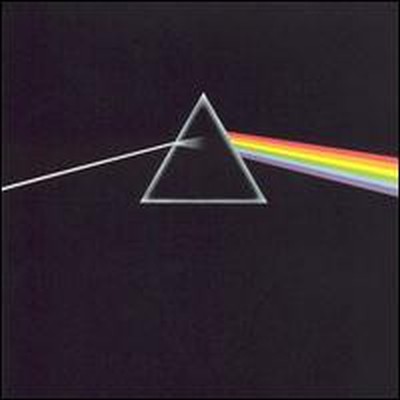
Expanding Space Itself on The Dark Side of the Moon

Many years ago, right around 2015 I believe, we played a copy with all the presence, all the richness, all the size and all the energy we could have ever hoped to hear on a pressing of Dark Side of the Moon.

It did it all and then some.

The raging guitar solos (there are three of them) on Money seemed to somehow expand the system itself, making it bigger and more powerful than I had ever heard.

Even our best copies of Blood Sweat and Tears have never managed to create such a huge space with that kind of raw power. This copy broke through all the barriers, taking the stereo system to an entirely new level of sound.

Listen to the clocks on Time. There are whirring mechanisms that can be heard deep in the soundstage on this copy that I’ve never heard as clearly before. On most copies you can’t even tell they are there.

Talk about transparency — I bet you’ve never heard so many chimes so clearly and cleanly, with such little distortion on this track.

One thing that separates the best copies from the merely good ones is super-low-distortion, extended high frequencies. How some copies manage to correctly capture the overtones of all the clocks, while others, often with the same stamper numbers, do no more than hint at them, is something no one can explain. But the records do not lie. Believe your own two ears. If you hear it, it’s there. When you don’t — the reason we do shootouts in a nutshell — it’s not.

The best sounding parts of this record are nothing less than ASTONISHING. Money is the best example I can think of for side two. When you hear the sax player rip into his solo as Money gets rockin’, it’s almost SCARY! He’s blowin’ his brains out in a way that has never, in my experience anyway, been captured on a piece of plastic. After hearing this copy, I remembered exactly why we felt this album must rank as one of the five best Rock Demo Discs to demonstrate the superiority of analog. There is no CD, and there will never be a CD, that sounds like this.

In fact, when you play the other “good sounding” copies, you realize that the sound you hear is what would naturally be considered as good as this album could get. But now we know better. This pressing took Dark Side to places we never imagined it could go.

(more…)

When Did You First Hear that 10k Boost on Sittin’ In?

Hot Stamper Pressings of the Music of Loggins and Messina Available Now

UPDATE 2026

It took us a long time to recognize it, I can tell you that. 30 years? Maybe even more.

And how about the boost to the low end?

This commentary is from many years ago, perhaps as far back as 2010.

Of course it could not have been written until the stereo had reached the level where these anomalies and others like them could be easily recognized, the clearest kind of evidence of progress in audio.

If you’re not noticing these kinds of things on the vintage vinyl you play, then it’s probably time for a serious upgrade or two.

The anomalies are there, of that there can be no doubt. They’re everywhere. You just need a more accurate and revealing system and room to show them to you.

In that respect, you my find our shootout notes are helpful at pointing you in the right direction as to what you should be listening for. They are especially helpful in recognizing when one side or another falls short in some specific area.

(more…)