Month: April 2024

Andre Previn & His Pals – West Side Story

Contemporary Jazz Records Available Now

Reviews and Commentaries for Contemporary Jazz
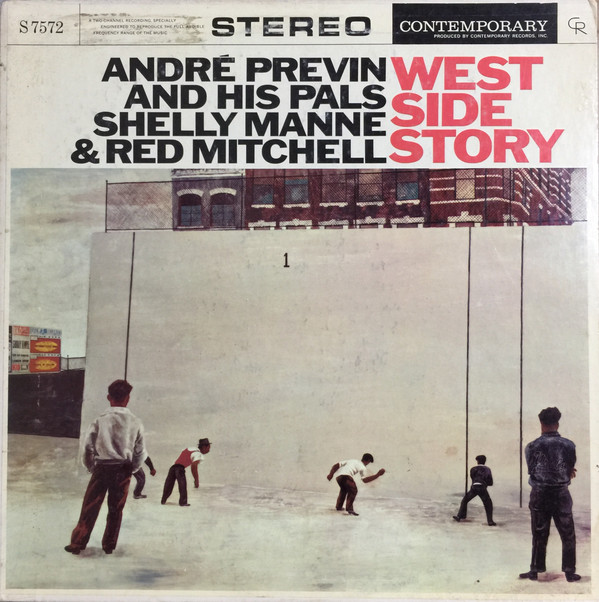
  • Previn’s stellar piano trio finally returns to the site with jazzy interpretations of the best songs from West Side Story, with STUNNING Shootout Winning Triple Plus (A+++) sound throughout
  • You win shootouts with this kind of All Tube Analog sound – warm, natural, lively and clear, with solid support down low, a nicely extended top and a huge three-dimensional soundfield
  • We had pressings on the black label, on the green label, and on the yellow label, and the person who ends up with this fantastic copy will know for sure which label sounds best, because he will be the owner of the best sounding copy
  • Andre Previn and his friends take eight classic tunes from West Side Story – it would be hard to imagine having better material to work with in a jazz setting
  • 4 stars: “The last of a series of showtune albums recorded by the trio finds the all-star group focusing on the music of West Side Story… As usual, the melodies are treated respectfully yet swingingly, and Andre Previn in particular excels in this setting. Recommended.”

One of Previn’s best piano trio records, this album was recorded in 1959 by Roy DuNann while at the height of his engineering powers.

The two Must Owns from his many sessions at Contemporary are this album and Bells Are Ringing. We are not aware of any of his jazz piano albums on other labels being much better than passable and most are not worth picking up at any price. Believe me, we’ve tried. The one exception I can think of is Four to Go on Columbia. It’s pretty good. Not in the same league as his Contemporary recordings by a long shot, but better than most of his output from the ’60s.

For both the albums mentioned above the Black Label originals in stereo are the best way to go, but finding them in clean audiophile playing condition is no walk in the park, which is the main reason it takes us about four years to do a shootout for either title.

The Piano Is Key

On the best copies of the album, the sound of the piano is solid, full-bodied, with both weight and warmth, just like the real thing. The copies of the album with a piano that sounded lean or hard always ended up having problems with the other instruments as well. (This should not be surprising; the piano was designed to be the single instrument most capable of reproducing the sound of an entire orchestra.)

(more…)

Two of Robin Black’s Engineering Masterpieces

jethrthick_1410_3_1192056381

Hot Stamper Pressings of the Music of Jethro Tull Available Now

Thick As A Brick is quite possibly the BEST SOUNDING ALBUM Jethro Tull ever made. It’s dynamic; has really solid, deep punchy bass; transparency and sweetness in the midrange; Tubey Magical acoustic guitars and flutes; in other words, the record has EVERYTHING that we go crazy for here at Better Records. I can guarantee you there is no CD on the planet that could ever do this recording justice. The Hot Stamper pressings have a kind of MAGIC that just can’t be captured on one of them there silvery discs.

A Real Gem

When we do these shootouts we play quite a few original copies of the record (the reissues are not worth the vinyl they’re stamped on) and let me tell you, the sound and the music are so good we can’t get enough of it. Until about 2007 this was the undiscovered gem (by TP anyway) in the Tull catalog. The pressings we had heard up until then were nothing special, and of course the average pressing of this album is exactly that: no great shakes.

With the advent of better record cleaning fluids and much better tables, phono stages, room treatments and the like, some copies of Thick As A Brick have shown themselves to be simply amazing sounding. Even the All Music Guide could hear how well-engineered it was. At one time this was our go-to record for testing and tweaking the system.

(more…)

Finlandia – Live and Learn

More of the music of Jean Sibelius (1865-1957)

More of the music of Edvard Grieg (1843-1907)

Years ago we noted how much worse the Classic Records pressing of our then current favorite Finlandia sounded when compared head to head with our best RCA Shaded Dog pressings.

We wrote:

Classic Records ruined this album. Their version is dramatically more smeared and low-rez than our good vintage pressings, with almost none of the sweetness, richness and ambience that the best RCA pressings have in such abundance.

Woops.

Turns out the RCA pressing we used to like was not as good as we thought, something we discovered to our chagrin in 2014.

Our current favorite pressing is on a Decca reissue label. Go figure.  When you hear how good this record sounds, you may have a hard time believing that it’s a budget reissue from 1970, but that’s precisely what it is.

Even more extraordinary, the right copies are the ones that win shootouts.

Want to find your own top quality copy?

(more…)

This Is Why We Love Columbia in the 60s

More of the Music of Al Kooper

More of the Music of Michael Bloomfield

Please excuse the copying and pasting from previous listings. When records are this good, we tend to say the same things about them, because they are doing all the things we want them to do.

From time to time a record comes our way that sounds absolutely amazing, “Way better than it used to sound” amazing. Progress in audio is a feature, not a bug, of record collecting and music reproduction at the most advanced levels.

If it’s the kind of record that sounds like the best copy of The Live Adventures of Bloomfield and Kooper from our most recent shootout, we might even let our enthusiasm for its superb fidelity get the better of us. That’s the effect a record as good as the copy we played can have. You just can’t stop yourself from saying one great thing after another about it.

Our over-the-top notes, like those you see below, attempt to convey what it’s like to experience the superb sound we were hearing.

But where is the harm in that? These are notes that no one outside of the staff are ever expected to see. They are helpful to us in writing our commentary and pricing the specific copy we auditioned, but they are practically never quoted in the listings.

The Live Adventures of Bloomfield and Kooper is an example of one of those recordings that comes along from time to time in order to show us sound that we’d almost forgotten was possible.

Oh yes, with the rare properly-cleaned, properly-mastered, properly-pressed vintage vinyl LP, played back on top quality equipment in a heavily treated, dedicated soundroom, we can assure you it is very possible indeed. Allow us to make the case with the Shootout Winning original pressing you see below.

The notes for side one read: 

  • Big, Tubey and jumping out
  • Breathy vocals
  • Deep, sustained bass

Side two:

  • Spacious
  • Glowing and rich drums are weighty and 3-D
  • No congestion
  • Extending high and low
  • Silky and present vocals

Side three:

  • Weighty and rich
  • No hardness
  • Extending high and low

Side four:

  • Rich and ? and space
  • More dynamic and 3-D
  • All around good weight

You know what’s unusual about these notes?

They’re the kind of notes we have never written for any Heavy Vinyl reissue, even for the one that won our shootout not long ago.

(more…)

The Electric Recording Company Does My Favorite Things No Favors

Hot Stamper Pressings of the Music of John Coltrane Available Now

My Favorite Things happens to be one of our favorite Coltrane records, but we much prefer the stereo pressing of the album. (This is almost always the case when an album has been recorded in stereo, as My Favorite Things was in 1960, later released on Atlantic vinyl in 1961.)

We even tell you what to listen for to help you separate the best pressings from the merely good ones: the piano.

A solid, full-bodied, clear and powerful piano. As we focused on the sound of the instrument, we couldn’t help but notice how brilliant McCoy Tyner is. This may be John Coltrane’s album, but Tyner’s contribution is critically important to the success of My Favorite Things.

The engineering duties were handled by Tom Dowd (whose work you surely know well) and Phil Iehle, who happens to be the man who recorded some of Coltrane’s most iconic albums for Atlantic: Giant Steps (1960) and Coltrane Jazz (also in 1961).

Our last shootout for My Favorite Things was in 2018, not exactly yesterday, but in our defense let me just say that we have done plenty of other Coltrane albums from this period and feel as though we would have no trouble recognizing the sound his engineers were going for.

Unfortunately for those of you who have bought into the idea that the Electric Recording Company produces records with audiophile quality sound, you will find an utterly alien My Favorite Things, one nobody has ever heard before and one that no audiophile should want anything to do with.

Allow us to lay out the specifics of our complaints:

Notes for Side One

  • Big and full but smeary, flat and dull sax
  • No space or depth anywhere
  • Bloated bass
  • A mess

Notes for Side Two

  1. Side two is even worse
  2. Where is the breathy detail of the sax?

Electric Recording Company

We’ve played a few other ERC releases produced by the gentleman who owns The Electric Recording Company, a Mr. Pete Hutchison.

As you no doubt know, we would not be correct in using the term “mastered.” He does no mastering. He does “transferring.” He transfers the tapes to disc and puts them in nice jackets of his own design.

(more…)

Our First Shootout for The Voice from 2007

More of the Music of Frank Sinatra

By 2007 we were doing regular shootouts for albums such as Sinatra’s The Voice (1955) whenever we had the stock, and of course we naturally would throw the Classic Records pressing in the mix to see how it compared to the real thing.

I was selling the Classic when it was in print back in 1999 although it had never impressed me much at the time. It was a “good enough” record for $30 back then.

We used to tolerate the differences between good vintage pressings and Classic Records reissues, but by 2007 the sound of many of these remastered titles was just too second- and third-rate to ignore, when they weren’t just awful as in the case of most of their orchestral titles.

By 2007 we had much better equipment, a better sounding room due to the room treatments we had purchased, and others we had developed, better cleaning technologies with our discovery of the Enzyme Record Cleaning System, and probably a lot of other things to go with them.

Looking back, 2007 seems to have been a milestone year for us here at Better Records, although we certainly did not know it at the time.

Our review from 2007 follows.

This is a Six Eye Mono Original Columbia pressing. These originals have the Tubey Magical Midrange that is missing from the Classic Records heavy vinyl pressing.

In our experience these Six Eye Mono Original Columbia pressings are the only ones with any hope of having the Midrange Magic that is fundamental to the sound of Frank’s early Columbia LPs — and is clearly missing from the Classic Records heavy vinyl pressing. The Classic is clean and clear and tonally correct like a CD. Without the warmth and sweetness of analog and, in this case, tube mastering, the sound just isn’t “the real Frank”.

(more…)

Leonard Bernstein – West Side Story (Original Soundtrack)

More of the music of Leonard Bernstein (1918-1990)

More Soundtrack Albums

  • You’ll find INCREDIBLE Shootout Winning Triple Plus (A+++) grades or close to them on both sides of this original Columbia 6-Eye Stereo pressing
  • Spacious, rich and smooth – only vintage analog seems capable of reproducing all three of these qualities without sacrificing resolution, staging, imaging or presence
  • Tonality is the hardest thing to get right on this album, and here it is right on the money, because if it were not, it would not have won the shootout
  • For those of you who like to do your own shootouts, good luck, you will need a lot of originals to find one that sounds as good as this one does
  • The biggest selling album of the ’60s – 54 weeks at Number One (!)
  • Marks and problems in the vinyl are sometimes the nature of the beast with these Classic Rock records – there simply is no way around them if the superior sound of vintage analog is important to you
  • 5 stars: “The soundtrack of the West Side Story film is deservedly one of the most popular soundtrack recordings of all time, and one of the relatively few to have attained long-term popularity beyond a specialized soundtrack/theatrical musical audience.”

This album is at least five times more common in mono than it is in stereo, and finding enough clean early stereo pressings takes us years nowadays.

(more…)

Music from Big Pink on MoFi – Bad Bass Like This Is Just Annoying

Hot Stamper Pressings of Music by The Band Available Now

In 2012 the “new” MoFi put out another remastered Big Pink. Since their track record at this point is, to be honest, abysmal, we have not felt the need to audition it.

It’s very possible, even likely, that they restored some of the bass that’s missing from so many of the originals.

But bad half-speed mastered bass — poorly defined, never very deep and never punchy — is that the kind of bass that would even be desirable?

To us, it is very much a problem. Bad bass is just plain annoying.

Fortunately for all, it is a problem we have to deal with much less often now that we’ve all but stopped playing Half-Speed mastered records.

Here are some other records with exceptionally sloppy bass. If the bass on these records does not sound sloppy, you have your work cut out for you.

Some of our favorite records for testing bass definition can be found here.

Sucked Out Mids

The Doors first album was yet another obvious example of MoFi’s predilection for sucked-out mids. Scooping out the middle of the midrange has the effect of creating an artificial sense of depth where none belongs.

Play any original Bruce Botnick-engineered album by Love or The Doors and you will notice immediately that the vocals are front and center. 

(more…)

Roxy Music – Flesh + Blood

More Roxy Music

More Art Rock Records

  • With outstanding Double Plus (A++) grades or close to them from top to bottom, you’ll have a hard time finding a copy that sounds remotely as good as this original British pressing (one of only a handful of copies to hit the site in three years)
  • Believe it or not, no copies in our most recent shootout, aside from the two shootout winners, had even Super Hot stampers on both sides, which was surprising since we know the right stampers and there were plenty of them in the shootout
  • If you need top quality sound, and assuming it takes as long to get our next shootout going as it did this last one, please check back with us in 2027
  • No domestic LP or import from any other country has ever been better than passable – we should know, we’ve been cleaning and playing every kind of pressing we could find for this title for forty years
  • Credit as always goes to the brilliant engineering of Roxy’s go-to guy, Rhett Davies
  • Flesh + Blood is the precursor to Avalon, with much the same style and sound – some of Roxy’s best material and biggest hits are here

Best Tracks

This is a transitional album. Some of it sounds like Avalon (“Oh Yeah,” “Over You,” etc) and some of it sounds more like their earlier material. It may not be as consistent as Avalon but it’s well worth owning for its best songs (listed below) and highly recommended for fans of the band.

Standout tracks on side one include In the Midnight Hour / Oh Yeah / My Only Love

Standout tracks on side two include Over You / Eight Miles High / Rain, Rain, Rain

Adventures in Music and Sound

AMG calls Roxy Music the “most adventurous rock band of the early 70s” and I’m inclined to agree with them. Roxy are certainly one of the most influential and important bands in my growth as a music lover and audiophile, joining the ranks of Supertramp, Ambrosia, 10cc, Steely Dan, Yes, Bowie and countless others, musicians and bands who seemed to me dedicated to exploring and exploding the conventions of popular music.

My equipment was forced to evolve in order to be able to play the scores of challenging recordings issued by these groups in the 70s.

You could say that the albums of Roxy Music and others informed not only my taste in music but the actual stereo I play that music on. I’ve had large scale dynamic speakers for the last four decades, precisely in order to play records like this, the kind of music I fell in love with more than forty years ago.

(more…)

Letter of the Week – “Am I really paying for nothing when I buy a Hot Stamper? “

More of the Music of Carole King

One of our good customers had this to say about his recent experience on the Steve Hoffman forum.

We’ve added some headings and such like. Scroll down to read the many comments that have been left, most of which I have replied to at length.

Hi Tom,

When Fred emailed me to say that a copy of Tapestry was about to hit the site, I did not hesitate in buying it. I’m not writing today with one of my usual raves of your records. Suffice it to say, it’s always a joy to be hear an album I thought I knew by heart in a whole new way. Rather I’m writing because I still can’t fully square my enthusiasm for your records with the reaction I got when I talked about it on the Steve Hoffman Forum a couple months ago.

Hoffman’s Parting Words

As I purchased my 32nd (!) record from you without a moment’s hesitation, Steve Hoffman’s parting words to me sprang back into my mind. Could he possibly be right? Am I really paying for nothing when I buy a hot stamper? By posting my appreciation of Better Records on his forum, was I merely inducing other people to throw their money away too? Have I been fooling myself? Are there other ways to get records that sound as good as yours?

I never had a chance to respond to his view there because the whole thread was taken down a few minutes after he posted that, so if you don’t mind, I’d like to ask you to share my views with the readers of your blog, since people can’t find my views on the Steve Hoffman forum.

So here goes.

We’re all aware that there’s misinformation on the internet. We’ve learned by now how to spot the sins of commission – the obvious manipulations and falsehoods. What’s more pernicious are the sins of omission – accurate information that’s been removed because it does not fit a narrative.

Somebody interested in finding great sounding records would be blameless if they ended up with a pile of mediocrities, because they followed the advice and opinions readily available on the internet. It’s a frustration that there are so few voices like yours and Robert Brook’s offering a different view.

The biggest problem with a stack of mediocre records that you mistakenly believe are excellent is that if you ever notice they don’t sound very good, the only fix you can think of is to buy more expensive equipment.

And that’s where the real money gets wasted.

[Hear hear!]

A Roadmap for Finding “Pretty Good Records”?

There are tons of posts on the Steve Hoffman Forum, and tons of people are presumably following the advice there, but what’s on there is really nothing more than a roadmap to finding Pretty Good Records.

(more…)