con-wis-fail

Many audiophiles are inclined to believe the conventional wisdom they receive from like-minded enthusiasts.

Some of it is right, some of it is wrong, but if you don’t know how to critically listen to records for yourself, you will never be able to tell which is which.

You’ll be stuck with the approaches most audiophiles use — guessing and assuming. Neither are a reliable method for getting to the truth.

What Are Some Good General Rules for Finding Records with the Highest Quality Sound?

More Entries from Tom’s Audiophile Notebook

The Riverside pressings we’ve auditioned of both The Thelonious Monk Orchestra – At Town Hall and Thelonious Monk Quartet Plus Two – At The Blackhawk were just awful sounding.

The OJC reissues of both albums from the 80s, although better, were not overflowing with the rich, natural, relaxed analog sound we were looking for either.

Ah, but a few years back (2015, maybe?) we happened to drop the needle on one of these Monk Milestone Two-Fers. Here was the sound we were looking for and had had so little luck finding up until then.

Which prompts the question that should be on the mind of every audiophile:

What are the rules for collecting records with the best sound quality?

The answer, of course, is that there are no such rules and there never will be.

There is only trial and error. Our full-time staff has been running trials — we call them shootouts  and needle drops — for more than twenty years now, with far more errors than successes. Such is the nature of records.

(more…)

Coppelia and Sylvia / London Vs. Decca – Updated 2025

Hot Stamper Pressings of Music Conducted by Ernest Ansermet Available Now

Once again, the right Decca reissue blows the doors off the original London we played. This has lately become a pattern, but keep in mind it’s a pattern that’s reliable less than half the time, if memory is any guide. Many of the Decca reissues we’ve played over the last few years have failed badly in a head to head with their earlier-mastered and -pressed counterparts.

But the ones that beat all comers are the ones that stick in our minds and show up on our site.


UPDATE 2025

A copy of one of the SPA reissues we used to like shown above made it to our latest shootout and did not do nearly as well as a copy did years ago.

We don’t have those copies anymore and cannot say whether they actually did sound as good as we thought they did.

Our advice would be to assume that this is not the best way to buy this album. But neither is the original, as you will read below.
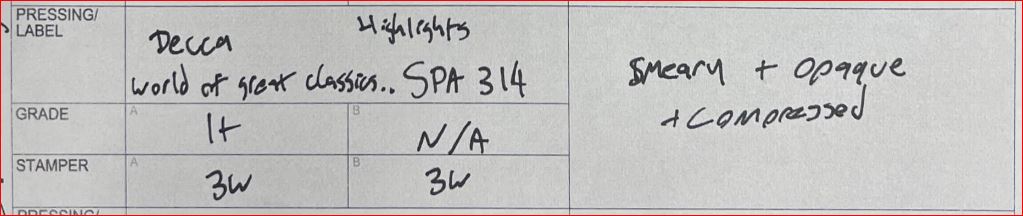

Clearly a case of confirmation bias, but at least we know something about our own biases, and that puts us well ahead of the audiophile pack.

Record collectors and record collecting audiophiles will tell you it shouldn’t happen, but fools like us, who refuse to accept the prognostications of those supposedly “in the know,” have done the work and come up with the experimental data that’s proven them wrong again and again.

Sort of. We had one, and only one, pressing of the original London (CS 6185), and boy was it a mess — crude as crude can be.

It sounded like an “old London record,” not the Decca engineered and mastered vintage collectible we know it to be.

We’ve played them by the hundreds, so we know that sound fairly well by now.

Are there copies that sound better? Surely there are, but how are you going to find them? Are you going to shell out the going rate of $25-50 on ebay for one (or more) clean copies, only to find that it/they sound every bit as bad as the one we auditioned? The question answers itself.

If, however, you are one of the lucky few who has a nice London or Decca original of this recording, please let us send you this copy so that you can do the shootout for yourself. You may be shocked at how good this music can sound on the right pressing. And if your copy sounds better than ours we will be very shocked indeed. [This offer was only good while we had the record, and it is long gone at this point. We still remember the sound though!]

Production and Engineering

James Walker was the producer, Roy Wallace the engineer for these sessions from April of 1959 in Geneva’s glorious Victoria Hall. It’s yet another remarkable disc from the Golden Age of Vacuum Tube Recording.

The hall the Suisse Romande recorded in was possibly the best recording venue of its day, possibly of all time. More amazing sounding recordings were made there than in any other hall we know of. There is a solidity and richness to the sound beyond all others, yet clarity and transparency are not sacrificed in the least.

It’s as wide, deep and three-dimensional as any, which is of course all to the good, but what makes the sound of these recordings so special is the weight and power of the brass, combined with unerring timbral accuracy of the instruments in every section of the orchestra.

(more…)

Fire and Water on a Mythical Pink Island

Reviews and Commentaries for Island Pressings on the Pink Label

Free’s Third Album on the original British Island pink label — wow!

Found one at a local record store a while back. It was the first one I’d ever seen in nice enough condition to buy. Checking the dead wax was a bit of a shock though. Care to guess where it was mastered? Right here in the good old U S of A. In fact, at one of the worst mastering houses of all time: Bell Sound in New York. [This is not fair. We have found many good pressings mastered at Bell Sound.]

Now what does that tell you about British First Pressings? Are those the ones you’re looking for? Don’t get me wrong; I look for them too. But you had better look before you leap, or you’ll end up with a bad sounding, probably quite expensive pressing.

It’s one more reason why we try to play as many records as we can here at Better Records. You can’t rely on anything but the grooves.

Rules of Thumb

Which brings up another interesting issue. Some audiophiles use the following rule of thumb for rock record collecting.

If it’s an English band, get the import pressing. If it’s an American band, the tapes should be here in this country, so the original domestic pressing should be the best.

As a rule of thumb it’s not bad. It’s just wrong so often (Led Zeppelin, Cat Stevens, The Eagles, etc.) that you must be very careful how you apply it.

Same with reissue versus original. Nice rule of thumb but only if you have enough copies of the title to know that you’re not just assuming the original is better. You actually have the data — gathered from the other LPs you have played — to back it up.

(more…)

Why Are We Guessing (Again)?

More of the Music of The Pretenders

German pressings? Not British?

We discovered that only the best German pressings convey the energy and enthusiasm of the band while avoiding the grunge, flatness and hardness that make the typical pressing of this album all but unlistenable at loud volumes.

Isn’t this a British band that just happens to be led by an American? And wasn’t the album produced by the clearly British Chris Thomas and recorded at George Martin’s AIR studios in London? How is it possible that the best German pressings consistently sound better than the best British pressings?

Your guess is as good as mine. And, if you stop to think about it, who in his right mind would think that any answer they might give to such a question is anything other than a guess?

But that’s not the half of it. It’s not simply the fact that the Germans seem to be the only ones able to work their magic on this title. Most German pressings are not nearly as good sounding as this one. It is only this specific German pressing that does everything right. It has won every shootout for the last five years if that tells you anything.

What to Listen For

In the chorus of Time the Avenger, the better copies do not get as harmonically distorted, edgy and hard as most. The best really “bloom,” but they are few and far between.

A Top Pretenders Title

This is where Chrissie Hynde matured into a top class songwriter; every track is good and many are brilliant. With Robbie McIntosh having joined the band, this is first and foremost a guitar rock record; his jangly, grungy riffs drive every song. Great songs and great guitar work — what more do you need in a rock record?

Think of Middle of the Road — everything that’s good about this band on this album is there in that song: it’s uptempo, with a driving beat, a rock solid rhythm section and a beautifully distorted guitar out front and high up in the mix.

(more…)

Guilty – Bab’s Best

More of the Music of Barbra Streisand

This ain’t no zombie audiophile BS, the kind of sleep-inducing, reverb-drenched trash that passes for “female vocals” in bad audio showrooms around the globe. (Paging Diana Krall.) This is Barbra and The Bee Gees at the peak of their Pop Powers. It just doesn’t get any better.

This is THE BEST ALBUM Babs ever made, and you can take that to the bank. It’s also one of the best sounding, if not THE best sounding of her later Monster Pop Productions. Can’t say for sure as I haven’t played all that many. Her first album is a true Demo Disc as well, but that one’s all about the Tubey Magical ’60s Columbia era, the Golden Age of Natural Sound, a world away from Guilty and its layers and layers of tracks. Having said that, there are multi-tracks and then there are multi-tracks.

The engineers and producers here pull it off brilliantly.

If you don’t feel something deep inside when playing this record, open up a vein and let some of that ice water that passes for blood in your system run out.

It’s From WHERE?

This very copy was on the site for a long time. Nobody wanted to buy it even though it was quite cheap, and there’s a good reason nobody wanted to buy it: it’s a Japanese pressing.

That’s right, it’s one of those typically awful Japanese pressings that we criticize endlessly on the site, the purest form of audiophle BS vinyl in the history of the world. We played side one and heard the kind of sound that did not exactly float our boats. (Before it was cleaned it really sounded bad.)

But when we filpped it over we were positively KNOCKED OUT by the sound and decided it had to be part of our shootout. While evaluating the record the listening panel (mostly me) had no idea which pressing was playing. When the Side Two A Triple Plus Gold Star was awarded to this much-maligned Japanese pressing we were FLABBERGASTED.

(more…)

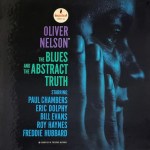
Oliver Nelson and RVG – Mastering Better than the Master?

More Music and Arrangements by Oliver Nelson

The sound of this Shootout Winning reissue is tonally correct, Tubey Magical and above all natural. The timbre of each and every instrument is right and it doesn’t take a pair of golden ears to hear it. So high-resolution too. If you love ’50s and ’60s jazz you cannot go wrong here.

For those record lovers who still cling to the idea that the originals are better, this pressing will hopefully set you straight.

Yes, we can all agree that Rudy Van Gelder recorded it, brilliantly as a matter of fact. Shouldn’t he be the most natural choice to transfer the tape to disc, knowing, as we must assume he does, exactly what to fix and what to leave alone in the mix?

Maybe he should be; it’s a point worth arguing.

But ideas such as this are only of value once they have been tested empirically and found to be true.

We tested this very proposition in our recent shootout, as well as in previous ones of course. It is our contention, based on the experience of hearing quite a number of copies over the years, that Rudy did not cut the original record as well as he should have. For those of you who would like to know who did, we proudly offer this copy to make the case.

Three words say it all: Hearing is believing.

(And if you own any modern Heavy Vinyl reissue we would love for you to be able to appreciate all the musical information that you’ve been missing when playing it. I remember the one from the ’90s on Impulse being nothing special, and the Speakers Corner pressing in the 2000s if memory serves was passable at best.)

(more…)

Atlantic Crossing – Thick, Dull and Dubby on British Vinyl

Another Well Recorded Album that Should Be More Popular with Audiophiles

The copies we liked best were the biggest and richest, the least thin and dry. Many of the brighter copies also had sibilance problems which the richer and tubier ones did not.

On some of the Rod Stewart albums that we happen to know well, the British pressings are clearly superior; the first two Rod Stewart albums come immediately to mind. After that, strange as it may seem, all the best pressings are domestic. This album is certainly no exception.

I remember bringing back a few Brit copies from England many years ago and being surprised that they were so thick, dull and dubby sounding. Of course, they were; the album was recorded right here in the good old US of A. The master tapes are here. The Brit pressings sound dubby because they are made from copy tapes.

If there is any doubt, the following is a list of the studios in which Atlantic Crossing was recorded.

  • A&R, NY
  • Criteria, Miami, FL
  • Wally Heider, Los Angeles, CA
  • Hi Recording and
  • Muscle Shoals Sound, AL

(more…)

Forget the Roulette Originals of Dreamy

More of the Music of Sarah Vaughan

The original release for Dreamy is on Roulette, a label we have often found to have problems in the sound department (not to mention notoriously bad vinyl).

The originals we’ve played over the years have much too much honk and hardness in the midrange to be taken seriously, at least by us anyway, and certainly not at the prices we charge. When we stumbled upon these good Emus reissues, the skies opened up and the sun shone down upon Sarah’s wonderful 1960 album of ballads as it had never done before.

This reissue is spacious, open, transparent, rich and sweet. It’s yet another remarkable disc from the Golden Age of Vacuum Tube Recording Technology, with the added benefit of mastering using the more modern cutting equipment of the ’70s. We are of course here referring to the good modern mastering of 30+ years ago, not the dubious modern mastering of today.

The combination of old and new works wonders on this title as you will surely hear for yourself on these superb sides.

We were impressed with the fact that these pressings excel in so many areas of reproduction. What was odd about it — odd to most audiophiles but not necessarily to us — was just how rich and Tubey Magical the reissue can be on the right pressing.

This leads me to think that most of the natural, full-bodied, lively, clear, rich sound of the album is on the tape, and that all one has to do to get that vintage sound on to a record is simply to thread up the tape on the right machine and hit play.

The fact that nobody seems to be able to make a record that sounds this good these days tells me that in fact, I’m wrong to think that such an approach would work. It just seems to me that somebody should have been able to figure out how to do it by now. In our experience that is simply not the case in the modern world of vinyl reissues, and has not been for many years.

Should You Collect the Original Pressing on Lush Life?

Hot Stamper Pressings of the Music of John Coltrane Available Now

Should you collect the original pressings on this title?

Absolutely not. Which means we were way off the mark with Lush Life.

It’s yet another case of live and learn. Previously we had written:

“There are great sounding originals, but they are few and far between…”

We no longer believe that to be true. In fact we believe the opposite of that statement to be true. The original we had on hand — noisy but with reasonably good sound, or so we thought — was an absolute joke next to our best Hot Stamper pressings. Half the size, half the clarity and presence, half the life and energy, half the immediacy, half the studio space. It was simply not remotely competitive with the copies we now know (or at least believe, all knowledge being provisional) to have the best sound.

Are there better originals than the ones we’ve played? No doubt. If you want to spend your day searching for them, more power to you. And if you do find one that impresses you, we are happy to send you one of our Hot Copies to play against it. We are confident that the outcome would be clearly favorable to our pressing. Ten seconds of side one should be enough to convince you that our record is in an entirely different league, a league we had no idea even existed until just this year.

By the way, the mono original we played was by far the worst sound I have ever heard for the album.

By far.

(more…)

The Imports Are the Only Way to Go on Leon’s Debut

Records We Only Sell on Import Vinyl

Albums with Better Sound Made in the “Wrong” Country

His first and best album, engineered by our man Glyn Johns, but it only sounds this brilliant on these UK original pressings – the domestic LPs are dead on arrival

Delta Lady, A Song for You and Roll Away the Stone are all here, which makes this a true Must Own for fans of the Classic Era.

The best copies of Russell’s debut album have excellent sound, as expected from a record engineered by Glyn Johns in 1970. Surprisingly, a number of copies suffered from somewhat dry sound, especially in the vocals. Our best copies are rich and Tubey Magical, which is the sound these songs need in order to sound their best.

Domestic Vs. Import

The domestic pressings of Leon Russell’s debut that we’d auditioned over the years always seemed flat, dry, and closed-in. We know that sound well; it’s the sound you hear on records that have been made from dubbed tapes (and it’s the hallmark of the modern Heavy Vinyl reissue, truth be told). That sound bores us to tears, and had us questioning what we could possibly have seen in the album in the first place. What happened to the glorious sound of early ’70s analog we were expecting to find?

It was only when we dropped the needle on a good British copy that the scales fell from our eyes. We found ourselves dumbfounded by the truly wonderful Tubey Magical richness, space and clarity of the real master tape. Finally, the key to the mystery had been found.

American artist, American pressing? A good rule of thumb but one that breaks down badly on this album, and for one obvious reason: the very British engineering of Glyn Johns.

(more…)