1959-all

Don’t Waste Your Money on this Living Stereo from 1959

Hot Stamper Pressings of Living Stereo Recordings Available Now

The sound of the copies we’ve played of LSC 2293 with Piatigorsky performing these two works for cello have never impressed us with their sound.

They are tonally natural but the acoustic is much too dry for our taste.

Perhaps Radio Recorders was not the ideal place to record this music.

Or we got unlucky with the copies we’ve played. Either way, we are not going to pursue this one. It’s a title that is very unlikely to sound right on high quality modern equipment.

There are quite a number of other vintage classical releases that we’ve run into over the years with similar shortcomings.

For fans of vintage Living Stereo pressings, here are some to avoid.

1959 was a phenomenal year for audiophile quality recordings – as of 2025 we’ve auditioned and reviewed more than one hundred and seventy titles, and there are undoubtedly a great many more that we’ve yet to discover.

We think there are close to 50 that belong in any audiophile record collection worthy of the name.


Our Pledge of Service to You, the Discriminating Audiophile 

(more…)

Beethoven Symphony No. 7 – This London with Solti Didn’t Make the Grade

Hot Stamper Classical and Orchestral Imports on Decca & London

In our survey for the work, we played a number of the better known recordings from the top conductors and orchestras around the world.

Here is what we heard when we dropped the needle on an early pressing of CS 6093, released in 1959.

Our notes read:

  • Awful,
  • so dry,
  • steely,
  • crude,
  • bad

In other words, it just sounded like an old record. The world is full of records that don’t sound very good. As a matter of fact they undoubtedly make up the bulk of large record collections.

And if you just happen to be the proud owner of a big record collection, how can you possibly find the time to play more than a small fraction of it in any given year. Or even over the course of a decade for that matter.

The fact is that you can’t. Which, on the upside, means that, as far as you know, all your records sound great!

No need to buy another copy of whatever title you care to name. What for? You haven’t played it in twenty years and probably won’t get around to pulling it off the shelf for a spin for at least another twenty.

Here’s hoping your kids like old records because they are going to end up with an awful lot of them.

Back to the Beethoven 7th. What a beautiful cover!

But what good is a beautiful cover when the record sounds as bad as this one does?

(more…)

A Scheherazade that Lacks Power in the Brass and Richness in the Lower Strings? No Thanks

Hot Stamper Pressings of the Music of Rimsky-Korsakov Available Now

One of the most dynamic Scheherazade‘s on record. The brass really blasts through in this recording. 

Of course the question is how does this recording stack up to the famous Reiner. Well, I’ll tell you.

The Minneapolis Symphony Orchestra is not in the same league with the CSO, that’s well known. Dorati may be every bit as talented as Reiner, but he doesn’t have the players at his disposal capable of pulling off demanding material such as this.

But the orchestra acquits itself well here. The first violinist is quite good. That’s not the problem.

What lets the side down is the Mercury recording team, who fail to adequately present the weight of the orchestra in the lower midrange and below. One thing I noticed recently when playing an original LSC 2446 was how rich and powerful the sound was in the lower strings and in the brass relative to later pressings of the same title and other recordings of the work.

That opening movement of Scheherazade needs power down there and the Mercury simply doesn’t have enough of that power to qualify it as one of the top sounding Mercs.

(more…)

How to Avoid Making this Rookie Record Collecting Mistake

Record Shopping Day Video!

Not sure how much of this video you can stand — nothing could interest me less than watching a couple of vinyl enthusiasts spouting off on what they think about some random records sitting in a local store’s bins.

But one or two bits caught my eye. I thought I might take the opportunity to share my take on them with you.

Is there any value to the comments of these two collectors? If you care about what music they like, perhaps.  Anything about what to look for on the label or jacket that might correspond to better sound?  If it’s there I sure didn’t see it, but I admit to speeding through most of it, so I can’t say for sure.

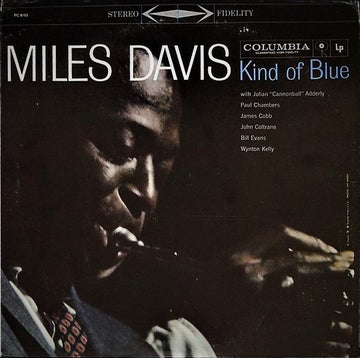
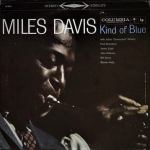
The first bit I refer to above is at 18:42.  The album in question is the legendary Kind of Blue. At this point the unseen helmet-cammed audiophile picks up the record, recognizes the cover, and proceeds to pull the record out to see what era the pressing is from.

Drat! The disappointment in this audiophile’s voice is palpable as he drops the record back in the bin with his dismissive comment that  “it’s a later pressing.”

But we here at Better Records would be falling all over ourselves to get our hands on that later pressing.

Those late pressings can and often do win shootouts. We would never look down our noses at a Red Label Columbia jazz LP, and neither should you.


UPDATE 2025

As good as the best pressings on the Red Label can sound, it has been years since one won a shootout. Here is our commentary for a recent 70s copy that went up on the site, one that earned a Super Hot grade on both sides.

They tend to sell for four or five hundred dollars these days. Why so much you ask? Because they beat the pants off of every so-called audiophile pressing of the album ever made. The testimony of one of our customers does a good job of describing the differences.

In addition, it turns out that at least nine out of ten of the copies with the red label are not remotely as good as the ones that earn Super Hot grades. The good ones are so rare that we only pick them up locally since practically none of the ones we find on the web have the right stampers. Trying to find the right red label needle in the haystack is more trouble than it’s worth, so don’t expect to see many coming to the site.


Our intrepid audiophile explorer does much the same thing about 23 minutes in. It seems pretty clear to us that he has no respect for such reissues, another example of one of the most common myths in record collecting land, the myth that the  original pressing is always, or to be fair, usually better.

This is simply not true, and those of our customers who have purchased White Hot Stamper pressings from us that turned out to be reissues know exactly what I am talking about. This is especially true for the records we sell by The Beatles. No original pressing has every won a shootout. [With one exception.]

Let’s get back to Kind of Blue.

Is the 50s original always better, is the 70s reissue always better, is the 60s 360 pressing always better?

No to one, two and three.

Why? Because no pressing is always better. All pressings are unique and should only be judged on their merits, and you do that by playing them, not by looking at their labels. For us this truth is practically axiomatic. It is in fact the premise of our entire business. Over the course of the 28 years we have been selling records we have never found any compelling evidence to invalidate it.

The day that someone can accurately predict the sound quality of a specific record by looking at the label or cover is a day I do not expect to come, ever.


UPDATE 2025

The above is somewhat misleading. With enough clean 6-Eye pressings on hand to play in a shooout, one of them will win.

That being the case, we have created two lists for those who would like to know which Columbia labels win shootouts — one for 6-Eye winners and one for 360 Label winners.


(more…)

None of the Living Stereos with Reiner Conducting Was Better than Passable

Hot Stamper Pressings of Living Stereo Titles Available Now

For a cover this beautifully rendered, you would think the sound of the Shaded Dog pressings of LSC 2219 would be something special.

Unfortunately, as we were preparing our shootout for the work we did not find that to be the case.

We dropped the needle on some copies and judged that the grades would be roughly in the range of 1+. Some copies might be a bit better, some might be a bit worse, but most of them would have sound that was merely passable, even after a good cleaning. (Without a good cleaning, most would probably not even earn that single plus.)

We do not sell records with 1+ grades. You should have no trouble finding those on your own. The world is full of them. They’re what most audiophiles call “good sounding records.”

Our favorite Brahms Second Piano Concerto for sound and performance is LSC 2581. It was recorded for RCA only a few years later in 1962.

The average Shaded Dog may be better than the average classical record, but that certainly doesn’t mean it has any claim to audiophile sound. We’ve played bad early RCA pressings by the hundreds. Now, with the help of this blog, we can point some of them out to the record lovers who are looking for top quality sound and don’t care that much about the label.

(more…)

Letter of the Week – “Who needs an equipment upgrade with records like these?”

Hot Stamper Pressing of Miles’s Albums Available Now

One of our good customers had this to say about some Hot Stampers he purchased recently:

Hey Tom, 

Listening to Kind Of Blue. Who needs an equipment upgrade with records like these?

Our reply:

So true!

It’s actually one of the common faults of audiophile thinking, present company excluded, that if you can make a record like KOB sound great, you must have a good stereo system.

The opposite is true; the real test is to get difficult to reproduce recordings to sound good, not easy to reproduce recordings.

If you want to test the limits of your system, here are some difficult to reproduce records that will allow you to do it.

And if you want to buy some records that sound great but are difficult to reproduce because you love or challenge, or for any other reason, these Hot Stamper pressings should do the trick.

Either way, KOB is killer, and the MoFi of it is a joke, but don’t tell this guy, who appears to be rather new to this whole “reviewing” thing.  Watch it here. If you can stomach more than two minutes worth, you may be reading the wrong blog.

(more…)

Mercury Produced a Truly Awful Collection of Verdi Overtures in 1959

Hot Stamper Classical and Orchestral Pressings Available Now

The sound of this 1959 Mercury release, SR 90156, is terrible. It’s crude and hot like an “old record,” a sound we find on far too many vintage pressings. The world is full of old records that just sound like old records. We’ve suffered through them by the tens of thousands.

Our website, as well as this blog, are devoted to helping audiophiles find pressings that don’t sound anything like the millions of run-of-the-mill LPs that have been stamped out over the last seven decades.

Even a million dollar stereo can’t make the average record sound good, and the more accurate and revealing the system, the more limited and lifeless the average record will show itself to be.

There are quite a number of others that we’ve run into over the years with similar shortcomings. Here they are, broken down by label.

(more…)

The Enigma Variations on Mercury Was Not to Our Liking (Although We Sure Love the Cover)

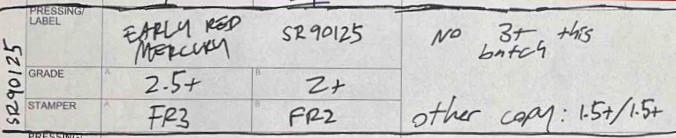
Neither the sound nor the performance of this 1959 Mercury (SR 90125) impressed us when we did a shootout for the work years ago.

The performance of the Enigma Variations here seems rushed, and the two other recordings of the work that we like, one on Philips, the other on RCA, are better.

The Philips with Haitink is probably the better of the time and our favorite at this time. Of the three recordings that we felt had the best combination of music and sound, the Merc with Barbarolli was our least favorite, so we decided to concentrate on the best two recordings in our shootout and get rid of the Mercury pressings we had on hand.

(more…)

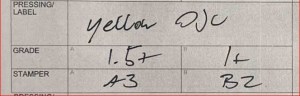
Skip the A3/B2 OJC on Some Like It Hot

Hot Stamper Pressings of the Music of Barney Kessel Available Now

Some Like It Hot badly needed to be made using tubes in the mastering chain, but that didn’t happen.

It’s another case of an OJC with zero Tubey Magic. You might as well be playing the CD. I would bet money it sounds just like this record. Maybe even better.

I suppose if you have a super-tubey phono stage, preamp or amp, you might be able to supply some of the Tubey Magic missing from this pressing, but then all your correctly mastered records wouldn’t sound right, now would they?

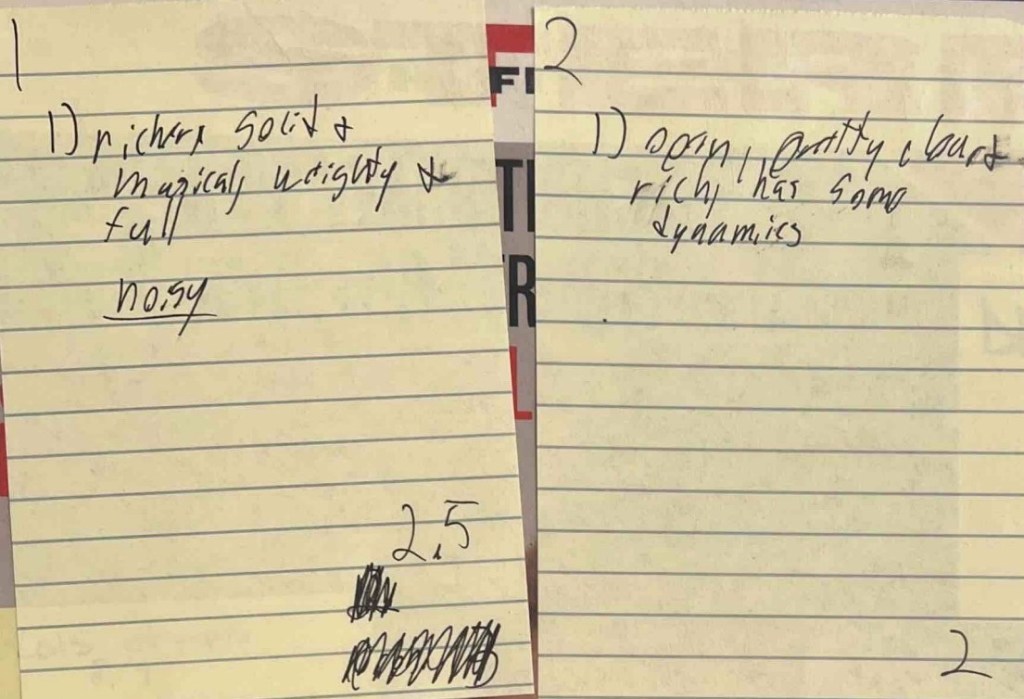
We had two copies of the OJC and one of them did better than this one. It earned a Super Hot grade for one side. If you see this OJC pressing in your local record store, avoid these stampers. The sound isn’t awful, but it’s not very good either, especially considering how amazing the tapes must be, based on the sound of our White Hot Stamper shootout winner.

The OJC pressing of this album is much better suited to the old school audio systems of the 60s and 70s than the modern systems of today. These kinds of reissues used to sound good on those older systems, and I should know, I had an old school stereo and some of the records I used to think sounded good back in the day don’t sound too good to me anymore (although this one never did).

The OJC pressings of Some Like It Hot are thinner and brighter than even the worst of the later pressings we’ve auditioned. That is decidedly not our sound. It’s not the sound Roy DuNann was famous for, and we don’t like it either, although we have to admit that we did find the sound of many of these OJC pressings more tolerable — even enjoyable — in the past.

Our old system from the 80s and 90s was tubier, tonally darker and dramatically less revealing, which strongly worked to the advantage of leaner, brighter, less Tubey Magical titles such as this one. Pretty much everybody I knew had a system that suffered from those same afflictions.

Like most audiophiles, I thought my stereo sounded great.

And the reality is that no matter how hard I worked or how much money I spent, I would never have been able to achieve top quality sound for one simple reason: most of the critically important revolutionary advances in audio had not yet come to pass.

It would take many technological improvements and decades of effort until I would have anything like the system I do now.

(more…)

Sonny Rollins Helped Us See the Light Many Years Ago

The following commentary was taken from our mid-90s catalogs, the ones that came out back in the days when it was still possible to find great jazz records like Alternate Takes for cheap, often still sealed.

The Analogue Productions Heavy Vinyl recuts done by Doug Sax had come out a few years earlier, starting in 1992. Those remastered records were in print at the time I wrote this, and I was pretty pissed off at the way they sounded.

Here is our listing with some minor changes from long ago:

Acoustic Sounds had just remastered and ruined a big batch of famous jazz records, and shortly thereafter a certain writer in The Absolute Sound had said nice things about them.

Said writer and I got into a war of words over these records, long, long ago. You’ll notice that no one ever mentions these awful records anymore, and for good reason: they suck. If you own any of them, do yourself a favor and get either the CD or a good LP for comparison purposes. I expect you will hear what I’m talking about.

In my essay on reviewers I attack him for giving a big “Thumbs Up” in TAS to the botched remastering of Sonny’s Way Out West. The OJC reissue, though superior, is still only a pale shadow of the original.

The Real Deal

Now we have the real thing! This LP has three alternate takes from that session, all mastered by George Horn, and surprise, surprise, surprise, they sound just like my original, much better than (but not so different from) the OJC, and worlds away from the muted flab of the Analogue Productions LP!

(more…)