Top Artists – Graham Nash

Listening in Depth to So Far

Hot Stamper Pressings of the Music of Crosby, Stills and Nash Available Now

This is a very difficult record to find with proper mastering (and good vinyl, ouch!). It seems that all of Crosby, Stills and Nash’s albums are that way. The average domestic pressing rarely even hints at how well recorded this band really was (and the imports are even worse — we’ve never heard one that didn’t sound dubby, veiled and compressed).

In my experience not even one out of ten LPs sounds right; I put the figure at one out of twenty. Most of them are shrill, dull, grainy, flat, opaque, harsh and in varying degrees suffer from every other mastering and pressing malady known to man.

But the best ones have some tracks in superb sound. When you hear the Hot Stampers for records like this you will simply be AMAZED. If you’ve ever heard a really good If Only I Could Remember My Name, an album that CAN be found with proper mastering, that should give you some idea of how good the first two albums can sound.

Side One

Déjà Vu

When you get a good copy of this album, this song sounds like it was lifted right off of a Hot Stamper copy of Deja Vu itself. It’s so rich and Tubey Magical you’d swear it couldn’t get any better. Huge amounts of deep bass. Acoustic guitars that ring for days. Midrange magic to die for. Not many of them sound this way, unfortunately.

If I could indulge in some more MoFi and Half-Speed bashing for a moment, the bass “solo” at the end of this song is a great test for bass definition. The notes are relatively high, and it’s easy for them to sound blurred and wooly. The MoFi, like virtually all Half-Speed mastered records, has a problem with bass definition. If you own the MoFi, listen for how clearly defined the notes are at the end of this track. Then play any other copy, either of So Far or Deja Vu. It’s a pretty safe bet that the bass will be much more articulate. I know how bad the MOFI is in this respect. Rarely do “normal” records have bass that bad.

(more…)

Crosby, Stills, Nash & Young – Deja Vu

More of the Music of Crosby, Stills, Nash and (Sometimes) Young
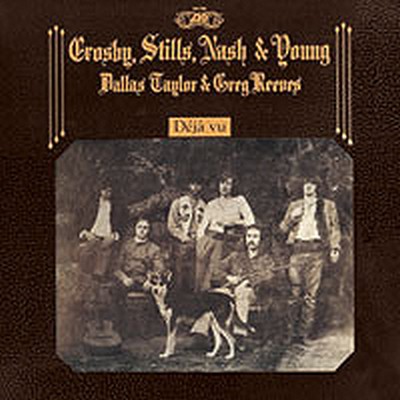
  • Boasting two solid Double Plus (A++) sides or close to them, this early pressing of CSNY’s magnum opus is doing just about everything right
  • The sound is huge throughout – lively, present and rich in a way that nothing you’ve heard can compete with (particularly on side two)
  • And that’s especially true if you own any audiophile pressing of any kind – none of the ones we’ve heard can begin to compete with the real thing we are offering here
  • One of our all-time favorite albums at Better Records and one that almost never sounds this good (unless you know exactly which stampers to buy, of course)
  • We find ten to fifteen RL Zep II’s for every Déjà Vu with the right stampers – we’ve only done three shootouts since 2020, if that tells you anything
  • 5 stars: “…this variety made Déjà Vu a rich musical banquet for the most serious and personal listeners, while mass audiences reveled in the glorious harmonies and the thundering electric guitars…”

If you play this copy at serious levels and have the kind of full range system that’s both loud and clean like live music, we guarantee you will be nothing less than gobsmacked at the size and power of the music on this album, the band’s inarguable masterpiece.

Both sides here are super high-resolution, tonally perfect, Tubey Magical and ALIVE. The vocals are silky and sweet with very little strain or grain (a very common problem in the loudest choruses). The highs are extended, the bass is deep and punchy, and the overall clarity is breathtaking.

Just listen to the guitars during the solos — you can really hear the sound of the pick hitting the strings. The rhythm guitars sound meaty and chunky like the best sounding copies of Zuma and After The Gold Rush. (more…)

Crosby / Nash – Graham Nash / David Crosby

More of the Music of David Crosby and Graham Nash

  • This early Atlantic pressing (only the second copy to hit the site in over twenty-one months) boasts solid Double Plus (A++) sound from start to finish
  • Quiet vinyl for this album, especially considering how rare clean copies of formerly common titles like this one have become in the last twenty years
  • The vocals are remarkably breathy, smooth and sweet here – this recording is the very definition of Midrange Magic, thanks to the brilliant engineering of Bill Halverson
  • 4 stars: “This self-titled release is one of most impressive side project to arise from CSN. The best elements of each are readily available here, punctuated at every turn by their complicated vocal arrangements and air-lock harmonies.”

Where in the world did all the Midrange Magic that we were hearing on this copy of the album come from?

On a song like “Where Will I Be” the sound is so unbelievably transparent, open and intimate it sounds like an outtake from David Crosby’s first album, one of the ten best sounding rock records ever made.

I was in high school when I first played this album and I remember being disappointed with it, mostly because I was expecting another Deja Vu. As I’ve grown older, I have come to appreciate other qualities in a recording than those found on Deja Vu.

I’ve come to appreciate this album for what it is: not the grand musical statement that Deja Vu is, but a simpler, more intimate portrait of two artists at the start of a lifelong, harmonious collaboration (which ended prior to Crosby’s passing because he was such a jerk).

This is a damn fine batch of songs they’ve written and the two men sing them well.

(more…)

Mobile Fidelity Actually Produced a New and Improved Deja Vu in 1983

Hot Stamper Pressings of the Music of Crosby, Stills, Nash and (Sometimes) Young
A letter came to us years ago with the comment “I had no idea that vinyl could produce this sound.”

As the time I made some of the following comments in reply and have added a few new ones since then.

Deja Vu is indeed a very special album, one I have been obsessed with since I first became an audiophile.

I was a big Crosby, Stills and Nash fan already — the first album being life-changing to a 15 year old music lover such as myself, playing over and over on 8-track tape in the car no less — so it was only natural that I would fall in love with Deja Vu when it came out in 1970.

13 Years Go By

Time went by and then, oddly enough, my love for the music was reignited by a pressing that came out 13 years after the album’s first release, on a label you may be familiar with, Mobile Fidelity Sound Labs.

I realized instantly that Mobile Fidelity had indeed improved upon the average original’s sound.

This is not a high bar considering how awful sounding most originals are, but let us give credit where credit is due. With the volume cranked good and loud,  I often played the first track, Carry On, using the MoFi pressing to demonstrate how smooth, rich, big, powerful and dynamic my system could sound.

“The CD may be taking over the world,” I would say, because by 1983 that was exactly what was happening, “but you”ll never hear a CD that sounds like this!”

13 More Years Go By

It would take me many years, at least another 13 or so, to come across the domestic reissues that trounced the MoFi and showed me how colored, compressed, thick, blurry and recessed their pressing was.

Here is the real shocker from that time: I actually thought that the extremely hard-to-find reissue I’d discovered was so flukishly good that it could never be beaten by any other pressing!

(To be fair, my long-time audiophile buddy Robert Pincus probaby deserves the credit for finding it. He found a great many special pressings for me back when I was buying records from him, reaching all the way back to 1987.)

Which is yet another example of everything being relative. I admit I had a poor understanding of that vitally important concept at the time. I really had no idea how good a recording Deja Vu was, and I didn’t really have a way to find out because many of the most important revolutions in audio had not been incorporated into my system, or had yet to be invented.

Within the last five years or so another domestic pressing, and now most recently an import (!), have come to be seen as clearly superior to all of these.

This is the result of having never given up the search for a better Deja Vu.

Record Collecting in My World

Anticipating the release of the newest Half-Speed remastered pressing that would deliver me from the evils of the garden-variety domestic or import LP I happened to own was the dominant feature of my record collecting world in the 70s and 80s.

No one reading this blog will be surprised to learn that almost none of those “new and improved” pressings would pass the test of time. This is an idea I first came to appreciate in the 90s and one that has become more true with each passing year.

With the increasing proliferation of one Heavy Vinyl mediocrity after another, in 2007 we finally recognized we had a duty to our customers to stand athwart audio history and yell “Stop.”

(more…)

Letter of the Week – “I think It’s a bargain at $800. It absolutely trashes my Mofi version…”

Hot Stamper Pressings of the Music of Crosby, Stills, Nash and (Sometimes) Young

One of our good customers had this to say about a Hot Stamper pressing he purchased recently:

Hey Tom,   

I couldn’t believe what I was hearing on the Crosby Still, Nash & Young Deja Vu White Hot stamper A+++ on both sides and absolutely dead quiet. I think It’s a bargain at $800.00. It absolutely trashes my Mofi version into bits and pieces. I don’t even want to mention the Classic records version because it’s painful to listen to. I’m writing up this record today and the Frank Sinatra and Count Basie Live at the Sands tomorrow.

Thanks,

Naz

Naz,

The Heavy Vinyl and Half-Speed Mastered pressings of Deja Vu are, as you say, practically unlistenable once you know what that record should really sound like, and now that you have a Hot Stamper pressing, you definitely know just how good the record can sound.

Demo Disc barely begins to do it justice.

Hey, I was fooled back in the mid-’80s – I used to demonstrate my system with the MoFi Deja Vu! How screwed up is that?

Let’s just say we have made a lot of progress in audio since then. We’ve learned a great deal about record collecting too, practically all of it derived from the thousands of shootouts we’ve conducted over the last twenty years, using tens of thousands of different pressings.

Before 2016 We Were Completely Wrong About Deja Vu

More Crosby / More Stills / More Nash / More Young

There are two areas in which we would like to amend some of the previous comments we’ve made about Deja Vu.

The first has to do with early pressings. Many years ago we wrote the following:

As we noted in previous commentary, the originals are uniformly awful. 

Although that’s mostly still true — Deja Vu is a very difficult album to find with good sound no matter what stampers you have. However, we now know that there are very good sounding copies — Shootout Winning copies in fact — with early stampers.

Deja Vu is in fact a title in which one stamper always wins, and that stamper can only be found on the early pressings.

Amazingly enough, there are more than 90 others (as of 2025) that we’ve discovered with one killer set of stampers that beat all comers as well. (There are surely many more hundreds that do, we just haven’t found them all yet. Please be patient; we are working on it.)

That’s area number one. Area number two is part of this old piece of advice:

If you bought the Classic Records pressing and you can’t tell what’s wrong with it, this may not be the right hobby for you. I highly recommend you buy the Joe Gastwirt mastered CD and either play it on your system or take it to a hi-fi store in your area. It’s tonally correct and undistorted. The Classic version is neither. Now when a stupid $15 CD is correct in a way that a $40 LP is not, something is very very wrong.

The part where we said this may not be the right hobby for you if you like Classic’s godawful remastering of Deja Vu is still true, depending on what exactly you’re trying to accomplish in the hobby.

If you’re not too picky about sound quality and just want to play new records, perhaps because old records are hard to find and often noisy, then fine, the Classic should get that job done for you.

We of course want nothing to do with it because we want exceptionally good sounding vinyl, and the Classic is definitely not very good sounding no matter how many nice things audiophile reviewers may have said about it.

No, the problem we see above is that we were recommending the currently available CD.

Yes, it’s mostly tonally correct and not distorted, but it has a bad a case of dead-as-a-doornail sound.

It’s as awful sounding as any remastered CD I have ever heard.

There is no top, there is no space, there is no life, there is no immediacy, there is no Tubey Magic — in short there is almost nothing left of what makes the best copies of Deja Vu so good.

We’ve known this for about five ten years, apologies for not getting around to correcting the record.

(more…)

Detail on Crosby, Stills and Nash – Holy Grail or Audio Trap?

Hot Stamper Pressings of the Music of Crosby, Stills, Nash and (Sometimes) Young

Detail may be the Holy Grail to some audiophiles, but listening for the details in a recording can be a trap we too easily fall into unless we are on our guard.

Tonal balance is the key.

Without correct tonal balance, no judgments about the details of the recording have any real value. 

A case in point: As good as the Classic Heavy Vinyl pressing is, the guitar at the opening of Helplessly Hoping tells you everything you need to know about what’s missing. The guitar on the better Hot Stamper domestic copies has a transparency and harmonic integrity that cannot be found on Classic’s version.

The Classic Records pressing gets the tonal balance right, but their guitar lacks the subtlety and harmonic resolution of the real thing.

I’m laboring here to avoid the word “detail,” since many audiophiles like bright, phony sounding records because of all their wonderful detail. Patricia Barber’s albums come to mind, along with scores of audiophile pressings. 

The MoFi guys and the CD guys are constantly falling into the trap of being impressed by the phony detail in some recordings.

The solution is to get the sound tonally balanced first, then see how much detail you have left.

Detail is not the end-all and be-all of audio. Those who think it is have systems that are sure to fall apart at louder levels. If the sound of your system on your best pressings doesn’t get better as it gets louder, you are failing one of the most important tests in all of audio, the turn up your volume test.

(more…)

Crosby / Nash – Wind on the Water

More of the Music of David Crosby and Graham Nash

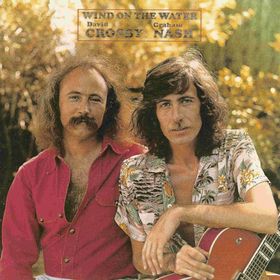
  • With a STUNNING Shootout Winning Triple Plus (A+++) side two mated to a solid Double Plus (A++) side one, we guarantee you’ve never heard Wind on the Water sound this good
  • These are just a few of the things we had to say about this incredible copy in our notes: “lots of space”…”huge and present and tubey”…”very detailed vox”…”tons of weight…”present and lively”
  • Here you will find noticeably richer sonics than practically all other pressings (hence the high grades) – many tended to be leaner and drier than we would have liked, and we take a lot of points off when they sound that way
  • It’s possible to get the clear, breathy vocals that bring out the wonderful harmonies these two are so rightly famous for – it’s just not easy
  • Marks in the vinyl are sometimes the nature of the beast with these vintage LPs – those on “Carry Me” are especially bad – but if you can tough those out, this copy is going to blow your mind
  • 4 stars: “Wind on the Water has an instant classic, lived-in sound and is a definite must-have.”

Solo and In Combination

Of course it’s easy to argue that finding good sound on an album with two or more members of Crosby, Stills, Nash and Young, in any configuration, has never been easy. It’s the rare copy of either of the first two albums that’s even listenable, and the CSN album from 1977 doesn’t sound nearly as good as any of the first three Crosby/Nash albums (of which this is the second). Which simply means that the “good” sound of our Hot Stamper copies is far better than what most audiophiles own of any of these guys in combination.

Their solo albums are a different story altogether. The first solo albums by David Crosby (1971), Stephen Stills (1970) and Graham Nash (1971) are three of my favorite records of all time; each is a brilliant recording, each is powerfully compelling music (the Nash album especially). Two made our Top 100. It’s puzzling to contemplate just how well-recorded each of their first solo albums are considering their less-than-stellar group recording efforts. Too many cooks spoiling the broth might make a good guess, but at this point it’s no more than speculation and mostly a waste of time. With so many records to play, we find we do better when we confine ourselves to the realities of the vinyl in front of us.

(more…)

Helplessly Hoping to Get the VTA Right

Hot Stamper Pressings of the Music of Crosby, Stills, Nash and (Sometimes) Young

This listing from 2005 (!) contains commentary about VTA adjustment using the track Helplessly Hoping from a Hot Stamper pressing of CSN’s So Far. It would not be long before we went with the much more accurate and revealing 17D (first the 17D3, then the 17DX), which took us to another level, as documented here.

Helplessly Hoping is a wonderful song that has a lot of energy in the midrange and upper midrange which is difficult to get right. Just today (4/25/05) I was playing around with VTA, having recently installed a new Dynavector DV-20x on my playgrading table (a real sweetheart, by the way), and this song showed me EXACTLY how to get the VTA right.

VTA is all about balance.

The reason this song is so good for adjusting VTA is that the guitar at the opening is a little smooth and the harmony vocals that come in after the intro can be a little bright. Finding the balance between these two elements is key to getting the VTA adjusted properly.

When the arm is too far down in the back, the guitar at the opening will lose its transparency and become dull and thick. Too high in the back and the vocals sound thin and shrill, especially when the boys all really push their harmony. The slightest change in VTA will noticeably affect that balance and allow you to tune it in just right.

To be successful, however, there are also other conditions that need to be met. The system has to be sounding right, which in my world means good electricity, so make sure you do this in the evening or on a weekend when the electricity is better.

That’s the easy part. The hard part is that you need a good pressing that includes this song, and those don’t grow on trees.

The vast majority of CSN’s first album and the vast majority of So Far’s are junk.

Trying to get junk pressings to sound right is impossible, because they weren’t mastered right in the first place.

But if you’re one of the lucky few who has a good pressing of Helplessly Hoping, try tweaking your VTA adjustment and see if you aren’t able to dial it in even better than before.

(more…)

Specific Critiques of All Four Sides of 4 Way Street

Hot Stamper Pressings of the Music of Crosby, Stills, Nash and (Sometimes) Young

If you want to hear Crosby, Stills, Nash and Young rock out live in your listening room, this copy will let you do it. It’s not easy to find good sound on even one side of this album, let alone all four.

Three Shootout Winning White Hot Stamper sides out of four! These three sides handily blow other copies out of the water, with the size, space, presence and energy that only the finest pressings are capable of. If you want to hear Crosby, Stills, Nash and Young rock out live in your listening room, this is the only copy that will let you do it. No other copy we’ve ever played rocked the way this one rocked! For three quarters of the “concert”, YOU ARE THERE.

If the singers get hard and shrill in the louder passages, then what you have is a pretty typical pressing. Add grit and grain, smeared transients, opacity, surface noise and a lack of weight down low and you’ll know why it takes us years to find enough copies to shoot out — because this is what most pressings sound like.

As you have surely read on the site by now, this band has put out more bad pressings of good recordings than practically any I can think of. Here is an excerpt from our review of their first album that discusses the issue in more depth.

Wrong Sound

95% of all the pressings of this album I’ve ever played have been disappointing. They’re almost always wrong, each in their own way of course. Some are dull, some are shrill, some are aggressive, some have no bass — every mastering fault you can imagine can be heard on one copy or another of this record. The bottom line? If you want to buy them and try them from your local record store, plan on spending hundreds of dollars and putting in years of frustrating effort, perhaps with little to show for it in the end. This is one tough nut to crack; it’s best to know that going in.

Sound So Real

The song “Triad”, for example, presents us with a lone David Crosby and acoustic guitar. It’s as real sounding as anything I’ve ever heard from this band. Listening to that natural guitar tone brings home the fact that their studio recordings (and studio recordings in general) are processed and degraded significantly relative to what the original microphones picked up.

This live album gives you the “naked” sound of the real thing — the real voices and the real guitars and the real everything else, in a way that would never happen again. (Later CSN albums are mostly dreadful. Fortunately later Neil Young albums, e.g., Zuma, are often Demo Discs of the highest quality.)


More records for which we’ve detailed the strengths and weaknesses of a specific shootout copy.

Side One

Big, clear, present, dynamic — what’s not to like? It shows you what few copies can: how well-recorded the album is. Halverson did a great job but you have to work your tail off to find a copy that does his brilliant engineering justice. Sad, isn’t it?

(more…)