Passable Sound

How Does the D1/D1 Jazz Giant Black Label Pressing Sound?

Hot Stamper Pressings of Contemporary Jazz Albums Available Now

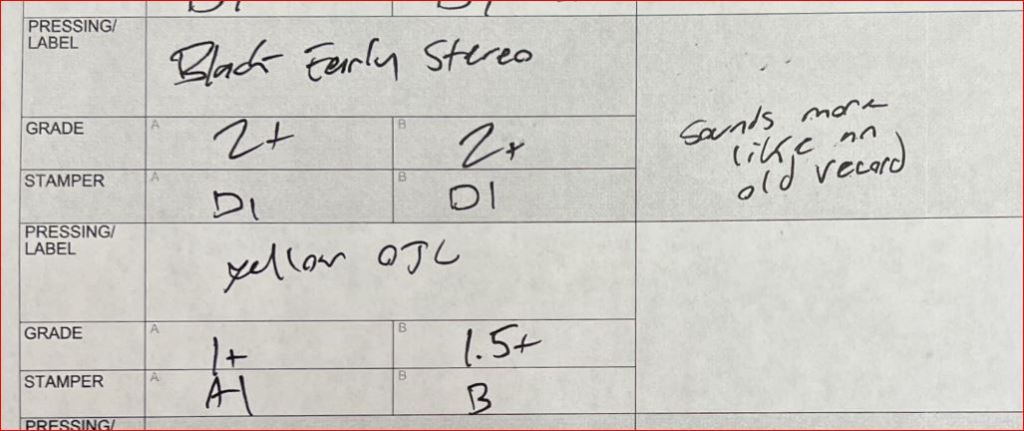
Even though the Black label original of Jazz Gianot we played in our shootout held its own well enough, it did suffer from a slight case of “old record” sound.

Head to head with the best vintage reissues, it was a bit crude, didn’t extend fully on the top end, and wasn’t as resolving in the midrange.

The fact that it earned a Super Hot (A++) sonic grade means that it could not have sounded too much like an old record. It was still doing most everything right.

It just had a few sonic shortcomings we recognized were holding it back.

The reissues that beat it in the shootout showed us just how good the album could sound, maybe not night and day better, but definitely better, a full grade better.
The Black Label original we played would still beat the pants off the godawful Analogue Productions Heavy Vinyl pressing that came out in the 90s, the one mastered by the formerly-brilliant Doug Sax.

For those who may not have been collecting back then, we describe in great detail the bad sound of the Heavy Vinyl pressing that AP produced for their version of Way Out West in 1992.

Mobile Fidelity got into the reissue act in 1994, making murky-sounding records on 200 gram vinyl and calling them Anadisqs.

Classic Records started producing their bright, screechy reissues of Living Stereo titles that year as well.

It seems a lot of bad sounding records were being made back then!

Is it any different now? (If it is, please contact me at tom@better-records.com and tell me what you think the differences are. I am at a loss after playing these six Heavy Vinyl titles in 2024 and finding that all of them fell well short of the mark. What mark is that, you ask? Why, the mark set by their vintage counterparts.)


(more…)

It Took Us More than Twenty Years to Figure Out What Was the Problem

Hot Stamper Pressings of the Music of Neil Young Available Now

Years ago — precisely how many we can’t really say, the old listings for those records have been deleted — we thought the original pressings in the nameless cover you see pictured had the best sound.

We thought the pressings that came in this early cover were the ones that were made from the original mix, the mix that Neil later disowned. (More on that below.)

We had played a number of copies that came in the original cover, and they sounded better to us than the others we had auditioned.

Our mistake was not understanding that pressings made with the first mix and pressings made with the second mix both came in the early cover, and both were pressed on the Reprise Two Tone label.

Here is what we wrote some years ago:

It turns out the remixed pressings we’d been selling for years were not the way to hear this album at its best. Neil wanted his voice to sound clearer and more present than the first mix, but the approach the engineers took to increase the clarity and presence was simply to boost the middle and upper midrange, a boost that seriously compromises the wonderful Tubey Magic found in the rich lower midrange of the original mix.

Neil may have liked the sound of his voice better on the new mix, played back on whatever mediocre-at-best stereo he was using at the time, but we here at Better Records are of a decidedly different opinion. On a modern, highly-resolving system Neil’s voice will not sound the least bit “buried” on the original mix, not on the better pressings anyway. Of course, the better ones are the only ones we sell.

If you want to hear this album sound right, we strongly believe that the original mix is the only way to go. And if you want to hear this album sound really right, better-than-you-ever-thought-possible right, you need a copy that was mastered, pressed and cleaned properly, and that means a Hot Stamper from Better Records.

It turns out the stampers for the pressings we like are the ones made from the remixed tapes.

(more…)

On King Crimson’s Red Album, How Good Are the Polydor Pressings?

Hot Stamper Pressings of the Music of King Crimson Available Now

Harsh and congested.

Not remotely competitive with the British originals.

Clean copies on the UK Island label may be hard to find, but they are the only game in town if you are serious about sound.

Want to find your own killer copy?

Consider taking the following moderately helpful advice.

As of 2024, shootouts for this album should be carried out:

How else can you expect to hear the record sound its best?

Based on our experience, Red sounds better:

That’s about it. They are neither easy nor cheap to find, but they are definitely the best sounding.

There’s more collecting help where that came from. Click on the top link below to learn about the pressings that win shootouts.

(more…)

Audiophiles Should Stick with Stereo on Looking Ahead!

Hot Stamper Pressings of Contemporary Jazz Albums Available Now

As a general rule, audiophiles should stick to stereo pressings of stereo recordings.

Case in point: The early stereo pressing of the album you see pictured to the left is an amazing Demo Disc quality jazz record.

Here is how we described a killer copy we found recently:

We play a lot of vintage Contemporary recordings, but this one surprised us right from the first track with sound that stands out — this on a label that produced many of our favorite standout recordings.

Both of these sides are clean, clear, and transparent, with an abundance of energy and wonderful clarity in the mids and highs.

This is not an easy record to come by, as evident by how long it took us to get our most recent shootout going, and they usually don’t sound anywhere near this good when you’re lucky enough to be able to track one down.

Mono Mistakes

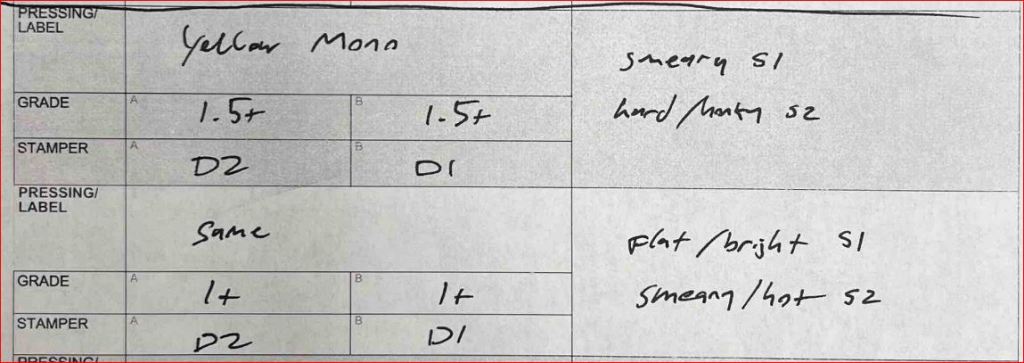
However, do not make the mistake of thinking that any of these wonderful comments apply to the two mono pressings we played.

One was passable, earning our 1.5+ grade. It’s a nice enough sounding record I suppose. Smeary, hard and honky.

Of all the Heavy Vinyl pressings we’ve played over the years, only a handfull of the best of them would earn that grade or better. They would suffer from a different suite of problems, but they would be problems nonetheless. Some of our reviews for them can be found here.

1.5+ is four grades down from the top copy. That is a steep dropoff as far as we are concerned. 1.5+ only hints at how good a recording Looking Ahead! can be on the best vintage pressings. (The OJC we played earned the same grade.)

(more…)

The RCA Later Label Pressings from the 70s Fall Short Yet Again

Hot Stamper Pressings Featuring the Violin Available Now
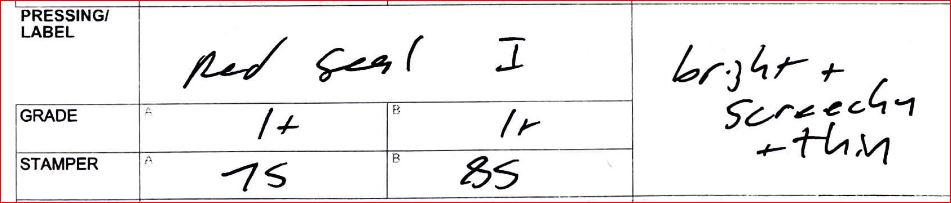

Many of the later RCA pressings we’ve played recently have left a lot to be desired.

We’re on record as telling audiophiles that it’s never a good idea to judge records by their labels, so when it came time to do a shootout for this famous Heifetz recording from 1963, LSC 2652, it was only fitting that we force ourselves to clean and play every pressing we had on the shelf, including the White Dogs and Red Seal reissues.

The White Dog did fine (2+ for the Bruch on side one, 1.5+ for the Mozart on side two).

The Red Seal had all the hallmarks of the transistory sound RCA apparently preferred in the 70s.

There are Red Seal pressings with excellent sound — some of them have won shootouts — but this one had too many similarities to the awful Classic Record classical titles produced in the 90s. You know the ones I’m talking about. They have bright, screechy string tone that no self-respecting audiophile with even passable equipment should find tolerable.

(The fact that many of them remain on the TAS list speaks volumes about the self-identified experts’ ability to distinguish a good record from a bad one. More on that subject below.)

More of the Same

Below you will find links to other records we’ve played that had the same problems as this RCA and are best avoided by audiophiles looking for high quality pressings to play.

There is no shortage of other records that we’ve run into over the years with these kinds of obvious shortcomings.

(more…)

Neither of These Tchaikovsky 5ths Made the Grade

More of the music of Peter Ilyich Tchaikovsky (1840-1893)

We’ve been playing quite a number of different pressings of Tchaikovsky’s Symphony No. 5 lately, hoping to find a 5th that would really knock us out.

Most have left us unimpressed with the quality of the sound, and in the case of this Solti on London, the performance.

London CS 6117. Solti conducts the Paris Conservatory Orchestra.

The sound is OK. It’s fairly tubey and there’s a decent amount of energy to the recording.

The problem is not the sound, the problem is that the performance is terrible. Our main listening guy said he could hardly recognize the music!

DG SLPM 138 658. Mravinsky conducting the Leningrad Phil on an early pressing from 1961.

Big energy and a great performance but the string tone is shrill and smeary.

We are very used to hearing this kind of sound on Deutsche Grammophon records. This is why you see so few of that label’s pressings on our site.

How Did We Figure All of This Out?

There are more than 2000 Hot Stamper reviews on this blog. Do you know how we learned so much about so many records?

Simple. We ran thousands and thousands of record experiments under carefully controlled conditions, and we continue to run scores of them week in and week out to this very day.

(more…)

Also Sprach Zarathustra by Way of Zubin Mehta – No Great Shakes

More of the music of Richard Strauss

A very good performance, with passable sonics.

But passable sonics are not going to cut it at the prices we charge.

Unlike many audiophiles and the reviewers who write for them, we have never been taken with most of the recordings of Zubin Mehta and the LA Philharmonic.

They almost always suffer from exactly the same problems that we heard on this album. We had about five copies on hand in preparation for a shootout, some of which I had noted seemed to sound fine, but once we listened more critically we started to hear the problems that eventually caused us to abandon the shootout. We ended up giving away the stock to our good customers for free.

Here is what my notes say:

By the way, if you do have some of these and want to play them, the 4G side two was the best we played, much better than any 6G side two.

This link will take you to our current favorite recording of the work.

Opacity Vs. Transparency

Note that we have been especially anti-heavy vinyl in our recent commentaries for their consistently opaque character, the opposite of what is necessary in order to hear into the music, deep into the soundstage, to see and hear ALL the instruments, even the ones at the back.

Try that with any Classic Record or Speakers Corner pressing. Our Hot Stamper pressings can show you precisely what you have been missing all these years if you have been collecting and playing releases from those labels and others like them.

(more…)

How Good Are the Later Reissues of The Bridge?

When we did a shootout for The Bridge about ten years ago, we thought the reissues with the cover you see to the left actually sounded better than the original pressings, but we were clearly wrong and we have no other option than to admit it, as painful as that may be.

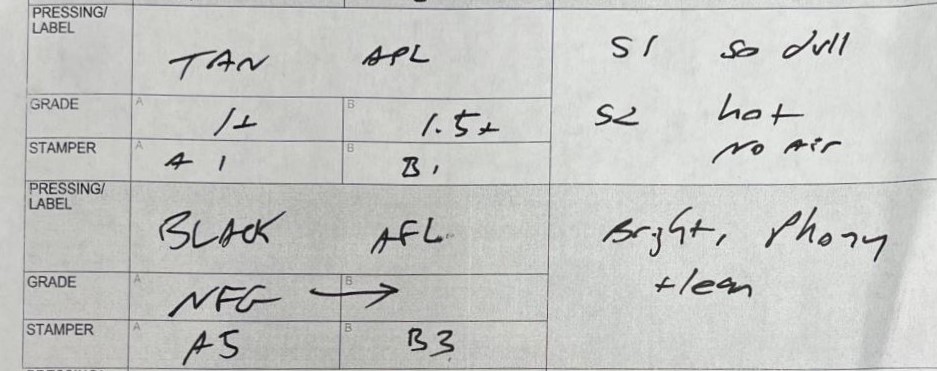
True, we never cared much for the later reissues described below — the tan labels can be passable but fall well short of the standards we set now.

However, even the best orange label pressings from 1975 don’t sound as good to us now as we thought they did ten years ago.

They can be good, but in our experience they can never be great. Great is the sound that can only be found on the best originals, and they win all the shootouts now.

The notes for the AFL pressing with the black label describe it as bright, phony and lean.

This is the kind of sound better suited to the stone age stereos of the past.

I should know. I had a stereo all the way up until the late-90s — not exactly stone age quality, but far from the sound we have now — that prevented me from hearing my records with the highest quality reproduction.

(more…)

Avoid the Tan Labels and Non-TML Pressings for Nilsson Schmilsson

Hot Stamper Pressings of the Music of Harry Nilsson Available Now

Not that we would ever claim that TML in the dead wax guarantees good sound.

Side two of our tan label copy below was passable, but that’s sonically a very long way from the top copies we played, which of course were all TML, with lots of different stampers, none of which we are likely to reveal, now or in the future, for reasons we are sure you understand.

Anyone who buys one of our White Hot Stamper copies will definitely know, but we only find a couple of those every few years, as this is not a shootout that’s been easy to do for a very long time.

Make sure your equipment is tuned up and the electricity is good before you get anywhere near a pressing of this album.

Big production pop like this is hard to pull off. Harry did an amazing job, but the recording is not perfect judging by the dozen or so copies I played this week and the scores I’ve suffered through before.


Nilsson Schmilsson is an album we think we know well, one that checks off a number of important boxes for us here at Better Records:

(more…)

For Top Quality Sound on Maiden Voyage, Skip the Black B

Blue Note Pressings with Hot Stampers Available Now

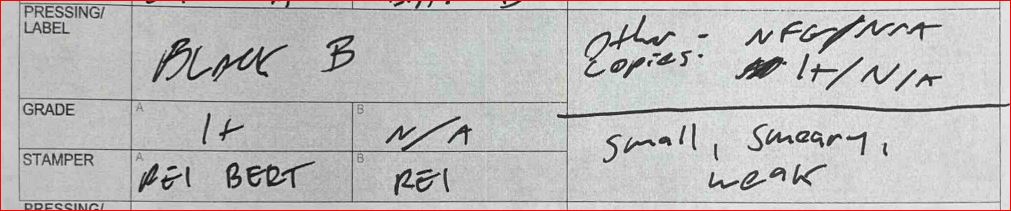
The three copies we had in our recent shootout for Maiden Voyage on the 70s Black B label did poorly.

Like a lot of the records we play when they weren’t mastered properly, they were small, smeary and weak. Considering how bad they sounded, it’s possible — accent on the word possible — that someone remastering the album for a modern audience could do a better job than Blue Note was doing in the late-70s.

This, of course, is not our standard, nor should it be anyone else’s.

Below you will find links to other records with the same problems as this Blue Note reissue.

(more…)