Lower Sound Quality Pressings

Helpful Stamper Information You Can Use – Episode 108

Hot Stamper Pressings of the Music of Genesis Available Now

British Pressing? Check.

Pink Label? Check.

Sound Quality?  Side One:: 1+ (dubby). Side One of another copy: NFG (no good).

Apparently something went wrong, but exactly what, nobody really knows.

And if for some reason somebody actually believes they know what went wrong, we tell them that that kind of thinking is detrimental to whatever success they hope to achieve in finding better sounding records, if our experience over the last fifty years has any bearing.

We don’t know it all and we’ve never pretended to. All our knowledge is provisional. We may not be the smartest guys in the room, but we’re sure as hell smart enough to know that much.

If somehow we did know it all, there would be no need for the two hundred entries in our live and learn section about all the mistakes we’ve made over the years trying to understand record pressings at the sonic level.

We take a different approach to searching out better sounding pressings. Instead of reading about them — who made them, how they were made, where they were made, all that sort of thing — we instead devoted our efforts to cleaning and playing them, so that we could make our own judgments about the sound and the music we heard.

Our experiments, conducted using the shootout process we’ve painstakingly developed over the course of the last twenty years, produce all the data we need: the winners, the losers, and the rankings for all the records in-between.

Free Stamper Info

By my count this is the 108th stamper sheet we have posted on The Skeptical Audiophile.

In the case of this title, these are what we would call bad stampers for Genesis’s 1973 prog album Selling England by the Pound (a record we rarely have in stock because the best stampers are just too hard to find, at least they are on copies in audiophile playing condition).

If you are looking for top quality sound — and seriously, what else would you be looking for if you are reading this blog? —  then make sure not to buy just any old early Pink Label UK pressing of the album. You may end up with one that sounds as bad as this one did.

(more…)

The Yellow Label Reissues Can Sound Very Good, But Great? Not a Chance

Hot Stamper Pressings of Contemporary Jazz Albums Available Now

The earlier pressing on the site as of this writing is an amazingly well recorded album with many fine qualities:

Boasting seriously good grades from top to bottom, this vintage Contemporary pressing is doing just about everything right.

These sides are bigger and more open, with more bass and energy, than most others we played – the saxes and trumpets are immediate and lively.

Mr. Earl Hines himself showed up, a man who knows this music like nobody’s business – Leroy Vinnegar and Shelly Manne round out the quartet.

“Great musicians produce great results, and most of the LP’s tracks were done in one or two takes. The result is ‘a spontaneous, swinging record of what happened’ when Carter met Hines ‘for the first time. . . .'”

Our notes for the Yellow Label reissues point out that they are always more compressed, with some added upper midrange. The intro benefits from this but the peaks can get congested.

The earlier pressings, especially the originals on the Black Label, are the most likely to sound right, but they are tough to find in audiophile playing condition.

If you see a copy on the site with these grades — less than 2+ on both sides — it will proabably have a Yellow Label and some of the shortcomings we mention above.

Correct, In This Case

Some people like to search for relationships between the sound of the pressing and the label it has, but in our experience that is more often than not a fool’s errand once confirmation biases and other kinds of mistaken thinking are taken into account.

When the conventional wisdom turns out to be correct — in other words, when it comports with reality, at least for the six copies of this album that we played — we are happy to temporarily put aside our skepticism and learn the lessons playing a stack of copies of this title has taught us.

Why? Because the experimental evidence supports it.

(more…)

There’s a Very Good Chance We Were Wrong about Mulligan Meets Getz

More of the Music of Stan Getz /More of the Music of Gerry Mulligan

This is an album that we were probably wrong about in 2021 when the following Hot Stamper two-pak pressing went up for sale on the site. (The pressings we liked at the time are long gone by now.) Here is what we wrote back then:

Mulligan and Getz’s 1957 collaboration arrives on the site with this superb 2-pack offering Nearly Triple Plus (A++ to A+++) sound on both sides – just shy of our Shootout Winner

Full, rich, and spacious with tons of Tubey Magic and, better yet, not the least bit dry, hard or transistory

Practically impossible to find in stereo with audiophile playing surfaces – it took two different pressings to get two good sides, and they are very good indeed

The reissues we discovered in 2025 trounced the originals (in both stereo and mono) as well as the early reissues (on the Verve T Label) we played in our shootout, as you can see from the stamper sheet notes below:

Our mistaken judgment is simply the result of ignorance. In 2021 we simply had no idea just how good this recording could sound on vintage vinyl. We hadn’t done our homework properly, and because of that we came up with the wrong answer.

We only discovered the right pressings, with the right stampers, pressed in the right era, and mastered by the right guy, sometime in 2024 or so. We bought a bunch of those and in 2025 did the shootout with all kinds of copies, just to keep everybody honest.
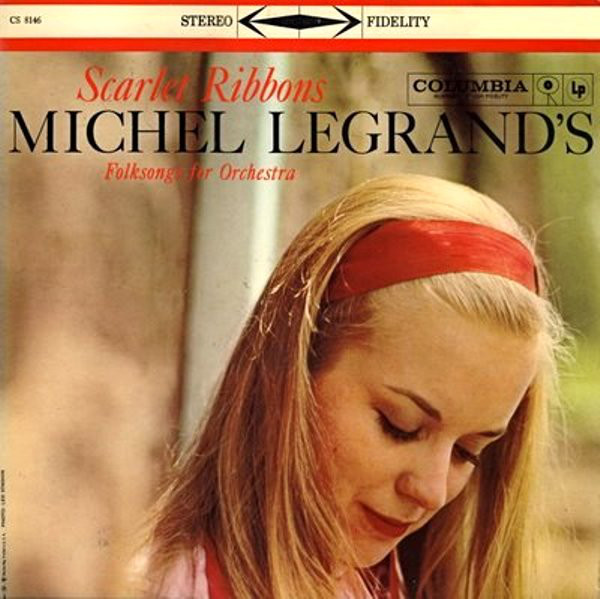
That was the year much better sounding reissue copies that look like the one you see on the left came along. As we noted in the listing:

  • Leave it to Better Records to figure out a complicated title with a long history such as this one – originals, reissues, monos, stereos, we had to play them all to find a copy that sounds as good as this one does.
  • Full, rich, and spacious with an abundance of Tubey Magic and, better yet, not the least bit dry, hard or transistory.

Some quick notes:

Bowtie Label Stereo

(more…)

On Security, Robert Ludwig Let Us Down, Big Time

Hot Stamper Pressings of the Music of Peter Gabriel Available Now

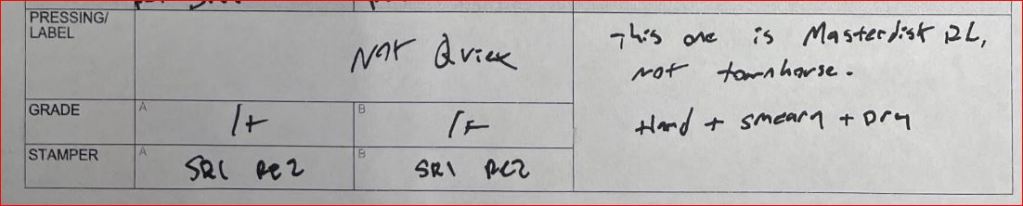
All the copies we had in our shootout were pressed domestically, and none of them were mastered by the legendary Robert Ludwig except for the one whose stampers you see below.

We awarded both sides of RL’s cutting a sub-Hot Stamper grade of 1+, which means the sound is passable at best, even after a good cleaning. (Without a good cleaning it would probably not even earn that single plus.)

We do not sell records with 1+ grades. We figure you can find those on your own. The world is full of them, as are most audiophile record collections.

1+ is actually a fairly good grade for many of the Heavy Vinyl pressings being made today. Some of the ones we’ve reviewed can be found in our Heavy Vinyl mediocrities section.

Any version of the album we sell will be noticeably — and probably dramatically — better sounding.

If you own any of those titles and didn’t pay much for them, you didn’t get ripped off too badly. You got something for your money. Not much, but something, and it would surprise us no end if any of them have been played much. Mediocre records tend to spend most of their lives sitting on record shelves. They’re not good enough sounding to bother with.

If you have any of these specific Heavy Vinyl pressings, something is wrong somewhere and it would be a good idea for you to figure out what before you flush any more money down the drain.

General Advice

On this title, forget the Brits. Every British pressing we played was badly smeared and veiled.

This took us somewhat by surprise because we happen to like the British PG pressings. However, So on British vinyl is awful too, so it’s clear (to us anyway) that the later PG records are bad on British vinyl and the early ones are better.

We are limiting our comments here to albums up through So. Anything after that is more or less terra incognita for us simply because we don’t care for any of the music he was making after 1986.

(more…)

These Two Michel LeGrand Records Didn’t Make the Grade

Hot Stamper Pressings of Top Quality Jazz Albums Available Now

Pictured are two Michel Legrand albums we auditioned at some point in the past and found less than impressive.

Without going into specifics — our notes are long gone at this point — we’ll just say these two albums suffer from weak music, weak sound, or both, and therefore do not deserve a place in most audiophile collections — unless that audiophile happens to be a huge fan of the artist.

My guess is that if these two records are sitting in a record collection, they have not been played in many years, if ever.

Here’s an idea: If you own either of these two albums, pull them out and play them.

You may find that making more room on your shelves for records you may actually enjoy playing is easier than you think.

Our Pledge of Service to You, the Discriminating Audiophile 

We play mediocre-to-bad sounding pressings so that you don’t have to, a free service from your record-loving friends at Better Records.

(more…)

So You Actually Think an OJC Can Beat an Original Black Label Contemporary?

Hot Stamper Pressings of Contemporary Jazz Albums Available Now
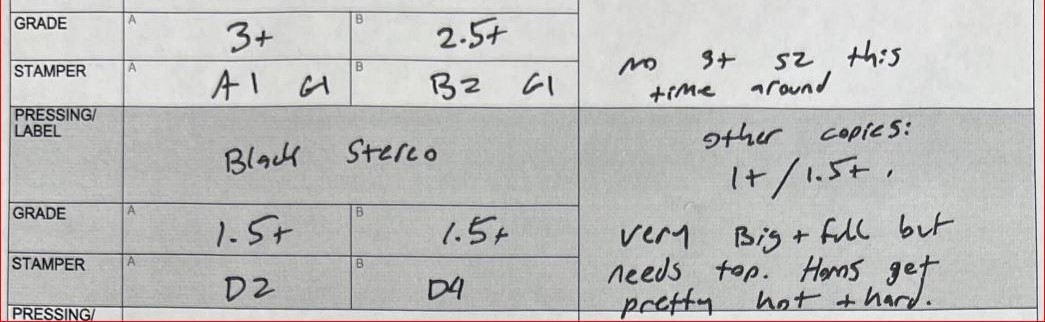
Yes, we think that, because that’s what the evidence from our most recent shootout in 2025 showed us.

As you can see from the stamper sheet below, the A1/B2 stampers of our OJC, in a blinded test, came out on top.

Better mastering equipment? Better mastering skills? Better vinyl? Better pressing methods?

Who the hell knows?

Better yet, what audiophile or record collector with a lick of sense would even pretend to know?

Not us, that’s for sure. At this point we are very comfortable not having answers for the unanswerable questions we posed above.

But don’t rush off to buy the OJC of the Sonny Rollins record you see pictured. This commentary has nothing to do with that record. (more…)

Artisan Let Us Down on These Early Green Label Pressings

Hot Stamper Pressings of the Music of James Taylor Available Now

Our most recent Shootout Winner was a very special copy indeed:

A wonderful copy of JT’s classic followup to Sweet Baby James with KILLER Shootout Winning Triple Plus (A+++) grades or close to them on both sides.

This early Green Label pressing demonstrates the Tubey Magical midrange that modern records almost never reproduce. The sound of most of the tracks on the better pressings is raw, real and exceptionally unprocessed.

The only pressings we put in shootouts these days are cut at Artisan, on transistor equipment we should note, but the kind of transistor gear that, to the best of our knowledge, no longer exists — the kind that transforms the Tubey Magic found on the tape into Tubey Magical grooves on the record.

Bernie Grundman used to have equipment like that back in 1971. The evidence is there for all to hear on records like this one. Oddly enough the two titles have remarkably similiar qualities.

But not all Artisan cuttings are equal, as our stamper sheet from the shootout makes clear.

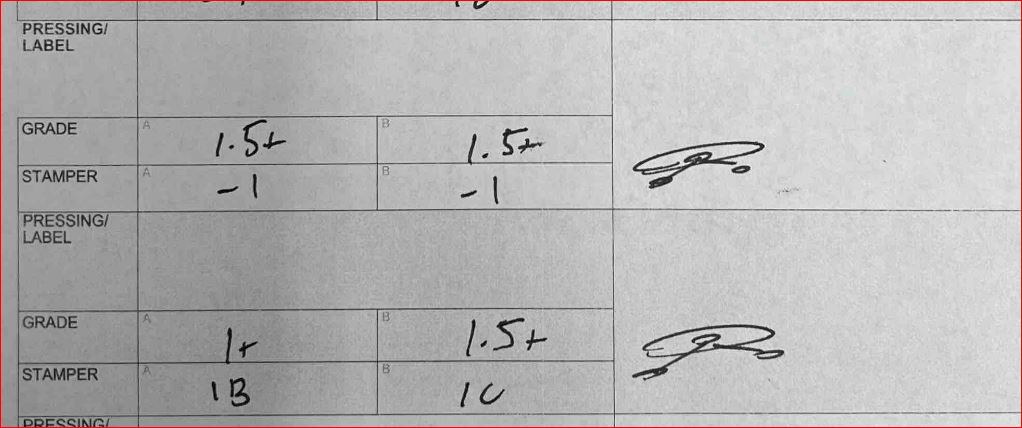
-1/-1 earned 1.5+ Hot Stamper grades, which means the sound is good, not great.

1.5+ is four grades down from the top copy. That’s a steep dropoff as far as we’re concerned. 1.5+ only hints at how good a recording Mudslide Slim can be on the best vintage Green Label Artisan-cut pressings. (For those who might be interested, there’s more on our grading scale here.)

1B/1C, the worst pressing from our shootout, is what we would consider passable. It’s not a bad sounding record, but it’s not good enough to qualify as a Hot Stamper.

The world is full of records that sound like the 1B/1C cutting of Mud Slide.

(more…)

This Rudy Van Gelder Cutting of Red Clay Is Good but…

xxx

… far from the best we played, earning barely Hot Stamper grades.

And we would be remiss if we failed to point out that the proper cleaning of your records will typically improve their sound quality by at least one half plus, and more often than not one full plus.

It’s very likely that neither of the A3/B3 copies you see below would have qualified as Hot Stamper pressings without the aid of a good cleaning.

Red Clay is one of our favorite CTI albums – Red Clay (the song and the album) is Hubbard’s soul jazz Masterpiece, and it’s a record that belongs in every audiophile’s jazz collection.

Lenny White drums up a storm on this album – on this copy he is playing right in the room with you. If you’re a Hubbard fan, or perhaps a fan of early-70s soul jazz, this title from 1970 is surely a Must Own.

Although Rudy recorded and mastered the album — the only pressings that qualified for the shootout were his — it should be noted that Van Gelder in the dead wax is never a guarantee of high quality sound, on any record.

(It’s easy to criticize the bad pressings of Rudy Van Gelder’s work, but let us not lose site of the countless great ones.)

This A3/B3 pressing was not awful, or even mediocre — the reissues without VAN GELDER in the dead wax would most likely be much worse sounding — but at 1.5+ we would say it has earned good, not great Hot Stamper grades.

The only way to guarantee higher quality sound is to do a shootout with a good-sized pile of cleaned pressings and find the one with the best sound using the rigorous testing methodologies we use.

For this kind of work, top quality playback is a must.

There is of course a way to avoid doing all that work and spending all that money on piles of pressings, most of which you will eventually have no use for, and that’s to buy a Hot Stamper copy of the album from us.

(more…)

The Original Jazz Classics Series Put Out a Passable Relaxin’

Hot Stamper Pressings of the Music of Miles Davis Available Now

We much prefer the right version of the 70s Two-Fer reissue (PR 24001) to the OJCs of both Cookin’ and Relaxin’ (OJC-190). Previously we had written:

These 70s reissue pressings are practically as good as any we have ever heard. Full-bodied, warm and natural, with plenty of space around all of the players, this is the sound of vintage analog.

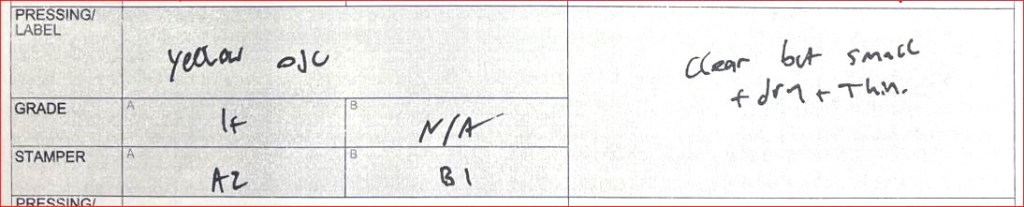
It had been a while since we last played the OJC pressing of either album, so we picked up a copy of Relaxin’ and threw it into the shootout, where it did about as badly as expected.

The first side earned our 1+ grade, which means that, like a lot of reissues it’s passable, but really not good enough for a serious audiophile (hopefully meaning you) to bother with, which is why we didn’t even play side two (the N/A you see noted where the grade should be).

The OJC is clearly better suited to the old school audio systems of the 60s and 70s rather than the modern systems in use today. These kinds of reissues used to sound good on those older systems, and I should know, I used to have an old school stereo, and some of the records I used to think sounded good back in the day don’t sound too good to me anymore (although this one never did).

(more…)

Tchaikovsky / Symphony No. 6 on Shaded Dog

Hot Stamper Pressings of the Music of Tchaikovsky Available Now

We’ve played at least three Shaded Dogs of LSC 1901 since we started doing shootouts for this recording and all three were awful.

The only version of this wonderful performance from 1955, one of the best we know of, is this very late reissue that we discovered more than twenty years ago, a sleeper of a record if ever there was one.

Years ago we described a Hot Stamper pressing this way:

The size and scope of this recording is enormous, with the orchestral sections clearly staged wide and deep. Where is the old tube smear and compression and opacity? It must not be on the tape, because I hear no trace of it.

This copy is cut clean, its dynamics intact, which just goes to show how much better the master tape must be than we’ve been led to believe by the original Shady Dogs and the hacks at Classic Records (note: their Heavy Vinyl reissue is awful).

RCA managed to cut this record amazingly well decades after the tape was first recorded, not for audiophiles, but for music lovers. Maybe that’s the secret.

When you hear how good it sounds, you may have a hard time believing that it’s a budget reissue from 1976, but that’s precisely what it is. Even more extraordinary, the right copies are the ones that win shootouts.


UPDATE 2025

Some of our newer commentary for the Gold Seal pressing we like goes like this:

(more…)