Print/Web Reviews

These commentaries illustrate how following the advice of most reviewers will more than likely inhibit your progress in this hobby.

Following our advice, on the other hand, can take your enjoyment of recorded music to levels never before imagined.

To learn more, click on Start Here, found at the top of every page.

How Can Sound This Bad Possibly Earn a 10?

Hot Stamper Pressings of the Music of Bob Dylan Available Now

Maybe if the scale goes from 1 to 100, sure, I could see it. Yeah, 10 out of 100 sounds about right.

But the scale goes to 11, which makes a grade of 10 risible to anyone who has played this seriously flawed pressing. Here is how we described its sound many years ago:

We found this mono reissue to be flat as a pancake and dead as a doornail, like most of the Sundazed records we’ve played, starting way back in the early 2000s. No, they never got any better.

In our experience, Sundazed is one of the worst record labels of all time. This pressing is simply more evidence that backs up our low opinion of them.

Obviously we may have a low opinion of them, but a famous audiophile reviewer seemed to find the sound to his liking. He wrote:

Sundazed’s reissue gives the original a run for the money and remains true to the original, though it suffers in the bass, which while deep and reasonably well defined, is not as tightly drawn or focused. The upper mids on the original also bloom in a way that the reissue’s don’t, giving the reissue a slightly darker, recessed sound, but there’s still sufficient energy up there since Dylan’s close-miked vocals pack an upper midrange punch. If the vocals or harmonica sound spitty and unpleasantly harsh, it’s your system, not the record [!] – though there’s plenty of grit up there. On the plus side, the overall clarity and transparency of the reissue beats the original. [!] A really fine remastering job.

Of course we find every word of this review arrant nonsense, except the discussion of the qualities he praises in the original relative to the reissue. It’s been twenty years since this remastered pressing came out, does anybody still like the sound of it? Anybody? Let’s hope not.

(more…)

Tea for the Tillerman – This Is Your Idea of Analog?

Dear Record Loving Audiophiles of Earth,

I’m afraid we have some bad news. [This was written back in 2011 when the record came out so it’s hard to imagine that what I am about to say is news to anyone after all these years.]

Regrettably we must inform you that the 2011 edition of Tea for the Tillerman pressed by Analogue Productions on Heavy Vinyl doesn’t sound very good. We know you were all hoping for the best. We also know that you must be very disappointed to hear this unwelcome news.

But the record is what it is, and what it is is not very good. Its specific shortcomings are many and will be considered at length in our review below.

Yes, we know, the folks over at Acoustic Sounds, in consultation with the late George Marino at Sterling Sound, supposedly with the real master tape in hand, and supposedly with access to the best mastering equipment money can buy, labored mightily, doing their level best to master and press the Definitive Audiophile Tea for the Tillerman on Vinyl of All Time.

It just didn’t come out very good, no matter what the reviewers say. And what do they say? Allow me to quote one.

…superbly dynamic, spacious and detailed…The attack of the pick on the guitar strings is astonishingly clean and detailed.

Depth is pronounced…

…the resolution of low level detail reveals a host of details that are either buried or glossed over on the other versions I’ve heard…

Uh-oh, wait a minute, here’s a blindingly red flag:

If you have the edition, you’ll find this similar in one way: there’s nothing “mellow” about the overall production and when the music gets loud (and Marino lets it get so) it can get a bit hard, but better that than to soften it and lose the clarity, focus and detail of this superb recording, especially in the quieter passages where the resolution of low level detail is astonishing.

More about that later.

(more…)

Sgt. Peppers on Heavy Vinyl – The Reviewers from 1982 Blow It Again

beatlessgtHot Stamper Pressings of the Music of The Beatles Available Now

You might agree with some reviewers that EMI’s engineers did a pretty good job with the new Sgt. Pepper.

In the March 2013 issue of Stereophile, Art Dudley weighed in, finding little to fault on this title but being less impressed with most of the others in the new box set.

His reference disc? The MoFi UHQR. Gadzooks!

Oh, and he also has some old mono pressings and a domestic Let It Be. Now there’s a man who knows his Beatles.

Fanatical? You’re damn right he’s fanatatical. And who can blame him? We’re talkin’ The Beatles for Chrissake!

When I read the reviews by writers such as these I often get the sense that I must’ve fallen through some sort of Audio Time Warp and landed back in 1982.

How is it that our so-called experts appear to have so little understanding of how records are made, how variable the pressings can be, and, more importantly, how critical it is to maintain rigorously controlled conditions when they carry out the comparisons among pressings that they discuss in their reviews.

Here’s the gist of the problem:

Critically comparing LPs is difficult and time-consuming.  It requires highly developed listening skills. Looking back, these are skills that I know I could not possibly have had because I didn’t have a clue as to how to go about acquiring them.

I see no evidence that the audiophile reviewers of today are better at it than I was in 1982, and I was terrible.

Moving on, let’s look at what one well-known reviewer has to say, keeping in mind that he’s using his original British pressing for comparison. I quote at length — without prejudice so to speak — so there can be no misunderstanding. (Emphasis added.)

(more…)

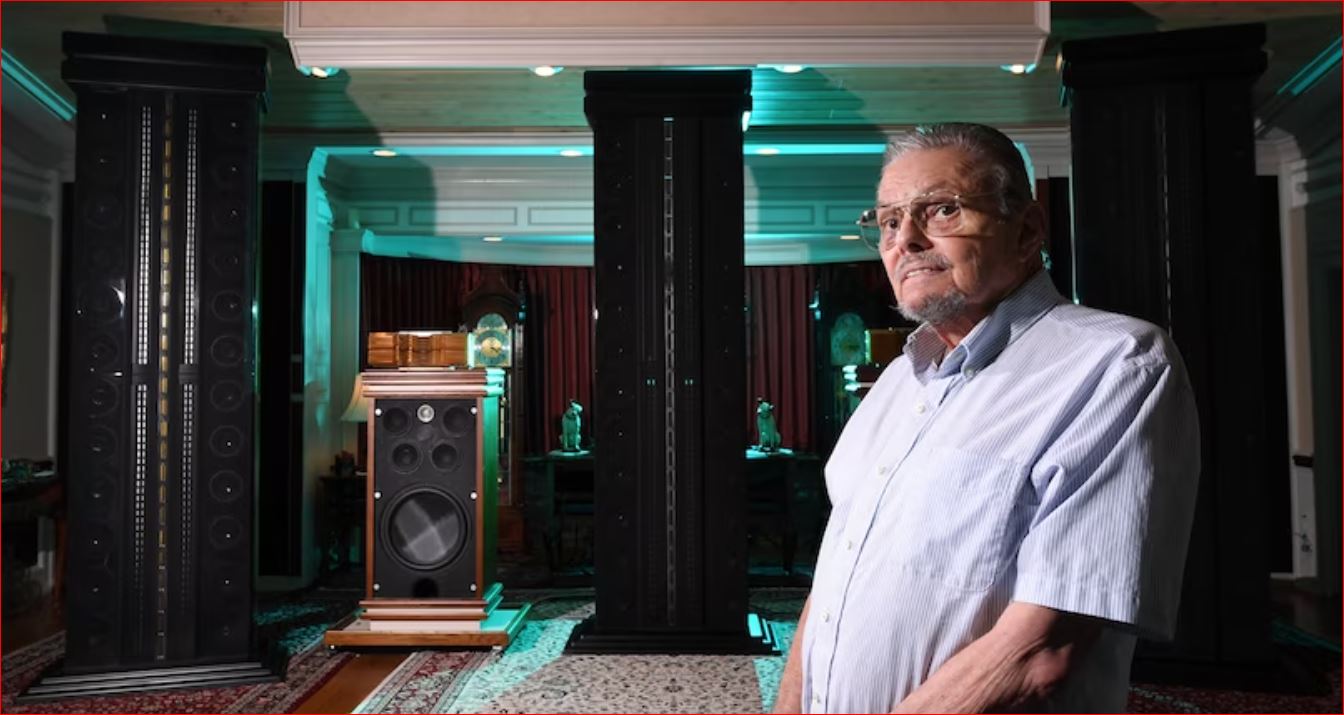
The Million Dollar Stereo (Updated)

Ken Fritz turned his home into an audiophile’s dream — “the world’s greatest hi-fi”.

What would it mean in the end?

Geoff Edgers has written a highly entertaining story about an extremely misguided audiophile who went “searching for perfect sound” in ways that practically guaranteed he would never find it.

There are a number of lessons to be learned from this fellow’s mistakes.

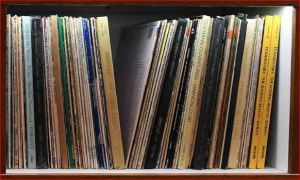
Just to take one obvious example, this picture of some of the records in his collection speaks volumes, at least it does to me.

He built a million dollar stereo to play records like these?
No amount of money spent on equipment can make most of these titles sound good, and failure to appreciate that fact is just one of the many fatal errors the late Mr. Fritz made in his approach to both records and audio.

He mistakenly thought he was at the “I know everything” stage, but that is just the prelude to the stages of knowledge where real understanding and progress begin, not end.

My own stereo history may be of some value in helping to shed light on these issues. Like everyone else, I started at the bottom. Thank god I didn’t have a million dollars to waste back then because I clearly didn’t understand audio any better than the late Mr. Fritz did.

Like him and practically every audiophile I’ve ever come in contact with, I sure thought I did. Having suffered myself from a serious case of pretentious-knowledge syndrome, it’s easy for me to spot the signs in others. (My understanding is that you can’t sign up on the Hoffman Forum without first proving your know-it-all bona fides.)

Why So Uncomfortable?

In a recent letter I received about the Dynavector 17dx cartridge we use, this question was posed:

Why is it that audiophiles are so uncomfortable with the idea that they might be wrong? I mean, you can’t improve if you think you are already right.

I answered as follows:

I was no different back when I started. For about my first ten years in high-end audio, roughly 1975-85, I bought the most expensive equipment that I could afford, as long as it sounded good to me and was well-liked by those whose ears I trusted.

Is the audiophile of today doing anything different?

What would you be doing if you hadn’t stumbled on a guy with some credibility — he sold you some records that sounded amazing, so he must know something — who turned you on to some audio stuff that sounds great and, better yet, didn’t cost that much?

And how did this guy — me — come to find out about all this stuff in the first place? Well, I’ll tell you.

(more…)

1A, or Is 1B Better on Parsley, Sage, Rosemary and Thyme? Your Guess Is As Good As Mine

Hot Stamper Pressings of the Music of Simon and Garfunkel Available Now

UPDATE 2026

Speaking of 1A and 1B, the evidence is in. We have now confirmed that one of these sets of stampers (one for each side) can win shootouts. Which of the two it is we will leave to you to discover, as we make it a point never to give out the shootout winning stampers except under the rarest of circumstances. We give out plenty of stamper information, just not the stampers of the winners.

[Actually, as if 2026, now we do.]


Before we go any further, I have one question:

Why are we guessing?

I received an email recently from a customer who had gone to great pains to do his own shootout for a record; in the end he came up short, with not a lot to show for his time and effort. It had this bit tucked in toward the end:

Some of [Better Records’] Hot Stampers are very dear in price and most often due to the fact that there are so few copies in near mint condition. I hate to think of all the great Hot Stampers that have ended up in piles on the floor night after night with beer, Coke, and seeds being ground into them.

Can you imagine all the 1A 1B or even 2A 2B masters that ended up this way or were just played to death with a stylus that would be better used as a nail than to play a record!

To be clear, it’s extremely unlikely than any Hot Stampers have ever ended up in piles on the floor. Hot Stampers are not just originals or good sounding records.

(more…)

Is It Possible to Find Out Who Mastered the Japanese Thrillers?

Hot Stamper Pressings of the Music of Michael Jackson Available Now

A letter we received not long ago made the point that the Japanese pressing of Thriller the owner had been listening to for years, even decades, fell well short of the mark set by the sound of the White Hot Stamper pressing he now owned.

To think, I spent all those years playing and re-playing a record that was bright and edgy, none the wiser to matrix numbers and pressing variations.

I agreed, saying that I myself learned the hard way, having wasted some of my own money on them. that Japanese pressings were almost always a crock, writing:

Most Japanese pressings cater to what a mid-fi system would need to sound good and a hi-fi system would find ruinous. They are almost always made from dubbed tapes, which are then brightened up in the mastering phase since that is the sound that appeals to the Japanese market for some reason unknown to me. Old school audio equipment — horn speakers and vintage tube electronics — would be my guess.

A fellow who saw an opening to set me straight and take me down a peg, all without having to learn how to use that pesky shift key on his computer, left the following comment in that post:

the japanese pressings were mastered by BG. the only difference being the quality of the material. nice try though, snakeoil salesman.

I immediately went to battle stations. I doubted whether Bernie Grundman has mastered any pressings for the Japanese market, but I couldn’t say for sure. It’s a question that had never come up. We ourselves had discovered a very good sounding pressing of Tusk that was mastered by Ken Perry and pressed in Japan, so I knew it was possible that the original mastering engineer could have sent metalwork to Japan for the Japanese to produce properly-mastered records for their market.

Fortunately, Discogs makes checking such things fairly easy. I went right up to the listing for Thriller and clicked on all the Japanese original pressings to see if there was any evidence to show that he had mastered them.

Bernie Grundman’s name was credited on the back cover as the mastering engineer, but I didn’t put much stock in that. I assumed that he did not master the album for their market, since that is hugely impractical. I surmised that removing his credit would have badly defaced the jacket, something I doubted the Japanese would have found acceptable. They seem to be very particular about these things.

Sure enough, here is what the stampers look like for the typical Japanese pressing that supposedly would have been mastered by BG:

There are about half a dozen original Japanese pressings for the album on Discogs and all the stamper listings look like the one above.

If you know anything about records, you know that these markings could not have been created by Bernie Grundman’s mastering operation here in the states.

(more…)

You Mean to Say You Don’t Have the Nautilus Half-Speed in Your Collection?

Hot Stamper Pressings of the Music of The Cars Available Now
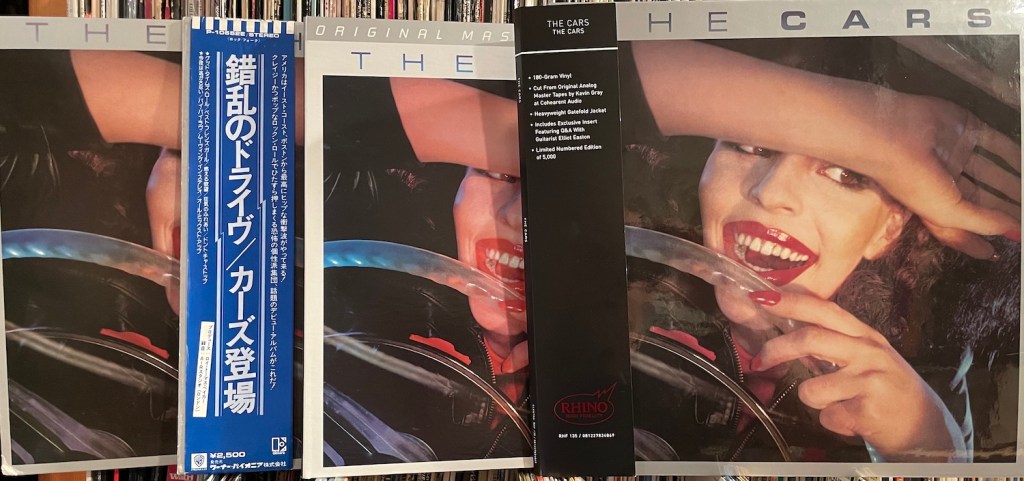
A well-known audiophile reviewer posted pictures of the Cars albums you see below.

As would be expected, it looks like he has rounded up the usual suspects from his collection:

  • A domestic pressing (probably), perhaps even an early one.
  • A Japanese pressing.
  • A Mobile Fidelity pressing (notice how contrasty the jacket photo is), and
  • The Rhino Heavy Vinyl pressing, which we reviewed recently here.

What are the chances that any of these pressings are any good?

Let me guess. One out of four?

(more…)

This Craft Pressing Was Definitely Born Under a Bad Sign

Hot Stamper Pressings of Electric Blues Albums Available Now

About a year ago we played the Craft pressing (CR00513) that had come out in 2023.

We have audition notes for lots of these dreadful Heavy Vinyl pressings sitting around. Sometimes they sit around for years. Obviously we are in no hurry to put them up.

The notes I took for the Craft pressing of Lush Life that Geoff Edgers played me still has not been posted, and he played me that record all the way back in 2022. For those of you who can’t wait for the complete review, I told him it sounded like a CD and proceeded to take it off the turntable.

At the time, I don’t think he understood how that could even be possible. He’d visited Bernie Grundman and read all the rave reviews for his work in the audiophile press. What do you mean his record sounds like a CD? Who the hell do you think you are anyway?

Geoff knows what that means now. I will leave it at that.

We were not surprised to find that the sound of this Craft pressing was terrible. Whoever this Jeff Powell is, I admit I’ve never heard of him, if you see his name on a remastered record, you might want to consider that if he can make a record that sounds this bad, he may not know what he is doing.

This strikes us as a safe bet.

Our notes for the album comprise all of five words. They read:

  • Not good
  • Blurry and congested

As you can see, we didn’t feel the need to spend too much time with it. When a record shows you right off the bat how badly mastered it is, we move on pretty quickly.

(more…)

Can Every Audiophile System Do Its Job Well?

More on the Subject of Speaker Advice

That depends on exactly what job you think you’re giving it to do.

If its job is to allow you to enjoy music in the comfort of your home, then the little box speakers you see pictured to the left can do that job just fine, with the caveat that you must be able to enjoy the kind of sound that comes out of little boxes.

If the job you give your stereo to do is to reproduce the full range of music with high fidelity, then the little boxes you see pictured are going to fail miserably. Until the laws of physics are repealed, however that might happen, they will never be able to reproduce music in a lifelike way.

I like big dynamic speakers because they do a better job of reproducing music in a lifelike way compared to every other speaker I have ever heard, horns included, which can be very lifelike indeed, but have other shortcomings that I cannot abide.

This is not just another post bashing small speakers. I say these things to introduce the comment sent to me that you see below.

I received this anonymous letter recently in reply to a commentary I had written entitled Tone Poets and one-legged Tarzans.

Another poster defended rl1856’s claims for the abilities of his system to judge different pressings, noting that his criticisms of these remastered records — both on Tone Poets and Classic Records — generally align with mine.

I find this ending hilarious: “Never Played One – To be clear, we have never played a Tone Poets record. We’ve played many titles mastered by Kevin Gray, and we know that he is credited with mastering some records for the label. Without exception we find that his remastered records leave a lot to be desired. You can find many of them in our Hall of Shame. Anyone defending his work to me has some heavy lifting to do.”

You condemn rl1856 for expressing an opinion regarding something YOU ADMIT YOU NEVER HEARD because you believe his equipment is not resolving enough ? The irony is that his opinion largely mirrors yours regarding the sonic virtues of original RVG recordings ! How is it that he, listening through his “inferior” system can hear the virtues you ascribe to RVG pressings, and also hear when those virtues are not present?

My reply, after a week of thinking about the points this gentleman makes, can be found below.

Hi,
Thanks for writing.

Little box speakers do produce sound of some quality. It would be foolish for me to say that one can’t actually hear something through them. The question is how much?

(more…)

Michael Fremer Says You Should Own the Classic 45 of Time Out

Hot Stamper Pressings of the Music of Dave Brubeck Available Now

Michael Fremer spends two hours and ten minutes on his site going through a list of 100 All Analog In Print Reissued Records You Should Own.

On this list is the 45 RPM Bernie Grundman cutting of Time Out. Fremer apparently liked it a whole lot more than we did. We think it is just plain awful.

The MoFi Kind of Blue is on this same list, another pressing that is astonishingly bad, or, at the very least, really, really wrong.

If you’re the kind of person who might want to give Michael Fremer the benefit of the doubt when it comes to All Analog records he thinks sound good, ones he thinks you should own, try either one of them. If you think they sound just fine, you sure don’t need me to tell you that they’re completely and utterly awful.

There might be some decent records on the list, but if it has two massive failures that I just happened to come across in the five minutes I spent watching the video — I have very little tolerance for the sort of amateurishness he displays — I would suspect the winners are few and the losers many.

As a practical rule, if you want good sounding vinyl, you should avoid anything on his list.

And if you do try some and do like them, let me know which ones you think sound good and I will try to get hold of some copies and listen to them for myself.

Here is what we had to say about the Brubeck that Mikey recommends. We called it:

An audiophile hall of shame pressing and another Classic Records jazz LP poorly mastered for the benefit of audiophiles looking for easy answers and quick fixes.

(more…)