Country Advice

Which country produced the best sounding pressings for the albums linked below? Click on the listing to find out.

Unlike the First Three Albums, on Security You Can Forget the Brits

Hot Stamper Pressings of the Music of Peter Gabriel Available Now

The basics notes here were written in 2009, about the time we finished our album by album auditions of his early catalog.

On this title, forget the Brits. Every British pressing we played was badly smeared and veiled.

This took us somewhat by surprise because we happen to like the British PG pressings, but remember, So on British vinyl is awful too, so it’s clear (to us anyway) that the later PG records are bad on British vinyl and the early ones are better.

We are limiting our comments here to albums up through So. Anything after that is more or less terra incognita for us simply because we don’t care for the music he was making after 1986.

Plays Live, from 1983, takes the dark, overly-rich, overly-thick and way-too-smooth sonics of Security and lathers it over the material he had previouly recorded up through then. Some of it works well enough I suppose, but in my experience it usually isn’t long before the monotony of this approach grows tiresome.

What We Listened For

The best copies have sonic qualities that are not the least bit difficult to recognize:

  • Presence, putting PG front and center;
  • Dynamics, both micro and macro;
  • Energy, allowing the rhythmic elements to bring out the life in the music;
  • Transparency, so that we hear all the way to the back of the studio (where some of the many musicians that play in the densest parts no doubt had to stand); and
  • Ambience, the air that surrounds all the players and what instruments they played.

And of course we played the album VERY LOUD, as loud as we could. It’s the only way to get the massive druming to sound right.

The Music

This is one of the most important records in the Peter Gabriel canon, groundbreaking and influential on so many levels. The entire album is a wonderful journey; anyone with a pop-prog bend will enjoy the ride. Just turn the volume up good and loud, turn off your mind, relax and float along with PG and the band. You’re in good hands.

I’ve listened to this one more than other PG albums with the only exception being his second release, the one produced by Robert Fripp. That one is still clearly my favorite of the lot. I play it to this day and have never tired of it since I bought it way back in 1978.

Naturally, I would have originally picked up the domestic pressing, which is clearly made from a dub tape, but in 1978 what did I know about master tapes and imported pressings?

I was still a big Mobile Fidelity fan at that time, which is a simple way of saying that it’s clear that I had a very long way to go in this hobby and a great deal left to learn!

Nothing Peter Gabriel released after So did much for me so I resigned myself to the first five albums. Five excellent albums from one artist is plenty in my book.

If you like the albums after So, to each his own and more power to you. It’s my opinion that their appeal is limited, such that doing a shootout for them is not likely to be in the cards.

(more…)

Waiting For Columbus – We Broke Through in 2017

Hot Stamper Pressings of the Music of Little Feat Available Now

Way back in 2009 we had this to say about a Hot Stamper pressing we listed:

This German import pressing of Waiting for Columbus is much better sounding than the typical Mastering Lab-mastered copy.

This German pressing is similar to one that came from my own personal collection, accidentally discovered way back in the early ’80s as I recall. It KILLED my domestic original, and got some things right that even my treasured Mobile Fidelity pressing couldn’t. We have been meaning to do a shootout for this album for at least the last five years, but kept running into the fact that in a head to head shootout the right MoFi pressing — sloppy bass and all — was hard to beat.

This is no longer the case, courtesy of that same old laundry list you have no doubt seen on the site countless times: better equipment, tweaks, record cleaning, room treatments, et cetera, et cetera. Now the shortcomings of the MoFi are clear for all to see, and the strengths of the best non-Half-Speed mastered pressings are too, which simply means that playing the MoFi now is an excruciating experience.

All I can hear is what it does wrong.

I was so much happier with it when I didn’t know better.

That same laundry list of improvements continued to pay big dividends, and right around 2017 or so the best original domestic Mastering Lab copies started to sound much more right to us than the German ones. 

The German pressings can be good, but the TML pressings are the only ones we would expect to win shootouts from now on.

But who knows? We might find something even better down the road. That’s what shootouts are for. (more…)

Letter of the Week – “I have been listening to a first pressing Decca, but your copy made it sound egregiously insipid.”

Hot Stamper Pressing of the Music of The Rolling Stones Available Now

One of our good customers had this to say about some Hot Stampers he purchased recently:

Hey Tom, 

This LET IT BLEED is a gorgeous monster. Everything just jumps off the page, so to speak. I have been listening to a first pressing Decca, which I have owned for years, but your copy made it sound egregiously insipid. As I kept turning up the volume, the room seemed to be nodding its head and egging me on to keep increasing it. I never reached the point where too much was too much. Great copy.

The Mahavishnu EMERALD was brilliant. It brought out all the exciting dimensions of my system. The exquisite strings floated above the musical melee which tattooed its obligato deliriously across its raucous underbelly. The sound reached out like tongues of flame making the speakers completely disappear in their rocking wake.

This is an amazing record that projects and dances the music in every direction and then some. Everything is alive. So completely alive. A real treat. A great recording that tells me my system is completely responsive.

Phil

Phil,

We’ve known for a very long time — since roughly 2005 — what an awful pressing the original mono Decca is of the album.

When we last heard one, it did not evn pass the laugh test, and we never bought another.

Even the original Decca stereo pressings of the album are not that good, and at the prices being charged these days, a very poor choice if you want the best sound.

(more…)

Casino Royale from Canada – Not Fit for Us Audiophiles

Hot Stamper Pressings of the Music of Burt Bacharach Available Now

I can honestly say that until we discovered the Hot Stampers for this album, I never thought this record deserved the praise The Absolute Sound’s Harry Pearson heaped upon it.

One of only thirteen entries in the Best of the Bunch: Popular section?

Not that hard to believe if, like me, you think a number of the titles there don’t really deserve to be called Super Discs in the first place. (See here and here and plenty more where those two came from.)

In case you are tempted to pick up a Canadian pressing of the album, don’t. Judging by the one we had, they are godawful.

(more…)

How Good Are the Domestic Originals of City to City Cut by Artisan?

Hot Stamper Pressings of the Music of Gerry Rafferty Available Now

The original domestic pressings may be cut by Artisan, but they are brighter and dramatically more congested and distorted than the better UK imports, and should be avoided at any price.

They are clearly made from dubbed tapes, and there is no getting around what that does to the sound.

However, as good a cutting house as Artisan may be, it’s shocking how bad the sound is on most of the domestic copies of the album they mastered.

Atrocious, to be honest.

When it comes to stampers, labels, mastering credits, country of origin and the like, we make a point of rarely revealing any of this information on the site, for a number of good reasons we discuss in some depth here.

We will happily make an exception in this case. Stick with UK imports. Or buy a Hot Stamper pressing from us.

If you’re a Gerry Rafferty fan, or perhaps a fan of mid-70s British folk pop, this title, a personal favorite of mine since 1978, is surely a Must Own.

In our opinion, City to City is the man’s best sounding album, and probably the only Gerry Rafferty record you’ll ever need. Click on this link to see more titles we like to call one and done.

The sound, at least on some tracks, Baker Street amoung them, may be too heavily processed for some, making the album fairly difficult to reproduce, but the best sounding pressings — played at good, loud levels on big dynamic speakers in a large, heavily-treated room, as god intended — are a truly powerful listening experience.

1978 was a good year for music on vinyl — we have some excellent pressings of well-recorded albums available now for those who want the best and are willing to pay a premium price to get it.

(more…)

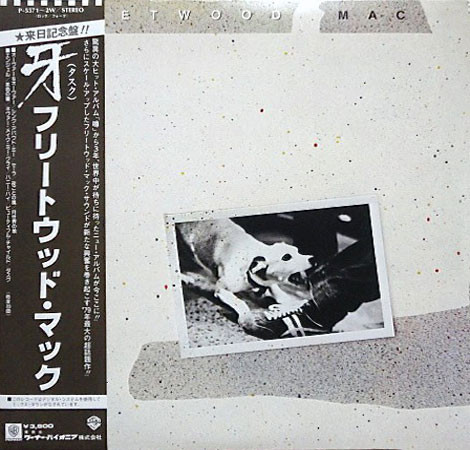
Tusk on Japanese Vinyl Without the Sub-Generation Japanese Mastering

Hot Stamper Pressings of the Music of Fleetwood Mac Available Now

This Capitol-mastered, Japanese-pressed LP has excellent sound on the first two sides and SUPERB sound on sides three and four. I doubt you’ve ever heard the title track rock like this.

We dug up a few Japanese copies of Tusk that were mastered at Capitol by Ken Perry. Because they were made from the real tapes, these don’t have the typical smeary, sub-generation sound associated with Japanese pressings. We found that the best Japanese copies could hold their own with the best domestics on sides one and two, and could win outright on sides three and four.

We almost never like records that, although pressed in Japan, were not recorded in Japan. This is one of the exceptions because the mastering was done by the real mastering engineer, Ken Perry, using the real tape, here in America.

There are also some excellent direct to disc albums that were recorded here in the states and subsequently pressed in Japan.

(more…)

Brain Salad Surgery on Shout Heavy Vinyl

Hot Stamper Pressings of the Music of Emerson, Lake and Palmer Available Now

If you’re a fan of Emerson, Lake and Palmer’s fifth album, and you know, or at least suspect, that the British original pressings are more than likely to be better sounding than most, you might find yourself in a bit of a quandary, pocketbook-wise.

Early British pressings in audiophile playing condition aren’t easy to find, and they don’t tend to be cheap when you do find them.

Ah, but there is a fairly cheap and exceptionally easy solution: just buy the Shout Heavy Vinyl reissue from 2008.

It says it’s made from the master tape, it has a replica of the original packaging, and even comes with a poster.

What could go wrong?

The sound could be shit — NFG in our shorthand — that’s what could go wrong.

  • The top end could be overly-textured, tizzy and hot, the kind that constantly calls attention to itself.
  • The bass could be smeary and thick.
  • And the overall presentation of the music could be veiled and recessed.

Alas, the money you thought you were saving buying this potentially wonderful flat, quiet pressing made from the master tapes ends up flushed down the tubes. Now what?

Now you have to do what you should have done to begin with: find yourself a real British pressing.

(more…)

On Tons Of Sobs, the Domestic Pressings Just Don’t Make the Cut These Days

Hot Stamper Pressings of British Blues Rock Albums Available Now

Years ago — in 2011 to be exact — we wrote the following in a listing for a very good sounding domestic pressing:

Solid bass, present vocals, plenty of energy — the only thing missing here is the Tubey Magical richness and sweetness that only the British originals (in our experience) have, and in spades by the way.

But try to find one. Over the last two or three years I think we’ve managed to get hold of exactly one clean copy.

Fast forward a number of years and we’ve only had a few since then. I have seen the original Pink Label British pressing of this album sell on the web for more than 1000 dollars, which might explain why we rarely have them.

But if you want to hear this record in all of its glory, the UK Island pressings are the only game in town.

Both Pink and Sunray labels sound good, just make sure they are from the UK.

And don’t buy any later label pressing from any country if you want the best sound.

(more…)

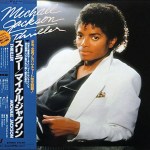
Is It Possible to Find Out Who Mastered the Japanese Thrillers?

Hot Stamper Pressings of the Music of Michael Jackson Available Now

A letter we received not long ago made the point that the Japanese pressing of Thriller the owner had been listening to for years, even decades, fell well short of the mark set by the sound of the White Hot Stamper pressing he now owned.

To think, I spent all those years playing and re-playing a record that was bright and edgy, none the wiser to matrix numbers and pressing variations.

I agreed, saying that I myself learned the hard way, having wasted some of my own money on them. that Japanese pressings were almost always a crock, writing:

Most Japanese pressings cater to what a mid-fi system would need to sound good and a hi-fi system would find ruinous. They are almost always made from dubbed tapes, which are then brightened up in the mastering phase since that is the sound that appeals to the Japanese market for some reason unknown to me. Old school audio equipment — horn speakers and vintage tube electronics — would be my guess.

A fellow who saw an opening to set me straight and take me down a peg, all without having to learn how to use that pesky shift key on his computer, left the following comment in that post:

the japanese pressings were mastered by BG. the only difference being the quality of the material. nice try though, snakeoil salesman.

I immediately went to battle stations. I doubted whether Bernie Grundman has mastered any pressings for the Japanese market, but I couldn’t say for sure. It’s a question that had never come up. We ourselves had discovered a very good sounding pressing of Tusk that was mastered by Ken Perry and pressed in Japan, so I knew it was possible that the original mastering engineer could have sent metalwork to Japan for the Japanese to produce properly-mastered records for their market.

Fortunately, Discogs makes checking such things fairly easy. I went right up to the listing for Thriller and clicked on all the Japanese original pressings to see if there was any evidence to show that he had mastered them.

Bernie Grundman’s name was credited on the back cover as the mastering engineer, but I didn’t put much stock in that. I assumed that he did not master the album for their market, since that is hugely impractical. I surmised that removing his credit would have badly defaced the jacket, something I doubted the Japanese would have found acceptable. They seem to be very particular about these things.

Sure enough, here is what the stampers look like for the typical Japanese pressing that supposedly would have been mastered by BG:

There are about half a dozen original Japanese pressings for the album on Discogs and all the stamper listings look like the one above.

If you know anything about records, you know that these markings could not have been created by Bernie Grundman’s mastering operation here in the states.

(more…)

Yes, We’re Getting Awfully Close To The Edge…

Hot Stamper Pressings of the Music of Yes Available Now

On the difficulty of reproduction scale, this record ranks well above most of the albums we play, in the top few percent without a doubt.

You need lots of Tubey Magic and freedom from distortion, the kind of distortion-free sound I rarely hear on any but the most heavily tweaked systems — the kind of systems that guys like me have been slaving over for more than forty years.

If you’re a weekend warrior when it comes to working on your stereo, this is not the record for you.

It took a long time to get to the point where we could clean the record properly, twenty years or so, and about the same amount of time to get the stereo to the level it needed to be, involving, you guessed it, many of the revolutionary changes in audio we tout so obsessively.

It’s also not easy to find a pressing with the low end whomp factor, midrange energy and overall dynamic power that this music needs, and it takes one helluva stereo to play one too.

If you have the kind of big system that a record like this demands, when you drop the needle on the best of our Hot Stamper pressings, you are going to hear some astonishingly good sound.

Unless your system is firing on all cylinders, even our Hottest Stamper copies can be difficult. Your electricity has got to be cooking, you’ve got to be using the right room treatments, and ideally you should be using a demagnetizer such as the Talisman on the record itself, your cables (power, interconnect and speaker) as well as the individual drivers of your speakers.

This is a record that’s going to demand a lot from the listener, and we want to make sure that you’re up to the challenge. If you don’t mind putting in the hard work, here’s a record that will reward you many times over, and probably teach you a thing or two about tweaking your gear in the process.

We’d started and abandoned this shootout multiple times before breaking through in 2008. The typical copy was just too painful to listen to, and the better pressings weren’t sounding the way we’d hoped they would.

Where was the Tubey Magical analog sound with the HUGE whomp factor that we’d been hearing on the best copies of Fragile and The Yes Album?

We just could not find that sound on Close to the Edge.

As futile as our previous attempts were, we decided in 2008 that we would take another stab at it. After all, there had been quite a few changes around here that had the stereo working really well —  the addition of the Odyssey Record Cleaning Machine and Prelude Record Cleaning System to our cleaning process, the Talisman Magnetic Optimizer, the third pair of Hallographs we added years back, tons of smaller tweaks, and a few other tricks that we’re going to leave hidden up our sleeves for now.

The Planets Align

Think about it: This is a highly COMPLEX recording, with HUGE organs, light-speed changes, lots of multi-tracking, and what amounts to an OVERLOAD of musical information. Can you imagine how irritating that would sound on a third-rate copy? We didn’t have to imagine it — we lived through it!

But that’s exactly what made the shootout so rewarding. We had finally gotten the sound we were searching for from Close To The Edge, although it was anything but easy. The toughest peaks to climb are the ones you feel the best standing at the top of, and I have no doubt that many of you will be able to get there, just as we did, as long as you’re willing to work for it. (We humbly suggest you follow our lead.)

We put a lot of time and energy into getting everything just right for our shootouts, and to hear the album sound amazing you’re going to have to do the same. If it doesn’t all come together and our Hot Stamper Close to the Edge leaves you cold, feel free to send it back for a full refund. That’s always our policy, but we wanted to stress it in regards to this album, because it is VERY difficult to reproduce. (Big speakers are pretty much a must on this one as well.)

And it should be noted that there is distortion on the tape. It’s on every LP copy and it’s on the CD too. There are cacophonous passages that have what sounds like board overload, mic preamp overload, tape saturation or some combination of all three.

(more…)