Pre-Shootout Reviews

Reviews from our (mostly) pre-shootout days.

Beethoven’s ‘Appassionata’ – A Superb Direct to Disc Recording

More of the music of Ludwig van Beethoven (1770-1827)

More Direct-to-Disc Recordings

A famous resident of the TAS list, this album offers excellent music, performed with feeling, and recorded properly, the best of all possible worlds for us audiophiles.

A friend of mine tells me that Kamiya plays this piece exactly the way Horowitz did, and that’s probably a good thing. Good luck finding a Horowitz recording that sounds like this. Or plays this quietly.

You will have a hard time finding a better recording of the piano than this. It’s one of the all time great Direct-to-Discs.


Further Reading

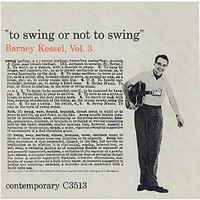
To Swing Or Not To Swing in 1955 with Barney Kessel

xxxMore Jazz Recordings Featuring the Guitar

If you’re a fan of Jazz Guitar, this 5 Star All Tube MONO Recording from 1955 belongs in your collection.

Definitely one of the best early Contemporary LPs we’ve ever played – this is why audiophiles love mono.

Man, this music is a blast when it sounds this good. I don’t think there’s a whole lot you could do to make this music sound any better. It’s one of the best early mono Contemporary LPs I’ve ever played. It’s so Tubey Magical. Kessel’s guitar sound is out of this world.

The music here matches the sound for excellence. The whole band just swings. There’s a real old rag-timey feel to the songs.

Look at this list of all-star players: Harry Edison, Jimmy Rowles, Red Mitchell and Shelly Manne — this is some serious jazz talent.

(more…)

Beethoven / Symphony No. 6 – Reviewed in 2005

More of the music of Ludwig van Beethoven (1770-1827)

Living Stereo Titles Available Now

Reviews and Commentaries for the Music of Beethoven

This is a lovely sounding RCA Shaded Dog.record, with a smooth, natural top end, the opposite of a hi-fi spectacular. Some may find it dull, but it’s actually correct.

Monteux has a wonderful feel for this symphony. His Beethoven in general is actually quite good. This music belongs in any serious collection. String tone is everything in the Pastoral, and Living Stereo gives you the string tone rarely found elsewhere.

Our favorite Beethoven 6th is of course the Ansermet from 1960. Decca does a pretty good job recording strings too in our opinion.


This is an older classical/orchestral review

Most of the older reviews you see are for records that did not go through the shootout process, the revolutionary approach to finding better sounding pressings we started developing in the early 2000s and have since turned into a veritable science.

We found the records you see in these older listings by cleaning and playing a pressing or two of the album, which we then described and priced based on how good the sound and surfaces were. (For out Hot Stamper listings, the sonic grades and vinyl playgrades are listed separately.)

(more…)

Benny Carter / Meets Oscar Peterson – A Pablo We Liked Back in the Day

We used to like this record back in the day. Have not played it in 15 years so it’s hard to say what we would think of it now. Probably still pretty good, somewhere in the B range.

“Benny Carter had recorded with pianist Oscar Peterson back in the early ’50s for Norman Granz’s Verve label. More than 30 years, later he teamed up with Peterson again, this time for Granz’s Pablo company. There was no sign of decline or disillusionment in either of the co-leaders’ playing; in fact, if anything, they had improved with age. Joined by guitarist Joe Pass, bassist Dave Young and drummer Martin Drew, Carter and Peterson are both in a joyous mood and in typically swinging form on six standards and a blues.” — AMG


This is an Older Jazz Review.

Most of the older reviews you see are for records that did not go through the shootout process, the revolutionary approach to finding better sounding pressings we developed in the early 2000s and have since turned into a fine art.

We found the records you see in these older listings by cleaning and playing a pressing or two of the album, which we then described and priced based on how good the sound and surfaces were. (For out Hot Stamper listings, the Sonic Grades and Vinyl Playgrades are listed separately.)

We were often wrong back in those days, something we have no reason to hide. Audio equipment and record cleaning technologies have come a long way since those darker days, a subject we discuss here.

(more…)

For Misty, Stick with the Real Japanese Pressings

More Audiophile Recordings with Audiophile Quality Sound

Hot Stamper Pressings of Jazz Recordings Featuring the Piano Available Now

This is a highly recommended Three Blind Mice LP. We don’t like most Three Blind Mice albums, or jazz played by practically anyone who is not American. (Ever played Jazz at the Pawnshop? If so, did you enjoy your nap?)

But we like the music of Yamamoto well enough to recommend some of it. Midnight Sugar might actually be his most enjoyable album of them all.

The Heavy Vinyl versions are not as good, although the 45 RPM pressing probably comes the closest to the real Japanese pressing we review here.

Anything pressed at RTI is rarely better than second rate and should be avoided if at all possible.

We almost never like records Made In Japan that were not recorded in Japan. There are of course a few exceptions.

My First Time

This was the first Three Blind Mice recording I ever heard, over 20 [now close to 40] years ago. A fellow audiophile who went on to become a true audio guru for me (George Louis) played me this recording to demonstrate his stereo.

It had to be the most dynamic piano recording I had ever heard in my life. 

Yamamoto likes to tinkle the keys very softly, and then really pound them. And the Three Blind Mice engineers were able to capture both the quiet tinkling because of the Japanese vinyl, and the full-on pounding because of the audiophile recording equipment they used. It was an ear-opening experience.

Over the course of the next year or two, I sold off my Fulton Premiers and my Audio Research Electronics, because no matter how hard I tried, I couldn’t get Misty to sound like it did at George’s house.

I realized that it takes better equipment than those companies were making back then to get the sound of that record right, and that put me on, to quote Cat Stevens, ”the road to find out.”

And it wasn’t just the equipment that had to get better, a subject we address in our commentary Revolutionary Changes in Audio. An excerpt:

When I got started in audio in the early- to mid-70s, the following important elements of the modern stereo system did not exist:

  • Stand-alone phono stages.
  • Modern cabling and power cords.
  • Vibration controlling platforms for turntables and equipment.
  • Synchronous Drive Systems for turntable motors.
  • Carbon fiber mats for massive turntable platters.
  • Highly adjustable tonearms (for VTA, etc.) with extremely delicate adjustments and precision bearings.
  • Modern record cleaning machines and fluids.
  • And there wasn’t much in the way of innovative room treatments like the Hallographs we use.

A lot of things had to change in order for us to reproduce records at the level required to do our record shootouts and be confident about our findings, and we pursued every one of them about as far as time and money allowed.

For a further discussion of these issues, please click here.

(more…)

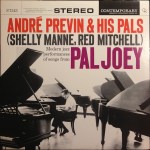
Andre Previn, Roy DuNann and Howard Holzer Were Hard to Beat in 1957

Hot Stamper Pressings of Contemporary Jazz Albums Available Now

The piano sounds uncannily lifelike right from the start, a beautiful instrument in a natural space, tonally correct from top to bottom.

I can’t think of many records off the top of my head that get a better piano sound than this one.

Both sides are rich and Tubey Magical in the right way, because they’re still clear and reproduce the space of the room.

Warmth turned out to be key to the sound of the best copies.

When the piano sounds warm and smooth everything else in the recording seems to fall into place.

With tight, deep bass and an extended top, both sides of this vintage pressings are analog at its best.

Like we said, ROY DUNANN and HOWARD HOLZER in 1957 are hard to beat.

This is an Older Jazz Review.

(more…)

An Import in 2004 Killed the Speakers Corner Reissue of Ella and Basie

More of the Music of Count Basie

More of the Music of Ella Fitzgerald

And back in 2004 that actually surprised us!

This review was written in 2004. We had never heard a clean, domestic original copy up to that time, mostly because they were always in such poor condition. Eventually we did, figured out how to clean it, and never looked back.

You might consider this a Wake Up Call. By 2007 we were awake enough to stop buying Heavy Vinyl to sell. The better our system became, the less competitive those modern remasters sounded. It was yet another Milestone Event in the history of Better Records. Please to enjoy our commentary.


This early British import (similar to the one you see above) KILLS the Speakers Corner 180 gram reissue.

I still like their version, but this is what it should have sounded like: tonally much fuller and richer.

The 180 gram copy suffers from the standard reissue MO — brighter is not necessarily better, and definitely not when you have a big band and a vocalist, as is the case here.

I’ve never heard this album sound better and I doubt that it really can sound much better than this. This copy makes me want to turn it up as loud as the stereo will go and let those wonderful Quincy Jones arrangements come to life.


UPDATE 2025

To doubt that the record can sound much better than the import we played? That was a silly thing to say. Of course it can. That’s what shootouts are for. Here is what we had to say about our last White Hot Stamper pressing of the album.


(more…)

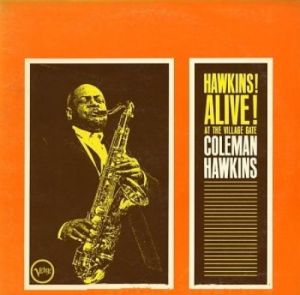
Coleman Hawkins – Hawkins! Alive! (Reviewed in 2005)

More Coleman Hawkins

More Reviews and Commentaries for Live Jazz Club Recordings

This review was written in 2005. We are not big fans of mono, but we know a good sounding record when we play one.

This Verve T Label Mono pressing DESTROYS the Classic Records reissue. It’s no contest.

Side one is lively, present, and dynamic, but a bit aggressive — the horn can really bite when Hawk pushes it. Side two, however, sounds LOVELY. It’s much smoother and very natural.

This isn’t an easy album to find in such gorgeous condition, and I bet you’d have a really tough time finding one that sounds as good as this one does on side two.


This is an Older Jazz Review.

Most of the older reviews you see are for records that did not go through the shootout process, the revolutionary approach to finding better sounding pressings we developed in the early 2000s and have since turned into a fine art.

We found the records you see in these older listings by cleaning and playing a pressing or two of the album, which we then described and priced based on how good the sound and surfaces were. (For out Hot Stamper listings, the Sonic Grades and Vinyl Playgrades are listed separately.)

We were often wrong back in those days, something we have no reason to hide. Audio equipment and record cleaning technologies have come a long way since those darker days, a subject we discuss here.

(more…)

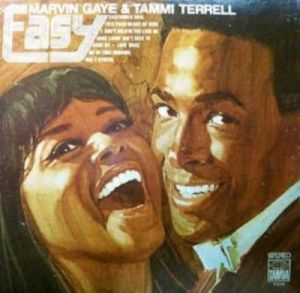
Marvin Gaye & Tammi Terrell / Easy – Reviewed in 2009

More Marvin Gaye

This Minty looking Tamla LP has AMAZING SOUND on both sides. Some songs sound better than others here but the ones that do sound good, WOW, they are out of this world!

Drop the needle on California Soul on side one to hear some tubey magical and sweet sound.

The best sounding track on side two is How You Gonna Keep It.

Some of the tracks have that slightly pinched Motown vocal EQ but that’s a small price to pay for this kind of sound.

We rate both sides A++ (on the best sounding songs). 

AMG Review

Along with the hit, the best songs here are “This Poor Heart of Mine,” an uptempo number and good workout for the duo, and “Love Woke Me Up This Morning,” an endearing exercise in romanticism.

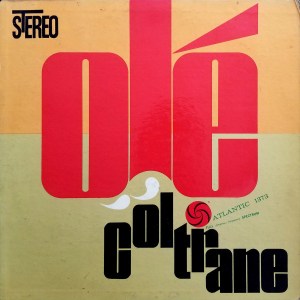
John Coltrane / Ole Coltrane

More John Coltrane

Olé! Here’s a great copy of a wonderful Coltrane album that we seriously enjoy but just don’t see enough to keep in our regular rotation. And that’s a shame, because these Top Copies are a THRILL to hear. Both sides give you an exceptionally strong bottom end, and with two bass players contributing on much of the album, that is essential for this music. The overall sound is lively, dynamic, and very transparent.

The music is wonderful, with Coltrane in fine form backed by a stellar lineup that includes Freddie Hubbard, McCoy Tyner, Elvin Jones, an uncredited Eric Dolphy and more. Two of the three extended tracks feature two bass players, and a transparent copy like this one allows you to separate out the players and follow their contributions over the course of the songs. (more…)