*Pressing Advice, by Title

Armed Forces Deserves to Be More Popular

Hot Stamper Pressings of Elvis’s Albums Available Now

Armed Forces is one of the best sounding rock records ever made.

I would put it in the first percentile of all the rock recordings I’ve ever played, ahead of 99% of the pack — but only if you have the right Brit pressing, with the kind of sound we describe at length in our reviews for the top copies.

Armed Forces sets a standard few records can meet. It will make every audiophile Half-Speed and Heavy Vinyl pressing you own sound positively sick by comparison.

The real thing just can’t be beat, and Armed Forces is as real as it gets, baby!  A true Demo Disc on big speakers at loud levels.

The hottest copies have unbelievably punchy, rock-solid bass and drums. I would say the sound of the rhythm section of this album ranks up there with the very best ever recorded. Beyond that, the musical chops of this band at this time rank with the very best in the history of rock. Steve, Bruce and Pete rarely get the credit they deserve for being one of the tightest, liveliest backing bands ever to walk into a studio or onto a stage.

There are about 100 records we think deserve to be more popular with audiophiles, and Armed Forces is one of them.

(more…)

Some Speakers Don’t Let Frampton Come Alive

Hot Stamper Pressings of the Music of Peter Frampton Available Now

When I was first getting serious about audio in the mid-70s, electrostatic and screen-type speakers were quite common in audio showrooms. Classical music aficionados in particular seemed to prefer them to other designs. They were more often than not big, open and clear, and never boxy or sour.

Another quality they had going for them was that they were exceptionally transparent.

Alas, they were inadequate or wrong in almost every way a speaker can be, but transparency was their strong suit and everybody could hear it. All of the qualities noted above — big, open, clear — worked together to fool a great many audiophiles into thinking that theirs was the right approach to reproducing music.

(Circa the Pretzel Logic era, Becker and Fagen of Steely Dan fame were apparently big fans of Magnepan speakers, to the consternation of everyone else in the band — especially the engineers, one imagines — who thought they were overly-smooth, incapable of reproducing the frequency extremes high and low, soft, and lacking in their ability to reproduce many of the most important aspects of music, energy especially. Count me among their harshest critics.)

It was my good fortune at the time that I liked to play my rock music good and loud, so screens, panels and full-range electrostats were never going to cut it for me.

I once heard the giant Magnaplanar 1D system — a series of ten panels that stretched all the way across the long wall of the audio showroom I frequented at the time, standing about 7 feet tall to boot — try to reproduce a favorite Peter Frampton record of mine. (It was Wind of Change, a Desert Island Disc I still play regularly to this day.)

(more…)

An Open Soundstage Is Key on Get Close

Hot Stamper Pressings of the Music of The Pretenders Available Now

Take it from us, it is the rare pressing that manages to get rid of the harshness and congestion that plague so many copies.

Look for a copy that opens up the soundstage — the wider, deeper and taller the presentation, the better the sound, as long as the tonal balance stays right.

When you hear a copy sound relatively rich and sweet, the minor shortcomings of the recording no longer seem to interfere with your enjoyment of the music. Like a properly-tweaked stereo, a good record lets you forget all that audio stuff and just listen to the music as music. Here at Better Records, we — like our customers — think that’s what it’s all about.

And we know that only the top copies will let you do that, something that not everyone in the audiophile community fully appreciates these days, what with one Heavy Vinyl record sounding worse than the next.

We’re doing what we can to change that way of approaching the pursuit of high quality audio playback in the home, but progress has always been, as you can imagine, slow.

This is no Demo Disc by any means — we grade on a curve, and considering the limitations of a heavily-processed pop record designed to be heard over the radio, the best copies are very good sounding for what they are.

(more…)

Punch The Clock – A Forgotten Classic

Hot Stamper Pressings of Elvis Costello’s Albums Available Now

UPDATE 2026

In 2008 we did our first shootout for Punch the Clock. This is what we had to say at the time about the album and the pressings that won our shootout.

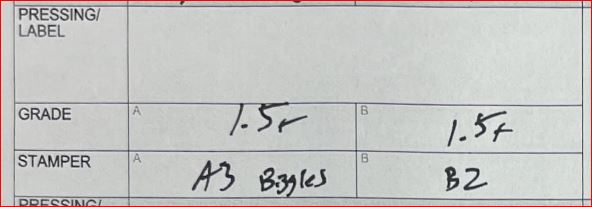
Note that we used to like the German pressings better than the Brits back then but no longer do. The best German pressings in our last shootout earned grades of 1.5+ to 2+, even though they were mastered by the same engineer. All the British copies we played had better sound.


This is one of my favorite Elvis Costello albums. I remember loving the sound of my old import copy from twenty years back. Now I know better: that most of them leave something to be desired. Did I have good one? Who can say? Everything is different, and revisiting old sonic favorites can sometimes be a bit of a shock. (Of course this is especially true for all the old MOFIs I used to like. Now most of them make me gag.)

Elvis: Still The King

By the way, we played a domestic copy of this album, just for fun you might say, and sure enough it was a real mess. Boosted highs, poor bass definition and copious amounts of grit and grain — 70s Columbia at their best, what else is new? The first album and Spike are the only Elvis records I know of that sound good on domestic vinyl. Forget the rest.

[Spike not so much anymore.]

(more…)

An Overview of Beatles Oldies But Goldies

Hot Stamper Pressings of the Music of The Beatles Available Now

This is a Beatles album we think we know well.

We’ve done a number of shootouts for A Collection of Beatles Oldies over the last ten years or so, and our experimental approach using many dozens of copies provides us with strong evidence to support the following conclusions regarding the sound of the originals vis-a-vis the reissues:

  1. The best of the early pressings always win our shootouts. No reissue has ever earned our top grade of A+++ and it is unlikely any reissue ever will.
  2. The reissues can be quite good however. The best of them have earned grades of Double Plus (A++).
  3. The worst of the early pressings also earned grades of Double Plus (A++).
  4. Conclusion: if you have a bad original and a good reissue, you might be fooled into thinking the sound quality was comparable.

(more…)

More Bass or More Detail, Which Is Right?

Hot Stamper Pressings of the Music of The Who Available Now

With Doug Sax mastering from the real tape, on the best pressings of Who By Numbers you get a rock solid bottom end like you will not believe. Talk about punchy, well-defined and deep, man, this record has bass that you sure don’t hear too often on rock records. 

And it’s not just bass that separates the men from the boys, or the real thing (a vintage pressing) from the current reissues (on Heavy Vinyl) for that matter. It’s weight, fullness, the part of the frequency range from the lower midrange to the upper bass, that area that spans roughly 150 to 600 cycles.

It’s what makes Daltry’s voice sound full and rich, not thin and modern.

It’s what makes the drums solid and fat the way Glyn Johns intended.

The good copies of Who’s Next and Quadrophenia have plenty of muscle in this area, and so do the imports we played.


Want to find your own top quality copy?

Consider taking our moderately helpful advice concerning the pressings that tend to win our shootouts.

Hot Stamper shootouts for this album should be carried out:

How else can you expect to hear the recording at its best?

Based on our experience, The Who by Numbers sounds best:

One Customer’s Ten LP Shootout for Abbey Road

Hot Stamper Pressings of the Music of The Beatles Available Now

One of our good customers had this to say about a Hot Stamper pressing of Abbey Road he purchased a while ago:

Hey Tom,   

I just played a couple of songs from the Abbey Road album ($850) I just purchased and I am blown away by the sound. The texture and clarity of the bass drum in Come Together is much more pronounced than any of the copies of the 10 Abbey Road copies that I have, including the MoFi and [Japanese] Pro Use albums. The album is so much better in all areas.

It was well worth the money and I am grateful to have it as it is my favorite album.

I like forward to hearing all of the songs. Wishing you all the best.

Ed

Ed,

That’s great news. Looking back through some of the emails we’ve exchanged, I see that I told you we would send you the best sounding Beatles records you ever imagined, and by the looks of it, apparently that is indeed the case.

(more…)

Letter of the Week – John Wesley Harding Has Playback Issues

Hot Stamper Pressings of the Music of Bob Dylan Available Now

One of our good customers had this to say about a Hot Stamper pressing of John Wesley Harding he purchased a while back:

Hey Tom,   

So many great records in this batch, but some solid misses too — details coming. John Wesley Harding for example sounds great but has some serious distortion through much of side two; a bit ’too vintage’, in spite of the sound it seems once to have had.

Dear Sir,

Definitely check your front end setup on this one, there is no actual distortion on the record, just sound that may be hard to reproduce.

My advice would be to make sure you have replaced your cartridge recently.

Carts that get old have a problem with records like these. We know, we replace our cartridge every three months when hard-to-play records start to sound strained or congested and gritty.

The sheen of massed strings, a sound critical to the orchestral recordings we play, are impossible to reproduce correctly with an older-than-it-should-be unit. A fresh cartridge can make all the difference in the sound of  difficult to reproduce records.

Keeping a cartridge installed for too long is a mistake made by 100% of the audiophiles I have ever known.

The other explanation could be that our microfine tip is playing deeper in the groove and missing whatever damage is encoded above it, damage which may have been caused by the older cartridges of the day that were used to play the record by the previous owner or owners. We can’t say it doesn’t happen.

We can say that if you bring this record back, the next person to buy it has a roughly 98% chance of keeping it. Maybe one out of five hundred or so ever come back a second time. At least that’s how it has worked out over the last twenty-five years.

(more…)

When Did You First Hear that 10k Boost on Sittin’ In?

Hot Stamper Pressings of the Music of Loggins and Messina Available Now

UPDATE 2026

It took us a long time to recognize it, I can tell you that. 30 years? Maybe even more.

And how about the boost to the low end?

This commentary is from many years ago, perhaps as far back as 2010.

Of course it could not have been written until the stereo had reached the level where these anomalies and others like them could be easily recognized, the clearest kind of evidence of progress in audio.

If you’re not noticing these kinds of things on the vintage vinyl you play, then it’s probably time for a serious upgrade or two.

The anomalies are there, of that there can be no doubt. They’re everywhere. You just need a more accurate and revealing system and room to show them to you.

In that respect, you my find our shootout notes are helpful at pointing you in the right direction as to what you should be listening for. They are especially helpful in recognizing when one side or another falls short in some specific area.

(more…)

We Don’t Offer Domestic Pressings of Pour Down Like Silver for One Very Simple Reason

Hot Stamper Pressings of the Music of Richard Thompson Available Now

In spite of the fact that the domestic pressings of this Richard and Linda Thompson classic from 1974 were mastered by the likes of Kendun and Sterling — two of the greatest mastering houses of all time, — they have never impressed us with their sound quality.

The biggest problems with this record would be obvious to even the casual listener: gritty, spitty vocals; lack of richness; bright tonality; lack of bass; no real space or transparency, etc.

The domestic Island pressings did not do nearly as well in our shootout as the best Island imports, no surprise there as the early UK records were mastered by one of our favorite engineers.

Avoid the Carthage pressings mastered by Sterling. They came in last in our shootout.

The domestic breakdown follows:

(more…)