*Mastering Issues

Thriller Is Proof that Bernie Grundman Was Cutting Great Records in 1982

Hot Stamper Pressing of the Music of Michael Jackson Available Now

This commentary was written many years ago, probably in 2007, right around the time that our system really started to get Thriller to sound good, owing to advances we had made in cleaning and playback. We went into a great deal more detail about those changes in this commentary, which compares the sound of Thriller from the 80s and the sound of Thriller today.

Our old friend Bernie Grundman handled the mastering for Thriller and managed to do a really nice job. Unfortunately, most copies of this mass-produced classic don’t give you as much of the magic as other copies, including the ones BG mastered.

The sound on this copy is huge — big, wide, deep, and open, with the kind of three-dimensional soundstaging that lets the music unfold in front of you and around you as well. You get the bottom-end punch that’s so crucial to this music and tons of energy. The bass is meaty and well-defined, showing you the rhythmic foundation that the music needs. The sound is transparent with amazing texture to practically every element.

Michael’s voice is marvelous on this copy — breathy, textured, and positively dripping with emotion (just listen to him break down on The Lady in My Life).

Thanks to constant improvements in our stereo, we’re now getting this album to sound better than it ever has. Extended highs appeared where none had been before. We were hearing synthesizers buried deep in the mix we’d never heard. All of a sudden, these ’80s pop records had amazing analog magic.

If your system is up to the task, you won’t believe how big and lively this album sounds. Who woulda thunk it?

In a more recent commentary we went into some detail about Bernie Grundman’s shortcomings as a mastering engineer.

(more…)

I Was Wrong about a Half-Speed Mastered Record – Not for the First Time, But I Hope for the Last

dixiedregsdd

Hot Stamper Pressings of Jazz Rock Fusion Albums Available Now

A classic case of live and learn.

I’d always preferred the famously rare Half-Speed to the domestic copies I had auditioned back in the day, the day being the 80s and 90s. That’s all changed now of course.

Now, with changes to the stereo and better cleaning techniques and all the rest, that Half-Speed’s weaknesses are hard to ignore.

Where is the rock ’em, sock ’em bottom end that the best originals have?

Gone without a trace.

Yes, the smeary, veiled quality of the typical original pressing is gone too, which is why I used to like the DD Labs version better. It’s simply another case of a reasonably good Half-Speed beating a bad domestic pressing, and in turn being beaten (soundly) by The Real Thing, the kind of record we like to call a Hot Stamper.

(more…)

Analogue Productions Fails Spectacularly Right Out of the Gate

Hot Stamper Pressings of Contemporary Albums Available Now

You may remember what a disaster the Analogue Productions version of Jazz Giant from the 90s was.

Or maybe you agree with a certain writer that they were god’s gift to the record lovers of the world in need of higher quality pressings. We thought they were crap right from the get-go and were not the least bit shy about saying so,

I haven’t heard the new 45 RPM version and don’t intend to play one, but I seriously doubt that it sounds like our good Hot Stamper pressings. We have yet to hear a single Heavy Vinyl 45 that sounds any good to us, judged by the standards we set in our shootouts.

Actually, to run the risk of sounding even more pedantic than usual, the records themselves set the standards.

We simply grade them on the curve they establish for themselves.

We guarantee that none of their LPs can hold a candle to our vintage records or your money back. If you have one of the new pressings and don’t know what’s wrong with it, or don’t think that anything is wrong with it, try one of ours.

It will show you just how much better a real record can sound, with more space, more transparency, more energy, more presence, more drive, more ambience — more of everything that’s good about the sound of music on vinyl.

It is our contention that no one alive today makes records that sound as good as the vintage LPs we sell. Once you hear one of our Hot Stamper pressings, those Heavy Vinyl records you bought might not ever sound right to you again.

(more…)

It’s Already So Good, How Could It Get Any Better?

Hot Stamper Pressings of the Music of Berlioz Available Now

You may have noticed that most of the time when we give out the stampers for the top copies of an album, we do not identify the title of the record that has those Shootout Winning stampers.

As you can imagine, our huge investments in research and development make up a big part of our costs, costs that accrue over the course of years, decades even, and that must eventually be passed on to our customers.

But this title is an exception, because we are telling you straight out that the 1K pressings of CS 6101, Music of Berlioz, are the way to go.

It turns out that both the early Decca pressings (SXL 2134) and the London Bluebacks were cut by Tony Hawkins.

It’s unfortunate that this record did not sell well when it came out in 1959, which explains why we could find no evidence of copies with any stampers other than 1K.

Not that the work of any other mastering engineers was in any way needed. Mr. Hawkins did a wonderful job on the copies we played than managed to reproduce the glorious, Golden Age All Tube analog sound of the master tape, which may sound  tautological as all get out but I assure you is not.

No, sadly for us, that glorious sound could be found on one and only one pressing, the one we graded 3+/3+.

No other pressing earned a top grade on either side. Whatever caused the amazing pressings to come out differently from the very good ones happened in the plating and pressing stages of manufacturing, an area that did not involve the work of any of the Decca mastering engineers.

(more…)

Acoustic Sounds Hired Doug Sax to Ruin a Classic Chet Baker Album

Hot Stamper Pressings of Jazz Recordings Featuring the Trumpet

The less said about this awful mid-90s Doug Sax remastering for Analogue Productions the better. What a murky piece of crap it was.

Audiophile reviewers may have been impressed, but even way back then we knew a bad sounding record when we played one, and that pressing was very bad indeed.

One further note: the Heavy Vinyl pressings being made today, twenty-five thirty-one years later, have a similar suite of shortcomings, sounding every bit as bad if not worse, and fooling the same audiophile reviewers and their followers to this very day.

Nothing has changed, other than we have come along to offer the discriminating audiophile an alternative to the muddy messes these labels have been churning out for decades.

(more…)

How Do the The Mastering Lab Pressings of Sticky Fingers Sound?

Hot Stamper Pressing of the Music of The Rolling Stones Available Now

A listing for an early domestic Hot Stamper pressing for Sticky Fingers will typically be introduced like this:

If you have never heard one of our Hot Stamper pressings of the album, you (probably) cannot begin to appreciate just how amazing the sound is.

A landmark Glyn Johns / Andy Johns recording, our favorite by the Stones, a Top 100 Title (of course) and 5 stars on Allmusic (ditto).

After hearing so much buzz about it, we finally broke down and ordered a German TML pressing about a year ago. Having played scores of phenomenally good sounding copies of the album over the past fifteen or so years, we were very skeptical that anyone could cut the record better than the mastering engineers who inscribed Rolling Stones Records into the dead wax on the early pressings. (I could find no mastering engineers credited.)

Well, the results were not good. As we suspected would be the case, we were not impressed in the least with what The Mastering Lab — one of the greatest independent cutting houses of all time, mind you — had wrought.

Their version is not really even good enough to charge money for. It might have earned a grade of One Plus, just under the threshold for a Hot Stamper that we would put on the site these days. Decent, but not much more than that.

Wait, There’s More

We subsequently learned that it is the British TML pressings that are supposed to be the best.

So we got one of those in, an A3/B4 copy.

Better, but good enough? Barely.

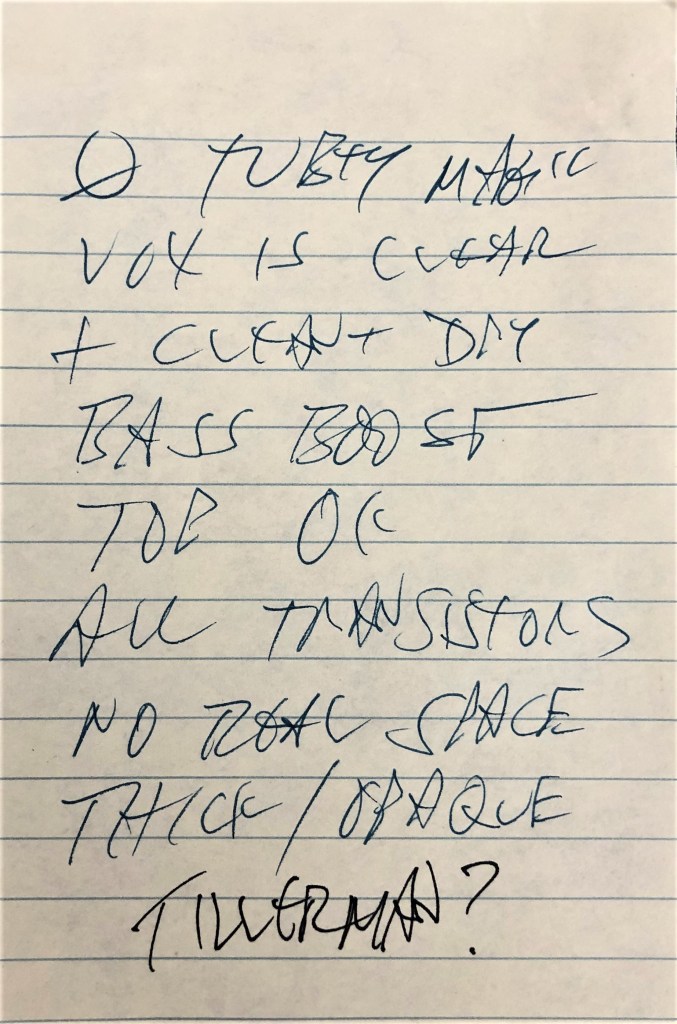
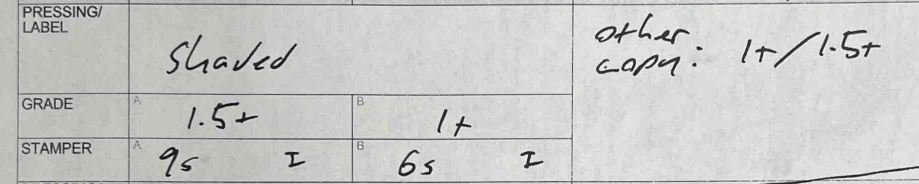
Here are the notes for the copy we played. For those who have trouble reading our writing, I have transcribed the notes as follows:

Side One

Track one:

Weighty, a bit veiled or smeary. Backing vox kinda lost.

Track three:

Very full, rockin’ but not the sparkle/space.

Kinda compressed.

Not as huge.

Side Two

Track two:

Not as rich, clear.

A bit pushy/dry vox.

No real space.

Thick drums

Track one:

This works better.

A bit hard, but full and lively.

This Sound?

Is this the sound audiophiles are raving about?

(more…)

Why Are the Earliest Stampers on 461 Ocean Boulevard So Bad Sounding on Side Two?

Hot Stamper Pressings of the Music of Eric Clapton Available Now

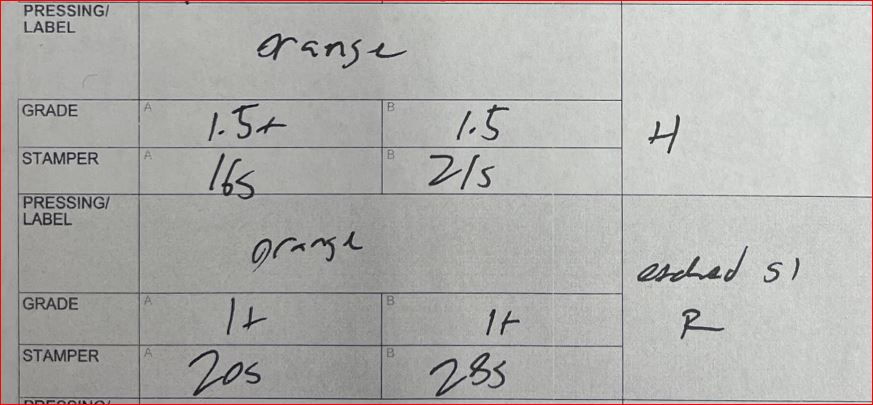
The UK pressings with the side two stampers shown below have not done well in our shootouts for a number of years now. If you own a copy with B-1 stampers on side two, the good news is that we can get you a much better sounding copy of 461 Ocean Boulevard than you have ever heard.

Stamper numbers are not the be-all and end-all in the world of records, a subject we discuss below, but after hearing too many copies with these stampers and substandard sound, from now on we are going to focus our attention on the stampers that do well and avoid copies with the B-1 marking on side two.

Bilbo cut the A-3 side one and did a great job; his side one won our most recent shootout.

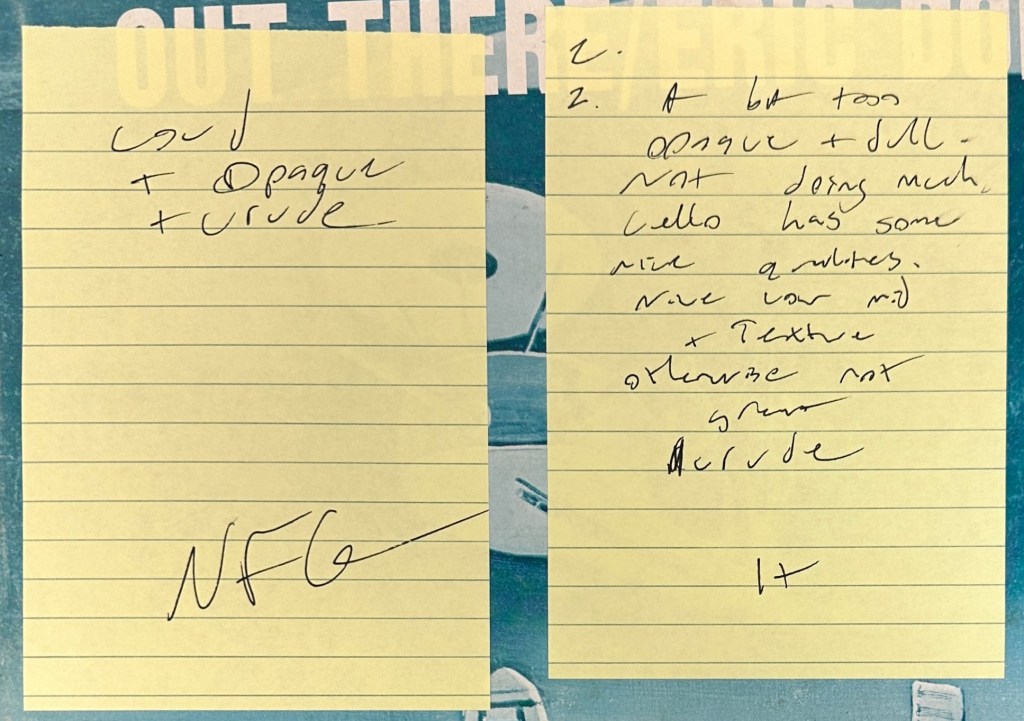
Whoever cut side two really screwed it up, as you can see from our notes for our last two shootouts.

When it comes to stampers, labels, mastering credits, country of origin and the like, we make a point of revealing very little of this information on the site, for a number of good reasons we discuss here.

The idea that the stampers are entirely responsible for the quality of any given record’s sound is a mistaken one, and a rather convenient one when you stop to think about it. Audiophiles, like most everybody else on this planet, want answers.

In the world of records, there aren’t many, but B-1 for side two of this album is a clear exception to the rule that the stamper numbers are one part of a multi-faceted puzzle. In this case, B-1 is awful and is best avoided at all costs.

The Biz

Being in the shootout business means we have no way to avoid such realities, which is why it is so easy for us to accept them.

The amateurs and professionals alike who review records for audiophiles want there to be clear-cut answers for every album they write about. Uncertainty and trade-offs upset them no end.

We recognized twenty years ago that the empirical pursuit of record knowledge, practiced scientifically, must be understood as incomplete, imperfect, and provisional.

That is not going to change no matter how upsetting anyone may find it.

(more…)

Is the 1s Pressing Always the Best on the Brahms Violin Concerto with Heifetz?

Hot Stamper Pressings that Sound Their Best on the Right Reissue

This early Shaded Dog pressing of the 1958 recording has surprisingly good sound on side two. On the second side the sound opens up and is very sweet, with the violin becoming much more present and clear.

The whole of side two is transparent with an extended top. Usually the earliest Living Stereo titles suffer from a lack of top end extension, but not this one.

Maybe the 1s pressing is also that way. For some reason audiophiles tend to think that the earliest cuttings are the best, but that’s just more mistaken audiophile thinking if our experience can serve as any guide, easily refuted if you’ve played hundreds of these Living Stereo pressings and noted which stampers sound the best and which do not.

The 1s pressings do not consistently win our shootouts.

About half the time, maybe less would be my guess.

Of course, to avoid being biased, the person listening to the record doesn’t know the stamper numbers, and that may help explain why the 1s loses so often.

If you are interested in finding the best sounding pressings, you have to approach the problem scientifically, and that means running record experiments.

Practically everything you read on this blog we learned through experimentation.

When we experimented with the Classic Records pressing of LSC 1903, we were none too pleased with what we heard. Our review is reproduced below.

(more…)

What Can You Learn from a Mercury Shootout Like This One?

Hot Stamper Pressings of Mercury Classical Recordings Available Now

The short answer is that you can’t learn much from this shootout, because we’re not telling you which title the stampers you see below belong to.

Be that as it may, in the case of this mystery title the conventional wisdom turns out to be correct — the earlier numbered pressings did better than the later numbered pressings, and the early labels did better than the later labels.

That happens a lot, and we are happy to admit that it does. Why? Because the experimental evidence — the datasay that is what happened.

As usual for posts in which the stamper sheet from a shootout is reproduced in its entirety, the stamper numbers shown below will belong to a different album than the one you see pictured.

These can be found under the heading of Mystery Stampers. Most of these posts will illustrate something to be learned from a Hot Stamper shootout, but because the information reveals the shootout winning stampers, the actual title of the record is rarely revealed.

Much more useful stamper information can be found using this link, which includes plenty of stamper numbers for specific titles that are best avoided by audiophiles looking for top quality sound. In addition, we post the winning and losing stampers for some titles that are an unreliable guide to good sound. Unreliable stampers are also quite common.

(more…)

What Are the Best Stampers for Led Zeppelin’s Albums?

Hot Stamper Pressings of the Music of Led Zeppelin Available Now

What are the best sounding stampers for Led Zeppelin’s albums?

As if we would tell you!

This is a reworked excerpt from a much longer piece entitled record collecting for audiophiles – the limits of expert advice

In it we discussed the various stampers for some of Led Zeppelin’s albums and what role they play in our Hot Stamper shootouts.

Please to enjoy.

There is no way to know whether a record is any good without playing it, early stamper, late stamper or any other stamper.

First pressings (A, 1A, A1) don’t always win shootouts.

If they did we would simply buy only first pressings with those early stampers and only sell copies with those early stampers, since they are the best.

But this ignores the inconvenient fact that a great many other things go into the production of a record that have nothing to do with how early the stamper is.

A single copy of an album with stampers numbered (or lettered) A, when compared to B, when compared to C, has no definitive meaning for stampers A, B, C, or any others, because of the tremendous variation in the sound of all the pressings with A,B,C and other stampers.

Example Number One

There is a hot stamper for a certain Zep album that always wins the shootouts, [redacted].

It beats the hell out of the early stampers, A and B. In fact, we don’t even go after A and B anymore because they are expensive and rarely sound good enough to recoup our investment of the time and money we would spend buying, cleaning and auditioning them in a shootout.

A and B can be good, but why pay top dollar for them when they have never been any better than “good?”

We’re looking for “great” so that we can charge a premium price for them. This accomplishes three things that are obviously of great importance to any business:

  1. It pleases the hell out of our customers.
  2. It covers our costs, and
  3. It lets us pay our staff good wages and bonuses for their hard work, skill and knowledge.

(more…)