Island – Reviews and Commentaries

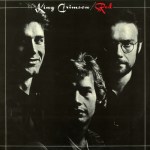
On King Crimson’s Red Album, How Good Are the Polydor Pressings?

Hot Stamper Pressings of the Music of King Crimson Available Now

Harsh and congested.

Not remotely competitive with the British originals.

Clean copies on the UK Island label may be hard to find, but they are the only game in town if you are serious about sound.

Want to find your own killer copy?

Consider taking the following moderately helpful advice.

As of 2024, shootouts for this album should be carried out:

How else can you expect to hear the record sound its best?

Based on our experience, Red sounds better:

That’s about it. They are neither easy nor cheap to find, but they are definitely the best sounding.

There’s more collecting help where that came from. Click on the top link below to learn about the pressings that win shootouts.

(more…)

A Pink Label Island LP Left Us with Egg on Our Face

Hot Stamper Pressings of the Music of Traffic Available Now

We used to think that The Best of Traffic had better sound than the early pressings of Mr. Fantasy, but in a head to head comparison with a killer copy we played not long ago, we were proved wrong, or, perhaps more accurately, we proved ourselves wrong, something we pride ourselves in being able to do by carrying out regular shootouts for records we’ve been listening to for more than twenty years.

Oddly enough, in our shootouts we often learn new things about records we thought we knew well.

Here is what we had to say about one of the tracks on Mr. Fantasy that we thought sounded dramatically better on The Best of Traffic back around 2005:

Best evidence: Heaven Is In Your Mind, the second track on side one. It is amazing sounding here and such a disappointment on every Pink Label Island original we’ve played.

Once you know how good that song can sound — by playing a Hot Stamper copy of Best of Traffic like this one — going back to the original version of the song found on the album is not just a letdown, it’s positively painful. Where’s the analog magic? The weight to the piano? The startling clarity and super-spaciousness of the soundfield? The life and energy of the performance?

They’re gone, brother. Not entirely gone, mind you, more a shadow of what they should be, but once you’ve heard the real thing it’s not a lot of fun listening to a shadow.

You can be sure that we did not know what we were talking about when we wrote all that.

What we had done is assumed that all the pink label pressings of Mr. Fantasy sounded like the one we played, something we’ve been telling audiophiles for twenty years not to do, because collecting records by label is a fool’s game.

In this case, clearly we are the fools.

It probably — probably, since all the evidence points in the same direction — had the stampers you see below, apparently known as an Orlake Pressing, something I knew nothing about until reading about it on Discogs just now.

  • Matrix / Runout (Side A, stamped): ILPS+9061+A
  • Matrix / Runout (Side B, stamped): ILPS+9061+B

These same stampers would be used to press the Pink Rim Label copy you see below. We put it into a recent shootout and described it as having “hollow, dubby” sound.

Yes, we heard the very same “dubby” sound on a copy we played about twenty years ago, and thought all the early pressings on Island, pink and pink rim alike, had these same mastering shortcomings.

Back then we didn’t know what we know now, which is that the right UK pressings on Island of Mr. Fantasy are dramatically better sounding.

(more…)

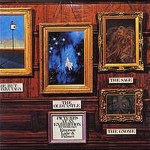
Pictures At An Exhibition and its Gigantic Organ Sound

More of the Music of Emerson, Lake and Palmer

Listen to that GIGANTIC organ that plays the fanfare opening of the work.

Honestly, I have never heard a rock album with an organ that stretched from wall to wall and sounds like it’s seventy five feet tall.

No, I take that back. The first ELP album has an organ that sounds about that big, but that’s a studio album. How did they manage to get that kind of organ sound in a live setting without actually having to build one inside the concert hall? I have no idea.

Pictures At An Exhibition has some of the biggest, boldest sound we have ever heard.

It’s clearly a Demo Disc for big speakers that play at loud levels.

Play this one as loud as you can. The louder you play it, the better it sounds.

The hottest Hot Stamper pressings of Pictures are Demo Discs in two other areas as well, bass and size and space, along with the titles linked below:

Please note that many of our Hot Stamper pressings are only available as imports. It has been our experience that the domestic pressings of these albums are simply not competitive with the better imports.

Advice

Want to avoid paying our admittedly high prices and find a top quality copy for yourself?

Consider taking our moderately helpful advice concerning the pressings that tend to win our shootouts.

Pictures at an Exhibition should sound its best this way:

(more…)

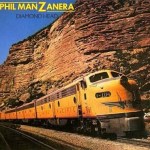
Diamond Head – Astonishingly Good Sound on the Right Island Pressing

More of the Music of Phil Manzanera

When it comes to blockbuster audiophile sound that jumps out of the speakers, the wind is at your back with Diamond Head because this is one seriously well-recorded album. If this record doesn’t wake up your stereo, nothing will.

Like its brother, 801 Live, this album is an amazing sonic blockbuster, with sound that positively leaps out of the speakers. Why shouldn’t it? It was engineered by the superbly talented Rhett Davies at Island, the genius behind Taking Tiger Mountain, the aforementioned 801 Live, Avalon, Dire Straits’ first album and many many more.

If we could regularly find copies of this audiophile blockbuster (and frankly if more people appreciated the album) it would definitely go on our rock and pop Top 100 list. In fact, it would easily make the Top Twenty from that list, it’s that good.

Looking for Tubey Magic? Rhett Davies is your man. Just think about the sound of the first Dire Straits album or Taking Tiger Mountain. The best pressings of those albums — those with truly Hot Stampers — are swimming in it.

Big Speakers Wanted Needed

This isn’t known as an audiophile album but it should be — the sound is GLORIOUS — wall to wall, floor to ceiling, and as rich and dynamic as it gets.

The best pressings of this album, played on big speakers at loud levels, are Demo Discs of the highest order.

Play this one as loud as you can. (801 Live is exactly the same way and needs high volumes to work its magic.)

A Personal Favorite

This album basically became the set list for 801 Live, the concert collaboration between Eno, Manzanera and their fellow travelers. That album is one of my all time favorites too, and a Must Own for anyone who likes British Art Rock from the ’70s.

What both of these albums share is amazing guitar work. Manzanera was the guitarist for Roxy Music, and this album can be enjoyed simply as an exercise in hearing every possible kind of sound the guitar can make. It also helps to have Eno doing electronic treatments for the instrument and coming up with a whole new sound.

One listen to a song like Diamond Head is all it should take to make you a fan. If that song doesn’t do it for you, the rest of the album won’t either, but I can’t imagine how that could be.

The best copies of this album excel in every area we prize.

It’s energetic, dynamic, the sound just jumps out of the speakers, there’s tons of bass, it’s smooth — in short, it’s doing it all.

What’s Good?

Domestic pressings suck.

German pressings too.

Don’t waste your money. We’ve never heard a good one. (And most of the British pressings you can find won’t hold a candle to this one.)

To see more reviews and commentaries for titles that we think sound their best on imported vinyl, please click here.

Want to avoid having to pay our admittedly high prices and find a top quality copy for yourself?

Consider taking our moderately helpful advice concerning the pressings that most often win our shootouts.

In the case of Diamond Head, we like it best this way:

(more…)
Taking Tiger Mountain Is a Big Speaker Tour De Force

Hot Stamper Pressings of the Music of Brian Eno Available Now

If you have a big speaker and the kind of high quality playback capable of unraveling the most complex musical creations, with all the weight and power of live music, this is the record that will make all your audio effort and expense worthwhile.

Repeat As Necessary

Like Roxy Music’s first album, Taking Tiger Mountain is a powerhouse that not only rewards repeated listenings but requires them. Music like this simply cannot be digested at one sitting. Like the Beatles said, It’s All Too Much. But the more you hear it the more you will be able to understand it and appreciate it and, if you’re like me, really start to love it (I hope).

I’ve been listening to this album since the mid-70s and in all that time I have never tired of it. To me it’s the very definition of a Desert Island Disc: a record that knocks me out every time I play it and never wears out its welcome. It’s still fresh and “cutting edge” (if I can use that term) forty odd years after its release. (801 Live from 1976 is the same way.)

The Sound

This album is all about sound, pure sound itself if you will: the sound of the instruments, their textures, and the textures of the soundscape Eno has created for them. Much of that information is lost or perverted on the LP reissues and of course the CD. Only these British originals sound like they are made from fresh master tapes on rich, sweet tubey-magical, super high resolution cutting equipment.

With the subtle harmonics of Eno’s treated sounds captured onto vinyl intact, the magic of the experience far exceeds just another batch of catchy songs with clever arrangements. It truly becomes an immersive experience; sounds you’ve never heard in quite that way draw you into their world, each more interesting than the next.

Brian Eno and other Art Rockers of the period were clearly dedicated to making higher quality recordings, recordings that could only come to life in the homes of those with the most advanced audio equipment. Credit the work of the amazing Rhett Davies for some of the best albums of the 70s: this one, 801 Live, Diamond Head, Dire Straits’ first album, and more.

My system was forced to evolve in order to reproduce the scores of challenging recordings issued by Eno in the 70s. The love you have for your favorite music has to be the driving force of your progress in audio if you want to achieve world class sound.

(more…)

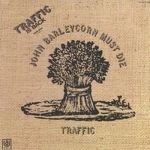
Listening in Depth to John Barleycorn Must Die

The toughest test on side two is the first track, Stranger to Himself.

Getting the voices right is practically impossible. If the voices are full, smooth, yet breathy and clear, you have that rare copy that actually gets the midrange right. Not many do.

Side One

Glad

The last portion of this track has some really interesting percussion and organ effects. Traffic were trying to break out of the standard pop song format by letting this song wander into psychedelic territory for a few minutes at the end. It’s now become my favorite part of the song.

The reason you want to pay close attention to this part is because it helps you to judge the transparency, immediacy, and top end extension for the whole side. It should be amazingly clear and open-sounding. On too many pressings, the percussion instruments are blurred and lost in the mix. On a Hot Stamper copy they’ll be right in front of you, allowing you to appreciate the interplay among the musicians as they contributed their various parts.

Freedom Rider

You’ll need lots of top end extension for this song to sound right. On many copies the double tracked flute solo in the middle of the song will be aggressive and irritating, but on a Hot Stamper pressing, the flutes will sound airy and breathy with a reasonably good sustain.

Empty Pages

The quality of the voice is what really sets the best copies apart. Winwood is much more present on the better copies. He’s recessed on most and that’s just not where he needs to be for the song to work musically. He needs to be right up front, surrounded by the air and ambience of the studio. The transparency found on the better copies will give you precisely that.

Side Two

Stranger to Himself

John Barleycorn

The acoustic guitars that open up this song are absolute perfection on the best copies — this is the sound of Tubey Magical analog at its best.

This is the real test for side two.

The acoustic guitars should sound rich and sweet. You’ll notice at the beginning of the song that they are a little dull. The last thing in the world you want to do, however, is to brighten them up, because when you do that, as some mastering engineers have in the past, the harmony vocals and the percussion and the tambourine become much too bright later on in the song.

You have to strike a balance between all the elements. That means Steve’s voice at the beginning needs to be a little reserved so that the harmony vocals later on will come in right.

(more…)

Two Key Tracks for Testing Sibilance and Transparency on Tea for the Tillerman

Hot Stamper Pressings of the Music of Cat Stevens Available Now

The song Father and Son can be a bit sibilant. On the best copies the sibilance is under control.

The best copies have the least amount and make the spit they do have much less gritty and objectionable.

We’ve known for decades how good a test sibilance is for tables, cartridges and arms. Sibilance is a bitch. The best pressings, with the most extension up top and the least amount of aggressive grit and grain mixed into the music, played using the highest quality, most carefully dialed-in front ends, will keep sibilance to an acceptable minimum.

VTA, tracking weight, azimuth and anti-skate adjustments are critical to reducing the amount and the quality of the spit in your records.

Another track I like to play on side two is Into White. With this song, you hear into the music on the best copies as if you were seeing the live musicians before you. The violinist is also a key element. He’s very far back in the studio. When he’s back where he should be, but the sound of the wood of his violin and the rosin on the strings is still clearly audible, without any brightness or edginess to artificially create those details, you know you are hearing the real thing.

(more…)

Listening In Depth to Catch Bull At Four

More of the Music of Cat Stevens

If you’re familiar with what the best Hot Stamper pressings of Tea for the Tillerman, Teaser and the Firecat or Mona Bone Jakon can sound like — amazing is the word that comes to mind — then you should easily be able to imagine how good a killer copy of Catch Bull at Four sounds.

All the ingredients for a Classic Cat Stevens album were in place for this release which came out in 1972, about a year after Teaser and the Firecat. His amazing guitar player Alun Davies is still in the band, and Paul Samwell-Smith is still producing as brilliantly as ever.

Side One

Sitting

This track often sounds a bit flat and midrangy, and it sounds that way on most domestic pressings and the “wrong” imports.

The best imports and domestic pressings are the only ones with the sweeter, tubier Midrange Magic that we’ve come to associate with the best Cat Stevens recordings.

Boy With a Moon & Star on His Head

Another very difficult track to get to sound right. The better copies have such amazingly transparent sound you can’t help feeling as though you really are in the presence of live human beings. You get the sense of actual fingers — in this case the fingers of Cat’s stalwart accompanist Alun Davies — plucking the strings of his Spanish guitar.

Angelsea

This is one of the best sounding tracks on the album, right up there with Cat’s most well recorded big productions such as Tuesday’s Dead, Changes IV, Where Do The Children Play and Hard Headed Woman. On Hot Stamper copies this is a Demo Track that’s hard to beat.

The midrange magic of the acoustic guitars is off the scale. Some of Catch Bull At Four has the magic and some of it does not, unlike Tea and Teaser, which are magical all the way through.

Silent Sunlight
Can’t Keep It In

On the best copies this track is as Huge and Powerful as anything the man ever recorded. It’s another one of the best sounding tracks on the album. On our top copies this is a Demo Track that’s hard to beat.

The midrange magic of the acoustic guitars is off the scale. Some of Catch Bull At Four has the magic and some of it does not, unlike Tea and Teaser, which are magical all the way through.

Side Two

(more…)

We Were Way Off the Mark with Stand Up in 2006

Hot Stamper Pressings of Jethro Tull Albums Available Now

Years ago we wrote:

This Island Pink Label Original British pressing has ABSOLUTELY AMAZING SOUND! We mention that there was a Sunray pressing that may have been even better, but I didn’t have this copy in hand to compare the Sunray to, so I can’t be sure that pressing was any better.

This one sounds as good as any I’ve ever heard. 

It’s amazingly dynamic and powerful, yet full of tubey magic. I played almost ten different pressings of this record today (11/08/06): every domestic label variation and a handful of imports. This copy is clearly the best of the batch.

A textbook case of live and learn.

My stereo was dramatically less revealing back then and also I did not know how to clean records properly. Those two facts, combined with the underdeveloped or yet-to-be-developed listening skills that go with them, allowed me to arrive at the wrong conclusion.

In 2006 we simply had not done our homework well enough. I had been an audiophile for at least 31 years by then, and a legitimate audiophile record dealer for 19.

Sure, by 2006 my staff and I had auditioned plenty of the pressings that we thought were the most likely to sound good: the original and later domestic pressings, the early and later British LPs: in other words, the usual suspects.

The result? We were roughly in the same position as the vast majority of audiophiles. We had auditioned a sizable number pressings of the album and thought we knew enough about the sound of the album to pick a clear winner. We thought the best pink label Island pressings had the goods that no other copies could or would have.

But of course, like most audiophiles who judge records with an insufficiently large sample size, we turned out to be completely wrong.

Logic hadn’t worked. None of the originals would end up winning another shootout once we’d discovered the right reissues.

But in 2006, we hadn’t stumbled upon the best pressings because we hadn’t put enough effort into the only approach that actually works.

What approach is that? It’s trial and error. Trial and error would eventually put us on the path to success. We had simply not conducted enough trials and made enough errors by 2006 to find out what we know now.

We needed a breakthrough, and we hadn’t gotten it yet.

(more…)

Two Tracks on Teaser and the Firecat Are Key

Hot Stamper Pressings of the Music of Cat Stevens Available Now

Just ran across the following in an old listing. We’re nothing if not consistent here at Better Records!

“And if you are ever tempted to pick up one of those recently remastered versions on heavy vinyl, don’t do it. There is simply no one alive today making records that sound like these good originals. Not to these ears anyway. We may choose to indulge ourselves in the audacity of hope, but reality has to set in sooner or later. After thirty years of trying, the modern mastering engineers of the world have nothing to show for their efforts but a ever-growing pile of failures. The time to call it quits has come and gone. Let’s face facts: when it comes to Teaser and the Firecat, it’s the Real Thing or nothing.”

If you’re looking for an amazing Demo Quality rock recording, you’ve come to the right place.

If you want a timeless classic rock record, it’s here too.

They just don’t know how to make them like this anymore. Those of you waiting for audiophile vinyl reissues with the kind of magic found on these originals will be in your graves long before it ever comes to pass.

Analogue Productions tried and failed — more than once — to produce a good sounding Heavy Vinyl pressing of Tea for the Tillerman.

You can be sure of one thing: there is little chance they would have better luck with Teaser and the Firecat.

Changes IV 

On this song there is a tremendous amount of energy in the grooves. On a copy I had a while back it sounded good to start with, but an intense cleaning regimen made it sound so alive I could hardly believe my ears. Listen to it VERY LOUD (as it was meant to be played) and then notice how quiet the next solo guitar intro is, with lots of space between the notes. Never heard it like that before. That’s when audio is FUN.

It’s always a roller coaster ride around here, as one day the system is cooking, and the next it ain’t, and nobody knows why. But the night that Teaser sounded great is one I will remember for a long time. Those big bass drum thwacks and that high hat being slapped to the point of abuse way out in front of the mix just blew my mind.

Tuesday’s Dead

There is a good-sized group of singers behind Cat Stevens that back him up when he says “whoa” right before the line “Where do you go?”. What often separates the best copies from the also-rans is how clearly those singers can be heard, assuming the tonal balance is correct and there’s plenty of energy in the performances.

The most transparent copies make it easy to appreciate the enthusiasm of the individual singers; they’re practically shouting.

For twenty years Tuesday’s Dead has been one of my favorite tracks for demonstrating what The Big Speaker Sound is all about. Now I think I better understand why. Big speakers are the only way to reproduce the physical size and tremendous energy of the congas (and other drums of course) that play such a big part in driving the rhythmic energy of the song.

In my experience no six inch woofer — or seven, or eight, or ten even — gets the sound of the conga right, from bottom to top, drum to skin. No screen can do it either. It’s simply a sound that large dynamic drivers reproduce well and other speaker designs do not reproduce so well.

Since this is one of my favorite records of all time, a true Desert Island Disc, I would never want to be without a pair of big speakers to play it, because those are the kinds of speakers that play it well.


(more…)