Heavy Vinyl Commentaries

Letters and commentaries on the subject of the modern remastered Heavy Vinyl pressing.

The Law of Large Numbers Can Help You Find Better Records

Presenting another entry in our series of big picture observations concerning records and audio.

One of our good customers had this to say about some Hot Stampers he purchased recently:

Hey Tom,   

I’m going out of my frigging mind on this White Hot stamper of Roy Orbison Greatest Hits. What a piece of sh*t is my DCC test pressing.

Naz

Naz,

I actually used to like the DCC vinyl. I suspect you did too back in the day.

Then my stereo got a lot better, which I write about under the heading progress in audio.

Eventually it became obvious to me what was wrong with practically all of the Heavy Vinyl pressings that were put out by that label.

The good ones can be found in this group, along with other Heavy Vinyl pressings we liked or used to like.

The bad ones can be found in this group.

And those in the middle end up in this group.

Audio and record collecting (they go hand in hand) are hard. If you think either one is easy you are most likely not doing it right,, but what makes our twin hobbies compelling enough to keep us involved over the course of a lifetime is one simple fact, which is this: Although we know so little at the start, and we have so much to learn, the journey itself into the world of music and sound turns out to be not only addictive, but a great deal of fun.

Every listing in this section is about knowing now what I didn’t know then, and there is enough of that material to fill its own blog if I would simply take the time to write it all down.

Every album shootout we do is a chance to learn something new about records. When you do them all day, every day, you learn things that no one else could possibly know who hasn’t done the work of comparing thousands of pressings with thousands of other pressings.

The Law of large numbers[1] tells us that in the world of records, more is better. We’ve taken that law and turned it into a business.

It’s the only way to find Better Records.

Not the records that you think are better.

No, truly better records are the records that we proved to be better empirically, by employing rigorous scientific methodologies that we have laid out in detail for anyone to read and follow.

Being willing to make lots of mistakes is part of our secret, and we admit to making a lot of them

(more…)

Letter of the Week – “My stereo upgrades have widened the sonic chasm between good, old-fashioned records and their nouveau imposters.”

Record Collecting for Audiophiles – These Are the Fundamentals

One of our good customers, Dan, found much to agree with in our recent Better Record’s record collecting commentary and offered up his own two cents worth in the letter below. (Emphasis added.)

Tom,

Just wanted to affirm the new Better Records axiom of “the better your stereo gets, the fewer modern reissues you will own.” My collection has dozens of these Heavy Vinyl reissues, and none of them are holding up after a year and half’s worth of significant improvements to my stereo.

It was only at the beginning of last year that I found myself pleased with roughly 50% of my heavy vinyl purchases. Now, that number has plummeted to less than 10%. Almost everything that’s being put out today is an utter disappointment.

Of course, part of the explanation may be that my listening skills have improved. But it’s hard to imagine that I would have liked dull, dreary, lifeless vinyl a year or two ago. I like to think not.

More probable is that my stereo upgrades have widened the sonic chasm between good, old-fashioned records and their nouveau imposters.

I’d also like to second the avoidance of new vinyl purchases until major stereo improvements are made. I’m trudging through the laborious task of replacing these records with older, better sounding copies. It’s excellent advice to those new to the game or young (or both).

Amazingly, hearing the difference doesn’t even require a Hot Stamper, almost any original or early reissue will beat the Sundazed, Classic, etc. That’s how inferior they are. To borrow from The Who, the sound must change.

Dan,

I agree with this bit at the end of your letter, with one caveat:

Amazingly, hearing the difference doesn’t even require a Hot Stamper, almost any original or early reissue will beat the Sundazed, Classic, etc. That’s how inferior they are.

The caveat would be if you know how to clean your records right, right in this case being the way we recommend you clean them, using Prelude fluids and a machine.

Old uncleaned records can sound pretty bad. An audiophile pressing may beat your old original — until you clean it.

It’s one of the revolutionary changes in audio we spend so much time talking about, and it can make all the difference in the world on some records, especially old ones.

Thanks for your letter. You are not alone in swearing off these modern mediocrities. Many of our customers went through the same process you have, and it seems they are as pleased with the results as you.

Best, TP

(more…)

Letter of the Week – “I’m hearing things I’ve never heard before. Orders of magnitude better.”

One of our good customers had this to say about some Hot Stampers he purchased recently:

Hey Tom,   

Once again, you folks have proved that your albums are worth EVERY PENNY that you charge for them.

For years, I’ve had a couple of domestic pressings, and a “200 gram Anadisq” MOFI, of ELP’s Trilogy. Always thought the sound was pretty solid.

But I JUST finished spinning the British A+++ pressing I scored from you folks this past week, and OH MY. It absolutely CRUSHES all prior versions. It leaves the MOFI in the DUST. I mean, it’s not even close. Not subtle. Not “Well, if I listen closely, I think I MIGHT hear a difference….”

NO. It’s utterly ridiculous. I’m hearing things I’ve never heard before. Orders of magnitude better.

THANK YOU, for your dedication to optimizing the quality of listening. SUCH a great album – and sound that finally is commensurate to the quality of the musicianship. 🙂

Steve

Steve,

So glad to hear it!

I was selling MoFi records when that pressing of Trilogy came out. What a murky piece of crap that was. The cutting system they were using was a joke, and the one they have now is not much better.

(more…)

The Dreadful Sound of the Heavy Vinyl Reissues Doug Sax Mastered in the 90s

Hot Stamper Pressings of the Music of Sonny Rollins Available Now

Longstanding customers know that we have been relentlessly critical of so-called “audiophile” LPs for years, especially in the case of these Analogue Productions releases from back in the early-90s. A well-known reviewer loved them, I hated them, and he and I haven’t seen eye to eye on much since.


(Old) Newflash!

Just dug up part of my old commentary discussing the faults with the original series that Doug Sax cut for Acoustic Sounds. Check it out.

In the listing for the OJC pressing of Way Out West we wrote:

Guaranteed better than any 33 rpm 180 gram version ever made, or your money back! (Of course I’m referring to a certain pressing from the early 90s mastered by Doug Sax, which is a textbook example of murky, tubby, flabby sound. Too many bad tubes in the chain? Who knows?

This OJC version also has its problems, but at least the shortcomings of the OJC are tolerable. Who can sit through a pressing that’s so thick and lifeless it communicates none of the player’s love for the music they’re making?

If you have midrangy transistor equipment, go with the 180 gram version (at twice the price).

If you have good equipment, go with this one.


UPDATE 2015

We are no longer fans of the OJC of Way Out West, and would never sell a record that sounds the way even the best copies do as a Hot Stamper. It’s not hopeless the way the Heavy Vinyl pressing is, but it’s not very good either. It’s yet another example of a record we was wrong about.

Live and learn, right?


(more…)

Find the Dubs = Less Records = Progress!

Robert Brook runs a blog called The Broken Record, explaining that the aim of his blog is to serve as:

A GUIDE FOR THE DEDICATED ANALOG AUDIOPHILE

Here is Robert’s posting from 8/26/2025 containing a great deal of good advice for record collectors and audiophiles of all ages, especially us old ones.

He admits to being wrong about the sound of a record he wrote about on his blog. When have you ever seen an audiophile admit to being wrong about a record? The very idea!

Why was he wrong? Because his stereo got dramatically better, so much better that he could see how mistaken he was about a Japanese pressing he thought for sure was made from the master tape. Now it sounds dubby. It was always dubby; he just hadn’t gotten his system, room, electricity, setup and who knows what else to the point where the true nature of that copy could be revealed.

Robert revisited a record he was sure he knew well, well enough to rave about on his blog, and found out things had changed — apparently quite a lot! — while he wasn’t looking.

A great deal of audio progress had been made, and that audio progress is what allowed Robert to also make some progress on the record collecting front, a win-win if every there was one. Congratulations are in order.

We here at Better Records live with this reality every day. Our mea culpas are occassioned by the shootouts we do for the same records over and over again, which is what allows us to discover even better pressings of albums than the ones we thought were the best. It’s surely the most rewarding part of the job.

FIND the DUBS = LESS RECORDS = PROGRESS!

Please to enjoy the lessons Robert learned.

I wrote about a similar experience I had myself back in the early-2000s.

If presently you are the happy owner of many Japanese pressings, perhaps now would be a good time to pull them out and play them. Very few master tapes went to Japan, and, as a result, most Japanese pressings in our experience sound like they are made from copy tapes, which of course they are.

Some of them have the potential for top quality sound, but most do not.

If your stereo is not revealing enough to show you their shortcomings, the way Robert’s was not revealing enough just five years ago, please take his advice and make the kinds of changes he has made.

The steps you take next will be the most satisfactory of all. Now you can clear the shelves of all your second- and third-tier records, which, of course, will not be limited to Japanese pressings, but should in fact include most of your Heavy Vinyl LPs, if not all of them. Let the culling begin!

(more…)

Heavy Vinyl – Audiophile Blessing or Curse?

More Letters Comparing Hot Stamper Pressings to their Heavy Vinyl Counterparts

Two editorial points to make up front:

The run-of-the-mill Heavy Vinyl pressing is so lifeless and opaque that we think the run-of-the-mill CD, on average, will sound better.

If you’re an audiophile who is currently collecting and playing Heavy Vinyl pressings, you are making the worst choice possible: second- or third-rate sound quality coupled with the hassle and expense of the modern LP.

In this letter Dan tells us of his disappointment with the new reissues he’s been trying:

I can’t tell you how many modern reissues I’ve bought over the past couple months that have lost, and lost badly, to just my one single original or early pressing of an album. Reissues by AC/DC, The Who, ZZ Top, The Rolling Stones, and Patti Smith have all failed miserably against my merely average sounding originals.

As a result, I have almost zero interest in buying anything that’s reissued nowadays. But I believe you said in a recent commentary that the less audiophile pressings you have in your collection the better. So I suppose the fact that I’m weeding these out from my collection is good news as far as my ears and stereo are concerned. But it’s still a sad state for the audio industry as a whole. It’s too bad we can’t tell a different story. I don’t know what in the mastering/pressing process needs to be different, but something does.

(more…)

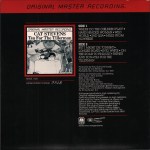
Can the Brightness Problem on the UHQR of Tea for the Tillerman Be Fixed?

Hot Stamper Pressings of the Music of Cat Stevens Available Now

Can adjusting the VTA for the heavier weight vinyl of the UHQR fix its tonality problems?

[This subject also came up in a discussion of the remastered pressings of Scheherzade.]

Probably not. VTA is all about balance.

Adjusting for all the elements in a recording involve tradeoffs. When all the elements sound close to their best, and none of them are “wrong,” the VTA is mostly right.

Try as you might, you cannot fix bad mastering by changing your VTA.

Tea for the Tillerman on UHQR

When I first got into the audiophile record business back in the 80s, I had a customer tell me how much he liked the UHQR of Tea for the Tillerman.

This was a record I was selling sealed for $25. And you could buy as many as you liked at that price!

I was paying $9 for them and could order them by the hundreds if I’d wanted to. Yes, I admit I had no shame.

I replied to this fellow that “the MoFi is awfully bright, don’t you think?” (My old Fulton system may have been darker than ideal, but no serious audio system can play a UHQR as bright as this one without someone noticing the paint has started to peel.)

His reply: “Oh no, you just adjust your VTA until the sound is tonally correct.”

(more…)

In the Real World, You Can Only Choose Two Out of Three

More Heavy Vinyl Commentaries and Reviews

I got this idea while thinking about the old saying:

Fast, cheap and good – pick two.

I’ve modified this saying into a version for audiophiles that takes into account that although some record collectors with top quality equipment may want to pursue the modern Heavy Vinyl pressing, they will run into the unavoidable reality that as their stereo starts to sound better, their new Heavy Vinyl records will start sounding worse.

They may want to get many things out of audio and record collecting, but they can’t have it all.

As will explain in detail further on, they will be forced to limit themselves to two of the following three.

Let’s assume that the audiophiles who collect modern records are those who:

  1. Want to have a revealing, accurate stereo.
  2. Want to be able to enjoy their favorite music.
  3. Want to continue to buy Heavy Vinyl pressings because they enjoy buying and collecting those records.

So let’s look at what happens when they pick one of the only three combinations that are logically available to them:

If they pick one and two, they get to keep their good stereo, and they can continue to enjoy their favorite music on it, but they will not be able to play Heavy Vinyl pressings anymore and will have to stop buying them.

On high-quality equipment those records reveal their manifest shortcomings and are simply no fun to play. They can have one and two but not three.

Damn!

What about one and three then?

If they pick one and three, they can still have excellent stereo reproduction in the home, and they can still buy and collect Heavy Vinyl pressings to their heart’s content, but they will not be able to enjoy the pressings they buy. Those pressings will simply not sound very good on a system that is working properly.

One hopes that before too long these folks will recognize that all they were doing was buying junk vinyl from the grifters exploiting the lo-fi and mid-fi crowd while pretending to appeal to the higher end of the market.

The lo-fi/mid-fi types are those who, lacking high-quality playback, are simply not able to tell the difference. Good systems make it easy to expose the incompetence of the pretentious hacks who make these new records.

Bad systems let them get away with murder.

And the folks making these records probably have playback systems of such low quality that they haven’t a clue as to just how bad their records actually sound. This allows them to be both incompetent and pretentious. They don’t know how little they know, the Dunning-Kruger effect in action.

OK, apparently one and three are out. How about two and three? How might those two work together?

Not any better. Choosing one and three, audiophiles can enjoy their music, and they can play their Heavy Vinyl pressings, the ones they like to buy and collect, endlessly discussing their merits on youtube as well as every audiophile forum on the web, but they can forget having a good stereo — the better the reproduction, the worse these Heavy Vinyl LPs sound. The ultimate effect is to ruin the fun of buying, collecting and discussing them.

Options two and three are sure to be the solution audiophiles and record collectors will find the most agreeable of the three combinations available to them.

Since nothing is harder than getting good sound in the home, these audiophile/record collectors will never need to burden themselves with the effort and expense of improving their playback.

They can simply enjoy doing what they like to do, which is buying records and playing them.

Which is why everybody got into the hobby in the first place, right?

True enough, as far as it goes. For those of us who became obsessed with music and wanted to hear it at its best, mostly on vinyl, we found that if we kept working on our systems, pushing against the boundaries of trying to get higher fidelity sound in the home, we actually could break through the barriers and achieve sound quality we never expected to find.

There was, however, an unintended consequence of making so many improvements to our playback and having them build one upon another to create so many revolutionary changes.

Our stereos became so good at reproducing music from vinyl that the newly remastered records that used to sound fine began sounding worse and worse. And when I say worse and worse, I mean really, really bad.

(more…)

Letter of the Week – “It really beats the pants off of my George Marino remaster…”

Hot Stamper Pressings of the Music of AC/DC Available Now

One of our good customers had this to say about a Hot Stamper pressing of Back in Black he purchased a while back (emphasis added).

It must have been quite a long time ago, mostly because the Aurios he mentions have not been made for more than a decade. Not to worrry: The Seismic Platform we tout here on the blog will make an even more dramatic improvement to your playback and can be purchased directly from Townshend, eliminating the middleman, us.

Hey Tom,  

I’ve been spending time this week listening to the seven records that arrived from you last week, and have been having a fabulous time doing it. So I thought I’d write to say THANKS – you guys really know how to pick ‘em!

Top honors in the batch definitely goes to the AC/DC Back in Black Hot Stamper. Wow, does it ever ROCK! And it’s not even the best one you had – which makes me wonder just how amazing the best copies sound. It really beats the pants off of my George Marino remaster, to say nothing of my old Canadian pressing.

The sheer energy that leaps off the vinyl is incredible.

To me, this record supports again the hypothesis that I first tested when I bought my Joni Mitchell Hot Stamper from you last fall: That I don’t have to wait until I manage to put together a really top notch stereo system before I can enjoy at least some of what Hot Stampers have to offer.

Obviously, as my system gets better I imagine I’ll enjoy them even more; but even with my current budget-ish system, recently much improved with Aurios and an EAR 834p (both recommended by you – thank you!), the Back in Black Hot Stamper shines. There’s truly nothing finer than listening to a record that sounds that good!

Anyway, all in all, it’s a pleasure purchasing from you, so thanks again. I’ll be back for more once my budget allows.

Martin H.

Martin,

Happy to help. We’re convinced that the better your system sounds, the bigger the difference will be between our Hot Stampers and everything else out there in record land.

Sometimes the difference is so great that even a modest system makes it obvious just how much better a Hot Stamper LP is than anything being pressed these days on modern Heavy Vinyl, famous mastering engineer or no famous mastering engineer.


UPDATE 2025

After George Marino cut this pressing of Tea for the Tillerman, I lost all respect for him. He was undoubtedly a good mastering engineer back in his day, but he stayed too long at the party and lost whatever skills he might have possessed, judging from the single disc TFTT he cut as well as the 45 2 disc set.


Regarding the importance of energy in the pressings we audition, this commentary on Zuma may be of some interest.

There is an abundance of audiophile collector hype surrounding the hundreds of Heavy Vinyl pressings currently in print. I read a lot about how wonderful their sound is, but when I actually play them, I rarely find them to be any better than mediocre, and many of them are awful.

(more…)

Analog Shmanalog – Why Avoid the Only Question Worth Asking?

Saving the world from bad sound you say? Hey, that’s what I’m about too!

The following is my reply to the friend who sent me the NYT article linked above.

He had been to my studio and heard for himself the sound of the Heavy Vinyl pressings that “The Wizard of Vinyl” produces. Up against properly-mastered, properly-pressed vintage LPs, they are rarely better than mediocre, and more often than not just plain terrible. (We actually play one of his remastered records in this video.)

Mr. Kassem can’t seem to stop stepping on rakes, no doubt because he never made any effort to develop his critical listening skills, which for some reason he thought he already possessed. As a consequence of this mistaken judgment, he literally has nothing to guide him, a fact that should be obvious to anyone who has played any of his company’s records.

My letter:

This “pure analog versus analog tainted with digital” debate needs to stop.

It completely avoids the only question worth asking: are these new records any good?

Who cares how they make them?

Only the deaf! Those who can actually hear know how badly they suck and could not care less.

You sat me down and we played a batch of modern remastered records. They all failed. (More or less.)

That is the only true test.

Put all of these new records to the same test! Please, somebody!

Somebody with a top quality system can volunteer to do shootouts for any and all of them and let the chips fall where they may.

Finding such a system may be impossible, but we can at least try. This talk of master tapes and pure analog sound is getting us nowhere.

There is no testing going on, just claims being made with almost nothing to back them up.

None of this matters. Literally, none of it.

(more…)