Heavy Vinyl Commentaries

Letters and commentaries on the subject of the modern remastered Heavy Vinyl pressing.

Suite Espanola – How Do the Remastered Pressings Sound?

Decca and London Hot Stamper Pressings Available Now

In 2011 we made the (usually pointless) effort to compare a London pressing to the 180 gram Speakers Corner reissue which we were carrying at the time. We noted simply that the Heavy Vinyl pressing “was a joke next to this copy.”

I wish I could tell you in what way it was a joke — we try to be specific about the shortcomings of these records, which is why we publish our notes for some of them — but the old notes are long gone.

Naturally, we don’t have the reissue to play this time around. Still, we are confident that the results of any comparison would be the same.

Mark Lehman in the Absolute Sound gave the ORG Heavy Vinyl remastering Five Stars, having this to say about the sound:

ORG’s 45rpm remastering is terrific (as indeed are all of the ORG vinyl reissues I’ve heard). Comparison with the late- 60s London LP on which the Suite first appeared reveals sharpened and clarified attacks and articulations, more tightly focused individual strands, fuller and warmer string choirs, more resonant brass, more pillowy air around flutes, clarinets, and oboes, and more nuance and opulence in the orchestral blends.

The total effect is to make Albeniz’s composition even more sweeping, rhapsodic, richly hued, evocative, and involving—and that’s saying something, considering how good the sonics are on this recording’s first incarnation.

If only any of this were true!

We readily admit we have never played the ORG pressing and have no plans to, but when has a Heavy Vinyl pressing ever had any of the qualities described above, let alone in such abundance?

Never in our experience, and our experience extends to more than four hundred of them.

Enough Already

Enough about records we’ve never played. Let’s discuss some of the pressings of this very recording that we actually have played, it being a favorite of ours for which we have done a number of shootouts.

The Super Analogue remaster from the 90s was awful. I would give it an F if I were grading it today.

The Speakers Corner pressing earned a B grade from us, which makes it one of the better releases on that label. I would guess that one or two out of ten would rate a B. I don’t know of any record of theirs that rates a grade higher than B.

Using letter grades, our grading system of White Hot, Super Hot and Hot would translate to something like A Plus, A and A Minus.

Which means that there is no Heavy Vinyl pressing, from any era, on any label, that should be able to beat any Hot Stamper pressing on our site, and we back that up with a 100% money back guarantee.


UPDATE 2024

Stop the presses and hold your horses.

As of 2024 we actually know of more than one Shootout Winning title pressed on modern Heavy Vinyl. You can read about one of them here.

There is another one as well and we will be writing about that one soon.

We now return you to our old commentary.

(more…)

Letter of the Week – “I think your blanket dislike of everything MoFi is also not credible.”

Record Collecting for Audiophiles from A to Z

Not long ago we received an email taking us to task for our bashing of Heavy Vinyl in general and Mobile Fidelity in particular.

Hey Tom,

I think your blanket ‘anything new is not as good as the best of original or vintage’ is totally illogical. Why couldn’t more care and excellence be put in to a new pressing now than the best you can find from an original vintage pressing? Take 70’s rock albums. With the oil crisis tons of vinyl was pretty rubbish and/or recycled, and sounds terrible. That having been said, most of the Jimmy Page remasters sound awful too. If you take somewhere like Craft Recordings and their one steps they are outstanding pressings. You also know RVG mastered records to deliberately avoid records jumping on relatively poor quality equipment and not to reflect the ‘true’ sound. So why can’t Kevin Gray master something now that RTI then presses that sounds ‘better’?

I think your blanket dislike of everything MoFi is also not credible. I listened to the original MoFi one step of Sgt. Pepper on a 2 million dollar plus system and it sounded better than any copy I’ve ever heard or anything else we had to compare it with that evening.

I’m not being critical. Just commenting. You clearly have a business in selling great sounding copies of ‘vintage’ pressings (at least I assume they are all vintage). That’s fine and that’s your prerogative. But it doesn’t render every single version of 60’s and 70’s releases produced in the last 10-15 years not worth listening to but it does support your business proposition. Fair enough.

I think you, your team and frequent shoppers may well be suffering from the one thing you kind of imply everyone who buys MoFi or Tone Poets records of – confirmation bias. But that’s fine. If it brings joy to your listening or that of your staff and customers I can’t argue with that. Well done. I just don’t buy the logic.  I too trust my ears! So I will at some point buy a copy that I’ve already got what I think is an amazing copy of and compare it to see for myself.

Nick H.

Nick,

Doing carefully controlled shootouts with large groups of records is the only practical way anyone can learn what to listen for. We wrote about it here in a review for Rubber Soul:

If you have five or ten copies of a record and play them over and over against each other, the process itself teaches you what’s right and what’s wrong with the sound of the album at key moments of your choosing.

Once your ears are completely tuned to what the best pressings do well that others do not do as well, using a specific passage of music — the acoustic guitar John beats the hell out of on Norwegian Wood just to take one example — it will quickly become obvious how well any given pressing reproduces that passage.

The process is simple enough. First you go deep into the sound. There you find something special, something you can’t find on most copies. Now, with the hard-won knowledge of precisely what to listen for, you are perfectly positioned to critique any and all pressings that come your way.

Admittedly, to clean and play enough copies to get to that point may take all day, but through the experience you will have gained knowledge that you cannot come by any other way.

If you do it right and do it enough it has the power to change everything you will ever do in audio.

Once you have done that work, when it comes time to play a modern record, on any label, it often becomes obvious what they “did to it” in the mastering, and how far short if falls when compared head to head to the pressings that were found to have the best sound. This is why we think the three most important words in the world of records are compared to what?

Our critiques are often quite specific about the sound of these records. Here is a good example from 2021Cat Stevens on 2 Heavy Vinyl 45 RPM discs.

I would be happy to sell you a killer Sgt. Pepper to change your mind, same deal, but I feel at this point you are very unlikely to take me up on that offer for the reasons you list.

The rest of your questions are good ones but have already been answered at length and ad infinitum on our blog. There are 5000 6000 postings. We repeat ourselves a lot.

Many of those who were skeptical before they heard their first Hot Stamper have written us letters extolling the virtues of our pressings. Here are some testimonial letters you may find of interest:

Either way, thanks for writing,

TP

PS

Before you try your first Hot Stamper, as long as you are buying vintage pressings in the meantime, not audiophile records, you are probably not wasting much money. Every vintage pressing has the potential to teach you something. Any modern record should always be considered a stop-gap, never an answer, something to beat when you finally find a real pressing in acceptable playing condition.

(more…)

Critical Listening Vs. Listening for Enjoyment

Record Collecting for Audiophiles – A Guide to the Fundamentals
In order to do the work we do, our approach to audio has to be fundamentally different from that of the audiophile who listens mostly for enjoyment.

Critical listening and listening for enjoyment go hand in hand, but they are not the same thing.

The first of these — developing and applying your critical listening skills — allows you to achieve good audio and find the best pressings of the music you love.

(Developing critical thinking skills when it comes to records and equipment is important too but that is not the focus of today’s commentary.)

Once you have a good stereo and a good record to play on it, your enjoyment of recorded music should increase dramatically. A great sounding record on a killer system is a thrill.

A Heavy Vinyl mediocrity, played back on what passes for so many audiophile systems these days — regardless of cost — is, to these ears, an insufferable bore. (And, judging by what we’ve played in 2024 and 2025, these remastered releases are sounding as bad as they ever have.)

If this sounds arrogant and elitist, so be it. Heavy Vinyl records are fine for some people, but for the last twenty or so years we’ve managed to set a higher standard for ourselves and our customers. Holding our records to that higher standard allows us to price our Hot Stamper pressings commensurate with their superior sound and please the hell out of the people who buy them.

For those who appreciate the difference, and have resources sufficient to afford them, the cost is reasonable. If it were not, we would have gone out of business long ago.

Hot Stampers are not cheap. If the price could not be justified by the better sound quality and quieter surfaces, who in his right mind would buy them? We can’t really be fooling that many audiophiles, can we?

(more…)

If You’re Just Getting Started, Beware of LPs that Will Inhibit Your Progress

Hot Stamper Pressings of Blue Note Albums Available Now

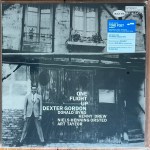
Robert Brook wrote a scathing review of the Tone Poets pressing of One Flight Up in 2023, much to the dissatisfaction of some of his readers. I was the first to leave a comment as I thought he hit the nail on the head when he said:

Overall, the Tone Poet is closed, distant and frankly boring to listen to. Where is the energy of the music? Where is the presence of these musicians? Where is the studio space?

The snare sounds muted. the piano weak, the horns, especially Gordon’s saxophone, resolves poorly and becomes increasingly tiresome to listen to. On my first listen I lasted about 3 minutes into side 1, mostly because I couldn’t stand the way the sax was sounding.

I posted the comments below on Robert’s review. (I have taken the liberty to rewrite some of my comments for the purposes of clarity, along with some additional thoughts.)

Robert,

Another great post. I have many comments to make, so here goes.

When audiophiles prefer records which are clearly second-rate, more often than not I chalk it up to their lack of a better record to play. In order to hear what they are missing, they have to have a record that somehow makes clear to them precisely which aspects of the sound are failing, or at the very least, not up to par.

You could give out the stamper numbers for your Blue Note reissue — I would be surprised if it does not have VAN GELDER STEREO in the dead wax — and those who like the Tone Poets release of One Flight Up could easily find one on Discogs or Ebay and do the comparison for themselves.

But you know what? I would bet you dollars to donuts they will never do that. They simply won’t bother.

To some audiophiles who collect records, collecting is simply not about sound quality.

It’s about collecting the right audiophile pressings.

These folks don’t want some old Blue Note reissue from the 70s. They want a fancily-packaged remastered record on high quality vinyl that’s made by a label that really cares. If it’s a numbered limited edition, even better!

If these people wanted to find out what is wrong with the sound of the Tone Poets pressing you played — thanks for laying it all out in detail so no one can doubt that you listened carefully and heard what’s really in those grooves — they could easily find a vintage copy of the record that would make a mockery of the one they own.

Twenty years ago I wrote something about this very subject:

(more…)

A Few Questions for the Record Reviewing Community Regarding Counting Crows

More Entries from Tom’s Audiophile Notebook

I think I originally posted this in the comments section for Steve Westman’s youtube channel, but, to be honest, I cannot remember as it was way back in 2023 when I wrote it.


Tom Port here. Hello all. I come in peace with a quick question.

Much is made of price points when discussing these modern pressings, and rightfully so.

I admittedly do not know anything about The Counting Crows record being discussed, but I wanted to know more — what was available, from what year, mastered by whom, that sort of thing — so I went to Discogs to see what vinyl versions had been pressed recently.

The original import LP is probably made from a dub, or mastered right off the CD — that used to happen a lot in the 90s. (My beloved Jellyfish Spilt Milk on import vinyl is a dubby joke compared to every other copy I have, including the cassette. Watch for a review of the Omnivore LP coming to the blog soon.)
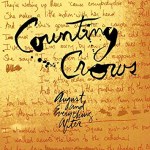
Then Analogue Productions put out a version in 2012, cut by Ryan Smith, which can be seen here.

There are 16 for sale starting at $127.49. It’s two discs at 45 RPM.

Chris Bellman cut the record in 2017, and his version can be found here.

CB in the deadwax. 2 discs at 33.

There are 43 available from $25.36. Since those were manufactured by Rainbo records, the vinyl may be terrible. Their stuff often is. I gave up buying their pressings in the 90s because they were so often warped and noisy.

Then there is one other which is a bit of a mystery, with no date of release, this one.

No CB in the dead wax. 2016 on the copyright info on the label though.

8 are available for $37.99

Question

Which one sounds the best?

Seems to me that this would be valuable information for your viewers to have. Why spend $100+ for an audiophile pressing when there are so many others around?

(more…)

Letter of the Week – “…jaw-droppingly good, and with quiet vinyl to boot…”

More of the Music of Bob Dylan

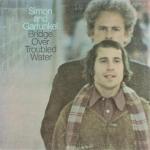
This letter comes from one of our best customers, our good friend Owais, who dropped us a line after he received his latest shipment of tasty Hot Stampers including a mono ’The Times They Are A-Changin’ and ’Bridge Over Troubled Water.’ 

Hi Tom,

Just a quick word on the last set of records that I received a couple of days ago, safe and sound. Have to agree with you – that mono of Dylan’s ‘The Times Thay Are A-Changin’ really is jaw-droppingly good, and with quiet vinyl to boot as well!

As for Simon & Garfunkel’s ‘Bridge Over Troubled Water’, I have bought quite a few copies of this LP and, to my ears, nothing sounded as good as the Classic reissue… that is, until I got your Hot Stamper. Again, you got this one spot-on. The Classic just doesn’t come close in terms of warmth and tonality.

All the best, 
Owais

Owais, thanks for your letter. We love beating Heavy Vinyl pressings, especially the good ones! Both those titles are quite well-mastered, and that’s precisely why we carry them. Classic and Sundazed are each responsible for a world of bad sounding LPs, but every once in a while they get one right, and those they got right, all things considered.


UPDATE 2025

It is doubtful that these days we would agree with our previous estimation of those two titles being “right.” When we revisit the Heavy Vinyl pressings we used to like, even those with the caveat “all things considered,” rarely do we find that they have stood the test of time sonically.


But of course, as we never tire of pointing out, the real thing just can’t be beat, and the real thing is almost always an old record (and almost never a new one; seems like that should be the logical corollary, and by golly it is).

As for Bob, we were knocked out by that mono copy. We dropped the needle on side one and our jaws hit the floor — we’d never heard a Bob Dylan record sound so warm, rich, and sweet.

Columbia 360 Mono Mania

I was actually a big fan of the Sundazed Mono, but this has more of that Tubey Magic, richness, and overall naturalness that you find on old records, qualities that seem to be sorely lacking on even the best 180 gram remasterings. MoFi also did this title and ruined it in the process (shocker!).

I just don’t think you could make this record sound any better than it does here. Everything you could want from this music is here: wonderful clarity, mindblowing transparency, clearly audible transients on the guitar, texture to the vocals, full-bodied acoustic guitar sound, and so on.

Here Are Just a Few of the Signs You May Be a Crackpot

Skeptical Thinking Is the Foundation of Audio Advancement

Pete Hutchinson of The Electric Recording Company came up with a new idea that he believes can solve all the problems of the record world.

He wants people to understand that records don’t need to be mastered.

In order to make the best sounding pressings, you just buy the right old tube equipment, get it working, get hold of the master tapes, and then patiently and carefully transfer them as flatly as possible, with the least amount of meddling.

You see, in his world the meddling is the problem.

And, like all crackpots, he has a simple but wrong solution for a complicated problem.

If you think cooked food is the cause of human ailments, and raw food is the solution to the health problems of the modern world, you are a crackpot.

If you think the world is flat and not more or less spherical, you are a crackpot.

If you think you have an aura of energy surrounding you which no one can see but which is part of your true being, a sign of your true, spiritual self, you are a crackpot.

If you think that three-wheeled cars are the solution to transportation problems in the modern world, and you’ve built one in your garage, and now all you need are investors to get the word out, you are a crackpot.

And Your Point Is?

Pete Hutchinson is someone who fits nicely into this group, because he is also a crackpot. He is an audiophile crackpot.

His “solution“ to the problems of the sound of records may be novel in the sense that no one has ever tried it at scale, but there’s a reason no one would be foolish enough to transfer master tapes to vinyl without the benefit of equalization, level adjustment, compression and a host of the other interventions mastering engineers make use of.

Records some of those things — maybe not all of them, but certainly some of them — in order to sound their best.

The fact that he is unable to hear how bad his “unmastered” records sound — and we can lump him in with all his customers who appear to be equally hard of hearing — is both comical and pathetic in equal measure.

We heard how bad his pressings sound, and we wrote about their many faults here.

(more…)

Letter of the Week – “Tom likes forward-sounding records, mastered for FM broadcasts. Steve masters for home stereos.”

Hot Stamper Pressings of the Music of Fleetwood Mac Available Now

One of our good customers played some Hot Stamper pressings for a friend of his and wrote to tell us about  the experience.

Dear Tom,

There’s some fascinating sociology here with how contentious your business model is. It really tweaks people.

I recently made a friend who’s always been a vinyl enthusiast. He’s got a fantastic collection. My friend has worked with Steve Hoffman on a few projects in the past, and holds him in very high regard, both professionally and personally.

We got together over Thanksgiving and I brought along my hot stampers. We listened to them on his gorgeous Linn stereo. One by one, he could appreciate the differences in them, and confirm what I was hearing.

I put my Rumours hot stamper and then his Steve Hoffman remaster. I put my Mahavishnu alongside his first UK pressing. I played my Abraxas Hot Stamper against the MoFi OneStep, which he had heard of, but never actually heard.

We debated the sonic merits of each, noting the different decisions that different mastering engineers had made. In all cases, he heard what there was to like about the hot stampers. Despite the evident sonic differences, which we could both hear and agree to, we disagreed over whether that meant Better Records was really on to something.

My friend’s reasons to resist becoming a customer really had nothing to do with the listening experience we had just shared. “Tom likes forward-sounding records, mastered for FM broadcasts. Steve masters for home stereos.”

Or, “a 1A-1A pressing that’s been well cared for will sound the best by definition because that’s closest to what the artists intended.”

Or, “Tom says there’s variance from one biscuit to the next. That’s clearly absurd.”

All this, despite having heard the records! Now, to my friend’s credit, he did allow that he might have a look at the site and try one out, if a record he really loves pops up at a reasonable price. (As far as I know, he hasn’t done it yet…)

Anyway, I had to agree with him – your business model makes no sense in light of all our preconceptions about how to find great sounding records.

And, even when you hear hot stampers for yourself, the defensive walls still stay up. It’s possible to deny what you’re hearing.

Aaron

Aaron,

A quick note about 1A/1A. There was a time when we might have had 6-8 original pressings of a title, some 1A’s, some 1B’s etc. I would have loved to have let you borrow them and have your friend spot the 1A pressing, since it’s “the best.”

It is of course impossible to do that, but then you just lose friends when you embarrass them that way, and who cares what somebody else likes or doesn’t like, thinks or doesn’t think about records? I sure never did. The records sound the way they sound. Opinions, as you found out for yourself, have been known to vary.

Hoffman’s fans are true believers. Try blindfolding the guys on his forum and playing them a variety of pressings, of his stuff and others. They would not do a good job of knowing which is which by ear, which are the ones you’re supposed to like and which are the ones that shouldn’t sound good, your friend included.

But most audiophiles will never submit to this test because the rug might be pulled out from under them. That is a risk they cannot take. The only tests they are willing to submit to are the ones where they know what the answers are in advance, and, to make matters worse, the only answers they will accept are the ones guaranteed to corroborate their biases and prejudgments.

When Geoff Edgers of The Washington Post wanted to test me with a batch of mystery pressings, I said “Bring it on. I do this for a living, and I’ve been at it for twenty years. I know good sound when I hear it.” He went on to play me two of the best sounding Heavy Vinyl pressings I have ever heard (here’s one of them), as well as some of the worst. (Reviews for those are  coming, but there are only so many hours in a day and finding the motivation to critique mediocre Heavy Vinyl pressings is not easy when there are so many great records to write about.)

(more…)

Classic Records and Begged Questions

Hot Stamper Living Stereo Orchestral Titles Available Now

A typical review of a Classic Records classical release here on the blog might read more or less as follows:

Classic Records ruined this album, as anyone who has played a sampling of their classical reissues would have expected.

Their version is dramatically more harsh and aggressive than the Shaded Dogs we’ve played, with transistory shrill string tone and almost none of the sweetness, richness and ambience that the best RCA pressings have in such abundance.

In fact, their pressing is just plain awful, like most of the classical recordings they remastered, and should be avoided at any price. 

With every improvement we’ve made to our system over the years, Classic’s remastered classical offerings have managed to sound progressively worse. How could that be, you ask?

Because higher quality playback stops hiding the shortcomings of bad sounding records.

At the same time, and much more importantly, better audio reveals more and more of the strengths of good sounding records.

Begging the Question

But what actually is a good record? Don’t I have to offer some evidence for what causes a record to be good rather than simply asserting that the original is good and the Heavy Vinyl reissue is bad (or at least worse)?

Luckily for you, dear reader, you are actually on a blog that has much to say about these issues.

The main reason we feel qualified to make these judgments is that we make sure to play the records we review under rigorously controlled conditions in what amounts to “blinded” experiments. (Certainly as blinded as is practical.)

And our approach to finding the best sounding pressings for any given album has gone through a host of changes over the course of decades in order to allow us to carry out this difficult work. Work we actually enjoy doing.

It’s also the kind of work that practically nobody else does.

And certainly no one does it at anything approaching the scale of our efforts, with a full time staff and a monthly record purchasing budget in the tens of thousands of dollars.

An amazingly good stereo set up in a heavily-treated room with clean electricity doesn’t hurt either.

(more…)

These Are the Kinds of Things You Say When You Haven’t Actually Played the Record

Hot Stamper Pressings of the Music of Van Morrison Available Now

From the brain trust at Music Direct.

[Italics added by yours truly.]

Van Morrison’s Moondance is that rare rock album where the band has buffed the arrangements to pure perfection.

And now, you can experience it on the finest-sounding pressing that’s ever been made courtesy of this 180g LP, remastered at Acoustech from the original analog tapes by Kevin Gray and Steve Hoffman.

Practically every audiophile press outlet in the world has sung its praises. Moondance has never had such power.

The power to make me wonder how anyone in his right mind would release a record that sounds this bad, that power?

Then there’s this guy, 51nocaster:

As for Moondance, the reissue is very good, but I still prefer the original. Steve Hoffman was involved in mastering the Moondance reissue and like some of the DCC reissues, he seems to favor the lower mids over the upper mids.

As a rule that’s true about DCC records, his awful Creedence records being the best examples, but boy, that’s not what I heard on my copy. Just the opposite. Morrison’s voice on the new reissue has no lower mids. It’s all mids and upper mids.

I suspect a download on ITunes would be more tonally correct in the midrange.

In summary, please count us as one of the outlets not singing this record’s praises, which is why you can find it in our audiophile hall of shame, along with others that — in our opinion — qualify as some of the worst sounding records ever made.

(more…)