Month: December 2025

Schubert – The Trout Quintet / Curzon / Vienna Octet

More of the Music of Franz Schubert

  • Boasting two seriously good Double Plus (A++) sides, this vintage Ace of Diamonds pressing is doing just about everything right
  • It’s simply bigger, more transparent, less distorted, more three-dimensional and more REAL than most of what we played – this is music you cannot help but be drawn into
  • The 1958 master tape has been transferred brilliantly using “modern” cutting equipment (from 1968, not the low-rez junk they’re forced to make do with these days), giving you, the listener, sound and surfaces that are hard to fault
  • When you hear how good this record sounds, you may have a hard time believing that it’s a budget reissue from 1968, but that’s precisely what it is.
  • Some budget reissues are so good, they can actually win shootouts

The cello does not have that “fat” sound some audiophiles seem to like – Decca knew more about recording chamber music in 1958 than practically all the audiophile labels that would come along later, the ones that managed to make a mess of the very idea of audiophile quality sound (you know who I mean)

The piano and the strings have that Golden Age Tubey Magical sound we love. It’s been years since I’ve had the opportunity to play this record; most copies are just too beat up to bother with, so I was glad to find a number in minty condition.

Now what I hear in this recording is sound that is absolutely free from any top end boost, much the way live music is. There’s plenty of tape hiss and air; the highs aren’t rolled off, they’re just not boosted the way they often are in a recording.

A few years back I had a chance to see a piano trio perform locally; they even played a piece by Schubert. The one thing I noticed immediately during their live performance was how smooth and natural the top end was. I was no more than ten feet from the performers in a fairly reverberant room, and yet the sound I heard was the opposite of what passes in some circles for Hi-Fidelity.

This is the opposite of those echo-drenched recordings that some audiophiles seem to like, with microphones placed twenty feet away from the performers so that they are awash in “ambience.” If you know anything about us, you know that this is not our sound.

I have never heard live music sound like that and that should settle the question. It does in my mind anyway. The Chesky label (just to choose one awful audiophile label to pick on) is a joke and always will be. How anyone buys into that phony sound is beyond me, but any audio show will prove to you that there is no shortage of audiophiles who love the Chesky “sound,” and probably never will be.

(more…)

Dire Straits – Brothers in Arms

More of the Music of Dire Straits

  • A Brothers In Arms like you’ve never heard, with a STUNNING Shootout Winning Triple Plus (A+++) side one mated to a solid Double Plus (A++) side two
  • Tonally correct from start to finish, with a solid bottom and fairly natural vocals (for this particular recording of course), here is the sound they were going for in the studio
  • After doing a comparison between our top copy and the Chris Bellman remaster, at very loud levels mind you, I now have much more respect for this recording than ever before – it’s truly a Demo Disc on the right Robert-Ludwig-mastered copy
  • Drop the needle on “So Far Away” – it’s airy, open, and spacious, yet still rich and full-bodied
  • 4 stars: “One of their most focused and accomplished albums … Dire Straits had never been so concise or pop-oriented, and it wore well on them.”
  • We admit that the sound may be too processed and lacking in Tubey Magic for some
  • When it comes to Tubey Magic, there simply is none — that’s not the sound Neil Dorfsman, the engineer who won the Grammy for this album, was going for
  • We find that the best properly-mastered, properly-pressed copies, when played at good loud levels on our system, give us sound that was wall to wall, floor to ceiling, glorious, powerful and exciting — just not Tubey Magical

Fully extended from top to bottom with a wide-open soundstage, this is the sound you need for this music. There’s plenty of richness and fullness here as well — traits that are really crucial to getting the most out of a mid-’80s recording like this.

The bottom end on “So Far Away” really delivers the goods — it’s punchy and meaty with healthy amounts of tight, deep bass.

(more…)

The Glorious Big Speaker Sound of Wind of Change

Hot Stamper Pressings of the Music of Peter Frampton Available Now

A while back we discussed the kind of sound that Glyn Johns managed to get for the likes of Humble Pie and The Who:

But oh what a glorious sound it is when it’s working. There’s not a trace of anything phony up top, down low or anywhere in-between. This means it has a quality sorely at odds with the vast majority of audiophile pressings, new and old, as well as practically anything recorded in the last twenty years, and it is simply this: The louder you play it, the better it sounds.

Chris Kimsey knew how to get the Big Rock Sound onto tape about as well as anybody who ever lived. His work on this album set me on a path I would would follow for the next fifty years.

Wind of Change is the very definition of a big speaker record, one that requires the highest-resolution, lowest-distortion components to bring out its best qualities. If you have a system like that, you should find much to like here.

I bought my first copy in 1972 while still in high school and it quickly became one of my favorite records.

All these years later it still is.

(more…)

Letter of the Week – “Crystal clear, musical as hell, huge sound, dynamic… What a record!”

One of our good customers had this to say about some Hot Stampers he purchased a while back:

Hey Tom,   

Good Lord, this Basie! Holy smokes!! Crystal clear, musical as hell, huge sound, dynamic …. wow.

What a record!

Dear Sir,

I agree completely, it’s a knockout.

The only other one I like as well, maybe even a bit better, is Farmers Market Barbecue.

Dennis Sands’ engineering is a bit more natural to my taste. Bigger space. All the players sound more like they are in the same big room.

Both are great though, and nothing made in the last forty years that we have heard can touch either of them for sound.

(more…)

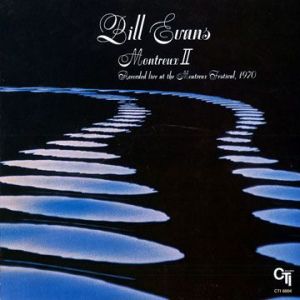
Bill Evans – Montreux II

More of the Music of Bill Evans

  • This vintage copy of this classic live jazz recording boasts solid Double Plus (A++) sound from first note to last
  • An excellent pressing, with lovely richness and warmth, real space and separation between the instruments
  • Recorded at the Montreux Jazz Festival in Switzerland, this 1970 release showcases Evans’s stylings in the trio setting that marked his best work
  • “Bill Evans’ second recording at the Montreux Jazz Festival in 1970 was a highly anticipated concert, finding the pianist in peak form, accompanied by bassist Eddie Gómez and drummer Marty Morell. “

(more…)

Jimmy Smith / Bashin’ – The Unpredictable Jimmy Smith

More of the Music of Jimmy Smith

  • This Big Band Jazz classic led by Jimmy Smith returns to the site for only the second time in four years, here with solid Double Plus (A++) grades from start to finish
  • If you own only one Jimmy Smith album, make it this one – with Oliver Nelson‘s arrangements ferociously blasting away, at good loud levels the first side here has the power to swing like you will not believe
  • 5 stars: “On the first half of the program, Smith was for the first time joined by a big band. Oliver Nelson provided the arrangements, trumpeter Joe Newman and altoist Phil Woods have a solo apiece, and “Walk on the Wild Side” became Smith’s biggest hit up to that point.”
  • It’s hard to imagine that any list of the Best Jazz Albums of 1962 would not have this record on it

This is tube mastering at its finest. Not many vintage tube-mastered records manage to balance all the sonic elements as correctly as this copy does.

(more…)

It’s Already So Good, How Could It Get Any Better?

Hot Stamper Pressings of the Music of Berlioz Available Now

You may have noticed that most of the time when we give out the stampers for the top copies of an album, we do not identify the title of the record that has those Shootout Winning stampers.

As you can imagine, our huge investments in research and development make up a big part of our costs, costs that accrue over the course of years, decades even, and that must eventually be passed on to our customers.

But this title is an exception, because we are telling you straight out that the 1K pressings of CS 6101, Music of Berlioz, are the way to go.

It turns out that both the early Decca pressings (SXL 2134) and the London Bluebacks were cut by Tony Hawkins.

It’s unfortunate that this record did not sell well when it came out in 1959, which explains why we could find no evidence of copies with any stampers other than 1K.

Not that the work of any other mastering engineers was in any way needed. Mr. Hawkins did a wonderful job on the copies we played than managed to reproduce the glorious, Golden Age All Tube analog sound of the master tape, which may sound  tautological as all get out but I assure you is not.

No, sadly for us, that glorious sound could be found on one and only one pressing, the one we graded 3+/3+.

No other pressing earned a top grade on either side. Whatever caused the amazing pressings to come out differently from the very good ones happened in the plating and pressing stages of manufacturing, an area that did not involve the work of any of the Decca mastering engineers.

(more…)

Our Top Copy of Broken Barricades Was Amazing Sounding

Hot Stamper Pressings of Art Rock Albums Available Now

Our recent Shootout Winning early UK pressing was described this way:

Looking for some proggy music that falls somewhere between Jethro Tull and Supertramp, with sonic credentials to match the recordings of those two very well-recorded bands? Well, look no further.

This early UK press is full of the Tubey Magic and studio space that makes the band’s recordings the joy they are to play on a heavily-tweaked audiophile rig.

If you’re a Prog Rock or Art Rock fan, this is a classic from 1971 that belongs in your collection. This also just happens to be our pick for the best sounding recording by the band. Others of similar stature can be found here.

And here are the notes that back up everything we had to say about the copy that knocked us out.

We LOVED playing this album, both for the music and the sound. These guys don’t get the respect they deserve among audiophiles, but we’re doing our best to try to change that.

Side one kicks off with the hit track Simple Sister, and you won’t believe how hard it rocks. Some copies are overly clean — they have the kind of clarity you might hope to find, but lacked the richness and fullness that makes ’70s analog so involving. Those “clean” copies simply do not earn very high grades from us. We leave that sound to the Heavy Vinyl and CD crowd; they seem to like it.

Punter and Thomas

John Punter engineered and Chris Thomas produced. They have worked on many of our favorite — and best-sounding – albums by British artists.

(more…)

Rossini-Respighi / La Boutique Fantasque / Solti

More of the Music of Respighi

  • An early London pressing of Solti and the Israel Phil’s performance of this wonderful ballet suite, here with seriously good Double Plus (A++) grades or close to them from first note to last
  • It’s also remarkably quiet at Mint Minus Minus, a grade that even our most well-cared-for vintage classical titles have trouble playing at
  • An abundance of energy, loads of rich detail and texture, superb transparency and excellent clarity (particularly on side one) – the very definition of Demo Disc sound
  • After trying a few years ago, we knew the best copies had the potential to be knockouts in the Decca canon – after that it was only a matter of finding enough clean copies
  • No other performance or recording we played could hold a candle to this one – the Fiedler we used to like years ago was especially disappointing this time around
  • The best sides were always the biggest, clearest and most three-dimensional, assuming they were able to retain the rich, natural, balanced tonality that is inherently key to a good record, or a great one in this case
  • There are about 150 orchestral recordings we think offer the best performances with the highest quality sound. This record is certainly deserving of a place on that list.

(more…)

Listening in Depth to Emerson, Lake & Palmer

Hot Stamper Pressings of the Music of Emerson, Lake and Palmer Available Now

If you’ve got the system to play this one loud enough, with the low end weight and energy it requires, you are in for a treat with Emerson, Lake and Palmer’s debut.

The organ that opens side two will rattle the foundation of your house if you’re not careful. This music really needs that kind of megawatt reproduction to make sense. This is bombastic prog that wants desperately to rock your world. At moderate levels it just sounds overblown and silly. At loud levels, it actually will rock your world.

To play this record right, you should have, at a minimum:

  • Big dynamic speakers, and they should be pulled out well into the room to create a three-dimensional presentation, in this case of a live rock concert. If the speakers are too big for the room, or stuck in the corners, you haven’t got a chance with a recording as powerful as this one.
  • A large room. (Our new studio has a 12 foot ceiling, a big help with a blockbuster recording such as this one.)
  • Strong walls with no windows, and, if possible, a concrete floor to keep the bass from leaving the room.
  • Seating for a single listener far from any boundary, especially the back wall (a common problem with small-ish rooms).
  • Extensive room treatments to deal with the loud levels this music requires.
  • Enough amplifier power driving speakers with big enough woofers to move all the air in the listening room with authority.
  • And, finally, high quality electricity, a heavily tweaked front end and all the rest of the audio stuff we discuss endlessly on this blog.

Without all of these things, it’s hard for us to imagine anyone could hear this record sound the way the artists and engineers wanted it to. Playing a record like this in a small room at moderate levels practically guarantees that the listener will not be able to hear what makes the best copies of this album so special.

(more…)