Month: February 2023

The Doors – L.A. Woman

More of the Music of The Doors

  • An L.A. Woman like you’ve never heard, with solid Double Plus (A++) sound from start to finish
  • This early pressing is huge, lively and rich, with in-the-room vocal presence that no Heavy Vinyl pressing can begin to offer
  • Here is the big Bruce Botnick sound we love
  • If all you know are the various Heavy Vinyl versions, this excellent copy will show you just what you’ve been missing
  • 4 1/2 stars:”The seven-minute title track was a car-cruising classic that celebrated both the glamour and seediness of Los Angeles; the other long cut, the brooding, jazzy ‘Riders on the Storm,’ was the group at its most melodic and ominous.”
  • If you’re a Doors fan, and what audiophile wouldn’t be?, this title from 1971 clearly belongs in your collection
  • The complete list of titles from 1971 that we’ve reviewed to date can be found here.

(more…)

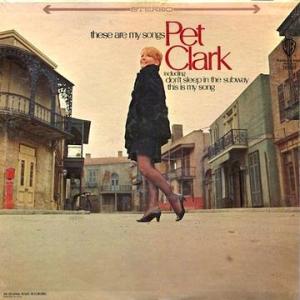
Petula Clark – These Are My Songs

More Petula Clark

More Sixties Pop

  • An original WB Gold Label pressing with outstanding Double Plus (A++) grades from start to finish – fairly quiet vinyl too
  • Both of these sides offer huge space with lots of lovely analog reverb swirling around Pet’s vocals – with all due respect, it should MURDER whatever copies you may have
  • The big hit is “Don’t Sleep in the Subway” and it sounds Tubey Magically awesome here
  • For this era of recording, 1967, and for such a big production, the sound in these grooves is glorious

Not many original copies survived in clean enough condition to be played on today’s modern audiophile equipment, but we’re glad to report that this one did.

The better copies are huge, rich and Tubey Magical. They were definitely not going for AM Radio sound on These Are My Songs the way they did on some of her albums, and thank god for that. We’ve probably auditioned close to a dozen of Miss Clark’s releases from back in the day and this one seems to us the best sounding of the bunch.

It’s rare for the loud vocal parts not to strain a bit from compressor or limiter distortion, but the really good pressings hold up through the sections where the chorus and the orchestra are their biggest and loudest.

(more…)

Why don’t you give out the stampers for your Hot Stampers pressings?

xxx

More Straight Answers to Your Hot Stamper Questions

When it comes to stampers, labels, mastering credits, country of origin and the like, we make a point of rarely revealing much of this information on the site, for a number of good reasons we discuss in some depth here.

The idea that the stampers are entirely responsible for the quality of any given record’s sound is a popular but mistaken one.

It’s a beautiful idea that must be resisted in order to make progress.

Answers Or Good Answers?

Audiophiles, like most people, want answers. 

But in the world of records, consistently good answers are very hard to come by.

For audiophiles in search of better sound, the only approach with any real hope of success is this: doing the hard work required to find the best answer you can under your present circumstances — your present equipment, your present tweaks, your present room, your present electrical quality, your present listening skills, your present table setup, et cetera, et cetera.

For those who are interested in pursuing audio and records at the highest levels, we explain in this commentary the work it takes: The science of Hot Stampers – incomplete, imperfect, and provisional


We have a section on the website you may have seen called live and learn. This section (115+ strong!) is devoted to the discussion of records we think we got, uh, wrong.

Oh yes, it’s true. But it’s not really a problem for us here at Better Records. We see no need to cover up our mistaken judgments. The process of learning involves recognizing and correcting previous errors. Approached scientifically, the gaining of knowledge — in any field, not just record collecting or music reproduction — is slow, incremental and riddled with mistakes.

What seems true today might easily be proven false tomorrow.

If you haven’t found that out for yourself firsthand, one thing’s for sure, you haven’t been in this hobby for very long.

We’re so used to the conventional wisdom being wrong, and having our own previous findings overturned by new ones, that we gladly go out of way in listing after listing to point out just how wrong we were. (And of course why we think we are correct now.)

A common misperception among those visiting the site is that we think we know it all. Nothing could be further from the truth.

We learn something new about records with practically every shootout.

Each time we go back and play a 180 gram or half-speed mastered LP we used to like (or dislike), we gain a better understanding of its true nature. 

Record cleaning gets better, front ends get better, electronics get better, tweaks get better — everything in your audio system should be improving on a regular basis, allowing you to more correctly identify the strengths and weaknesses of every record you play. (I almost forgot: your ears get better too!) If that’s not happening, we can help you make it happen.

What follows is a typical excerpt from a recent listing.

(more…)

Another Amazing Demo Disc for Bass – Peter Cetera and Chicago

We’ve called this album a Demo Disc for Bass and any Hot Stamper copy will show you why.

Talk about beefy — this album is the poster boy for rock solid bottom end. When you have a copy of Chicago’s first album with a hot side three you have a Bass Demo Disc LP that’s going to rock your world, not to mention the foundation of your house.

(How they managed to get the bass so right and screw up so many other things I will never know.)

This is a Rock Demo Disc by any measure, especially on Big Speakers at Loud Levels

It’s also our pick for the band’s best sounding album. Roughly 150 other listings for the Best Recording by an Artist or Group can be found here.

Peter Cetera

Not many musicians qualify to be placed on the list of Most Underrated, but if there were any justice in this world Peter Cetera’s name would be found right up at the top.

Meaning that he can’t even get credit for being the most underrated.

His bass playing alone — forget his singing, which is as good as any pop singer of his generation — qualifies him for Most Talented (but for some reason) Most Overlooked Musician. The huge bass sound Peter got out of his axe is the meat and potatoes of this album.

Again, it’s hard to believe this is the same guy that sang and played on ‘Hard To Say I’m Sorry’. His jazz-rock chops anchor the rhythm section with the kind of energy a band with as many pieces as this one simply cannot do without.

Chicago boasts seven top players, but Cetera’s brilliance cuts through on practically every song. People may not be able to appreciate his playing because they have bad records or bad stereos, but we’re here to rectify that situation, as least the record part of it.


New to the Blog? Start Here

What Exactly Are Hot Stamper Pressings?

Basic Concepts and Realities Explained 

Hampton Hawes – Vol 2: The Trio

More Hampton Hawes

More Contemporary Label Jazz Recordings

This Triple Plus (+++) pressing from ’55/’56 mono tapes is EVERYTHING that’s good about mono. The size, the weight, the solidity, the clarity, the energy, the rhythmic drive – it’s all here and more.

This killer pressing has the best sound and the best music we have ever heard on any Hampton Hawes album.

There is nothing to fault in the sound of side one of this pressing, and side two was nearly as good – what a record!

Both sides are Tubey Magical, rich, open, spacious and tonally correct. We’ve never heard the record sound better, and that’s coming from someone who’s been playing the album since the ’80s.

These guys are playing live in the studio and you can really feel their presence on every track — assuming you have a copy that sounds like this one.

Based on what I’m hearing my feeling is that most of the natural, full-bodied, smooth, sweet sound of the album is on the master tape, and that all that was needed to transfer that vintage sound correctly onto vinyl disc was simply to thread up the tape on a high quality machine and hit play.

The fact that nobody seems to be able to make an especially good sounding record these days — certainly not as good sounding as this one — tells me that in fact I’m wrong to think that such an approach would work. Somebody should have been able to figure out how to do it by now. In our experience that is simply not the case today, and has not been for many years, if not decades.

(more…)

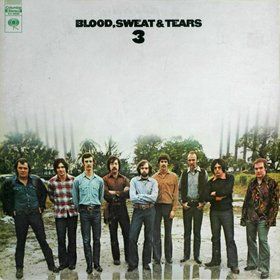
Blood, Sweat & Tears – 3

More Blood, Sweat and Tears

  • An excellent copy with solid Double Plus (A++) sound from start to finish
  • Here is the big jazz-rock sound we love, stretching from wall to wall and extending from floor ceiling, with energy and power that only a handful of albums can begin to compete with thanks to the engineering prowess of Roy Halee
  • This copy shows you just how good Roy Halee‘s engineering used to be, comparable to his brilliant work on BS&T’s previous album, the one we salute to this day as (probably) the best sounding rock record ever made
  • “David Clayton-Thomas remained an enthusiastic blues shouter, and the band still managed to put together lively arrangements, especially on the Top 40 hits ‘Hi-De-Ho’ and ‘Lucretia Mac Evil’… BS&T 3 was another chart-topping gold hit.”
  • This is an excellent title from 1970, which just happens to be a great year for Rock and Pop Music, maybe the greatest of them all

On the best copies, the brass is rich, solid, and present, with correct timbre for every instrument from the bass trombone all the way up the scale to piccolo trumpet — exactly the sound we were looking for and struggle to find.

The right pressing is BIG down low. The vocals are clear and present. The huge 30+ member chorus on the first track works; it doesn’t most of the time. It obviously presents a real challenge to any engineer, but Halee is up to it, judging solely by the sound on this very copy. Mastering and pressing issues end up making that chorus sound small, thin and opaque most of the time.

“Lucretia MacEvil,” a minor hit, has more compression than the rest of the side, to make it more radio-friendly of course, but here it holds up much better than on most copies.

(more…)

Is This Bill Halverson’s Engineering Masterpiece?

Hot Stamper Pressings of the Music of Stephen Stills Available Now

This listing for the White Hot Stamper pressing we put up years ago was written around 2007. A few points have been added since then.

When all the elements are working together as they do here, the music on Steve Stills’ first album is positively AMAZING. Until I hear something better, I’m going to have to call this Bill Halverson‘s engineering masterpiece.* Yes, on the best copies it’s that good.


UPDATE 2024

We have now discovered something even better, an album from earlier in the same year in fact, Deja Vu.


What to Listen For

Both sides can be rich and full-bodied, as well as transparent, with lots of separation between the parts. Most copies tend to be murky, thick, and veiled. The overall sound here is airy, open, and spacious, with TONS of ambience.

Check out the sound of Booker T’s big organ solo on Love The One You’re With — you can really hear the air moving through the instrument. That’s what a Hot Stamper pressing is all about.

(more…)

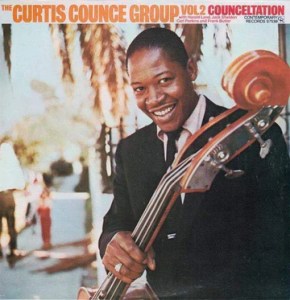
The Curtis Counce Group – Vol. 2: Counceltation

More Curtis Counce

More Contemporary Label Jazz Recordings

  • With excellent Double Plus (A++) grades throughout, you’ll have a hard time finding a copy that sounds remotely as good as this vintage Contemporary pressing
  • Another Classic Roy DuNann recording, this one is from 1957 and it is going to be very hard to beat for audiophile sound
  • Counce is a wonderful bassist and here he’s joined by Jack Sheldon, Harold Land, Carl Perkins and Frank Butler; I think you’ll be very impressed with how good this music from the late ’50s still sounds today
  • 4 1/2 Stars: “Bassist Curtis Counce led one of the finer West Coast-based groups of the 1950s, a quintet that was greatly underrated… This excellent music falls somewhere between hard bop and cool jazz.”
  • If you’re a fan of Mr. Counce, this is a Top Jazz Title from 1957 that surely belongs in your collection.
  • The complete list of titles from 1957 that we’ve reviewed to date can be found here.

(more…)

Heavy Vinyl Quality Control? We Put That Proposition to the Test

bellcurve500

Important Lessons We Learned from Record Experiments

Part one of this commentary concerns the random results of all record making processes. It can be found here.

A Heavy Vinyl Shootout

A number of years ago (2011?) we had the opportunity to crack open two brand new sealed copies of a recently remastered Heavy Vinyl pressing came our way. I already had one which I was waiting to audition, so that meant there were actually three copies to play.

At the time, we were told that with this pressing every effort was made to produce the highest quality product and to maintain the utmost in quality control throughout the production process. They fellow representing the company distributing the title was adamant that every copy produced, from first to last, would be indistiguishable from any other — not just in terms of surfaces, but sound quality too.

To accomplish this feat, the producer used the real master tapes (we were told, no reason to doubt him), had a well known mastering engineer do the mastering at a highly-regarded studio, then had a well-known audiophile pressing plant in Germany make the record, using the finest vinyl compounds available, in presses that meet the highest standards in the industry, operated by skilled individuals of the utmost professionalism.

Any stamper would be replaced long before it could possibly be showing any wear.

All the metal mothers and stampers would be made in a way designed to eliminate all variation.

One and only one complete run would be made. If another was needed at some later date the whole process would have to be started over from scratch using the same strict quality controls.

(more…)

Robert Brook Digs Deep and “Gets” Down to Earth

Hot Stamper Pressings of Jazz Featuring the Piano

Robert Brook has a blog which he calls

A GUIDE FOR THE DEDICATED ANALOG AUDIOPHILE

Below is a link to the review he has written for a record we had very much enjoyed while doing the shootout for it a few years back, Down to Earth.

Lately we have been writing quite a bit about how pianos are exceptionally good for testing your system, room, tweaks, electricity and all the rest, not to mention turntable setup and adjustment.

DIGGING DEEP Into The Ramsey Lewis Trio’s DOWN TO EARTH

Other records that we have found to be good for testing and improving your playback can be found here.

(more…)