Month: August 2022

Freddie Hubbard – Sky Dive

More Freddie Hubbard

More Jazz Recordings Featuring the Trumpet

  • Outstanding Double Plus (A++) sound on both sides of this classic CTI album – exceptionally quiet vinyl too
  • This is the kind of spacious, low-distortion, dynamic and energetic sound Rudy Van Gelder was getting in the early ’70s – if you think he was better in the sixties, you need to play some of these recordings from the ’70s that show off just how good his work could be
  • Hubbard got together a great group of Funky Jazz players to support him here, with Don Sebesky doing his usual inventive arrangements
  • 4 Stars: “The charts for the brass and woodwinds are colorful; there is a fine supporting cast that includes guitarist George Benson, Keith Jarrett on keyboards, and flutist Hubert Laws; and Hubbard takes several outstanding trumpet solos.”

Rudy was getting one hell of a lively trumpet sound on tape during this period in his career. If you have a good pressing of one of his early ’70s jazz recordings, the sound can be positively EXPLOSIVE, with what feels like all the size and power of live music. (more…)

The Three at 45 RPM – Our Four Plus Copy from 2013

Hot Stamper Pressings of The Three Available Now

We had six (yes, six!) of these 45 RPM pressings (and five Inner City’s and a couple of Eastwind 33’s — it was a big shootout), and this side one had the most ENERGY of any of them. This is a quality no one seems to be writing about, other than us of course, but what could possibly be more important? On this record, it took the performances of the players to a level beyond all expectations.

Our lengthy commentary entitled outliers and out-of-this-world sound talk about how rare these kinds of pressings are and how to go about finding them.

We no longer give Four Pluses out as a matter of policy, but that doesn’t mean we don’t come across records that deserve them from time to time.

This album checks off a number of important boxes for us here at Better Records:

Folks, you are looking at the BEST SOUNDING RECORD we have ever played here at Better Records, and the good news for you dear reader, whether you’re a true believer, a skeptic, or fall somewhere in-between, is that it can be yours. There was a time when a record like this would go directly into my collection. If I wanted to impress someone, audiophile or otherwise, with the you-are-there illusion that only Big Speakers in a dedicated room playing a LIVE recording can create, this would be the clear choice, possibly the only choice. There is simply nothing like it on vinyl in my experience. (more…)

The Book of Hot Stampers – We’d Love to Read It!

Some Moderately Helpful Title Specific Advice

I received this email about fifteen years ago:

Hi Tom,

Could you please recommend a book which would give the stamper numbers associated with the different pressings of a particular record.

Dear Sir,

Let me take this opportunity to give a more comprehensive answer, since the concept of Hot Stampers is not especially well understood by the audiophile community outside of our admittedly rather small customer base. Only those who have spent a great deal of time reading the reviews and commentary on the site are likely to understand the importance of stampers. This is partly my fault, as this issue of stamper variability and quality is spread out all over the place, exactly where, no one really knows.

_1400755003First of All, There Is No Such Book

I regret to say there is no such book and probably never will be. To my knowledge, we are the only guys on the planet selling records who know much about the subject. In fact, we pioneered the very concept, starting about fifteen years ago.

Back in the early ’90s I complained that the TAS Super Disc List didn’t list the “correct” stampers: the stampers (or matrix numbers if you prefer) being the individual markings associated with the actual pressing HP was calling a Super Disc. Without knowing those stampers almost any pressing one might acquire would be different from the one on the list, and quite possibly inferior (or superior; in any event, different sounding).

The catalog number or label — practically all that could be gleaned from his writings — serves as a very poor guide in this respect. Occasionally one might read a review which mentioned stampers, but any such mentions were few and infrequent. To do much good they would have had to be much more systematic, and that never happened (mostly because the reviewers making these pronouncements were of course not very systematic and never pretended to be).

So, since we do not have the time or the intention to write such a book, and no one else to my knowledge has the necessary expertise, one will probably never be written. There are at least two good reasons for not even attempting such an endeavor, however. One is selfish, one is not.

Trade Secrets

First off, when we discover hot stampers, they become the equivalent of trade secrets — we never reveal them to anyone. Over the last twenty five years of collecting we have bought hundreds of thousands of dollars worth of records and spent tens of thousands of hours of our time deciphering those arcane little squiggles in the dead wax that correlate, however imperfectly, with both the good records and the bad ones. Why would we want to give that hard-earned information away? It’s priceless, to us anyway.

(more…)

Bashin’ – A Difficult to Reproduce Jazz Masterpiece

More of the Music of Jimmy Smith

Rudy Van Gelder Is One of Our Favorite Engineers

In the past we’ve complained about “Rudy Van Gelder’s somewhat over the top echo-drenched brass,” but on a copy such as this there is nothing to complain about!

All that reverb on the brass sounds RIGHT. If you have a top quality front end (and the system that goes with it), this recording will be amazingly spacious, three-dimensional, transparent, dynamic, and open.

Copies of this album are sometimes so sour or dull (or both) that they go right in the trade pile. Add to that the difficulty of finding copies that are scratch-free and not too noisy and you have one tough shootout. Inner Groove Distortion caused by the non-anti-skate-equipped turntables of the day is a chronic problem with vintage jazz records, and this title is typically no exception — except in this case! 

A Must Own Jazz Record

This Demo Disc Quality recording should be part of any serious Jazz Collection.

It also ranks fairly high on our Difficulty of Reproduction Scale. Do not attempt to play it using any but the best equipment.

Unless your system is firing on all cylinders, even our hottest Hot Stamper copies — the Super Hot and White Hot pressings with the biggest, most dynamic, clearest, and least distorted sound — can have problems .

Your system should be thoroughly warmed up, your electricity should be clean and cooking, you’ve got to be using the right room treatments, and we also highly recommend using a demagnetizer such as the Walker Talisman on the record, your cables (power, interconnect and speaker) as well as the individual drivers of your speakers.

This is a record that’s going to demand a lot from the audio enthusiast, and we want to make sure that you feel you’re up to the challenge. If you don’t mind putting in a little hard work, here’s a record that will reward your time and effort many times over, and probably teach you a thing or two about tweaking your gear in the process.

(more…)

Facing Some Hard Truths in Phoenix

Advice on Making Audio Progress

Or kicking them while they’re down. Pick whichever one you like best, they both work for me.

For those of you who have not been following this story, here is the best place to start.

Although it’s behind a paywall, you can get a free test drive easily enough. (In September there will be a long-form video of me going about a Hot Stamper shootout and discussing the world of audiophile records, which you do not want to miss!)

Now that you are up to date on the overall contours of this mess, here is another one of the many thoughts I have had concerning the revelation that Mobile Fidelity has been secretly sourcing at least some of their masters digitally since 2015.

Before we start talking about where the blame lies in this mess — with Esposito, Fremer, Jim Davis, or the so-called “engineers” who work for Mobile Fidelity — I would like bring up a couple of ideas that you have no doubt seen before, mostly because they are discussed endlessly on this blog.

We Make Mistakes

The first is that anyone who has been on an audio journey for very long has made a lot of mistakes along the way.

Uniquely among reviewers and record dealers, we go out of way to admit when we were wrong. You might say we are even proud of the fact that we used to get so many things wrong about records and audio.

(more…)

Respighi / Strauss – Pines of Rome / Don Juan / Kempe

More Orchestral Spectaculars

More Reviews and Commentaries for The Pines of Rome

  • With two top quality sides, we guarantee you’ve never heard The Pines of Rome sound remotely as good as it does here (unless you own one of killer Living Stereo LPs of the work)
  • This Readers Digest pressing of Kempe’s superb 1964 recording for Decca has glorious sound on both sides and plays reasonably quietly for any LP produced by this notoriously difficult label for audiophiles
  • There were only three performances with top quality audiophile sound, and our Wilkinson-engineered pressing here was right up there with the best we heard in our massive shootout
  • If you know anything about these works, you know that they have tons of top and bottom end, and it is the rare pressing that captures both
  • The texture and harmonic overtones of the strings are superb – as we listened we became completely immersed in the music on the record, transfixed by the remarkable virtuosity Kempe and the Royal Philharmonic Orchestra brought to these difficult and demanding works 50 plus years ago

This shootout has been at least thirty years in the making — that’s how long I have been picking up these RDG sets, ever since my friend Robert Pincus turned me on to them all those years ago.

Around 2016 we surveyed the recordings of the work we had on hand, close to a dozen different performances I  think, and found them all wanting, save three: the Reiner (which is still on the TAS List), this Reader’s Digest pressing with Kempe (our second favorite, and a close second at that), and a London with Kertesz.


If a particular performance had any distortion or limitation problems in the higher frequencies, it was quickly rejected out of hand. Same with low end whomp and weight. On The Pines both are crucial.

No other pieces of music of which we are aware have so much going on up high and down low. This narrowed the field of potential Hot Stampers considerably. Great performances by top conductors could not get over these hurdles — high and low — time and time again.

For these reasons, it took us years to find the right recordings. We knew the Reiner would be hard to beat, but we kept trying record after record hoping that we could find one to wrest the crown away from what is widely considered the greatest recording of the works ever made.

The best pressings were doing everything right. There was plenty of top end, with virtually no harmonic distortion, and when I say plenty, I mean the right amount. Not many engineers managed to get all the highs correctly onto the tape, but Lewis Layton and Kenneth Wilkinson sure did.

So many recordings had screechy strings and horns. When the music would get loud — and the Pines gets very loud indeed, assuming the recording will let it — the sound would become unbearably harsh and unpleasant. This is the opposite of what should happen, and it was obvious that those recordings would not make it past the first round.

All three of the finalists could claim enthusiastic performances with powerful energy and top quality orchestral playing.

(more…)

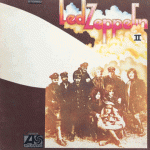
Led Zeppelin / II – Gee, I Seem to Have No Trouble At All Playing This Record

More of the Music of Led Zeppelin

I expect that pretty much everyone knows the famous story by now.

Robert Ludwig’s “Hot Mix” (a complete misnomer, mostly propagated by those with a poor understanding of what is involved in making records – the mix never changed, only the mastering) of Zep II was causing the needle to jump the groove when Ahmet Ertegun’s daughter tried to play it on her cheap turntable, so they recut the record with more compression and cut the bass. (The recut, if you have never heard one, may take the cake for the worst sounding pressing of the album ever made.)

Our Triplanar Mark 6 / Dynavector 17dx combination seems to play the original just fine. Amazingly well in fact.

Here’s a challenge for all the Heavy Vinyl fans in the world:

Name all the Heavy Vinyl records that sound as good or better than RL’s cutting of Zep II.

Modern engineers tell us they can cut records better now than ever before, with all the bass and dynamics that previous engineers were supposedly forced to limit for the cheap tables and carts of the past.

So where are these so-called “new and improved” records, the ones with better bass and dynamics?

I have yet to hear one. Perhaps someone can point me in the right direction.

Send your list — even if your list only has one entry! — to tom@better-records.com

(more…)

Hampton Hawes in 1964 – The Green Leaves of Summer

  • This ’70s pressing was our Shootout Winner on side two for its clean, clear and lively sound, with lovely space around all of the instruments 
  • Not an easy title to find, and this one is quieter than most of what we played – Mint Minus to Mint Minus Minus
  • “Hawes had lost nothing of his swinging style while in prison, as can be heard on such numbers as “Vierd Blues,” “St. Thomas” and “Secret Love,” and he was just starting to hint at moving beyond bop. Recommended.” – All Music

This Contemporary Yellow Label LP has wonderful Contemporary All Tube sound, courtesy of the amazing engineering of Howard Holzer. The piano is right — weighty and percussive with a full-bodied tone. The bass definition is superb. The clarity and transparency here are nothing short of breathtaking.

Steve Ellington’s brush work on the snare is very clear on this copy, helping to push the music to the next level. On the great Sonny Rollins track, St. Thomas, Steve Ellington is doing some fancy playing on the rims of his drums — the ambience bouncing off the studio walls is amazing.

A major highlight here is the completely original interpretation of Blue Skies. Hawes gets going with some really complicated two-handed playing. With the superb clarity of this copy you won’t miss a note. (more…)

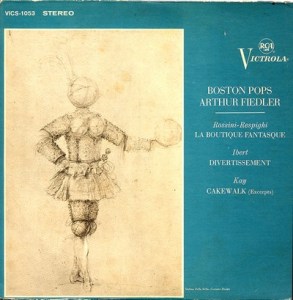
Rossini-Respighi / La Boutique Fantasque / Fiedler

More Music Conducted by Arthur Fiedler

More Living Stereo Recordings

  • Outstanding sound throughout this vintage RCA Victrola stereo pressing of these delightful orchestral pieces
  • Unlike the original Shaded Dog pressings, this Victrola is in correct polarity on both sides
  • Tons of energy, loads of detail and texture, superb transparency and excellent clarity – this recording, when mastered and pressed right, as is the case here, is the very definition of DEMO DISC sound
  • When we talk about space and transparency, we’re talking about recordings that sound like this one
  • A favorite title with audiophiles – it’s full of lovely orchestral colors and, as usual, Fiedler and the Boston Pops know how to bring them out
  • More of the music of Gioacchino Rossini (1792-1863)
  • More of the music of Ottorino Respighi (1879-1936)

Fiedler has a way with the Ibert piece here like nobody’s business; the performance is definitive, although the sound is not as good as La Boutique Fantasque, which is nothing short of amazing. The Kay piece sounds excellent here and is beautifully performed. Fiedler is hard to beat on music like this.

(more…)

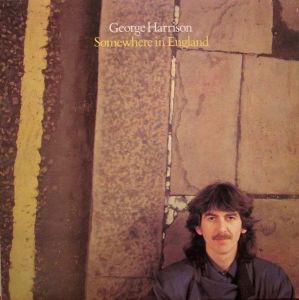
George Harrison – Somewhere in England

More George Harrison

More Beatles

  • This domestically pressed Dark Horse LP boasts very good Hot Stamper sound or BETTER throughout – exceptionally quiet vinyl too
  • Dramatically richer, fuller and with more presence than the average copy, and that’s especially true for whatever godawful Heavy Vinyl pressing is currently being foisted on an unsuspecting record buying public
  • “Harrison’s first album since 1979 is one of his finest, featuring his moving tribute to Lennon, All Those Years Ago. Harrison’s signatures – crystal-clear production, buoyant backup and chimelike guitar runs are all here. This record is both entertainment and a musical giant’s defiant tribute to the value of life.” (Author unknown)
  • If you’re a George Harrison fan, this title from 1981 is surely a Must Own

(more…)