vin-Dec-w

We judged these vintage Decca and London records to have unacceptable sound based solely on the specific pressings we played.

We can’t say that other pressings don’t sound better. We just don’t plan on playing any more copies to find out.

Neither of These Tchaikovsky 5ths Made the Grade

More of the music of Peter Ilyich Tchaikovsky (1840-1893)

We’ve been playing quite a number of different pressings of Tchaikovsky’s Symphony No. 5 lately, hoping to find a 5th that would really knock us out.

Most have left us unimpressed with the quality of the sound, and in the case of this Solti on London, the performance.

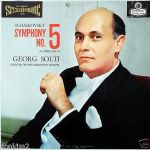
London CS 6117. Solti conducts the Paris Conservatory Orchestra.

The sound is OK. It’s fairly tubey and there’s a decent amount of energy to the recording.

The problem is not the sound, the problem is that the performance is terrible. Our main listening guy said he could hardly recognize the music!

DG SLPM 138 658. Mravinsky conducting the Leningrad Phil on an early pressing from 1961.

Big energy and a great performance but the string tone is shrill and smeary.

We are very used to hearing this kind of sound on Deutsche Grammophon records. This is why you see so few of that label’s pressings on our site.

How Did We Figure All of This Out?

There are more than 2000 Hot Stamper reviews on this blog. Do you know how we learned so much about so many records?

Simple. We ran thousands and thousands of record experiments under carefully controlled conditions, and we continue to run scores of them week in and week out to this very day.

(more…)

Gorgeous Cover, Bad Sound

Hot Stamper Pressings of the Music of Felix Mendelssohn Available Now

UPDATE 2025

Our favorite recording of the work can be found here.


Awful sound. It’s bright, dry and flat, with strident strings.

The sound is much too unpleasant to be played on high quality modern equipment.

If your system is dull, dull, deadly dull, the way older systems tend to be, this record has the hyped-up, bright and aggressive sound that is sure to bring it to life in no time.

There are scores of commentaries on the site about the huge improvements in audio available to the discerning (and well-healed) audiophile. It’s the reason Hot Stampers can and do sound dramatically better than their Heavy Vinyl or audiophile counterparts: because your stereo is good enough to show you the difference.

With an Old School system, you will continue to be fooled by bad records, just as I and all my audio buds were fooled thirty and forty years ago. Audio has improved immensely in that time. If you’re still playing Heavy Vinyl and other audiophile pressings, there’s a world of sound you don’t know you’re missing.

(more…)

Dvorak’s Symphony No. 9 – An Overview of Decca’s Recordings

More of the music of Antonin Dvorak (1841-1904)

This commentary was written close to a decade ago, when we were first trying to figure out which pressings and performances of the work were worth pursuing.

Please to enjoy.

We got off to a rough start with this piece of music. The early pressings we played were often sonically uninspiring, and that’s being charitable.

The London pressings with Kubelik (CS 6020) that we had thought were competitive with some of the better recordings we had on hand turned out to be disappointing.

The strings were often hard and shrill, the overall sound crude and full of smear.

These Londons cost us a pretty penny owing to the high quality condition we require them to be in for our shootouts. In the end, all that time, effort and money was for naught. A big chunk of dough was headed down the drain.

The Stereo Treasury pressing of this same performance sounded better to us than any of the Bluebacks we played but far from competitive with the recordings we ended up preferring.

The Londons and Deccas from 1967 with Kertesz conducting the LSO also left much to be desired sonically. After hearing the 9th on both London and Decca, we did a quick needle drop on the other symphonies from the complete cycle that Kertesz conducted and concluded that none of them were worth our time.

The trade-in pile was growing ever taller.

Then some good news came our way when we dropped the needle on the Decca/London recording with Mehta and the LA Phil. Our best London sounded shockingly good, much better than the one Decca pressing we had on hand.

His 8th Symphony (CS 6979) is also quite good by the way.

This is surprising because we rarely like anything by Mehta and the LA Phil. from this period — the recording in question is from 1975 — but of course we are happy to be surprised when the recordings sound as good as the ones we played.

The one that seemed to us to be the best balance of sound and performance was conducted by Istvan Kertesz, but not with the LSO.

His recording with the Vienna Philharmonic in 1961, his debut for Decca as a matter of fact, is the one that ended up winning our shootout of a dozen pressings or so.

We prefer a later mastering of the recording though, not the original.

Here are more reviews of music conducted by Kertesz, a man whose work we very much admire.

(more…)

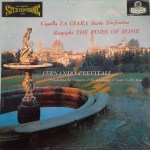
Skip this Ridiculously Compressed London Pines of Rome

Hot Stamper Pressings of The Pines of Rome

The Prevatelli on London you see pictured was way too compressed to be taken seriously by us.

When the music is supposed to get loud at the end of the Pines, it never does!

The Stereo Treasury you see below was equally bad sounding. It did not last more than a few minutes on our turntable.

If more vintage Londons had sound as bad as the three or four copies we had on hand (it’s a fairly common used record, now I know why), we would happily admit that going the Heavy Vinyl route is a good idea.

(more…)

This Blueback of Le Cid Was Just Awful

Hot Stamper Classical and Orchestral Imports on Decca & London

Don’t buy into that record collector/audiophile canard that the originals are always the best sounding pressings.

This original Blueback pressing — true, we only had the one, so take it for what it’s worth — was a complete disaster: shrill, with no top or bottom to speak of, the very definition of boxy sound.

Our current favorite for sound and performance is the one Fremaux conducted for EMI in 1971.

It had been on the TAS List for some time, but we confess we didn’t bother finding out how good it was until about five years ago when it became clear to us what a wonderful conductor Louis Fremaux could be.

Here are some other Hot Stamper pressings of TAS list titles that we like.

Back to London

The sound of the London original you see above was much too unpleasant to be played on high quality modern equipment. There are quite a number of others that we’ve run into over the years with similar shortcomings.

(more…)

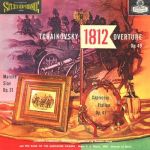
Avoid the Early Pressings of the 1812 Overture with Alwyn

More of the Music of Peter Ilyich Tchaikovsky

More than ten years ago, 2010 or thereabouts I’m guessing, we felt we were ready to do a shootout for Tchaikovsky’s famous 1812 Overture, music that surely belongs in any serious audiophile record collection.

On a well-known work such as this, we started by pulling out every performance on every label we had in our backroom and playing them one after the other. Most never made it to the half-minute mark. Compressor distortion or inner groove overcutting at the huge climax of the work? Forget it. On the trade-in pile you go.

A few days went by while we were cleaning and listening to the hopefuls. We then proceeded to track down more of the pressings we had liked in our preliminary round of listening. At the end we had a good-sized pile of LPs that we thought shootout-worthy, pressings that included various RCA, Decca and London LPs.

The London you see above did not impress us. It sounded too much like an old record.

There are a number of other Deccas and Londons that we’ve played over the years that were disappointing, and they can be found here.

We much preferred the Decca budget reissue, cut from the same tapes, shown here.

(more…)

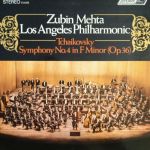
This Tchaikovsky 4th Turned Out to Be Not as Good as We’d Hoped

Hot Stamper Pressings of the Music of Tchaikovsky Available Now

About ten years ago we dropped the needle on this Mehta recording and thought it had potential, so we went about acquiring more copies for an eventual shootout.

A few years back we gave them another listen and found the sound not to our liking.

We have not done a shootout for any of the major Tchaikovsky symphonies (4, 5 and 6) in a very long time, but we hope to do them in the future, although that future could be many years from now. Nothing we have dropped the needle on has knocked us out, and that’s usually what it takes to get the ball rolling.


UPDATE 2024

Actually we quite like this RCA reissue with Monteux, and there are some other recordings we know to be good, but they are turning out to be very hard to find.


These Mehta Londons have revealed themselves to be much more artificial sounding than we thought they were, or, more accurately, could tell they were back in 2011.

Like every Royce Hall recording we’ve ever played, including the one everybody knows, there is too much multi-miking and spotlighting going on for us to suspend our disbelief and feel like we are in the living presence of the musicians, to borrow a phrase. The orchestra in this recording is not presented with anything resembling the experience one would have in the concert hall.

James Lock is a brilliant recording engineer, but his work here in the states leaves a lot to be desired.

(more…)

Neither the Sound Nor the Performance Here Make the Grade

Hot Stamper Pressings of the Music of Rimsky-Korsakov Available Now

In our experience this is not the recording of the work to buy, on either Decca or London. Of the two recordings by Ansermet, we much prefer the one made with the Suisse Romande in 1961 to that of the one he recorded with the Paris Conservatoire in 1954 (which was his second recording of the work with them).

We did a monster shootout for this music in 2014, one we had been planning for more than two years. On hand were quite a few copies of the Reiner on RCA; the Ansermet on London (CS 6212, his second stereo recording, from 1961, not the earlier and noticeably poorer sounding recording from in 1959); the Ormandy on Columbia, and a few others we felt had shown potential.

The only recordings that held up all the way through — the fourth movement being THE Ball Breaker of all time, for both the engineers and musicians — were those by Reiner and Ansermet.

This was disappointing considering how much time and money we spent finding, cleaning and playing those ten or so other pressings.

Here it is a year later and we’re capitalizing on what we learned from the first big go around, which is simply this: the Ansermet recording on Decca/London can not only hold its own with the Reiner on RCA, but beat it in virtually any area. The presentation and the sound itself are both more relaxed and natural, even when compared to the best RCA pressings.

The emotional content of the first three movements (all of side one) under Ansermet’s direction are clearly superior. The roller coaster excitement Reiner and the CSO bring to the fourth movement cannot be faulted, or equaled. In every other way Ansermet’s performance is the one for me.

There are other Deccas and Londons that we’ve cleaned and played recently that were disappointing, and they can be found here.

Our Pledge of Service to You, the Discriminating Audiophile 

(more…)

A Reviewer Liked this London a Whole Lot More Than I Did – A Cautionary Tale

Hot Stamper Orchestral Imports on Decca & London

While digging around the web I ran into a site called From Miles to Mozart, which purports to be “An exploration of the incredible world of classical and jazz recordings”

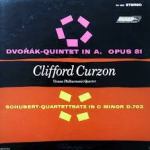
Fair enough. Here is what the reviewer had to say about a London we did not think sounded very good, CS 6357. At the time, he was most of the way through a fairly complete survey of London Bluebacks, and when those were done he went on to review a Whiteback pressing of this London, which appears to be the only pressing he had on hand. (We of course had only the one as well.)

I’d run out of blue so next up was CS 6357 with its retro FFSS label, a white back FFSS. Clifford Curzon scores a knockout with the Dvorak Quintet with a very refined late Blueback sound; truly transcendental sound of the highest order. Another white back FFSS followed in CS 6379 Mozart Clarinet Quintet with a magical clarinet but some edginess at times with some of the instruments. Overall the Clarinet Quintet had very strong sound to rival most any Blueback. Unfortunately, the Mozart Divertimenti on side 2 was not as assured with quite a few signs of strain in the highs indicative some early transistor changing the precious Blueback sound. CS 6379 was recorded by Smith and Parry October, 1963 at Sofiensaal, Vienna with the LP coming out in May of 1964. CS 6357 was recorded in Sofiensaal, Vienna by Culshaw and Parry in October 1962 with the LP in October 1963. Overall two strong LP’s without a Blueback! (Well, CS 6357 does exist with a Blueback.)

He has some ideas about “precious Blueback sound” and the half-speed mastering setup used to achieve them. I will leave that for others to discuss, mostly because I could not seriously entertain this fellow’s writing once I found out what he had to say about one of Mobile Fidelity’s earliest half-speed mastered releases:

Zubin Mehta Conducts Music from Star Wars and Close Encounters of the Third Kind (MFSL 1-008)

Comments: If you want to hear what audiophile vinyl sounds like, this is a great way to start. Whether you like science fiction movies or not, this record is a must hear … and try to turn up the volume if you can. This Mobile Fidelity Sound Lab pressing of Decca SXL 6885 (London ZM 1001) is one of the most incredible sounding orchestral recordings I have ever heard. It may not be the recording used for the movies (John Williams conducted those himself), but it sounds significantly better in terms of recording quality. Talk about lifelike presence, huge dynamic range, bass depth with real visceral impact — this record has DEMONSTRATION written all over it. Even the Cantina Band track gives you the impression of an alien jazz/pop band playing right before you. I was fortunate enough to get my copy for free from a friend, and only recently did I realize that this album sells for some money. Looking for a change from the same old EMI, Decca, RCA, Mercury, DG, or Philips? Try this one.

If this is your idea of an audiophile Demo Disc, you are setting the bar awfully low, about even with the height of the carpeting.

I consider it a piece of mid-fi audiophile trash, one that I never bothered to discuss on the blog.

Were I to grade it today I would probably give it a D for sound and an F for music. I remember playing it back in the late-70 or early-80s and wondering what on earth was the appeal of such a cheesy, lowest-common-denominator schlockfest.

If this London LP isn’t the perfect example of a pass/not-yet record, I can’t imagine what would be.

We Know the Record Well

Years ago I did a little shootout with a few of the early London pressings of the album — which were also mastered by Stan Ricker, not sure if many of you out there knew that — as well as some later pressings not cut by SR, and of course the MoFi.

The MoFi was clearly better than any of the three regular London pressings, as they were just not very good sounding at all, suffering from a problem which makes most later Londons hard to enjoy. That problem is opacity.

For classical and orchestral music, it’s the kiss of death.  It is also one of the main reasons we like so few orchestral recordings pressed on Heavy Vinyl. Most of them badly lack transparency, a sonic issue we wrote about more than a decade ago.

(more…)
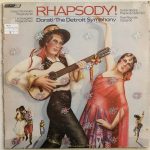
Rhapsody! – The Story of an Old Fave We Were Wrong About

Hot Stamper Classical and Orchestral Imports on Decca & London

A great example of an album We Was Wrong about.

As you can see by the commentary below, I used to think this was a wonderful sounding London “Sleeper” classical recording.

That was many years ago – five, six, seven, I cannot be sure. I ended up acquiring a half dozen copies of the album or so over the course of those years, had them cleaned up and proceeded to do a shootout.

It did not go well. Immediately I noticed that the pressings I was playing were sounding clean, clear and lively, but much too modern, too much like a good CD and not enough like the good Golden Age classical recordings we audition regularly.

Those recordings, on the right pressings, will take your breath away.  Rhapsody! was leaving me asking myself what was wrong. The more I listened the more obvious the faults of the recording became.

The pressings I played lacked warmth, richness, sweetness, space, and a number of other analog qualities I won’t belabor here. Too much of what makes listening to vintage vinyl so involving was just not on these records no matter how much I may have wanted them to be.

The extreme top and bottom were also lacking, giving the sound a “boxy” quality. The presentation was wide but not tall. Of the five levels of sound we discuss on the site in various listings, levels one and five were not as evident as they should have been.

This is, again, what progress in audio in all about. As your stereo improves, some records should get better, some should get worse. It’s the nature of the beast for those of us who constantly make improvements to our playback and critically listen to records all day.

We cannot rely on our previous judgments. With all the changes we’ve made over the years, we can now clean our records better and play our records better than ever before.

That means that some will rise and some will fall. This one fell, pretty hard in fact. Not a bad record, but not a good one either, and far from as good as I once thought.

Below is our previous commentary.  All of this was true for my old stereo and room, my critical listening skills at the time, my old cleaning regimen. And by old I mean my approach from only about five or six years ago!

Things have changed, dramatically, and nothing in all of audio could make me happier.

DEMO QUALITY SOUND! This is one of the greatest SLEEPER albums of all time.

This London reissue from 1979 of recordings from 1978 in Detroit, the year in which Dorati became director of the Detroit Symphony has the kind of orchestral sound we drool over here at Better Records. Dark and rich strings — the basses growl just like the real thing. Dynamic. Deep solid bass. Fluffy tape hiss, which sounds exactly the way it should. This tells you that the top end is untweaked. (Almost all Classic Records have funny sounding tape hiss as you may or may not know. It”s a dead give away that the top end is boosted. Tape hiss is like pink noise: it always sounds the same, unless somebody has fooled with it. Steve Hoffman taught me to listen for this quality and it was a lesson important to my growth as a critical listener.) (more…)