smeary-sound

Smear, a blurring or loss of sharpness of individual notes, refers to missing transient information, the kind most often associated with tube gear.

However, smear occurs with every kind of gear, especially high-powered amps, the kind typically required to power the inefficient speakers audiophiles seem to favor these days.

When we got rid of our tube equipment and high-powered amps, some of the smear in our records disappeared with them.

Once that happened, the smear that is commonly heard on modern Heavy Vinyl repressings became much more noticeable and, as might be expected, even more annoying.

Strauss / Carnival in Vienna / Ormandy – Reviewed in 2011

More Johann Strauss

Side two of this two-eye Columbia pressing has EXCELLENT sound, rating a sonic grade of A+ to A++. With a grade such as that it ranks somewhere in the Top Five Per Cent of Columbia pressings I would guess, only because so many Columbias are just plain awful. Is even one out of ten passable? I doubt it. But this one is! It’s quite good in fact, with an extended top end and lovely texture to the strings. (more…)

Parallel Lines on Heavy Vinyl

Hot Stamper Pressings of the Music of Blondie Available Now

Sonic Grade: D or worse

EMI and Simply Vinyl both released Heavy Vinyl versions of the album with little sonic success.

I remember being underwhelmed by the Simply Vinyl version, the perfect example of the smeary sub-gen sound you get when a record is made from a tape dub.

The EMI 180 was brighter and thinner and every bit as wrong in its own way. Choosing among them would have been difficult.

The best choice: none of the above. 

As is so often the case, the Heavy Vinyl Reissues are simply a disgrace.

(more…)

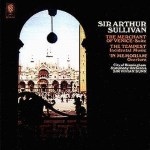
The Merchant of Venice Suite – Another Dubby Klavier Record

Hot Stamper Pressings of Classical and Orchestral Music

Sonic Grade: F

A Hall of Shame Pressing and another Heavy Vinyl Classical LP debunked.

This record sounds like it was mastered from copy tapes, which is where at least some of its dubby sound comes from. All the Klavier Heavy Vinyl pressings we’ve played have this problem.

Yes, it is yet another murky, smeary Audiophile Piece of Trash from the mastering lathe of the formerly brilliant Doug Sax. He used to cut the best sounding records in the world. Once he started cutting Heavy Vinyl it was all over.


Mendelssohn / Scotch Symphony & Fingal’s Cave / Dorati

Hot Stamper Mercury Pressings Available Now

The sound of this side one came as a bit of a surprise to us. It’s so BIG and RICH — this is a Mercury?

It sounds like a good Decca/ London.

It’s actually instead a bit of a hybrid. The recording takes place in a famous London hall with superb acoustics (Walthamstow Town Hall) in which the Mercury recording team merely set up their usual three mics and recorded to half-inch tape. Gone is the dryness and upper-midrange nasality of so many Mercury’s; no doubt that sound was caused in large part by the halls in which they were recorded.

This is some Tubey Magical Decca orchestral sound from 1956, here on a Colorback early Mercury pressing. Go figure.

Side One

With a grade of A++ this side was KILLER. A little smear but so rich, musical and enjoyable you will find yourself lost in the performance. The London Symphony is hard to beat.

Side Two

A+ for the fourth movement of the symphony, with more smear than we heard on side one. Fingal’s Cave Overture sounds better though, more like side one. We gave it an A++ grade.

This is a truly wonderful copy of one of the rarest and best Mercury recordings. (more…)

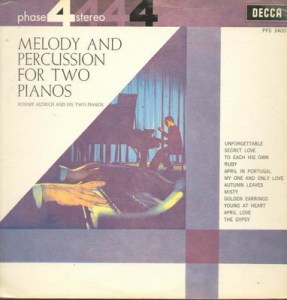
Ronnie Aldrich / Melody and Percussion For Two Pianos – Reviewed in 2012

This Decca Phase 4 record from 1962 has Demo Disc sound of a sort on side one. Super Hot sonics, coupled with the Super Phase 4 “jumping out of the speakers” recording techniques that were employed, mean that this is one LIVELY record!

The pianos can get to be a bit much, but when they are under control, the huge stage and the effect of all the percussion that jumps out of the soundfield is really quite something to behold.

Zero smear on this side too, which is what makes it work — the blunting of all those transients would quickly ruin the fun.

Which is what happens on side two; the smear and hardness of the typical Phase 4 pressing are evident and do spoil all the fun.

Try tracks 1, 2, 4 and 6 – talk about immediacy and explosive dynamics.


This is an Older Review.

Most of the older reviews you see are for records that did not go through the shootout process, the revolutionary approach to finding better sounding pressings we developed in the early 2000s and have since turned into a fine art.

We found the records you see in these older listings by cleaning and playing a pressing or two of the album, which we then described and priced based on how good the sound and surfaces were. (For out Hot Stamper listings, the Sonic Grades and Vinyl Playgrades are listed separately.)

We were often wrong back in those days, something we have no reason to hide. Audio equipment and record cleaning technologies have come a long way since those darker days, a subject we discuss here.

Currently, 99% (or more!) of the records we sell are cleaned, then auditioned under rigorously controlled conditions, up against a number of other pressings. We award them sonic grades, and then condition check them for surface noise.

As you may imagine, this approach requires a great deal of time, effort and skill, which is why we currently have a highly trained staff of about ten. No individual or business without the aid of such a committed group could possibly dig as deep into the sound of records as we have, and it is unlikely that anyone besides us could ever come along to do the kind of work we do.

The term “Hot Stampers” gets thrown around a lot these days, but to us it means only one thing: a record that has been through the shootout process and found to be of exceptionally high quality.

The result of our labor is the hundreds of titles seen here, every one of which is unique and guaranteed to be the best sounding copy of the album you have ever heard or you get your money back.

Ravel / Daphnis et Chloé / Munch – Reviewed in 2011

More of the Music of Maurice Ravel


UPDATE 2022

Our favorite recording of the work is Monteux’s with the London Symphony Orchestra from 1959 on the early Decca label. We know of no other recording of the work that does as good a job of capturing such a large orchestra and chorus.

Of course, Monteux is a master of the French idiom — his performance of the complete ballet here is definitive in our opinion.


We actually had three clean Shaded Dog pressings for our shootout of this Ravel classic (which took us somewhere between five and ten years to acquire) with this copy showing itself as CLEARLY the best, with transparency and openness not heard on the others. The sonic grade for side one was at least A++ to A+++, meaning that the sound was Hard To Fault (HTF), but of course there’s no telling if a better copy exists. One must assume such a thing is possible but where would one find such a copy? Clean shaded dogs do not come cheap. 

This copy might not have been the quietest in our shootout at Mint Minus Minus but it is without a doubt the best sounding. With quiet music such as this surfaces for vintage pressings are always an issue, but we think you will find the superb sound more than compensates.

Side One

A++ to A+++ or better. This work includes a chorus, always a tough test for any recording/pressing to pass. The good news here is that the voices are clear, natural, separate and full-bodied. This is the hallmark of a vintage Golden Age recording — naturalness.

The top is also quite good, with a triangle that sounds harmonically correct and clear. The transparency on this side is superb.

In addition the bass is big and powerful. You will not find many recordings of the work that do a better job of capturing such a large orchestra and chorus, and of course Munch is a master of the French idiom. (more…)

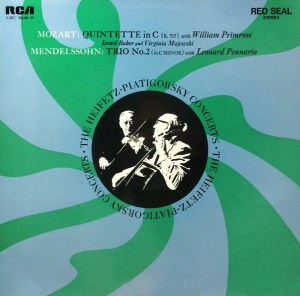
Mozart / Mendelssohn / The Heifetz-Piatigorsky Concerts

Hot Stamper Pressings Featuring the Violin

Superb Recordings with Jascha Heifetz Performing

Reviewed in 2011.

The Mozart side of this Red Seal pressing from 1975 sounds AMAZING. I have never heard better staging for a chamber work of this kind. All five instruments are so clearly set apart from each other and tonally correct (for the most part) that it is nothing less than fascinating to be able to follow each instrument as it weaves its way through the score.

If you’ve suffered through the horrendously sour and screechy recordings Heifetz and Piatigorsky are known for in audiophile circles — LDS 2513 and LDS 6159 — you will be glad to know that this side one sounds NOTHING like them.   

(Reversing your polarity on LDS 6159 helps but it can’t fix sound that’s that bad.)

Side one is, as we say, wonderfully clear and transparent. It does not have as much warmth and fullness as one might want, so for those of you who have plenty of tubey magic to bring to the recordings you play, this may just be the best chamber work you have ever heard. It is a touch hot in the 3-4k region but this is a minor quibble. Tons of recordings from this era are, including most RCAs and Mercuries; Deccas and Londons less so.

Side Two Sucks

Side two of this pressing is smeary, boxy and opaque, a sound we come across quite often when playing the scores of Golden Age classical recordings we audition every month here at Better Records.

(more…)

Years Ago We Thought We’d Found a Good Sounding Orange Label Pressing

Hot Stamper Pressings of Folk Rock Albums Available Now

UPDATE 2023

This review for a copy of Surrealistic Pillow was written more than ten years ago.

At present we no longer pick up any pressings on the later label.

Hardly any have good sound and most are dry, boxy and almost completely lacking in Tubey Magic. Why waste time searching for the few needles that might be sitting in haystacks?


This QUIET orange label (!) pressing has surprisingly good sound, some of the best sound we have ever heard for that more-often-than-not dismal second label in fact. It actually beat a few of our black label originals, with more tubey magic and less distortion and harshness than we expect from these later pressings. 

We always have fun playing this psychedelic ’60s masterpiece. The sound — problematical as it may be — gives you so many of the qualities we love about good ol’ analog. No one’s recording albums these days with this kind of richness, sweetness, and warmth, that’s for sure. Drop the needle on My Best Friend or Today to hear that trippy Sixties San Francisco sound at its best.

This album is an exceedingly difficult nut to crack — no matter how many copies we have, no matter how much information we have to work with. Play the typical copy and you’ll likely run for cover — we heard copies that were aggressive, shrill, lifeless, dull, thick, veiled, bass-shy — you name it, we heard it. Not only that, but as a rule most pressings, even the orange labels ones, are BEAT TO DEATH. Finding a copy that sounds any good and plays Mint Minus Minus or better is a real challenge.

Less Distortion

This one is cut very clean, with less of the grit and grunge that you hear on so many copies. The overall sound is rich, full, and tonally correct. There’s a touch of smear and the vocals don’t have all the presence of the best originals, but this is still an excellent copy that will sound better and play quieter than most copies out there. (more…)

Mendelssohn & Schubert / Symphony No. 4 & Symphony No. 5

Hot Stamper Pressings of the Music of Felix Mendelssohn Available Now

The strings are rich, with lovely rosiny texture and virtually no tube smear. Played with zest and the recording is every bit as lively. 

The grade on side one could even be better than Two Pluses — we just don’t have enough clean copies to know. Big bass at the end, powerful dynamics too.

Side two was good but nothing like this amazing side one. Too much smear hurts it badly, and the mark is not helping either.

We’re pricing this one for just the one side. Fortunately it’s the complete symphony, one of Mendelssohn’s most famous works.

(more…)

Aretha Franklin – Gritty Sound or Smeary Sound? You Gotta Pick One

More of the Music of Aretha Franklin

Reviews and Commentaries for the Music of Aretha Franklin

We pulled together enough clean copies for a big shootout years ago and most of them sounded the way you’d expect — thin, bright, and grainy. The best copies did a much better job of communicating the music, giving you the kind of life and energy this music needs to work its magic.   

There’s a touch of grit and grain at times, but that’s unavoidable unless you get a smeary later pressing that robs the instruments and vocals of their texture. I couldn’t stand to listen to a copy like that — I’ve heard plenty — so I’ll take the grit and the grain with my 60s soul and call it a day. 

Tons of great material on here, including Aretha’s fun version of the Stones’ Satisfaction and the rockin’ classic 96 Tears.

(more…)