same-stampers-different-sound

When All the Stampers Are the Same, What’s a Mother to Do?

Hot Stamper Pressings of Blue Note Albums Available Now

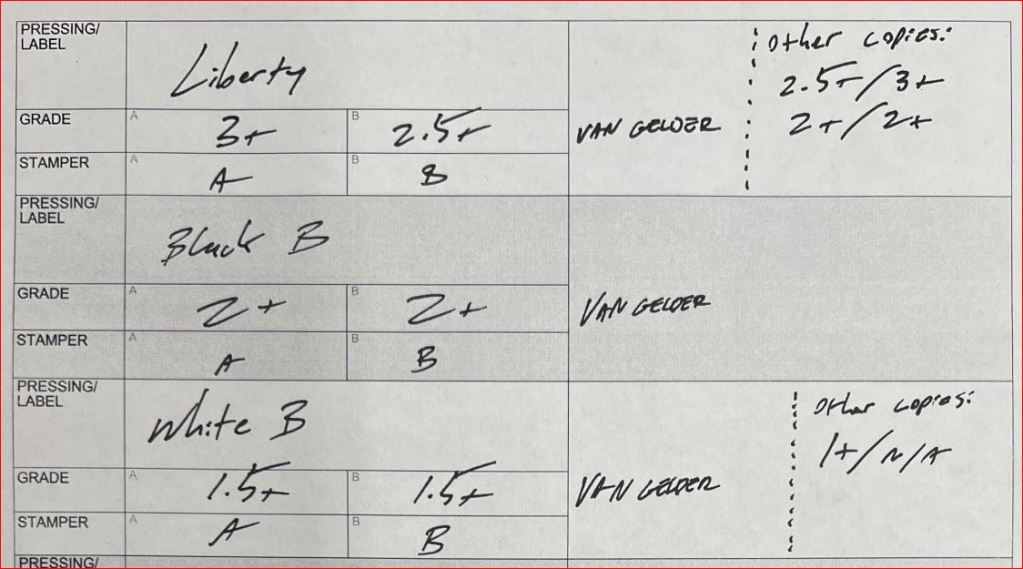
What happens when all the stampers are A and B and every one of them is cut by Rudy Van Gelder?

This is precisely the problem we were faced with on the mystery Blue Note album whose stampers can be seen below.

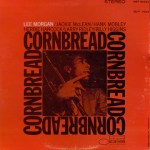
It’s not Cornbread — those are really hard to find! We did a shootout last year and hope to have another one coming before long, but most of what we buy ends up going back to the seller for noise issues, so it may be a while before we can get it going.

In the meantime, whatever you do, don’t waste your money on the Tone Poets reissue — it’s ridiculously bad.

What information can you rely on when trying to find the best sounding pressings?

The stamper numbers are no help.

And you can’t look for the VAN GELDER stamp in the deadwax since they all have it.

Of course, now that we’ve done the shootout, we know to buy the Liberty label pressings, but that could hardly have been predicted beforehand. Plenty of later labels beat the early label pressings on Blue Note’s albums.
But readers of this blog surely know that we are being facetious when we say we faced a lack of stamper information with the title above.

We have no way of knowing what the label is for any copy that is playing on our turntable, so how could the stamper information possibly matter, ever, under any circumstances?

We judge records by their sound quality, then grade them on that single metric, ignoring all others.

Only later do we learn which labels and stamper numbers correspond with which sonic grades, assuming they actually correspond at all. (Some don’t.)

If you are buying certain pressings because they have earlier labels, rather than pressings with later labels, predicated on the theory that the earlier labels should have better sound, this blog will be a godsend — because it will prove to you that the approach you are taking is not a particularly good one.

You are only fooling yourself if you think it is. It might work more often than not, but do you really want to be wrong about four records out of ten? Forty out of a hundred. Four hundred out of a thousand? With no way of knowing which group — good or bad — any given title happens to fall into?

A record collection of a thousand records is a decent sized collection. But with four hundred titles having second-rate or worse sound? Nobody wants that.

Buying originals is just not a good way to insure your collection will have top quality sound. Fortunately we know of a way that does.

(more…)

Now That You Know the D2 Stampers Have the Best Sound, What’s Your Next Move?

Hot Stamper Pressings of Contemporary Jazz Albums Available Now

Recently we conducted a shootout for yet another superb Contemporary recording, one that we had auditioned a couple of times before, and one for which we had a good understanding of both the music and the quality of the sound. We’ve played vintage Contemporary pressings by the hundreds at this point. Rarely are we surprised by how good the right stampers and labels can sound.

It’s not the record you see pictured, however. For now, the title of this album will have to remain a mystery, along with a great many others we’ve been discussing on the blog recently.

The cost of discovering the right stampers for famous and often expensive records is often high, can take decades, and is fundamentally at the heart of how we make our money. We are in the business of finding potentially amazing sounding pressings. Often they have stampers we know to be good, and sometimes they have stampers we discover are even better.

We clean them up, play them, and offer to our customers those that, for whatever reasons no one has yet figured out — including us — are far better sounding than any others.

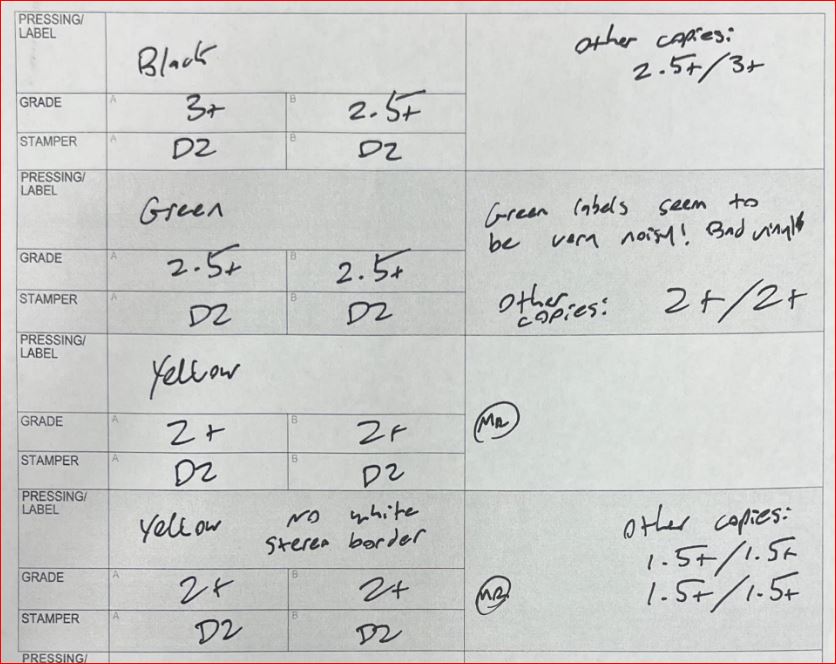
You’ll notice that the early Black Label pressings did the best in our shootout, followed by the later Green Label pressings, followed by the Yellow Label pressings with the earlier cover at 2+, which are in turn followed by the Yellow Label pressings in the later cover.

Depending on which D2 you’re playing, the sound could be absolutely amazing, or perhaps excellent, or, as in the case of the 1.5+ copies, merely good, not great.

Lessons Learned

Knowing the right stampers are D2 for this title does not allow us to predict which pressings will win a shootout. We actually have to sit down and play all the copies to come up with the hierarchy we laid out above.

However, knowing that the Black Label originals with D2 stampers are the copies most likely to win shootouts is very helpful information.

(more…)

This Mercury May Have the Same Stampers on Both Sides, But the Sound Is Very, Very Different

Hot Stamper Pressings of Mercury Classical Recordings Available Now

For Mercury classical and orchestral recordings, the original FR pressings (when there are such pressings), in stereo, on the original plum label are the best way to go, right? 

In many cases, yes. We talk about how much better the FR pressings for The Firebird are compared to the much more common, and still quite good, M2 reissue pressings here. (Both beat the pants off the awful Classic Records pressing.

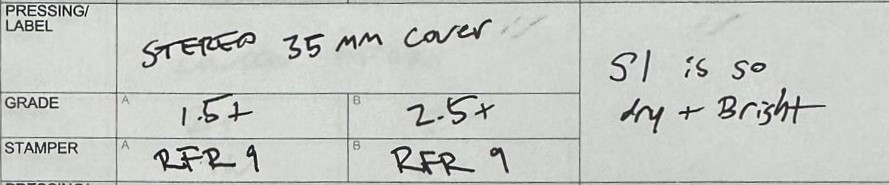
But sometimes the RFR pressings — which, as I am sure you know, can be the earliest stampers for some titles — are nothing special on one side or the other. That is exactly the case here.

Keep in mind that the stamper numbers you see above belong to a different album.

We’ve lately been giving out much more stamper information than we used to, but for now we are keeping the identify of this title close to the vest.

We are not able to predict what stampers will win a shootout before we actually sit down to play all our copies.

It turns out that the FR pressings did not sound as good as some of other pressings. The RFR stampers came in somewhere in the middle of the pack, an average of 2+, but a hard record to sell with such very different sounding sides.

This is why we do shootouts, and why you must do them too, if owning the highest quality pressings is important to you.

Fortunately for readers of this blog, our methods are explained in detail, free of charge.

We’ve also written quite a few commentaries to help audiophiles improve the way they think about records.

I implore everyone who wants to make progress in this hobby to learn from the mistakes we’ve made. There are 146 “we were wrong” listings on the site as of this writing, and we learned something from every damn one of them, painful and costly as those experiences may have been.

(more…)