break

Some of the more notable breakthrough pressings we’ve discovered are linked here.

The Thrill of Discovering Great Recordings

Hot Stamper Pressings of Percussion Recordings Available Now

Robert Fine was one of the greatest audio engineers who ever lived. He is the man responsible for recording this audiophile gem for Command, as well as much of the Mercury catalog.

Unfortunately, we rarely have any Command records in stock, but we do make an effort to have a good selection of the most amazing sounding Mercury titles available in the form of Hot Stamper pressings.

If you have the system for it, it’s very possible you have never heard most of these instruments sound this real on any other recording. It’s as if you were standing right in the studio with them. Yes, it’s that crazy good.

Let Me Ask You This

Here’s a question no one seems to be asking:

Who is finding incredible Demo Discs like this Command from 1961 nowadays?

(more…)

Yes, Sometimes There Is Only One Set of Magic Stampers

Hot Stamper Pressings of the Music of Rimsky-Korsakov Available Now

Way back in 2015 we wrote:

There are certain stampers that seem to have a consistently brighter top end. They are tolerable most of the time, but the real magic can only be found on the copies that have a correct or even slightly duller top. Live classical music is never “bright” the way recordings of it so often are.

On the other hand, it’s rarely “rich” and “romantic” the way many vintage recordings are — even those we rave about — but that’s another story for another day.

We recently did the shootout again, and now with a much more resolving, clear, accurate upper midrange and an even more extended top end, the stampers that we used to find “brighter than ideal” are almost always just too damn bright, period.

We will never buy another copy with those stampers except by accident or misfortune.

We was wrong and we don’t mind admitting it. We must be learning something in our shootouts, right?. We ran an experiment, we discovered something new about this album, and that should be seen as a good thing.

If you have been making improvements to your system, room, electricity, etc., then you too own records which don’t sound as good as you remember them. You just don’t know which ones they are, assuming you haven’t played them in a while.

(more…)

Striving for Orchestral Clarity on Finlandia with Decca and Failing with RCA

More of the Music of Jean Sibelius

More of the Music of Edvard Grieg

The original RCA Living Stereo pressings we played in our 2014 shootout were not competitive with the best Deccas and London reissues of Finlandia.

Is the original the best way to go? In our experience with Finlandia, it is not. And it’s not even close.

The Decca reissue you see here is yet another wonderful example of what the much-lauded Decca recording engineers were able to capture on analog tape all those years ago. The 1961 master tapes have been transferred brilliantly using “modern” cutting equipment (from 1970, not the low-rez junk they’re forced to make do with these days), giving you, the listener, sound that only the best of both worlds can offer. [Not true, see Two Things below.)

When you hear how good this record sounds, you may have a hard time believing that it’s a budget reissue from 1970, but that’s precisely what it is.

Even more extraordinary, the right copies are the ones that win shootouts

Side One

Correct from top to bottom, and there are not many records we can say that about. So natural in every way.

The brass is HUGE and POWERFUL on this side. Not many recordings capture the brass this well. Ansermet on London comes to mind of course but many of his performances leave much to be desired. Here Mackerras is on top of his game with performances that are definitive.

The brass is big and clear and weighty, just the way it should be, as that is precisely the sound you hear in the concert hall, especially that part about being clear: live music is more than anything else completely clear. We should all strive for that sound in our reproduction of orchestral music.

The opening track on side one, Wedding Day at Troldhaugen, is one of my favorite pieces of orchestral music. Mackerras and the London Proms make it magical.

Side Two

The richness on this side is awesome. So 3-D, with depth and transparency to rival any recording you may own.

Two Things

When you hear a record of this quality, you can be pretty sure of two things: one, the original is unlikely to sound as good, having been cut on cruder equipment.


UPDATE

Let me stop myself right there. I no longer subscribe to this view. There are many original pressings mastered in the 50s that are as hi-rez and undistorted as anything made after them. Here’s one example. It would be easy to name a great many more. Live and learn I say.


And two, no modern recutting of the tapes (by the likes of Speakers Corner for example, but you can substitute any company you care to choose) could begin to capture this kind of naturalistic orchestral sound. [Mostly still true.]

I have never heard a Heavy Vinyl pressing begin to do what this record is doing. The Decca we have here may be a budget reissue pressing, but it was mastered by real Decca engineers (a few different ones in fact), pressed in England on high quality vinyl, and from fairly fresh tapes (nine years old, not fifty years old!), then mastered about as well as a record can be mastered.

The sound is, above all, real and believable.

The brass has weight, the top extends beautifully for those glorious cymbal crashes, the hall is huge and the staging very three-dimensional — there is little to fault in the sound on either side.

(more…)

This Mud Slide Slim Rocked Like No Other Pressing We’d Ever Heard

Hot Stamper Pressings of the Music of James Taylor Available Now

This Shootout Winning copy from 2008 or thereabouts showed us a Mud Slide Slim we had no idea could exist.

We have a name for records like this. We call them breakthrough pressings. They are one of the reasons we play so many thousands of records every year. We’re looking for records that sound as good as this one does, even for titles that no one thinks are particularly well recorded.

No, especially for those titles.

Experience has taught us they can only be found by playing lots of pressings and looking for whatever needles might be hiding in the haystacks. (The haystack for One Man Dog can be seen at the bottom of this post.)

As you will see from our commentary, the first track on side one, Love Has Brought Me Around, is a great test for energy.

If your copy does not seem very energetic to you, then we recommend you keep buying every green label original you see until you find one that does.

Our commentary from the early days of shootouts can be seen below.

(more…)

Yes, For Some Records There Is Only One Set of Magic Stampers

Hot Stamper Pressings of Music on Island Records Available Now

As is sometimes the case, there is one and only one set of stamper numbers that consistently wins our Catch Bull at Four shootouts.

We stumbled upon an out-of-this-world copy of the right pressing in 2016, a copy took the recording to a level we had no idea could even be possible. (We were going to give it Four Pluses, and probably should have, but cooler heads prevailed.)

Since then we have had many copies come in, but none that could compete with the Magic Stamper pressings.

And the best part of this story is that, no, the best stampers are not 1U, or 2U, or even 3U.

As a matter of fact, they are far from the stampers found on the earliest pressings. That’s one reason it took us so long to discover them, because they are much less commonly found than pressings with the earlier stampers. By the time these later pressings were mastered, pressed and released, the album’s biggest selling days were over.

For all we know this cutting may have been done just to keep the record in print, possibly undertaken many years after its initial release.

Who knows? Who cares? What difference does it make?

Well, it does serve to make a point near and dear to our hearts: that the idea (and operational premise of most record collectors) that the originals are always better is just a load of bunk. It might be and it might not be.

If you want better sounding records, you had better open your mind to the idea that some reissues have the potential to sound better than even the best original pressings.

These, for starters, and there are hundreds more you can read about here on the blog.

Of course this is nothing but bad news for the average audiophile collector, who simply does not have the time or money to go through the hassle of buying, cleaning and playing every pressing he can get his hands on.

But good news for us, because we do.

(more…)

Honky Chateau – Two Very Different Mastering Approaches

Hot Stamper Pressings of the Music of Elton John Available Now

Our thoughts circa 2007, about the time we found our first real breakthrough pressing.

This has to be one of the best sounding rock records of all time. The highs are silky sweet, the vocals are full-bodied and breathy, and the tonal balance is perfection from top to bottom.

If you have any doubts that Elton John was a pop music genius, just play this record. It’s all the proof you will need. Drop the needle on any track — you just can’t go wrong.

There’s no need to go on and on about the sonic qualities of this copy. Everything you’d ever want from this record is here in abundance. Folks, this copy is the epitome of what we call Master Tape Sound — on both sides.

Two mastering approaches

The original British copies of this record, with the leatherette cover, have two distinctly different mastering approaches.

The earliest pressings tend to be very lively, but a bit hi-fi-ish and aggressive in places. I used to think these were the best.

The later British originals tend to sound dull and muddy.

There was a time when we liked a certain British stamper that we thought split the difference between the mastering approaches mentioned above.

The copies we played this time around with that stamper were practically unacceptable this time around.

Our best domestic pressings actually bettered many of the Brit copies with our old favorite stamper.

Recent improvements in our stereo and evaluation process have allowed us to discover the stampers with that we think have the right sound.


When it comes to stampers, labels, mastering credits, country of origin and the like, we make a point of revealing little of such information on the site, for a number of reasons we discussed in a commentary we wrote many years ago, at the dawn of the Hot Stamper revolution. (Ahem.)

However, in 2024 we decided to reverse our previous policy. We now make available to our readers a great deal of that information, under these four headings:

Please to enjoy.

(more…)

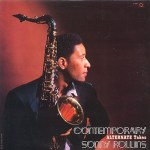
Sonny Rollins Helped Us See the Light Many Years Ago

The following commentary was taken from our mid-90s catalogs, the ones that came out back in the days when it was still possible to find great jazz records like Alternate Takes for cheap, often still sealed.

The Analogue Productions Heavy Vinyl recuts done by Doug Sax had come out a few years earlier, starting in 1992. Those remastered records were in print at the time I wrote this, and I was pretty pissed off at the way they sounded.

Here is our listing with some minor changes from long ago:

Acoustic Sounds had just remastered and ruined a big batch of famous jazz records, and shortly thereafter a certain writer in The Absolute Sound had said nice things about them.

Said writer and I got into a war of words over these records, long, long ago. You’ll notice that no one ever mentions these awful records anymore, and for good reason: they suck. If you own any of them, do yourself a favor and get either the CD or a good LP for comparison purposes. I expect you will hear what I’m talking about.

In my essay on reviewers I attack him for giving a big “Thumbs Up” in TAS to the botched remastering of Sonny’s Way Out West. The OJC reissue, though superior, is still only a pale shadow of the original.

The Real Deal

Now we have the real thing! This LP has three alternate takes from that session, all mastered by George Horn, and surprise, surprise, surprise, they sound just like my original, much better than (but not so different from) the OJC, and worlds away from the muted flab of the Analogue Productions LP!

(more…)

Having a Tough Time Shooting Out Blue from 2005 to 2011

Hot Stamper Pressing of the Music of Joni Mitchell Available Now

UPDATE

This review starts with a killer copy we played in 2011. Further down you can read about our aborted attempt to do a shootout for the album in 2005.


ABSOLUTELY STUNNING TRIPLE PLUS SOUND ON SIDE TWO with a side one that’s nearly as wonderful! You’ve probably heard us say this before, but it is ridiculously tough to find great copies of Blue. It’s not just the toughest nut to crack in Joni’s catalog, it’s one of the most difficult albums in ALL OF POP MUSIC to get to sound right.

So when we find one like this, it’s a BIG DEAL. It’s got Off The Charts breathiness, delicacy, warmth and sweetness, and that’s just Joni’s voice. The sound of the ensemble throughout is amazingly natural, the recording so spacious.

Just check out the piano on The Last Time I Saw Richard: this is not the thin and hard-sounding instrument that accompanies Joni on every pressing you have ever had the misfortune to audition, hoping against hope that someday you would find that “elusive disc” with sound worthy of such extraordinary music. No, this piano has real weight; it has body; and it’s surrounded by real, three-dimensional studio space. No vinyl pressing we have ever played has managed to capture the sound of the piano on this record any better. Exactly no copies. (A few White Hot Stamper copies have done it as well, but none any better.) For those of you with a certain Heavy Vinyl pressing in your collection, we can only say: Put that in your pipe and smoke it.

Both sides here are rich, full-bodied and warm with amazing immediacy. The sound is exceptionally DYNAMIC and the clarity and transparency are OFF THE SCALES. Joni’s vocals sound just right — so clear and natural, with lots of breath and texture.

We Promised Not to Talk About It

In the introduction to the Blue Game you may remember reading this:

Down the road when we’ve had a chance to do a shootout amongst all our best copies, we will be offering something more to our liking. I recommend instead — and this is coming from a die-hard LP guy, someone who disconnected his home CD player over two years ago and only plays the damn things in the car — that you pick yourself up a nice used copy of the gold CD Hoffman mastered for DCC. It’s wonderful.”

We then went on to explain that we didn’t want to just tell you what we found lacking in the newly remastered version. We much preferred that you discover it for yourself, an experience we were sure would be both edifying and enjoyable in equal amounts.

We Weren’t Ready in 2005

That first aborted attempt at a shootout for Blue failed because we had neither the specialized cleaning techniques and machinery that we use now, nor the equipment required to play such a challenging recording. We pointed out at the time that our notes contained comments such as “soft, lacks bass, grungy, grainy, thin, hi-fi, bright, so-so, aggressive, hard, thick, groove damage, highs worn away, lacking in bass and extreme top, gritty, swooshy, bad vinyl.”

No doubt that’s what we were hearing.

We also found comments such as “perfection, wonderful, lovely, sweet, transparent, as good as it gets, Joni’s right there, one of the best, wow.”

So there was hope, even way back in 2005. But no Blue to sell.

(more…)

Powerful People on MoFi – What Was I Thinking?

More Entries in the Mobile Fidelity Hall of Shame

UPDATE 2024:

I just found my old review notes from 2014! They can be seen below. Please to enjoy.

At the time of our last shootout in 2014, I still had the MoFi pressing of Powerful People in my personal, very small (at that point) record collection.

Almost all the best sounding records from my collection had been sold off long before, going to good homes that I can only assume would play them more than I had in the last ten years.

If it’s a record you see on our site, chances are good I’d have listened to it until I’d practically turned blue in the face.

But I had kept my Powerful People Half-Speed these 30+ years because the domestic pressings I’d played were just too damn midrangy to enjoy.

At least the MoFi had bass, top end and didn’t sound squawky or hard on the vocals.

Well, let me tell you, played against the best domestic pressings, the MoFi is laughable. (In that respect it shares much with the current crop of audiophile reissues.)

It’s unbelievably compressed, a problem that is easily heard on the biggest, most exciting parts of the tracks. They never get remotely as big or as loud on the MoFi as they do on the lowly A&M originals.

It’s also sucked out in the midrange, like most MoFis, and, like most MoFis and Half-Speeds in general, the bass is not well-defined, punchy, and it never goes very deep.

There is also the issue of the MoFi 10k boost on the top end — it’s clearly audible and as bothersome as ever.

In summation, like most of the better audiophile records — from long ago as well as those being produced today — the most you can hope for from these reissues is that they can fix a few problems you might be saddled with on the particular pressing you own.

(more…)

Years Ago We Badly Misjudged the Recording Quality of Tull’s Debut

Hot Stamper Pressings of the Music of Jethro Tull Available Now

A clear case of live and learn.

We listed a White Hot copy of This Was in 2008 on the Island pink label and noted at the time:

Be forewarned: this ain’t Stand Up or Aqualung. I don’t think you’ll be using any copy of This Was to demo your stereo, because the recording has its share of problems. That said, this record sounds wonderful from start to finish and will make any fan of this music a VERY happy person. We guarantee you’ve never heard this album sound better, or your money back.

Now we know a couple of things that we didn’t back in 2008.

1). This album is a lot better sounding than we gave it credit for years ago. It’s not perfect by any means but it is much better than the above comments might lead you to believe.

We chanced upon an exceptional sounding copy of the album in 2017 or so, and that taught us something new about the record:

2). The Pink Label pressings are not the best way to go on this album.

Once we heard the exceptional copy alluded to above, we played it against our best Pink Label copies and it was simply no contest.

In 2008 we still had a lot to learn. We needed to do more research and development, which of course we are doing regularly with Classic Rock records, our bread and butter and the heart of our business.

We do them as often as is practical, considering how difficult it is to find copies with audiophile quality playing surfaces.

Nine years later, we felt we finally had a proper understanding on the various pressings of This Was. It goes like this:

The Pink Label original British pressings can be good, but they will never win a shootout up against copies with these stampers (assuming you have more than one copy — any record can have the right stampers and the wrong sound, we hear it all the time. Beware of small sample sizes).

(more…)