Half-Speed Disasters

Linked here are more than 100 Half-Speed mastered records that have exceptionally poor sound compared to the Hot Stamper pressings we’ve auditioned, which inludes both vintage early pressings and reissues.

On this blog we detail precisely what problems Half-Speed mastering causes. These hundred or so pressings are proof of the damage it can do to perfectly good recordings.

Byrd at the Gate – Another Hyped-Up MoFi

An Audiophile Hall of Shame pressing and another MoFi LP reviewed [decades ago] and found seriously wanting.

This is a title Mobile Fidelity ruined (what else is new?), and having just played an early Riverside LP I can see how their mastering approach was — as is so often the case — misguided to say the least.

First off, the guitar and the drums on the original are tonally right on the money. They sound like bass and drums should. They sound, in a word, correct.

Mobile Fidelity felt it necessary to brighten up both and the results are a phony sounding guitar and phony sounding drums, with tizzy cymbals thrown in for good measure.

(The Wes Montgomery MoFi title has many of the same faults, but it’s not quite as bad as this one. We’ve had Hot Stamper copies of the originals so we know they can sound superb, some of RVG’s best work.)

The old Mobile Fidelity — the pre-Heavy Vinyl Mobile Fidelity — rarely met a master tape they didn’t think needed a healthy dose of top end boost. They also never understood what an acoustic guitar sounds like. They blew it on every last one of the Cat Stevens albums, brightening up the guitars, which, as we all know from playing with the treble controls on our receivers way back when, emphasizes the “picking” of the strings at the expense of the resonating guitar body as well as the vibrating string harmonics.

What makes Byrd At The Gate a good record is the natural acoustic guitar tone. Once you screw that up, what’s left?

An audiophile record, for audiophiles who like phony sounding guitars. (Chesky anyone?)

Another reason the Mobile Fidelity is such a joke is that this recording inherently has a lot of ill-defined bass. Since Half-Speed mastering causes a loss of bass definition, their pressing is even WORSE in this respect. Bad guitars, bad drums and bad bass — that pretty much covers everybody in the trio. Resulting score: 0 for 3. (more…)

The Doors’ Debut – MoFi Reviewed

More of the Music of The Doors

Sonic Grade: D 

If anyone still thinks that this pressing is anything but a bad joke played on the audiophile public — so sucked out in the midrange, bass shy and compressed to death — that person still has a way to go in this hobby.

A very long way.

You can hear that something is off with this pressing from another room. The sound is bad enough to have earned a place in our Mobile Fidelity Hall of Shame.

But wait just a gosh darn minute.

I liked the MoFi just fine when it came out. I guess I had a way to go in this hobby too.

That was back in the early ’80s. I like to think I’ve learned a thing or two in the last forty years.

Some reviewers and a great many audiophiles may be stuck in the 80s, but I sure as hell don’t think I am one of them.

(more…)

The Nightfly on MoFi – More of the Same Old Same Old

Hot Stamper Pressings of the Music of Donald Fagen Available Now

More MoFi phony EQ on the top right around 10k and sloppy bass.

You should be able to do a whole lot better and you sure won’t have to work very hard to do it.

Robert Ludwig is the man who knows how to cut this album, not Stan Ricker.

The properly pressed, properly cleaned Robert Ludwig-mastered copies are right in a way that the typical Half-Speed mastered or Heavy Vinyl pressing rarely is. The more critically one listens, the more obvious this distinction becomes.

The real thing just can’t be beat, and you can be pretty sure that the real thing is an old record.

If you are buying these audiophile pressings, take the advice of some of our customers and stop throwing your money away on Heavy Vinyl and Half-Speed mastered LPs.

(more…)

“Tour de Force” – Analogue Productions Reviewed

Hot Stamper Pressings of Bossa Nova Recordings Available Now

Sonic Grade: F

Acoustic Sounds had Stan Ricker remaster this record a number of years ago, and of course they (he) ruined it. A twinkly top end and flabby bass were just two of the major shortcomings of their version. Nothing surprising there, as Stan Ricker is famous for his “smile” curve, boosting both ends of the audio spectrum, whether they need boosting or not. (They rarely do).

When you add too much top end to a guitar album and ruin the sound of the guitar, what exactly are you left with?

Please note that not a single title from the Analog Revival series is any good, to the best of my knowledge, and every last one of them should be avoided if high quality sound is important to you.

The same is true for all the 180 gram jazz titles on Analogue Productions that were mastered by Doug Sax, as you may have read elsewhere on the site. Those records received rave reviews in the audiophile press when they came out, but you won’t find too many audiophile reviewers sticking up for them now, as they are, without exception, murky, compressed disasters of the worst kind.

I guess these reviewers eventually acquired equipment accurate enough to notice how bad those pressings are, which goes to show there is hope for practically anyone.

(more…)

Old Ways – Another Anadisq Disaster

More of the Music of Neil Young

Hot Stamper Pressings of Country Albums Available Now

Some time in the 2000s we reviewed this pressing from 1996. We did not care for it much.

The MoFi is a muckfest, as was to be expected from a record mastered by this awful label during the Anadisq era, the darkest chapter in the disgraceful history of Mobile Fidelity.

We guarantee any Hot Stamper LP will make your MoFI pressing sound like the bad joke it was even as far back as 1996, the stone age in audio, or your money back including shipping.

Is it the worst version of the album ever made? Hard to imagine it would have much competition, if any.

As of 2015, this label may have entered a new and even more disgraceful era, but considering how bad their records have been from the very start, (something that should be obvious to any audiophile with a high quality playback system, the kind of system that should have no difficulty exposing the manifold shortcomings of their remastered pressings), how much lower can they possibly fall?

Only time will tell!

(more…)

CBS Half-Speed of Tapestry Reviewed

Hot Stamper Pressings of the Music of Carole King Available Now

The CBS Half Speed is brighter and thinner than the good sounding pressings we sell — can you imagine a worse way to present this often intimate music?  

I had a much darker and less revealing system in 1980 than I do now. Pretty much everybody had a system that suffered from those afflictions. I thought my system was a near-perfect State of the Art dreadnaught that did everything right. Obviously I didn’t know how much there was to learn.

And the reality is that no matter how hard I worked or how much money I spent, I would never be able to get very far for one simple reason: most of the revolutions in audio had not yet come to pass. It would take decades of constant improvements until I would have anything like the system I do now.

Those Stone Age Stereos of the Seventies were better suited to the audiophile pressings being made to play on them, the ones put out by the likes of CBS and Mobile Fidelity. However, as bad as our stereos were back then, even in 1980 when this album came out I could hear it was too bright.

If my Mobile Fidelity records sounded fine to me in 1980, and they did, I was a huge fan and true believer, and this CBS record sounded too bright, I’m figuring it would ridiculously bright played back on my much more revealing stereo today.

What Are the Chances?

The chances of there being Hot Stamper Half-Speed Mastered pressings of Tapestry may be vanishingly small, but we can’t say the number is zero. There could be some, but considering how bad an idea Half-Speed Mastering is, would they have much chance of beating our Hot Stampers?

As a practical matter I would have to say the chances are zero.

If you are still buying modern pressings, take the advice of some of our customers and stop throwing your money away on Heavy Vinyl and Half-Speed Mastered Records.

(more…)

Aqualung Is a MoFi Disaster (But Some Folks Refuse to Believe It)

Hot Stamper Pressings of the Music of Jethro Tull Available Now

[This commentary was written about fifteen years ago, perhaps more.]

We noted in our Hot Stamper review for Aqualung that the MoFi is a disaster, with the murky bloated DCC even worse. (We didn’t like the Classic either. It seems we’re hard to please when it comes to Aqualung.) 

But we used to like the MoFi and DCC just fine. What could possibly have changed?

It’s a long story, and a pretty long commentary, which we have excerpted from a customer’s letter, along with our reply. Note that we have edited our original commentary and his letter for the sake of brevity. Now the letter:

To: Tom Port,

As far as “Aqualung” is concerned, I have a Mobile Fidelity issue of this album which sounds great and being pressed on some of the best vinyl in the world by people who are known for their meticulous care with records, I don’t think that there would be much difference at all in the quality of different MoFi pressings of this or any of their records.

The key phrase here is “I don’t think that there would be much difference at all…”.

You see, this is not something to think about, this is something to test. Thinking got this gentleman nowhere; testing might have had the opposite effect.

How About Abbey Road?

And speaking of MoFis all sounding the same, we had a MoFi that we called “the Killer MFSL Abbey Road of All Time” which sold for $500. Our average copy is about $75. Which one do you think sounded better? And how can there be that big of a difference in the sound of one MoFi relative to another?

Don’t ask me; we just play them and price them according to the sound. Those big questions I defer to Joe. He thinks he has the answers.

(more…)

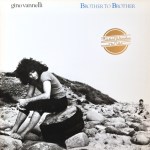
Brother to Brother – A Half-Speed Mastered Disaster

More of the Music of Gino Vannelli

More of Our Favorite Titles from 1978

Sonic Grade: F

An Audiophile Hall of Shame pressing and a Half-Speed Mastered Bomb if there ever was one.

Wooly bass, sucked-out mids, compressed to death, this record is one of the worst of the A&M Half-Speed series, and that is saying a lot.

We’ve played at least a dozen titles from this series and only one of them was any good.

The regular A&M pressings with the right stampers just kill it.

This pressing is every bit as bad.

(more…)

Ride The Lightning at 45 RPM – MoFi Reviewed

Hot Stamper Pressings of Rock and Pop Albums Available Now

Sonic Grade: F

This review is for the 2008 Warner Brothers 45 RPM 180g Double LP Half-Speed Mastered by Mobile Fidelity from the original analog master tapes.

Compressed, sucked-out mids, no deep bass and muddy mid-bass, the mastering of this album is an absolute disaster on every level.

If you want to know how lost the average audiophile is, a quick Google search will bring up plenty of positive comments from listeners and reviewers alike. 

(more…)

The Tony Bennett / Bill Evans Albums – More Mistaken MoFi EQ

Hot Stamper Pressings of Pop and Jazz Vocals Available Now

Sonic Grade: F

That weird boost around 10k that Stan Ricker likes to add to practically every record he masters wreaks havoc on the sound of Tony Bennett’s voice.

I would be very surprised if the current in-print Compact Disc doesn’t sound more tonally natural, and for us audiophile record lovers – not lovers of audiophile records, but guys who love records with audiophile sound – that’s simply another nail in the coffin for one of the most laughably inept remastering labels in the history of that sad enterprise.

If you love this album, and you should, the regular early Fantasy pressings are the only game in town.