*Experimenting with Records

Experimenting with records is the only way to learn much about them of any real value.

Sibelius / Violin Concerto / Ricci

Hot Stamper Pressings of the Music of Jean Sibelius Available Now

This is a wonderful sounding London Stereo Treasury pressing featuring one of our favorite violinists, Ruggiero Ricci, performing the Sibelius Violin Concerto in D Minor.

The tone of the violin on side one is just right — every nuance of Ricci’s bowing can clearly be heard.

While the violin sounds amazing on side one, the orchestra lacks a bit of weight.

This side is also not quite as Tubey Magical as it could be. In our opinion, however, the violin tone and the incredible dynamics are more than enough to make us want to award this record a fairly high grade.

Side two actually has a bit more fullness, but this also seems to rob the violin of some of its presence. 

(more…)

Pros and Cons of this Copy of Swings in High Stereo

Hot Stamper Pressings of Large Group Jazz Recordings Available Now

Side One

Big and spacious, yet clear, dynamic and energetic. The brass is never “blary” the way it can be on so many Big Band or Dance Band records from the 50s and 60s. (Basie’s Roulette records tend to have a bad case of blary brass as a rule.)

Sharp transients and mostly correct tonality and timbres, powerful brass — practically everything you want in a Hot Stamper is here!

The stage is exceptionally wide on this copy.

Listen to the top end on track two — man, that is some natural sound!

This side could use a bit more weight so we feel a grade of Super Hot (A++) gets it right.

(more…)

The Gayne Ballet on Mercury Can Be a Little Bright

Hot Stamper Pressings of Classical Masterpieces Available Now

UPDATE 2025

The review you see below was written more than ten years ago.

Having just done another shootout for SR 90209, Dorati’s recording of the two works, The Gayne Ballet and Romeo and Juliet, I can now confirm that there are some stampers that are indeed way too bright.

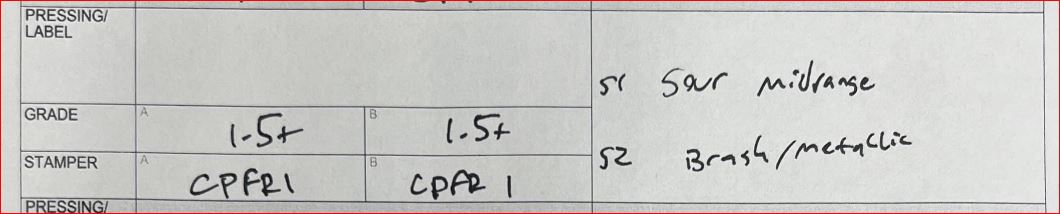
Side one of a recent copy had a sour midrange. Side two of the same copy was brash and metallic.

As for side two not sounding as good as side one in the older review before, seems we clearly got that wrong, the result, to some degree, of having an inadequate sample size.

Also,  we didn’t have as good a stereo as we do now, and we weren’t as good at doing shootouts back then either.


Our Old Review

This side one is truly DEMONSTRATION QUALITY, thanks to its superb low-distortion mastering. It’s yet another exciting Mercury recording. The quiet passages have unusually sweet sound.

This kind of sound is not easy to cut. This copy gets rid of the cutter head distortion and coloration and allows you to hear what the Mercury engineers accomplished.

(more…)

Pretzel Logic – Our Four Plus Shootout Winner from 2011

Hot Stamper Pressings of the Music of Steely Dan Available Now

This BEYOND White Hot side one (A++++) of Pretzel Logic has nothing less than master tape sound. [Whatever that is!] Our Four Plus ranking is rare enough, but in this case it has the added benefit of conferring upon this very pressing the status of the best sounding Steely Dan recording we have ever heard.

There is no better recording in the Steely Dan catalog, and I don’t think there’s a copy anywhere that’s any better than this on side one. (To see what we consider to be the single best sounding album from two hundred(!) other artists, please click here.)


UPDATE 2026

  • Note that only one side on this pressing was actually any good. Side two earned a sub-Hot Stamper grade of 1+. We no longer sell records with grades that low.
  • In 2011 we still had a lot to learn about Pretzel Logic, but this copy sure had us fired up at the time, and that’s a good thing, right?
  • Our lengthy commentary entitled outliers and out-of-this-world sound talks about how rare these kinds of pressings are and how we go about finding them.
  • We no longer give Four Pluses out as a matter of policy, but that doesn’t mean we don’t come across records that deserve them from time to time.
  • Nowadays we most often place them under the general heading of breakthrough pressings. These are records that, out of the blue, revealed to us sound of such high quality that it changes our undertanding of the recording itself.
  • We found ourselves asking “Who knew?” Perhaps a better question might have been “How high is up?”

This Beyond White Hot Pretzel Logic has got it all: tons of energy, mindblowing transparency, uncanny presence, and lots of deep bass. We feel Pretzel Logic is the band’s best sounding recording, and here’s a copy that will show you why.

There’s lots of room around the drums, texture to the bass, breath to the vocals, and weight to the bottom end. The clarity is unbelievable and the overall sound is HUGE! The piano sounds AMAZING and the top end is silky sweet. It’s more open and more alive than you could ever imagine.

We’ve been playing this record since it came out in 1973 and this is the first “Four Plus” A++++ grade we have ever awarded it. The sound is Demo Disc quality of the highest order.

(more…)

Question: “Is your stance that all copies of that same pressing, if you had five brand new copies, would all sound the same and superior?:

What Exactly Are Hot Stamper Pressings?

Patrick wrote to ask us a series of questions recently:

Hello team.

You have vinyls that you consider some degree of a “hot stamp” and this correlates to a very specific pressing of an album, correct?

Is your stance that all copies in that same pressing, if you had five brand new copies, would all sound the same and superior?

Or is it that the one you have is just better than all the others in that same pressing?

Or is it that of the ten different pressings of this album we listened to, this is the best sound period.

Thanks in advance … I hope this makes sense, and any help is appreciated.

Regards,
Patrick L.

Dear Patrick,

Click on this link to see some examples of records with Shootout Winning stampers in which we found out that, after all was said and done, the best sounding stampers could also be the worse sounding stampers.

Knowing the right stampers helps us find good copies, but the most they can do is point the way to good sound.

The listening panel never knows what the stampers are for any of the records that are being evaluated.

We find out what the best stampers are after the records have been played, not before.

Who knows what a record sounds like until it’s been played? No one, not even self-described know-it-all experts such as us.

We run record experiments in order to get actual data that we can rely on to be truthful. We call them shootouts.

The stampers can’t tell us how good the sound of a record is. Only our ears can do that.

Put another way, critical listening doesn’t just play a part in our judgment of a particular pressing.

It is the sole source of that judgment.

Because nothing else counts for anything. (See the Feynman link below for more on that subject.)

(more…)

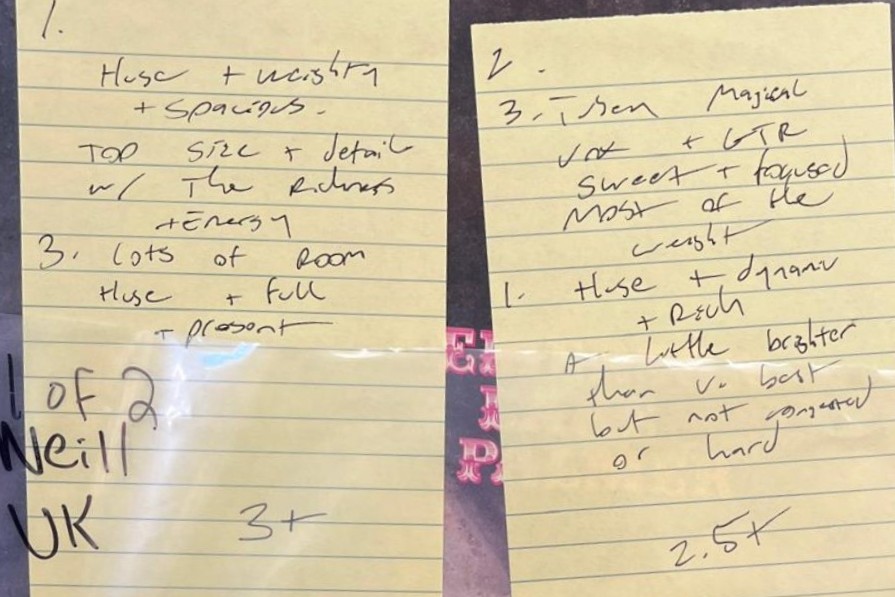
How Did We Know Side Two Lacked Weight and Tubey Magic?

Hearing massive sound coming out of Big Speakers in a Big Soundroom from a Prog Rock blockbuster like this was a thrill our listening panel won’t soon forget. The notes from the listing we put up for ELP’s debut tell the story.

But not the full story, since we rarely mention what was lacking or wrong with the sides that did not earn our top grade of three pluses.

Our notes below will get to that, but first, here is how we described our Shootout Winning UK copy:

Boasting KILLER Shootout Winning Triple Plus (A+++) sound or close to it throughout, this UK Island Pink Rim pressing makes the case that ELP’s debut is clearly one of the most powerful rock records ever made.

Spacious, rich and dynamic, with big bass and tremendous energy – these are just some of the things we love about Eddie Offord’s engineering work on this band’s albums.

Analog at its Tubey Magical finest – you’ll never play a CD (or any other digitally sourced material) that sounds as good as this record as long as you live.

Side one was awesome in every respect, and the way we know that is we played a bunch of copies and nothing could beat it. This side one took top honors for having exactly the sound we described above.

Side two is another matter. We came across a side two that was slightly better than the side two you see here.

When we played the two best copies back to back, side one of this copy came out on top, earning a grade of 3+. However, the side two of another pressing showed us there was even more weight to be heard in the recording than we’d noticed the first time around. Also, it turns out that this side two was a little bright compared to the very best.

When comparing your own pressings of the album, consider listening for these qualities yourself.

(more…)

Every Last One of These Bartok Records with Ansermet Was No Good

Hot Stamper Pressings of the Music of Bela Bartok Available Now

Every last one of our London pressings of Concerto for Orchestra was a disaster: smeary strings, blary brass and painfully shrill throughout, with no top or bottom to speak of, the very definition of boxy sound.

The entire group of CS 6086 we had on hand — whether on Blueback or Whiteback, we had a good selection of both — were much too unpleasant to be played on high quality modern equipment.

Why had I been buying them for years?

I made the mistake of assuming that the phenomenally talented Decca engineering and producing team who worked on this project could be relied upon to produce a top quality recording of the Concerto for Orchestra.

As it turns out, my guess turned out to be wrong.

I had made the mistake of believing in the infallability of experts.

I talk about the team of producers and engineers seen below in listing after listing, raving about the amazing sound of the recordings produced by them in the 50s and 60s, many of which are right at the top of the best sounding recordings I have ever had the privilege to play.

(more…)

Cat Stevens Wants to Know How You Like Your Congas: Light, Medium or Heavy?

Hot Stamper Pressings of the Music of Cat Stevens Available Now

During the shootout for this record a while back [the late 2000s would be my guess], we made a very important discovery, a seemingly obvious one but one that nevertheless had eluded us for the past twenty plus years (so how obvious could it have been?).

It became clear, for the first time, what accounts for the wide disparity in ENERGY and DRIVE from one copy to the next. We can sum it up for you in one five letter word, and that word is conga.

The congas are what drive the high-energy songs, songs like Tuesday’s Dead and Changes IV.

Here is how we stumbled upon their critically important contribution.

We were listening to one of the better copies during a recent shootout. The first track on side one, The Wind, was especially gorgeous; Cat and his acoustic guitar were right there in the room with us. The transparency, tonal neutrality, presence and all the rest were just superb. Then came time to move to the other test track on side one, which is Changes IV, one of the higher energy songs we like to play.

But the energy we expected to hear was nowhere to be found. The powerful rhythmic drive of the best copies of the album just wasn’t happening. The more we listened the more it became clear that the congas were not doing what they normally do. The midbass to lower midrange area of the LP lacked energy, weight and power, and this prevented the song from coming to LIFE the way the truly Hot Stampers can and do.

Now I think I understand why. Big speakers are the only way to reproduce the physical size and powerful energy of the congas (and other drums of course) that play such a big part in driving the rhythmic energy of the song.

(more…)

Hey, Maybe Rudy Van Gelder IS as Bad a Mastering Engineer as Some Say

Hot Stamper Pressings of Recordings by Rudy Van Gelder Available Now
It’s certainly a proposition worth considering, mostly because so many audiophiles seem to believe it. Or maybe in spite of their believing it, skeptics such as myself being the troublemakers they always are.

So let’s dig down into the dirt of a record that Rudy both recorded and mastered.

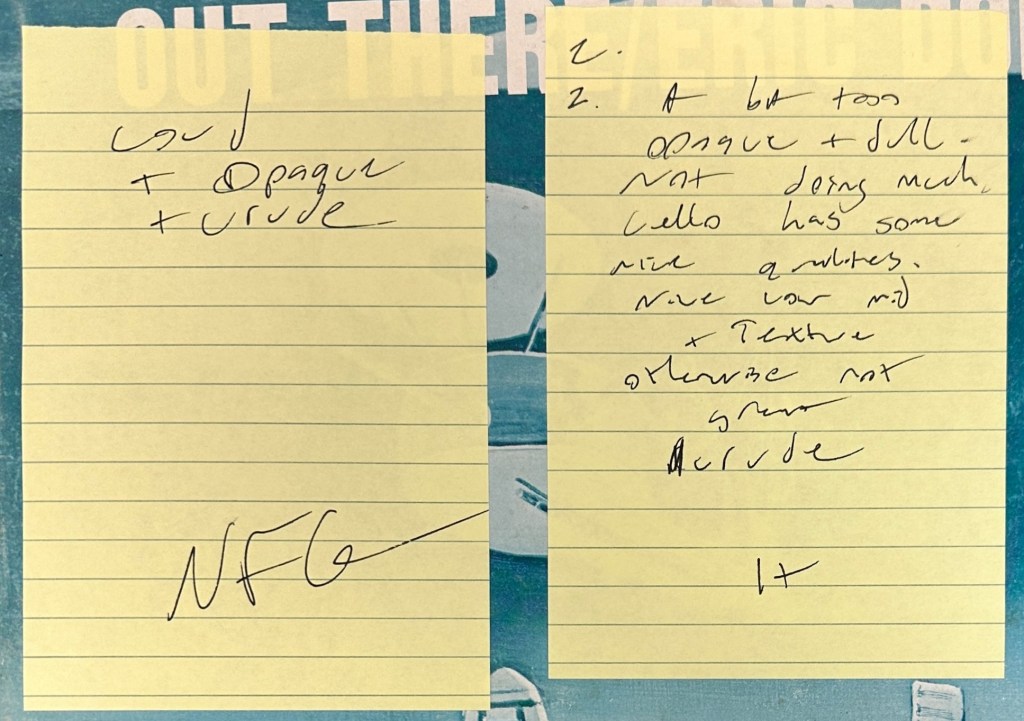
None of the Rudy Van Gelder cuttings we played of Eric Dolphy’s 1961 release of Out There were better than passable, and some had sides that were downright awful sounding, as you can plainly see from our notes.

The copies that won our most recent shootout were mastered by George Horn, and the best of them sound amazing. Here are some comments we made for the album years back as well as the Allmusic review:

Insanely good sound throughout with both sides earning Shootout Winning Triple Plus (A+++) grades. This copy was doing it all right: rich, full-bodied and Tubey Magical yet still super open and spacious.

“A somber and unusual album by the standards of any style of music, Out There explores Dolphy’s vision in approaching the concept of tonality in a way few others — before, concurrent, or after — have ever envisioned.” – 5 stars

As you will see from our notes, we played some very disappointing early pressings. All the early pressings we had on hand were expensive to acquire, the vintage jazz pressing market being what it is: expensive and full of optimistic record graders of questionable skill. (For these kinds of vintage pressings we probably return 70-80% of what comes our way.)

We have to pay top dollar to get copies that are clean, even on the 60s and 70s reissue labels. Noisy old jazz records are simply not saleable to audiophiles no matter how good they sound.

None of the early copies we played earned grades good enough to bother pursuing, not when there are wonderful sounding vintage reissues from the 80s available. On a more positive note, this being our first shootout for the album in many years, we certainly learned a lot, so let’s just chalk up the losses to the cost of doing business. Our newfound knowledge of the best pressings will continue to pay dividends for years to come now that we know what the right stampers tend to be.

(more…)

Is So Far Really Just a Waste of Money?

Hot Stamper Pressings of the Music of Crosby, Stills and Nash Available Now

The All Music Guide considers So Far to be a waste of money (on CD) because it was a slapped together effort to capitalize on CSN’s success, combining material from only two albums and then adding two unreleased tracks.

Their attitude boils down to the idea that the first two records are essential, so why buy this album for two songs?

I’ll tell you why.

Because finding good sounding pressings of either of the first two albums is practically impossible for the average audiophile record collector.

I mean that literally: as a practical matter, it is very, very difficult to find Hot Stamper versions of the band’s first two releases. This is especially true for the self-titled album from 1969, which sounds best in our experience on a later reissue that we have a devil of time finding and therefore rarely have in stock.

Both the first two albums and So Far are records we credit with helping us dramatically improve the playback quality of our system.

A Few Words About Deja Vu

Deja Vu is a special album for me, one I have been obsessed with since I first became an audiophile.

I was a big Crosby, Stills and Nash fan already — the first album being life-changing to a 15 year old music lover such as myself, on 8-track tape in the car no less — so it was only natural that I would fall in love with Deja Vu when it came out in 1970.

(more…)