Mobile Fidelity

Labels with shortcomings – Mobile Fidelity

The Tony Bennett / Bill Evans Albums – More Mistaken MoFi EQ

Hot Stamper Pressings of Pop and Jazz Vocals Available Now

Sonic Grade: F

That weird boost around 10k that Stan Ricker likes to add to practically every record he masters wreaks havoc on the sound of Tony Bennett’s voice.

I would be very surprised if the current in-print Compact Disc doesn’t sound more tonally natural, and for us audiophile record lovers – not lovers of audiophile records, but guys who love records with audiophile sound – that’s simply another nail in the coffin for one of the most laughably inept remastering labels in the history of that sad enterprise.

If you love this album, and you should, the regular early Fantasy pressings are the only game in town.

Fleetwood Mac / Self-Titled – A MoFi Winner

Another MoFi LP reviewed, and this one is actually pretty good. 

The Mobile Fidelity pressing of this album can actually sound quite good (if you get hold of a decent copy that is). Audio perfection it ain’t, but all in all it’s a very enjoyable record. Its strengths are many and its faults are few. Let’s give credit where credit is due; the MoFi is rich, transparent, sweet, and natural, and you won’t hear us saying that about very many MoFi pressings.

It belongs in their Top Ten, toward the bottom I would guess, due to its own sloppy bottom, but that’s half-speed mastering for you.

Like most new audio technologies it was a giant step in the wrong direction: backwards. (more…)

The Planets – MoFi and UHQR Reviewed

Reviews and Commentaries for The Planets

Sonic Grade: Regular MoFi LP: F / UHQR: D

Years ago we auditioned an excellent sounding Decca Purple Label British import LP, the same performance, the same recording that Mobile Fidelity remastered (#510), but, thankfully, it sounded a whole lot better.

I just listened to both and a catalog of the faults of the MFSL pressing would be quite lengthy. I won’t waste your time listing them.

Although the recording is far from perfect, the Decca pressing shows it in its proper light. It finds the right balance between the multi-miked sound of the super disc List Mehta and a vintage recording from the Golden Age such as the famous Boult.

The sound is very dynamic and the brass has tremendous weight.

Not the MoFi. It’s thin and bright.

Their UHQR is somewhat better, not quite as thin and phony up top, but not really very good either.

Avoid them both.

Our Recommendation

Our favorite performance of The Planets can be found here.

Many of Solti’s recordings from the Seventies are not to our liking, for reasons we lay out here.


Our Pledge of Service to You, the Discriminating Audiophile 

We play mediocre-to-bad sounding pressings so that you don’t have to, a free service from your record-loving friends at Better Records.

(more…)

Led Zeppelin II on MoFi — Back to the Stone Age!

Hot Stamper Pressings of the Music of Led Zeppelin Available Now

An audiophile hall of shame pressing and another MoFi LP reviewed.

Yes, it’s yet another record perfectly suited to the stereos of the 60s and 70s, often referred to on this blog as the “stone age” for reasons explained in detail here.

This version of Zep’s sophomore release from 1969 has to be one of the worst audiophile remastering jobs in the history of the world. There is NOT ONE aspect of the sound that isn’t wrong. Not one!

The highs are boosted, the upper midrange is boosted, the mid-bass is boosted, the low bass is missing — what part of the frequency spectrum is even close to correct on this pressing? The answer: none.

If you’re in the market for a Hot Stamper pressing of Led Zeppelin II, we can help you, but prices these days are steep and show no sign of coming down. We typically pay $1000+ or more for the used copies we buy if that tells you anything about what to expect a Hot Stamper pressing will cost you.

Records are getting awfully expensive these days, and it’s not just our Hot Stampers that seem priced for perfection.

If you are still buying these modern remastered pressings, making the same mistakes that I was making before I knew better, take the advice of some of our customers and stop throwing your money away on Heavy Vinyl and Half-Speed Mastered LPs.

At the very least let us send you a Hot Stamper pressing — of any album you choose — that can show you what is wrong with your copy. of the album.

And if for some reason you disagree with us that our record sounds better than yours, we will happily give you all your money back and wish you the best.

How Does the MoFi Dixie Chicken Sound?

Little Feat Albums We’ve Reviewed

How does the MoFi pressing sound?

We have no idea; we’ve never bothered to order one, for at least one very good reason.

This is an album about rhythm.

Half-Speed mastered records have sloppy bass and, consequently, lack rhythmic drive.

Who is his right mind would want to half-speed master an album by Little Feat, one of the most rhythmically accomplished bands in rock and roll history?

The obvious answer is that it was a bad idea. But, if you’re Mobile Fidelity, and that’s the only idea you’ve ever had because you are in the half-speed mastering business, then what else can you do?

As the old saying goes, to a hammer everything looks like a nail.

OUR PREVIOUS HOT STAMPER COMMENTARY

Folks, this is no demo disc by any means, but the later pressings strip away the two qualities that really make this music work and bring it to life: Tubey Magic and Big Bass. This side two has both in SPADES.

Listen to how breathy and transparent the chorus is on the first track. Now layer that sound on top of a fat and punchy bottom end and you have the formula for Little Feat Magic at its funky best. This is the sound they heard in the control room, of that I have no doubt, and it is all over this side two. No side of any copy we played was better.

Personally

The All Music Guide (and lots of other critics) think this is Little Feat at their best. With tracks such as Two Trains, Dixie Chicken, Fat Man in the Bathtub and Roll Um Easy, who’s gonna disagree!? (I guess I am. I prefer Waiting for Columbus and The Last Record Album but cannot deny that Dixie Chicken is probably the best of the albums that came before them.)


Head to Head It’s No Contest

Visit our Hall of Shame (300+ strong) to see what, in our opinion, are some of the worst sounding records ever made.

Note that most of the entries are audiophile remasterings of one kind or another.

The reason for this is simple: we’ve gone through the all-too-often unpleasant experience of comparing them head to head with our best Hot Stamper pressings.

When you can hear them that way, up against an exceptionally good record, their flaws become that much more obvious and, frankly, that much more intolerable.

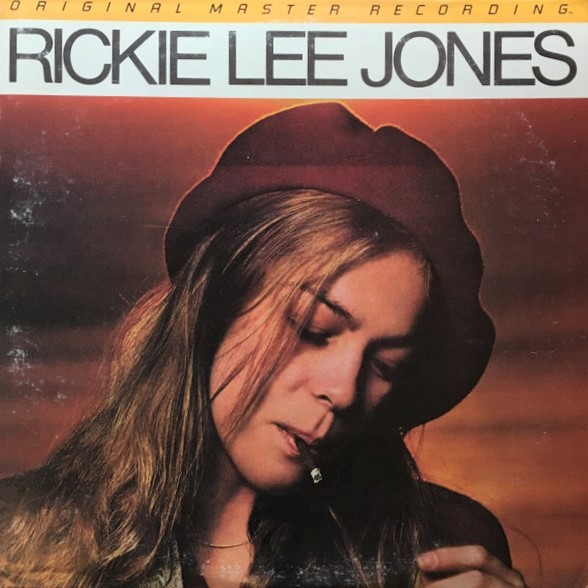
Rickie Lee Jones – MoFi Reviewed, Positively (!)

Hot Stamper Pressings of the Music of Rickie Lee Jones Available Now

Sonic Grade: B

Another MoFi LP reviewed, and this one’s pretty good for a change. 

The Mobile Fidelity pressing of this album can actually be pretty decent.

If you get a good one, that is. Records are records and limited editions have dramatic pressing variations just like all the other records out there in Record Land.

Audio perfection it ain’t, but all in all it’s a very enjoyable record. Its strengths are many and its faults are few. Let’s give credit where credit is due; the MoFi is dynamic, transparent, sweet, and open, and you won’t hear us saying that about very many MOFI pressings.

It belongs in their Top Ten (a list we have yet to make, for some reason we never find the time!), toward the bottom I would guess, due to its own sloppy bottom, but that’s half-speed mastering for you. Like most new audio technologies it was a giant step in the wrong direction.

We suppose you could live with the blubbery MoFi bass found on their remastered LP — most audiophiles seem more than happy to, right? — but instead, we’re happy to report that it will no longer be necessary. All our Hot Stamper copies are guaranteed to trounce it.

Hall, Oates and Mobile Fidelity – A Counterfactual Approach to Remastering

Hot Stamper Pressings of the Music of Hall and Oates Available Now

We here present a set of ideas about remastering that Mobile Fidelity could have used to guide them as they went about cutting their version of Hall and Oates’ masterpiece, Abandoned Luncheonette.

This is the approach they could have taken when it came time to produce an audiophile pressing of Abandoned Luncheonette, an album originally released in 1973.

By the time Mobile Fidelity released their version of the album in 1980, the record was already being offered as a Super Saver reissue, of minimal quality at a reduced price, produced solely for the purpose of keeping record store bins stocked with back catalog. (In our experience it is the rare Super Saver pressing that is worth the vinyl it’s pressed on.)

However, there is nothing inherently wrong with such a budget release. And the Super Saver version may even have some merit. But let’s assume for a moment that it does not.

Why Abandoned Luncheonette?

Now imagine that Mobile Fidelity knows, or at least believes, two things.

One, the album is a Masterpiece that belongs in any right-thinking audiophile’s collection, and two, the current version does not sound very good. The wise men at MoFi recognize that an opportunity to do some good for the audiophile community and make a buck at the same time has presented itself.

Audiophiles may not know it, but they are in need of a good sounding copy of this brilliant album, and they deserve one that sounds every bit as good as the shockingly good sounding originals (like the ones we sell).

In addition, we at MoFi can go Atlantic’s original one better.

We can now press the album on quieter vinyl than Atlantic ever could.

Next, Mobile Fidelity greenlights this project and gets a real master tape from Atlantic. (There are many tapes that masquerade as masters and aren’t any such thing, but let’s assume for the moment that Mobile Fidelity did get a real tape.)

They would also need a nice batch of original pressings, which in our opinion are the best, and would easily be recognized as being the best sounding by anyone playing the album on good equipment. The best originals are lively, rich and smooth, befitting an expensive, high quality studio recording from the era.

So instead of Mobile Fidelity trying to create a new sound for this album, they could have taken a different approach. They could’ve just said to themselves: let’s make a copy of the record that sounds as good as the original, and because we can press it on expensive, high-quality Japanese vinyl, we can justify selling it at a premium price to audiophiles looking for the best sound and quiet vinyl.

They could then cut a number of reference lacquers trying to re-create the best qualities of the originals, and then test those lacquers up against the best originals, in something that might be called a “shootout” long before the term was commonly used bu audiophiles of our persuasion.

The Counterfactual Part

This is what they could have done. That’s why we are calling this commentary a counterfactual.

They did something else entirely.

They tried to make the record sound better than any of the copies they had at hand. They tried to fix the sound. In trying to fix the sound, they made it worse because they simply were not capable of recognizing how right the good originals were.

They must have thought them dull, because the Brain Trust at Mobile Fidelity boosted the hell out of the upper midrange and top end. (Using the concept of reverse engineering, I assume their playback equipment was dull, a fairly safe assumption considering how many Mobile Fidelity records are bright enough to peel the paint.)

They Were on a Mission

They of course would never have been able to get the bass right, because half speed mastering always causes problems down low.

But they could have made the record tonally correct, and fairly transparent in the midrange, and then could have pressed that sound onto state-of-the-art Japanese vinyl.

But none of these things interested Mobile Fidelity at the time. They were hell-bent on making everything they touched better. In the process, practically everything they touched got worse, as anyone with good equipment and two working ears who has played a large selection of their records can attest.

(more…)

Night Moves – MoFi Reviewed

More of the Music of Bob Seger

Sonic Grade: F

An Audiophile Hall of Shame pressing and another MoFi LP reviewed and found seriously wanting.

The last time I played a copy of the MoFi pressing I could not believe how ridiculously bright it was.  

It’s interesting to note that some of the brightest records this atrocious label ever released came out about the same time as this one.

Aja is number 033

Night Moves here is number 034.

Tea for the Tillerman is number 035

Are you seeing a pattern here?

Three dogs in a row, all suffering from the same problem: they’re way too bright!

Did MoFi buy some dull studio monitors right before they mastered these awful pressings? Did a tweeter or two blow?

Did Stan Ricker have too much wax buildup in his ears?

What could account for records that are bright enough to peel the paint?

Some mysteries will never be solved, and I would bet this is one of them.

But really, what difference does it make? We should all know to avoid this company’s products by now, and that includes all three eras of records produced by this label:

That should pretty much cover it.

Never buy any record on this label (except the one we sell) if you are interested in top quality sound, and if you own any, get rid of them and replace them with records that actually sound good, like the ones we sell.

(more…)

Why Would Anyone Want to Take All the Fun Out of CCR’s Music? Part One

More of the Music of Creedence Clearwater Revival

The last time I played the MoFi pressing mentioned below I found the sound so weirdly colored as to defy understanding. Ten years ago when I wrote this commentary I apparently found it more tolerable.  More recently I clearly did not.

When an audiophile record sounds worse than it used to, there is a very good chance that you are making progress in audio.

Of course this is not something to be assumed. (Speaking of assumptions, you can find more on the subject here).

Rather it is something to be tested. (You can read more about some of the rigorous and extensive record testing we have conducted over the last twenty years here.)

Even if 99 times out of a hundred it turns out to be the case that the modern remastered record can now be seen for the fake it always was, there is still a one out of a hundred chance that the record may in fact be better than you remember.

These audiophile records are easily called out for their illusory superiority for the simple reason that the better your stereo gets, the more obvious their colorations and shortcomings become. This was my experience, and I pass this information on in the hopes that you will make progress with your stereo system and find them every bit as wrong as I do.

We’ve created a section for the worst of them, and even with 274 entries we could easily double that number if we were inclined to carry out more auditions and catalog their manifold shortcomings.

With the number of Heavy Vinyl records being pressed today, triple or quadruple that number I suspect would be possible.

Without sounding even more arrogant than some believe me to be, I have better things to do with my time. Thank god we are in the business of selling good records and not in the business of reviewing bad ones.


Further Reading

Records are getting awfully expensive these days, and it’s not just our Hot Stampers that seem priced for perfection.

If you are still buying these modern remastered pressings, making the same mistakes that I was making before I knew better, take the advice of some of our customers and stop throwing your money away on Heavy Vinyl and Half-Speed mastered LPs.

At the very least let us send you a Hot Stamper pressing — of any album you choose — that can show you what is wrong with your copy. of the album.

And if for some reason you disagree with us that our record sounds better than yours, we will happily give you all your money back and wish you the best.

To Our Children’s Children’s Children on Mobile Fidelity Anadisc

Hot Stamper Pressings of the Music of The Moody Blues Available Now

Sonic Grade: F

We here present yet another MoFi pressing that we played and found seriously wanting.

Pure Anadisc murky mud, like all the Moody Blues records MoFi remastered and ruined in the ’90s with their misbegotten foray back into the world of vinyl. By 1999 they were bankrupt and deservedly so.

Their records were completely worthless to those of us who play them and want to hear them sound good but, unsurprisingly, a quick search on ebay indicates that they’re still worth money to the audiophile types who collect the kind of trash this label put out.

Folks, seriously, you really have to work at it to find pressings of the Moody Blues albums that sound worse than the ones MoFi did in the ’90s.

To be honest, we really don’t know of any. Which means that, as far as we’re concerned, their pressing of To Our Children’s Children’s Children is the worst version of the album ever made.

(more…)