Classic Records – Classical

Classic Records and Begged Questions

Hot Stamper Living Stereo Orchestral Titles Available Now

A typical review of a Classic Records classical release here on the blog might read more or less as follows:

Classic Records ruined this album, as anyone who has played a sampling of their classical reissues would have expected.

Their version is dramatically more harsh and aggressive than the Shaded Dogs we’ve played, with transistory shrill string tone and almost none of the sweetness, richness and ambience that the best RCA pressings have in such abundance.

In fact, their pressing is just plain awful, like most of the classical recordings they remastered, and should be avoided at any price. 

With every improvement we’ve made to our system over the years, Classic’s remastered classical offerings have managed to sound progressively worse. How could that be, you ask?

Because higher quality playback stops hiding the shortcomings of bad sounding records.

At the same time, and much more importantly, better audio reveals more and more of the strengths of good sounding records.

Begging the Question

But what actually is a good record? Don’t I have to offer some evidence for what causes a record to be good rather than simply asserting that the original is good and the Heavy Vinyl reissue is bad (or at least worse)?

Luckily for you, dear reader, you are actually on a blog that has much to say about these issues.

The main reason we feel qualified to make these judgments is that we make sure to play the records we review under rigorously controlled conditions in what amounts to “blinded” experiments. (Certainly as blinded as is practical.)

And our approach to finding the best sounding pressings for any given album has gone through a host of changes over the course of decades in order to allow us to carry out this difficult work. Work we actually enjoy doing.

It’s also the kind of work that practically nobody else does.

And certainly no one does it at anything approaching the scale of our efforts, with a full time staff and a monthly record purchasing budget in the tens of thousands of dollars.

An amazingly good stereo set up in a heavily-treated room with clean electricity doesn’t hurt either.

(more…)

On the Concerto in F, String Tone Is Key

Hot Stamper Pressings of the Music of George Gershwin Available Now

I must admit Classic Records did a passable job with LSC 2586, RCA’s recording of Gershwin’s Concerto in F, with Fiedler conducting the Boston Pops.

The two things that separate the good originals from the Classic reissue are in some ways related.

Classic’s standard operating procedure is to boost the upper midrange, and that, coupled with their transistory mastering equipment, results in strings that are brighter, grittier, and yet somehow lacking in texture and sheen compared to the originals,

This to us is a clear sign of a low-resolution cutting chain.

Once you recognize that shortcoming in a pressing, it’s hard to ignore, and I hear it on every Classic Record I play. (This commentary has more on the subject.)

RCA is more famous for its string tone than anything else.

If the strings on the Classic Records LPs don’t bother you, you can save yourself a lot of money by not buying authentic RCA pressings — and get quieter vinyl to boot.

Here are some other records that are good for testing string tone and texture.

(more…)

Classic Records 45 RPM Recut – This Is Your Idea of a Great Firebird?

Hot Stamper Pressings of the Music of Igor Stravinsky Available Now

Many years ago, a customer alerted me to a review Wayne Garcia wrote about various VPI platters and the rim drive, and this is what I wrote back to him:

Steve, after starting to read Wayne’s take on the platters, I came across this:

That mind-blowing epiphany that I hadn’t quite reached with the Rim Drive/Super Platter happened within seconds after I lowered the stylus onto the “Infernal Dance” episode of Stravinsky’s Firebird (45 rpm single-sided Classic Records reissue of the incomparable Dorati/LSO Mercury Living Presence recording).

That is one of my half-dozen or so favorite orchestral recordings, and I have played it countless times.

This is why I have so little faith in reviewers. I played that very record not two weeks ago (04/2010) against a good original and the recut was at best passable in comparison. If a reviewer cannot hear such an obvious difference in quality, why believe anything he has to say?

The reason we say that no reviewer can be trusted is that you cannot find a reviewer who does not say good things about demonstrably mediocre and even just plain awful records. It’s the only real evidence we have for their credibility, and the evidence is almost always damning.

I want a reviewer who knows better than to play such an underwhelming pressing and then waste my time telling me about it. He should tell us what a good record sounds like with this equipment mod. Then I might give more credence to what he has to say.

Reviewer malpractice? We’ve been writing about it for more than 25 years.

P.S.

This is one of the Classic Records titles on Harry Pearson’s TAS List of Super Discs(!)

P.P.S.

Allow me to quote a writer with his own website devoted to explaining and judging classical recordings of all kinds. His initials are A.S. for those of you who have been to his site.

Classic Records Reissues (both 33 and 45 RPM) – These are, by far, the best sounding Mercury pressings. Unfortunately, only six records were ever released by Classic. Three of them (Ravel, Prokofiev and Stravinsky) are among the very finest sounding records ever made by anyone. Every audiophile (with a turntable) should have these “big three”.

Obviously we could not disagree more. I’ve played all six of the Classic Mercury’s. The Chabrier, Ravel and Prokofiev titles are actually even worse than the Stravinsky we reviewed.

This same reviewer raved about a record we thought had godawful sound, Romantic Russia on MoFi, a label that never met an orchestral string section it didn’t think needed brightening.

Find me a Mobile Fidelity classical record with that little SR/2 in the dead wax that does not have bright string tone. I have yet to hear one.

What is it with audiophile record reviewers? They seem to be taken in by the most unnatural sounding pressings. The world is full of wonderful vintage pressings that have no such problems. If you are an audiophile who feels himself qualified to write about records, shouldn’t you at least be able to hear the difference between a phony audiophile pressing and the vintage pressings it supposedly improved?

(more…)

Tchaikovsky on Classic Records and the TAS List

Hot Stamper Pressings of the Music of Tchaikovsky Available Now

We used to like the Classic Records pressing of LSC 2241 a lot more than we do now, a case of live and learn.

Our tube system from the 90s was very different from the one we are using now.

That system was noticeably darker and by all accounts far less revealing when we had auditioned the Classic sometime in the 90s, and those two qualities did most of the heavy lifting needed to disguise its shortcomings. We mistakenly noted:

HP put the Shaded Dog pressing (the only way it comes; there is no RCA reissue to my knowledge) on his TAS List of Super Discs, and with good reason: it’s wonderful!

The rest of our commentary still holds up though:

But for some reason he also put the Classic Records Heavy Vinyl reissue on the list, and that record’s not even passable, let alone wonderful. It’s far too lean and modern sounding, and no original Living Stereo record would ever sound that way, thank goodness. 

(more…)

We Review the Classic Records Pressing of SR 90212

The Classic Records pressing of the famous Mercury is a gritty, shrill piece of crap.

I used to have a less-than-revealing all-tube system back in the 90s, but even that system, limited as it was and not remotely as revealing as the one we have now would have had a hard time hiding the faults of this awful record.

I don’t know how dull and smeary a stereo would have to be in order to play a record this phony and modern sounding in order to make it listenable, but I know that it would have to be very dull and very smeary, with the kind of vintage sound that might work for Classic’s Heavy Vinyl pressings but not much else.

It’s a disgrace, and the fact that it’s on the TAS Super Disc list is even more disgraceful.

Which all adds up to an audiophile hall of shame pressing and a record perfectly suited to the stone age stereos of the past.

Argenta and Ansermet

I much prefer Ansermet’s performances on London to those of Paray on Mercury.

As of 2022 we actually prefer the famous Argenta recording for Decca that’s on the TAS List, CS 6006.

Both are excellent and clearly superior to the Paray, even on the original Mercury pressings we’ve played.


UPDATE 2024:

This recording is no longer on the TAS Super Disc list. Our favorite, the London with Argenta, is however.

We call that progress! Maybe there’s hope for the TAS List yet.


(more…)

Witches’ Brew on Classic Records and How Crazy Wrong I Was, Part One

Hot Stamper Living Stereo Orchestral Titles Available Now

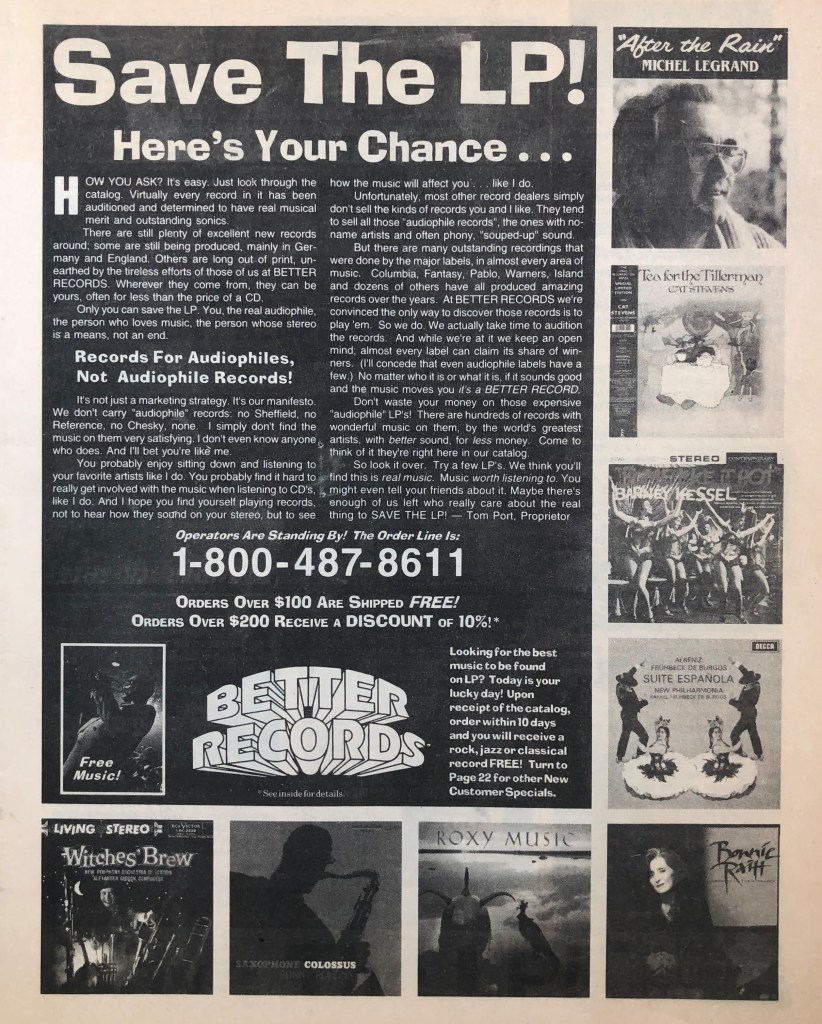
Well below the reproduction of the front page of our old catalog you will find the review I wrote in 2007 for the Classic Records’ Heavy Vinyl pressing of Witches’ Brew.

Clearly I did not care for it in the least. In fact, I thought it was one of the worst reissues I’d ever heard, so aggressive, boosted and unnatural it all but defied understanding. That anyone could play such a record and not notice how wrong it sounded did not speak well for audiophiles.

Now when I think about the Classic Records reissue of Witches’ Brew and its awful sound, it’s obviously a modern remastering I could not possibly have liked.

However, in preparing to move to Georgia in 2022, I found myself digging through some old catalogs from the early Nineties. Something I read in one of them chilled me to the bone.

There it was in black and white, lower left: my rave review for the Classic Records pressing of Witches’ Brew.

It’s actually on the front page of the catalog, along with at least one other record that I would be mortified to sell today: the OJC pressing of Saxophone Colossus.

(As soon as I find my review in the old catalog for Saxophone Colossus, I will post it. I can hardly believe I wrote it, but I did. I wrote all my catalogs back then. My lack of competence and the guilt associated with my lack of expertise at the time is undeniable. It obviously would be foolish and wrong of me to try to deny any of it, so I don’t.)

(more…)

Another “Problematical” Classic Records Reissue

Hot Stamper Pressings of Living Stereo Titles Available Now

It’s been quite a while since I played the Classic pressing of these works by Shostakovich, but I remember it as nothing special.

Like a lot of the records put out by this label, it’s tonally fine but low-rez and lacking spacewarmth and above all, Tubey Magic.

I don’t think I’ve ever played an original or a Victrola reissue that didn’t sound better, and that means that the best grade to give Classic’s pressing is probably a D for below average.

The Classic Records pressing can currently be found on the TAS list, but we don’t think it has any business being there, along with a great many others, far more than we could ever find the time to play and review.

(more…)

The Classic Pressing of Beethoven’s 4th Can Have Very Good Sound

More of the music of Ludwig van Beethoven
Somehow we managed to have a Classic Records pressing on hand to play in our most recent shootout for the Beethoven Symphony No. 4.

We knew all the way back in 1997 that Classic had done a good job with the record — we recommended it as one of the best Classic Records pressings in our catalogs at the time — but we sure didn’t expect it to do as well as it did, earning 2 pluses on one side and close to that on the other.

Years ago we wrote:

Here is the kind of sound that Classic Records could not ignore, even though the original was only ever made available as part of RCA’s budget reissue series, Victrola.

Don’t let its budget status fool you — this pressing puts to shame most of what came out on the full price Living Stereo label. (And handily beats any Classic Records reissue ever made.)

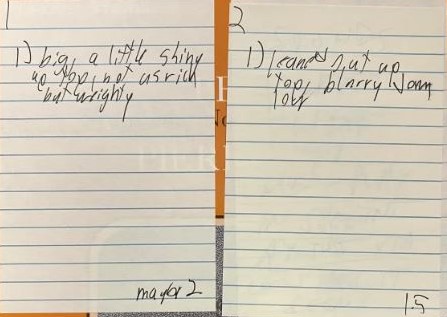
The top and bottom are wrong to varying degrees on both sides of the Classic, as you can see from our notes, which read:

(more…)

Beethoven’s Violin Concerto – Classic Records Reviewed

Hot Stamper Pressings Featuring the Violin

An Audiophile Hall of Shame pressing and another Classic Records Classical LP we found seriously lacking in some of the most important qualities we listen for on the classical and orchestral recordings we audition.

The Classic pressing of this album does not present the listener with the sound of a real, wood instrument, bowed by horsehair, in a physical space.

It is an airless fraud, a cheap fake reproduction that’s incapable of fooling anyone currently in possession of two good ears, a properly set up hi-fi system and a decent collection of Golden Age violin concerto recordings.

The fact that a great many writers identifying themselves as audiophiles embraced Classic’s mediocre-at-best reissues tells me that they were lacking some or all of the above.

Notes from a Recent Hot Stamper Pressing (more…)

A Simple Listening Test Makes It Easy to Judge Pressings of Scheherazade

Hot Stamper Orchestral Pressings Available Now

The Classic reissue of LSC 2446, as well as the Analogue Productions version from 2013 (the original 33 is the only one I have played, mastered by Ryan Smith at Sterling), are both disasters for many reasons, but they do have one specific failing that is easy to recognize.

Both pressings are worth further discussion and analysis because they provide an easy test that can show you how wrong they are.

When reading the commentary below, keep in mind that what is bad about the Classic Records reissue from 1995 is what is bad about the Analogue Productions remaster put out many years later.

As I noted for some of the Classic Heifetz titles a while back, for all I know the CDs for his Living Stereo recordings may have better sound. That’s probably the first place to go, considering Classic’s rather poor track record regarding the remastering of his music.

Case in point: The Living Stereo CDs I own (both the CD and the SACD) of Scheherazade are dramatically better than the awful Classic Records pressing of it.

Audiophiles who don’t notice what is wrong with the Classic pressing need to get hold of a nice RCA White Dog pressing to see just how poorly the Classic stacks up. (They could even find one that’s not so nice and listen through the surface noise. The difference would still be obvious.)


UPDATE 2025

It has been many years since a White Dog pressing won a shootout. In our last listing for a Hot Stamper White Dog pressing in 2024, we noted:

Now that we know which stampers have the potential to win our shootouts, the right Shaded Dog originals have lately been coming out on top, although the White Dog pressings can still sound quite good, just not as good.

No White Dog earned a higher grade than 2+, and none of the three WD pressings we had on hand earned 2+ on both sides.

Our notes for the various sides of the WD pressings read: “a bit brash, sometimes squawky, dry and bright,” and the like.

Those of you looking for the best sound should stick to the Shaded Dog label originals. They are rich and lush in a way that the WD reissues in our experience never are. I used to swear by the WD reissues, but I see now how wrong I was. My judgments were colored by a darker, less revealing stereo than the one we use now, and that makes all the difference in the world.

(more…)