Month: June 2026

Letter of the Week – “Santana’s guitar is scorching on this record!”

Hot Stamper Pressings of the Music of Santana Available Now

Our good customer, Dan, wrote to tell us he was positively astounded by our Hot Stamper pressing of Abraxas. We told Dan to listen to this record as loud as his ears could take it. Take it from the man himself: “As you suggested, I played this album as loud as my ears could tolerate and the result was astounding.”

Hey Tom,

Today I was blown away by yet another Hot Stamper I bought from your store: Santana’s Abraxas. Now, I have always been in awe of the musicianship of the band’s first three albums, but it was not until I heard the grooves in this Hot Stamper that I realized they are geniuses. Santana’s guitar is scorching on this record! Those leads just burst out of the musical soundscape that’s behind him. But it never sounded like that in the hundreds of times I’ve heard it. Sure, his leads always stood out, but they didn’t leap out.

As you suggested, I played this album as loud as my ears could tolerate and the result was astounding. Though my stereo is still short of being able to reproduce a live concert (for now!), it felt pretty damn close to that experience with this record! Mike Shrieve’s drums positively exploded with power after that organ intro on “Hope You’re Feeling Better”. There’s no denying it, playing this music at a polite volume would be a sin, and one I happily did not commit. This record is just poppin’ all over the place with dynamics, and the only way to hear everything is to set the dial to 11.

On a similar topic, I recently purchased the Mofi pressing of Santana’s first album and later stumbled upon your commentary on it. It is indeed good, but no nowhere near alive. My hot stamper of “Abraxas” gives me an excellent reference point for the Santana sound, and I can see just how much is missing now from Mofi’s pressing of their debut.

Anyhow, just wanted to say thank you again a keep up the great work at Better Records!

Dan

Dan, I’m glad to see you hadn’t wasted your money on the awful MoFi pressing of Abraxas, which, as I pointed out in my blog, is so bad (compressed to death, whomp factor = zero) we refused to carry it.

(more…)

Gaite Parisienne Is Just More Smeary Dreck from Classic Records

More of the Music of Jacques Offenbach

Sonic Grade: F

The last time I played the Classic I thought it was nothing but a smeary mess, as awful as their awful Scheherazade. If I were to play it today, I’m guessing it would join the other Classic Records entries in our audiophile hall of shame.

Here are some other records we played and found had smeary strings. Orchestral recordings with smeary strings do not last long on our turntable.

I love Arthur Fiedler‘s performance with the Boston Pops and the 1954 two track RCA Living Stereo sound, but finding an original Shaded Dog pressing in clean condition under $500 with the right stampers is all but impossible nowadays.

If you want to go that way, more power to you. 

This 1954 2-track recording is RCA’s first stereo recording of the work. 1954. Can you believe it? A few mics and two channels and it blows away most of the classical recordings ever done! Some old record collectors and tube lovers say classical recording quality ain’t what it used to be. This record proves it.

Here are some other records that are good for testing string tone and texture.

Rachmaninoff – Symphony No. 2 / Previn

More of the Music of Sergei Rachmaninoff

  • Superb sound throughout this vintage British EMI pressing of Rachmaninoff’s Symphony No. 2, with both sides earning solid Double Plus (A++) grades
  • A long term resident of the TAS super disc list, and one I never realized was anything special until my stereo got a lot better about ten or fifteen years ago
  • This is a spectacular recording – it’s guaranteed to put to shame any Heavy Vinyl pressing of orchestral music you own
  • There are more than 175 orchestral recordings we think offer the best performances with the highest quality sound. This record is certainly deserving of a place on that list.
  • The vast majority of the best orchestral recordings we’ve played were made in the Golden Age of recording (50s & 60s), but that doesn’t mean that the 70s & 80s didn’t produce amazing discs as well, and you can find more than 20 of them here

(more…)

J.J. Cale – Troubadour

More Roots Rock

  • An outstanding copy of 5 with Double Plus (A++) sound from the first note to the last
  • The overall sound here is rich, full-bodied and musical with lots of Tubey Magic and a solid bottom end — the perfect sound for this laid-back bluesy rock
  • If you’ve got a hankerin’ to hear Cocaine on the authentic original, you will really have to work hard to hear it sound any better than it does on this pressing.
  • Wikipedia lists his many styles as “Americana, Cajun, blues, swamp rock, country rock, Red Dirt, Tulsa Sound” but we think Americana is probably all you really need.
  • If you like Dire Straits, try this one – J.J. Cale and Mark Knopfler have a lot in common, probably more than you think
  • “While Cale remains the ultimate laid-back Blues artist, he still manages to conjure up the spirit of Country, Soul and subdued Funk in each of the tracks on 5, making this album one of the best loved in his catalog.”
  • We’ve recently compiled a list of records we think every audiophile should get to know better, along the lines of “the 1001 records you need to hear before you die,” but with less of an accent on morbidity and more on the joy these amazing audiophile-quality recordings can bring to your life. Cale’s breakthrough album is a good example of a record many audiophiles may not know well but should.

(more…)

The Rolling Stones – Beggars Banquet

More of the Music of The Rolling Stones

  • You’ll find INSANELY GOOD Shootout Winning Triple Plus (A+++) grades on both sides of this vintage London pressing of this surprisingly well-recorded Stones album from 1968
  • The long lost Tubey Magic of these early pressings has them sounding better than we ever thought possible with the audio equipment of the day
  • This is exactly the way you want Beggars Banquet to sound and it sure doesn’t take a pair of golden ears to hear it
  • One of a select group of Rolling Stones Must Own titles we prize above all others – Sticky Fingers and Let It Bleed round out the trio
  • 5 stars: “Basic rock & roll was not forgotten, however: ‘Street Fighting Man’… was one of their most innovative singles, and ‘Sympathy for the Devil’… was an image-defining epic.”
  • If you’re a Stones fan, this vintage pressing of their 1968 classic belongs in your collection

No Expectations, the second song on the first side, is one of the greatest Demo Tracks for Tubey Magical guitar reproduction we know of. The next year, Glyn Johns would pull off another acoustic guitar recording of that quality with Love in Vain on Let It Bleed.

Good pressings are certainly not easy to come by — this kind of rich, full-bodied, musical sound is the exception, not the rule. And there’s actual space and extension up top as well, something you certainly won’t hear on most of the vinyl that’s been pressed over the 50+ years since this album was released.

What sets the best copies apart from the pack is a fuller, richer tonal balance, which is achieved mostly by having plenty of bass and less upper midrange. Those are the copies that sound tonally correct to us, and you should have no trouble appreciating the difference.

(more…)

Another Dirty Little Secret of the Record Biz

More of the Music of Traffic

For our current take on the sound of the various labels and stampers for Mr. Fantasy and The Best of Traffic, please click here.

Let’s talk about hits that are made from dubbed tapes.

The sound of some songs on some greatest hits albums can be better than the sound of those very same songs on the original pressings.

How can that be you ask, dumbfounded by the sheer ridiculousness of such a statement?

Well, dear reader, I’ll tell you. It’s a dirty little secret in the record biz that sometimes the master for the presumptive Hit Single (or singles) is pulled from the album’s final two track master mix tape and used to make the 45 single, the idea being that the single is what people are going to hear on the radio and want to buy. Or, having heard it sound so good on the radio, go out and buy the album.

One way or another, it’s the single that will do the selling of the band’s music. This is clearly the case with Mr. Fantasy on the original Island Pink Label pressing. (Some of the other pink label Island pressings that never win shootouts can be found here.)

A dub is then made of the tape that was used to cut the 45 and spliced back into the album master, so that the single (or singles) is one generation down from the master for the other songs on the side.

This explains why the hit single from so many albums is often the worst sounding song on the album — it’s the one most likely to suffer from bad radio EQ and distorted, smeary, sub-generation sound.

(more…)

A 45 RPM Audiophile Pressing to Put Them All to Shame

Hot Stamper Pressings of the Music of Prokofiev Available Now

This Japanese 45 RPM remastering of our favorite recording of Prokofiev’s wonderful Lt. Kije Suite has DEMONSTRATION QUALITY SOUND. For starters, there are very few records with dynamics comparable to these. Since this is my favorite performance of all time, I can’t recommend the record any more highly. 

Most of what’s “bad” about a DG recording from 1978 is ameliorated with this pressing. The bass drum (drums?) here must be heard to be believed. We know of no Golden Age recording with as believable a presentation of the instrument as this.

The drum is clearly and precisely located at the back of the stage; even better, it’s as huge and powerful and room-filling as it would have been had you attended the session yourself. That’s our idea of hi-fidelity here at Better Records.

(more…)

Listen to Winwood’s Left Hand on “Glad”

Hot Stamper Pressings of the Music of Steve Winwood Available Now

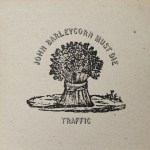
Many years ago, perhaps in 2015, while playing an especially transparent copy of John Barleycorn, we learned something new about the album. Although it was a title I had been playing since it came out all the way back in 1970, apparently things had changed.

This pressing made it clear — really, for the first time — exactly what Winwood was doing with his left hand on the piano during the song Glad.

There are two musical figures that one can focus on: one involving the lower notes, which tend to be blurry, obscured and murky on most pressings, and two, the right-handed higher notes, which are typically much more clear and audible in the mix.

Only the very best copies let us “see” the bass notes of the piano so clearly and correctly. Next time you’re in the mood to compare different pressings of Barleycorn, pay special attention to the lower notes of the piano on Glad. It is our contention, backed by mountains of evidence, that no two copies of the album will get that piano to sound the same. (It will also help if you have large dynamic speakers with which to do the test.)

Lately we have been writing quite a bit about how pianos are good for testing your system, room, tweaks, electricity and all the rest, not to mention turntable setup and adjustment.

  • We like our pianos to sound natural (however one chooses to define the term).
  • We like them to be solidly weighted.
  • We like them to be free of smear, a quality that is rarely mentioned in the audiophile record reviews we read.

(more…)

Steve Miller Band – Fly Like An Eagle

More of the Music of the Steve Miller Band

  • F
  • Here is a vintage copy with INCREDIBLE Shootout Winning Triple Plus (A+++) grades or close to them from start to finish – fairly quiet vinyl too
  • A surprisingly difficult record to find with good sound and quiet surfaces – they pumped these out by the millions and most copies aren’t worth even the bad vinyl they’re pressed on
  • The sound is clear, full-bodied and detailed with tremendous space, critical to reproducing the recording’s spacey (and pretty cool) effects
  • The title track and “Take The Money And Run” both sound excellent (but so does pretty much everything else)
  • 4 1/2 stars: “The key is focus, even on an album as stylishly, self-consciously trippy as this, since the focus brings about his strongest set of songs (both originals and covers), plus a detailed atmospheric production where everything fits.”
  • If you’re a Steve Miller fan, or perhaps a fan of mid-’70s Classic Rock, this title from 1976 is surely a Must Own.

On this copy, you get richness and warmth, front and center immediacy, extension up top and down low, and loads of energy. The synths have texture, the guitars are full-bodied and the bottom end is nice and meaty.

The soundfield is especially open and transparent, with three-dimensional space that brings out the trippy effects the band threw in all over the place. When they sound this good, they really work some Seventies Analog Magic. (more…)

Haydn – Symphony Nos. 59 and 81 / Dorati

More of the Music of Haydn

  • This vintage Mercury Living Presence LP brings excellent recording energy and presence to Haydn’s music with solid Double Plus (A++) sound or BETTER from first note to last
  • It’s also remarkably quiet at the high end of Mint Minus Minus, a grade that even our most well-cared-for vintage classical titles have trouble playing at
  • This recording is not your typical dry, bright, nasaly, upper-midrangy Merc – the sound is rich and smooth like a good London, with a big stage and lovely transparency
  • Dorati pushes the Festival Chamber Orchestra to dizzying heights of performance – if you find Haydn boring, try this record, it’s got the pacing and dynamic contrasts that bring the Master of the Symphony’s music back to life
  • There are about 150 orchestral recordings we’ve awarded the honor of offering the Best Performances with the Highest Quality Sound, and this record certainly deserve a place on that list.

These are some of the best Haydn Symphonies I have heard on disc. Folks, until I heard Dorati and the Festival Chamber Orchestra perform these pieces, I never knew there could be this much FIRE in Haydn’s music. (Please excuse the pun; the 59th Symphony is entitled “Fire”.)

Mercury brings the kind of recording energy and presence to this music that I have frankly never heard before. Credit must go to both Dorati and his players.

(more…)