Month: April 2024

In 2008 We Had a Lot More R&D Ahead of Us

Hot Stamper Pressings of the Music of Led Zeppelin Available Now

A classic example of live and learn.

In 2008 we simply had not done our homework well enough. I had been an audiophile for at least 33 years by then, and a professional audiophile record dealer for 21, but we still hadn’t cracked the code for Zep III.

Sure, by 2008 we had auditioned plenty of the pressings that we thought were the most likely to sound good: the original and later domestic pressings, the early and later British LPs, some early and later German pressings, maybe a Japanese import or two. In other words, the usual suspects.

We already knew the Classic Records Heavy Vinyl was unbelievably bad; no need to put that in a shootout. It earned an “F” right out of the gate for its bright and harsh sound.

The result? We were roughly in the same position as most serious record collecting audiophiles, if not actually in a better one: who do you know that has played at least ten different pressing Led Zeppelin III, or any other album for that matter?

We had auditioned a number pressings of the album and thought we knew enough about the sound to pick a winner. We thought the best original British Plum and Orange label pressings had the goods that no other copies could or would have. (Years later we would get hold of another one, clean it up and put it in a shootout.)

But of course, like most audiophiles who judge records with an insufficiently large sample size, we turned out to be quite mistaken.

Logic hadn’t worked. None of the originals would end up winning another shootout once we’d discovered the right reissues.

But in 2008, we hadn’t stumbled upon the best pressings because we hadn’t put enough effort into the only approach that actually works.

What approach is that? It’s trial and error. Trial and error would eventually put us on the path to success. We had simply not conducted enough trials and made enough errors by 2008 to find out what we know now.

We hadn’t made the breakthrough we needed to make in order to know just how good the album could sound.

Can you blame us? The pressings that have been winning shootouts for years are from the wrong country (not the UK) and the wrong era (not the original).

We reproduce below the commentary for the 2008 listing that gets it wrong.

The best British originals are good records, but none of them would win a shootout these days up against the superior import pressings we discovered around 2015 or so.

(more…)

Horace Silver – Song For My Father

More Horace Silver

More Blue Note Albums

  • This Van Gelder-mastered Blue Note reissue pressing (one of only a handful of copies to hit the site in years) boasts solid grades from start to finish
  • Tubey Magic is the key to the sound of the better pressings, and we guarantee this one has the kind of Tubey Magic that no modern pressing of the last 40 years can offer the audiophile community
  • Energetic, clear and spacious, as well as relaxed and full-bodied (thanks, RVG!) – this pressing was a step up over most other copies we played
  • An incredibly tough album to find with the right sound and decent surfaces, but the music makes it worth all the time and trouble we spent finding this outstanding copy
  • 5 stars: “Horace Silver’s signature LP and the peak of a discography already studded with classics. Silver was always a master at balancing jumping rhythms with complex harmonies for a unique blend of earthiness and sophistication, and Song for My Father has perhaps the most sophisticated air of all his albums…”

The leading edge transients on the horns here are excellent, with the pinched quality you hear on some tracks kept to a minimum. The whole of the ensemble is transparently clear.

The drums on this record have a wonderful quality: they actually sound like hollowed out, three-dimensional objects that are being struck in order to make them resonate — which is kind of what they are — the opposite of the cardboard drums you hear on bad rock records. (We hear a lot of drums on old rock records that sound like somebody is slapping a corrugated shipping carton with a mallet. You lose a lot of points if you’re a record with that sound.)

(more…)

Letter of the Week – “I had no idea that vinyl could produce this sound.”

Hot Stamper Pressings of the Music of Crosby, Stills, Nash and (Sometimes) Young

One of our good customers had this to say about some Hot Stampers he purchased recently:

Hey Tom, 

Tom, I just listened to the White Hot Stamper (A+++) CSNY album.

Amazing. I had no idea that vinyl could produce this sound. Worth every penny.

The sound at low volume is amazing. The sound at high volume is spectacular.

The clarity, the depth, the soundstage are very rich and alive with color and presence.

Thank you! I am now going to investigate your piece on the cleaning process.

Rocco

Rocco,

Glad you liked this copy as much as we did! Deja Vu is indeed a very special album, one I have been obsessed with since I first became an audiophile.

I was a big Crosby, Stills and Nash fan already — the first album being life-changing to a 15 year old music lover such as myself, on 8-track tape in the car no less — so it was only natural that I would fall in love with Deja Vu when it came out in 1970.

Years went by and then, oddly enough, my love for the music was reignited by a pressing that came out 13 years after the album’s first release, on a label you may have heard of, Mobile Fidelity.

I realized instantly that Mobile Fidelity had indeed improved upon the average original’s sound. (Not a high bar considering how awful sounding most originals are.)

It would take me and my staff many years, at least another 13 or so, to come across the domestic reissues that trounced the MoFi and showed me how colored, compressed, thick, blurry and limited it was.

(more…)

Ranking The First Seven Albums by The Eagles

More of the Music of The Eagles

Without question the first Eagles album is still their best sounding release.

Hotel California is a classic, no argument there, but even the best sounding copies are a little “modern” for our tastes. I prefer both the music and the sound of On The Border to Hotel CA, but that should clearly be seen as a minority opinion. De gustibus and all that.

Let’s call them their second and third best, we’ll leave the order to you.

The third tier would have One of These Nights, followed by Desperado, The Long Run and Eagles Live.

The less said about any of their albums after 1980 the better.

You know the first album. You know Hotel California. The best Eagles album you don’t know is On The Border.

We’ve recently compiled a list of records we think every audiophile should get to know better, along the lines of “the 1001 records you need to hear before you die,” but with less accent on morbidity and more on the joy these amazing audiophile-quality recordings can bring to your life. On the Border is a good example of a record most audiophiles don’t know well but would most likely benefit from getting to know it better.


(more…)

The Band – Self-Titled

More of The Band

More Roots Rock LPs

  • A killer copy of an absolutely essential album with Nearly Triple Plus (A++ to A+++) grades on both sides – just shy of our Shootout Winner
  • One of the most difficult albums to find great sound for, but the music makes it worth all the time and trouble we spent finding this outstanding copy
  • Huge amounts of deep bass (something that only the best Robert Ludwig-mastered original pressings can offer), meaty guitars and silky vocals make this pressing of The Band’s second album a very special listenng experience indeed
  • Problems in the vinyl, especially for this title, are sometimes the nature of the beast with vintage LPs – there simply is no way around them if the superior sound of analog is important to you
  • 5 stars: “As had been true of the first album, it was the Band’s sound that stood out the most… The arrangements were simultaneously loose and assured, giving the songs a timeless appeal…”

The lucky person who takes this record home is in for quite a shock. This very pressing is proof positive that this album is much better recorded than the audiophile community gives it credit for being. How could anyone judge the sound of the record without a great copy such as this one to play?

This vintage pressing has no trace of phony sound from top to bottom. It’s raw and real in a way that makes most pop records sound processed and wrong. These two sides have plenty of the qualities we look for in an album by The Band. Energy, presence, transparency, Tubey Magic… you name it, you will find it here. Its biggest strength — and the biggest strength of the album as a whole — is its wonderful, natural midrange.

And the bass is huge. On the better copies it always is.

Drop the needle on “The Night They Drove Old Dixie Down” or “King Harvest Has Surely Come” and get ready for some serious Analog Magic. This is The Band’s second album like you have never heard it before.

Overview

This copy has superb space in the midrange — it was wider, deeper and clearer than practically all of the Robert Ludwig originals we played (which are, of course, the only way to go on this album). Few copies were this full-bodied, solid, meaty and rich, yet clear. It was so tubey, never dry, unlike more copies than we care to remember.

Despite what anyone might tell you, it’s no mean feat to find good sounding copies of this record. There are good originals and bad originals, as well as good reissues and bad reissues. Folks, we’ve said it many times — the label can’t tell you how a record sounds, but there’s a sure way to find out that information. You’ve got to clean ’em and play ’em to find out which ones have Hot Stampers, and we seem to be the only record dealers who are doing that, in the process making unusually good pressings like this one available to you, the music-loving audiophile.

(more…)

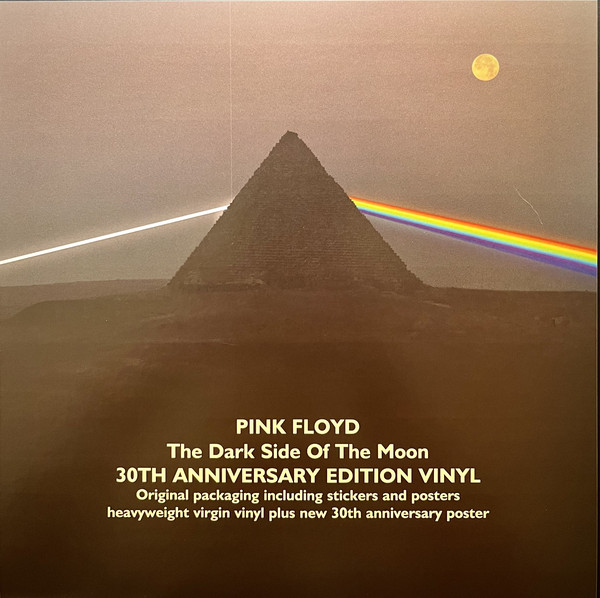
The Dark Side of the Moon – 2003 Heavy Vinyl Reviewed

Pink Floyd Hot Stamper Pressings Available Now

An audiophile hall of shame pressing and a Heavy Vinyl disaster if there ever was one (and oh yes, there are plenty).

The 30th Anniversary Heavy Vinyl pressing is too bright. There is a boost in the top end, probably in the 12K region, that appears to be a poor mastering choice the late Doug Sax made, one that is surely not doing this recording any favors.

In fact, in the case of this new pressing, it’s positively ruinous, assuming you have set your VTA correctly and have the properly functioning tweeters to show you how bright this record is. If you like the phony detail a boosted top end provides, this record should be right up your alley. However, you would do well to recognize that this is a blind alley, and the best way forward is to turn around and start heading in the opposite direction.  

Some audiophiles revere a record like this (last time I checked, the average selling price on Discogs was $149.50) because they need it to wake up their sleepy stereos. My stereo hasn’t been sleepy enough to play this 2003 recut for a very long time, and I hope you can say the same.

As a service to the audiophile community, please click on the link below to find other records that your system should be able to make clear are too damn bright.

(more…)

Are Our Heavy Vinyl Reviews Based on Faulty Reasoning?

Welcome to the Skeptical Audiophile

The short answer is that our reviews aren’t based on reasoning at all.

The full story follows. The comments you see below were left on our listing for the Rhino pressing of The Cars’ first album.

The grievances the writer lists are long and mostly unserious, but I think they have some value, just not the value the writer intended, so of course I am happy to reproduce them here and take a crack at explaining the mistaken audiophile thinking they represent.

If you’ve ever stumbled upon the Wikipedia page for logical fallacies, you will have no trouble recognizing all the shortcomings this writer has called us out for in our review of The Cars on Rhino, as well as, we assume, the hundreds of other Heavy Vinyl disasters we take to task on this blog.

Rather that attempt to rebut the individual charges, which seem to be grounded in issues of logic, semantic hair-splitting, a deep misunderstanding of the unwritten rules of criticism, what does and does not constitute an ad hominem attack, my use of injudicious language, and who knows what else, I have an answer that I believe gets to the heart of why none of this matters, which you will find below in my reply to his comments. [Bolding added by me,]

Ad Hominem Attack: The author attacks Kevin Gray personally, suggesting that his work is consistently poor without addressing the specific issues with the remastering process.

Appeal to Authority: The author mentions Steve Hoffman and his successful remastering of The Cars’ first album on Gold CD, implying that because Hoffman did it well, Kevin Gray should have done the same. This disregards the possibility of differences in approach and technique between the two engineers.

Appeal to Popularity: Popularity does not equate to quality.

False Dichotomy: The author presents a binary choice between their preferred pressing and the Rhino pressing, suggesting that the Rhino pressing is objectively bad without considering the possibility of subjective preferences or different listening experiences.

Appeal to Emotion: The author uses emotive language (“just awful,” “godawful”) to elicit a strong negative reaction from the reader, rather than providing objective evidence to support their claims. This would be very difficult considering that taste and preference is subjective.

Hasty Generalization: The author assumes that anyone who disagrees with their assessment of the Rhino pressing must have inferior audio equipment or lack understanding of audio quality. This overlooks the possibility of legitimate differences in opinion or subjective preferences.

Appeal to Ignorance: The author suggests that because they personally find the Rhino pressing to be of poor quality, it must be objectively bad. However, personal experience or opinion does not necessarily reflect objective truth.

I would hope that no one reading this blog could possibly find these sophistic arguments persuasive, for the simple reason that none of them have very much to do with the sound of the records, by The Cars or anybody else, that we discuss in our 5000+ listings and commentaries.

Everything we say about records is backed up by the evidence we have discovered by actually playing them.

Failures of logic and generally fallacious thinking have nothing to do with whatever “truths” we believe we have discovered about records, because we didn’t use either one — logic nor reasoning — to learn what we know about them.

I also don’t think we would be comfortable characterizing our claims about the sound of records to be objectively true. Our claims may be objectively true for us; the same stampers of scores of records win our shootouts over and over again, even though no one playing or reviewing the pressings in question knows which stampers are which until the grades are in.

But that objectivity extends only to the records we play on our stereo, and the kind of sound we like our records to have. (May I point out here that the other two guys who took over the job of doing our shootouts more than five years ago heard things the same way I did, and we never quarreled even once about which pressings were the best. They didn’t need teaching, they just needed good records to play on a good system. If your stereo is good enough, the right answers come naturally and effortlessly.)

Fortunately for us, thousands of customers have found that their stereos play our records just fine, and these same customers seem to like the kind of sound we like. That didn’t have to be the case, but we’re glad it is. Otherwise I would have had to find some other way to make a living. I sure wasn’t going to keep selling Heavy Vinyl once it was clear to me how consistently inferior the sound was more than likely going to continue to be.

Logic and Evidence

To understand the records we offer, and the reviews we write, logic is of no use whatsoever.

The only thing that has any real value is experimental evidence.

Without experimental evidence, you simply have no evidence, because logic is not evidence.

(more…)

Forget the STS Labels with Black Print on Images Pour Orchestra

More of the music of Claude Debussy (1862-1918)

None of the pressings on this later Stereo Treasury label that we played in our most recent shootouts were very good, unlike the Silver Print labels, which can sound quite respectable.

At this stage of the game, we’ve learned our lesson and will not be giving any more of the Black Label pressings a chance. This goes for practically all the records we’ve played on the later Stereo Treasury label. They rarely sound any good and just aren’t worth the trouble now that we know what the best pressings are.

Both the Ansermet on London and the Munch on RCA are better recordings, but both sell for quite a bit more money than the Stereo Treasury pressings we offer, so if you can’t see spending the kind of bread they command, there is a much more affordable alternative that is guaranteed to satisfy.

(more…)

The Monkees / More of The Monkees – Actually Sounding Pretty Good

More of The Monkees

More Sixties Pop

  • Both sides of this copy have outstanding sound for the band’s sophomore LP, earning solid Double Plus (A++) grades or BETTER – exceptionally quiet vinyl too
  • Amazingly QUIET for an early Stereo Colgems pressing – not many survived in this kind of audiophile playing condition
  • The key to any Monkees record is the midrange, and here is the low-distortion, rich, breathy, present, Tubey Magical sound that no other copy had in such abundance
  • This is no Demo Disc by any means — we grade on a curve, and considering the limitations of a heavily-processed, 60s pop record designed to be heard over AM radio, this is very good sounding pressing for what it is, and one of the best we have ever played
  • The key to any Monkees record is the midrange, and here is the low-distortion, rich, breathy, present, Tubey Magical sound that few of the copies we played had in such abundance
  • The sound may be too heavily processed for some, but we find that on the best copies that sound works about as well as any for this album
  • 4 stars: “…the Monkees rate with any pop band of their era and More of The Monkees solidifies that position.”

(more…)

Is Digital Really the Problem on this Cowboy Junkies Album?

Hot Stamper Pressings of Digital Recordings with Audiophile Sound 

The RCA domestic pressings cut at Sterling are not worth the vinyl they’re pressed on.

Don’t be one of those die-hard analog types who point fingers at the fact that there was digital in the recording chain when their pressing doesn’t sound good.

It’s got nothing to do with digital. It has everything to do with Sterling doing a bad job mastering the domestic vinyl.

(Keep in mind that a very large group of audiophiles, including some well-known reviewers, had no idea there was a digital step used in the process of making some of the records they had raved about. Apparently the only way to hear it is when you already know it’s there.)

Our notes for the domestic pressing below read:

  • Flat and dry vox.
  • Shifted up [tonally]
  • A bit scooped [or “sucked out” in the midrange, meaning the middle of the midrange is missing to some degree]

The midrange suckout effect is easily reproducible in your very own listening room. Pull your speakers farther out into the room and farther apart from each other and you can get that sound on every record you own. I’ve been hearing it in the various audiophile systems I’ve been exposed to for more than 40 years.

Why Defend the Indefensible?

When good mastering houses like Kendun and Sterling and Artisan make bad sounding records, we offer no excuses for their shoddy work. The same would be true for the better-known cutting engineers who’ve done work for them, as well as other cutting operations.

Individuals working for generally good companies sometimes produce substandard work product.

How is this news to anyone outside of the sycophantic thread posters, youtubers, and self-identified record experts who write for the audiophile community?

(more…)